15 Hip Tattoo Designs to Pin Before Your Appointment
The hip might be the most quietly personal canvas on the body. It sits at the intersection of visible and private, bold and intimate, which is exactly why so many people end up with it at the top of their “someday” list. And if you have been saving hip tattoo ideas on Pinterest for longer than you care to admit, I completely understand. I did the same thing before my first real hip-placement piece. I must have stared at my saved folder for three months before I finally felt sure enough to make a call.
That stretch of time between “I love this” and “I’m ready to book” is where most of the important work happens. Not the tattooing itself, but the dreaming, narrowing down, and deciding. And that is exactly what this article is for. Below you will find fifteen design ideas organized by style, with honest notes on pain, sizing, aging, meaning, and how to bring each concept to an artist in a way that gets you exactly what you want.
Every single one of these designs belongs on a licensed professional artist’s table. Finding the right person, preparing well, and trusting a skilled, licensed artist is the whole foundation of a tattoo you will love for life.
Let’s get into it.
Why the Hip Is Such a Good Canvas
Before we dive into the designs, it helps to understand why the hip is so beloved as a placement. The answer is mostly about shape and flexibility.
The hip area is not one single spot. It includes the upper hip, which sits just above the hip bone and below the waistline, the side hip, which runs along the outer curve of the body from waist toward the thigh, the lower back and pelvic region, and the front hip or bikini-line area. Each of these zones offers something different in terms of pain level, canvas size, and how visible the tattoo will be day to day.
What makes the hip special as a placement is that it naturally curves.
A vine of botanical flowers that follows the side of the body looks different from the same design placed flat on an arm, and for most people, it looks better. The hip moves with you. Designs placed here have an organic, flowing quality that is harder to achieve elsewhere.
The other thing that draws people to this placement is the privacy factor. You get to decide when it is visible. Under everyday clothing, most hip tattoos disappear completely. In a swimsuit, a crop top, or low-rise jeans, they become part of your look. That control over visibility is genuinely appealing, and it is one reason this spot is so popular for a first or second tattoo.
A Straightforward Guide to Pain at This Placement
Let me be honest with you here, because I think vague reassurances actually make this harder. The hip is not universally comfortable, and whether it hurts depends significantly on exactly where the needle lands.
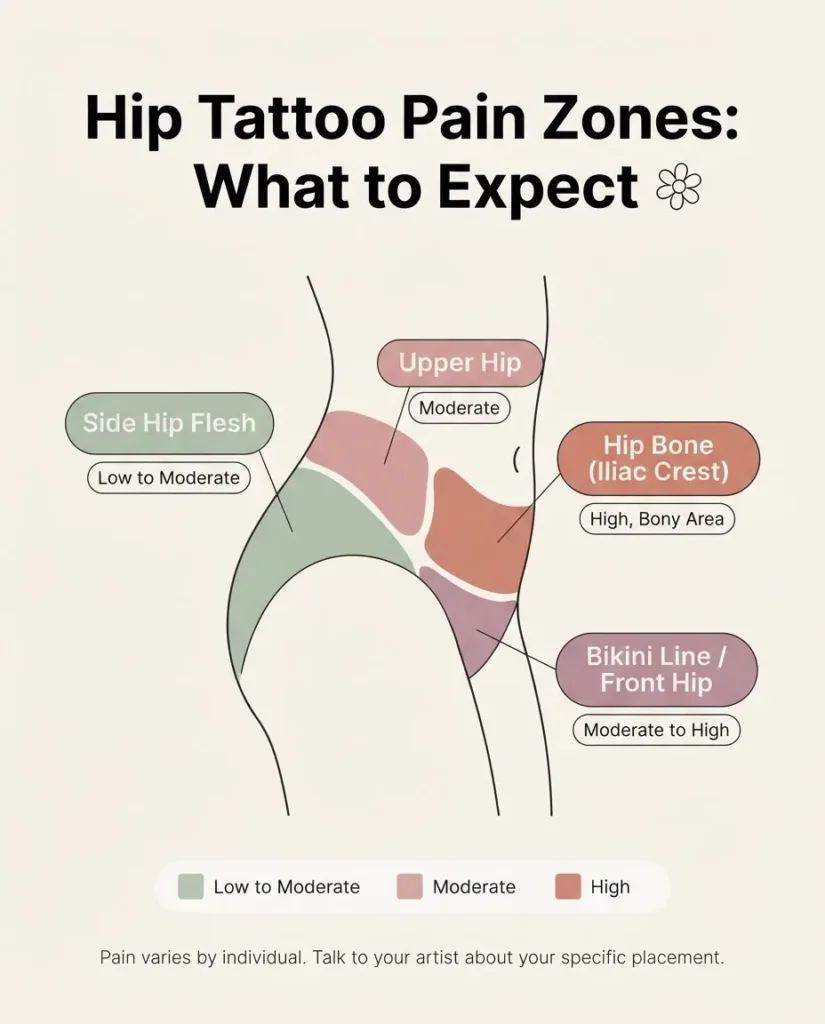
The softer, fleshier part of the side hip tends to be relatively manageable. There is cushioning between the skin and the bone, and most people describe the sensation as a dull scratch or mild burn. This zone is considered moderate on the pain spectrum. The hip bone itself, including the area directly over the iliac crest, is a different story. There is almost no fat or muscle between the skin and the bone there, and the needle vibrates against that bony surface in a way that most people find genuinely intense. If your design sits directly over the hip bone, be honest with yourself going in. It will likely be uncomfortable.
The Healthline tattoo pain chart explains this well: bony areas with thin skin and many nerve endings consistently rate as the most painful tattoo locations, while areas with more fat and fewer nerve endings are significantly gentler. The hip falls in both categories depending on the exact spot.
A few practical things help. Eat a proper meal beforehand, stay hydrated, get a good night’s sleep, and skip caffeine and alcohol the day of your appointment. Your pain tolerance is genuinely lower when you are hungry, dehydrated, or running on three hours of sleep. Talk to your artist at the consultation about where the design will land and what they recommend for that specific placement.
The 15 Hip Tattoo Designs
1. Fine-Line Botanical Vine
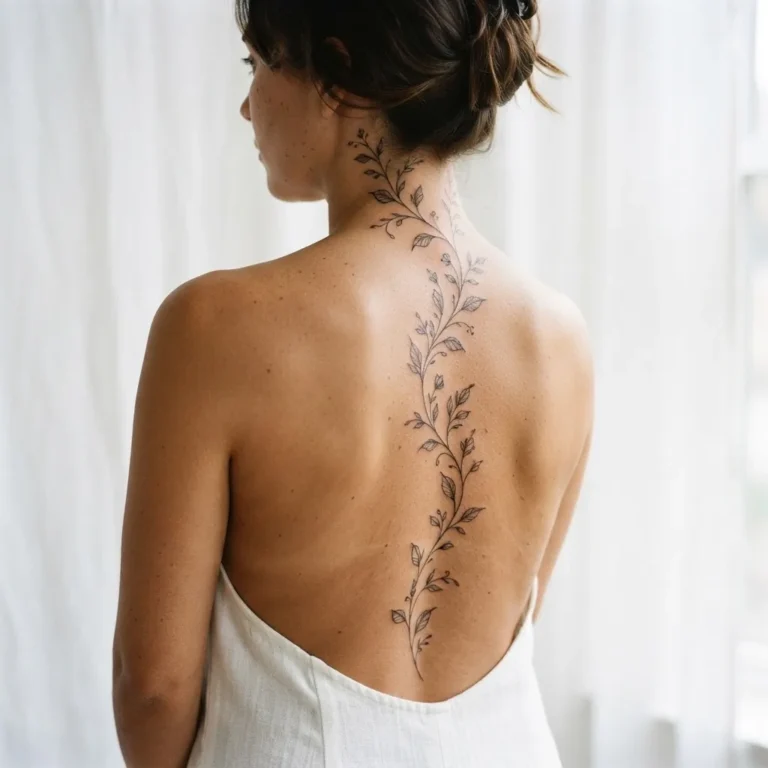
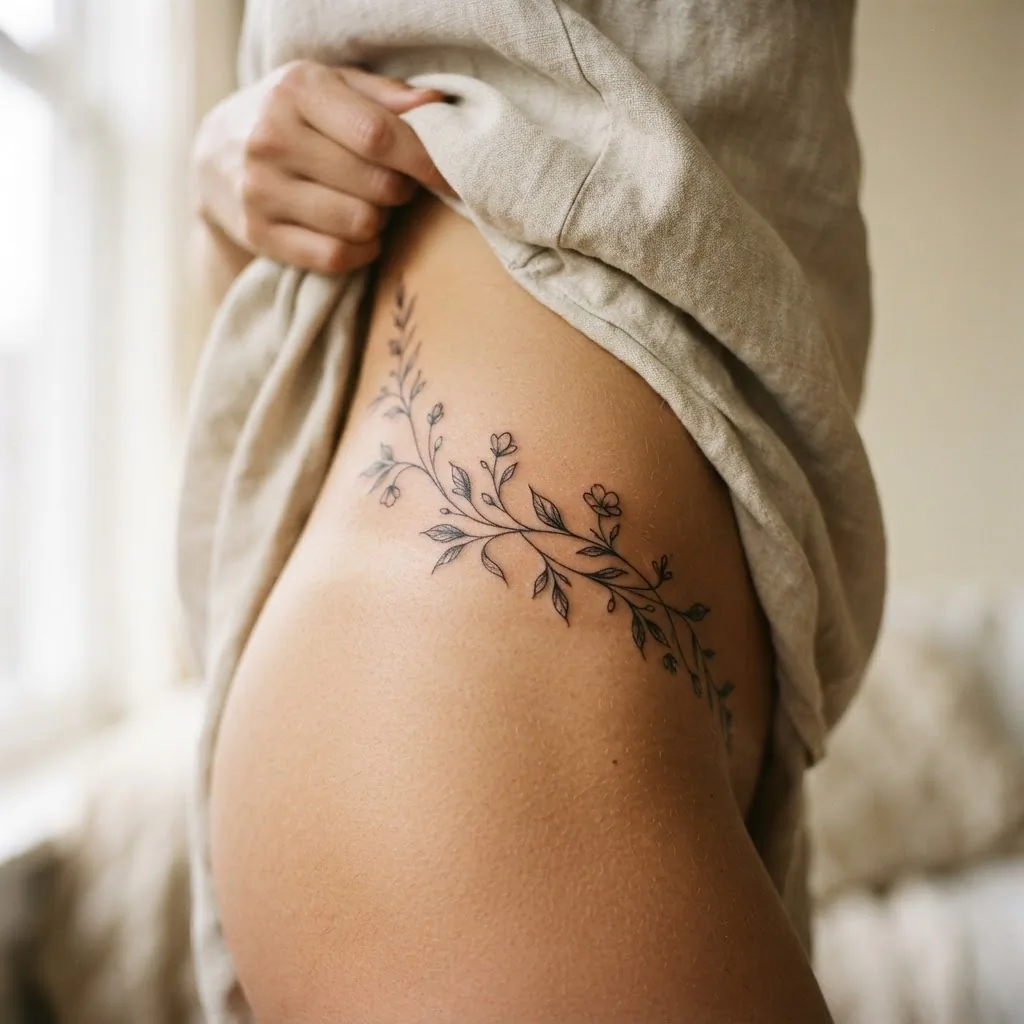
This is one of the most popular hip designs for a reason. A single vine with leaves, small buds, and simple flowers that winds along the side of the hip or wraps slightly around the hip bone to the front looks elegant without being overdone. The fine-line style means delicate, single-stroke lines with minimal shading, so the result feels like a pencil sketch brought to life on skin.
It suits the side hip canvas beautifully because the design can grow or shrink with the available space. A vine can be three inches or twelve inches and still feel intentional. Sizing is something to discuss carefully with your artist. A good rule: if you think the design should be small, ask your artist to show you the stencil on your actual body before committing. Things often look different on paper than on skin.
Fine-line work does require some maintenance awareness. Research from professional studios that specialize in fine-line tattoos notes that after roughly ten years, fine-line tattoos typically show some softening and gentle fading, but designs placed in low-friction zones with proper sun protection and occasional touch-ups continue to look beautiful for a very long time. The hip’s side-flesh area is generally considered a good candidate for fine-line longevity compared to high-movement spots like fingers or wrists.
2. Peony Cluster
The peony has one of the richest histories in tattoo symbolism. In Chinese tradition it is called the “queen of flowers,” representing wealth, nobility, and good fortune. In Japanese tattooing, which has a centuries-long tradition of botanical imagery, peonies carry meanings of bravery, resilience, and beauty. For most people who choose them, peonies simply feel lush and feminine without being cliche.
A cluster of two or three large peony blooms at the side hip, with loose petals trailing downward toward the outer thigh, creates a stunning composition.
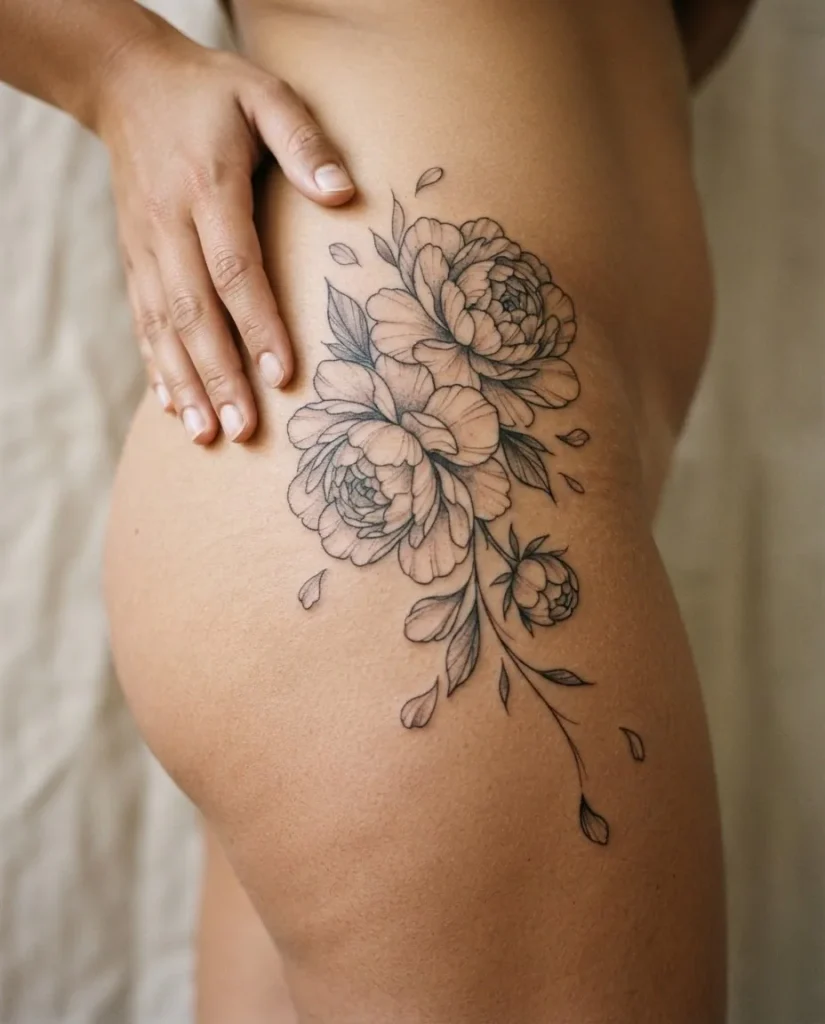
This design tends to work well in both black-and-grey and in muted color. Talk to your artist about shading style. The fine-line version is softer and more illustrative; the neo-traditional version will be bolder with more visible line weight and hold its detail longer over time.
3. Single Rose, Graphic Style
The rose is the most tattooed flower in the world, but “rose tattoo” covers an enormous range of aesthetics. A single graphic-style rose, bold black lines with flat fill rather than heavy shading, placed just above the hip bone or along the upper hip sits apart from the typical romantic-style rose and reads as more modern and editorial. It references traditional tattooing without looking old-fashioned.
Roses traditionally represent love and passion, but in graphic or neo-traditional styling they carry a certain quiet strength that feels genuinely personal. This placement is small enough to be your first tattoo but interesting enough to be a meaningful addition to a collection.
4. Serpent Wrap
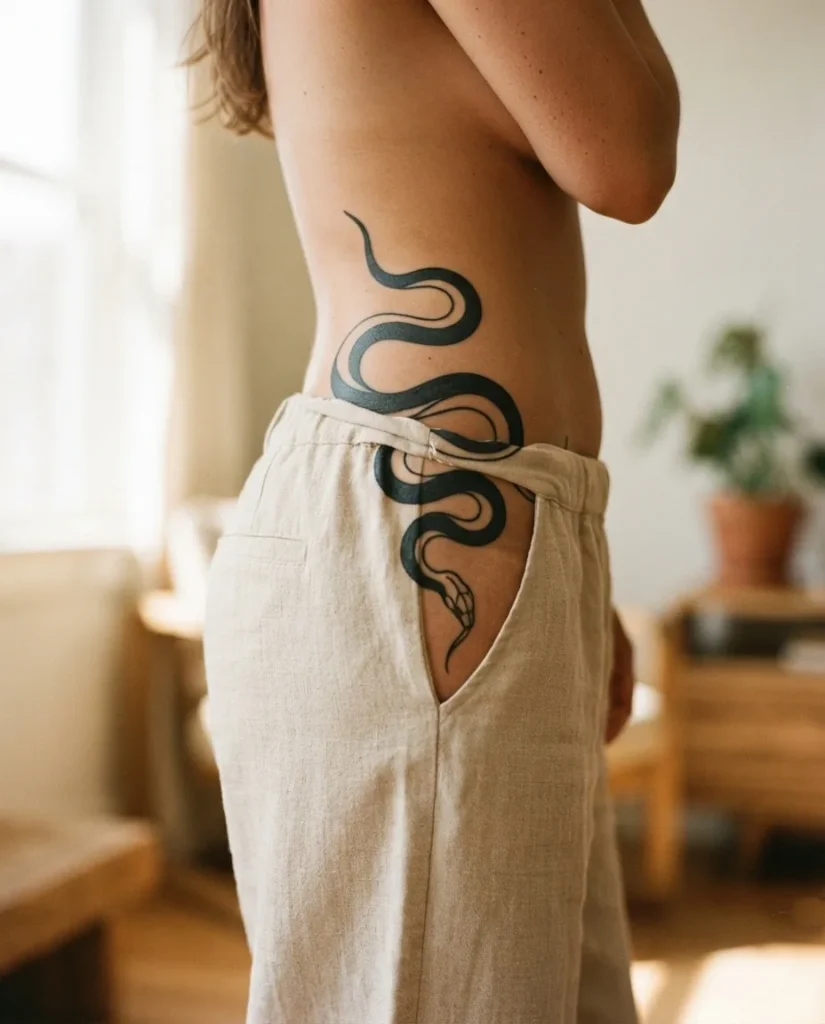
A snake that winds around the hip or coils from the lower back and wraps forward is one of the most dramatic choices for this placement. The serpent form literally follows the body’s curves, which is why it looks so natural here in a way that a straight-edged geometric shape might not.
Serpent tattoos carry layered meaning across cultures: rebirth and renewal from the shedding of skin, transformation, wisdom, and in some traditions, protection. For many people the appeal is simply visual. A snake wrapping the body has movement and dimension that feels alive.
This is a medium-to-large piece in most cases, which means a longer session and a higher investment. Ask about the artist’s approach to line weight and shading. A serpent done in blackwork with bold lines will age more predictably than an ultra-fine-line version. Your artist should walk you through the longevity differences.
5. Lotus Flower
The lotus is universally associated with rising above difficulty. The flower grows through muddy water toward light, and that symbolism resonates with almost everyone, which is part of why it appears in tattoo collections across every background and culture. It is also one of the most naturally suited designs for the hip because the bloom is roughly circular and the stem can flow downward in a way that fills the canvas gracefully.
A single lotus at the side hip or just above the hip bone, done in either fine-line black or subtle color, is a timeless choice. If you want something with a little more movement, ask your artist about a lotus with water or ripple elements that frame the bloom.
6. Wildflower Meadow Scatter
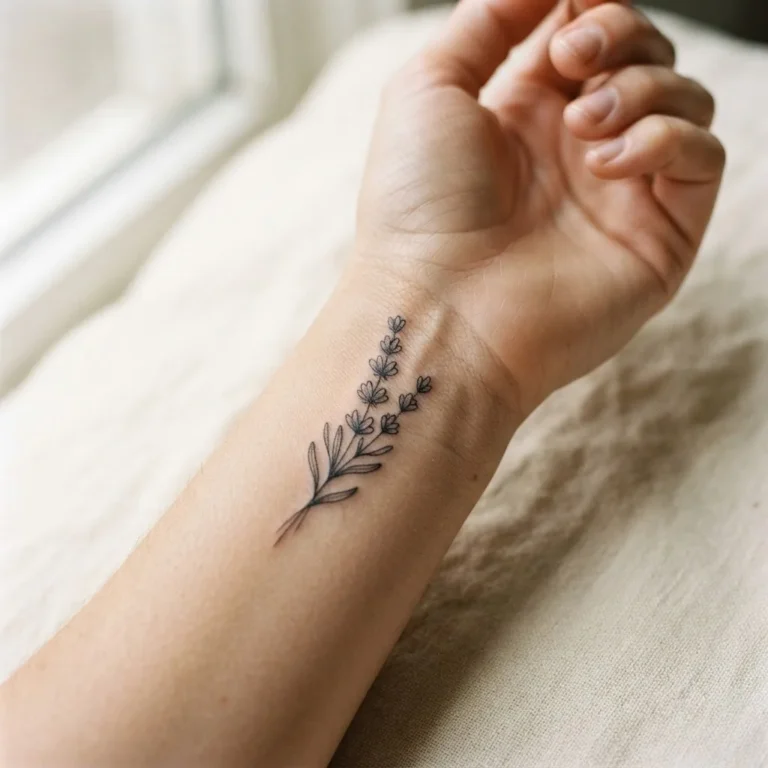
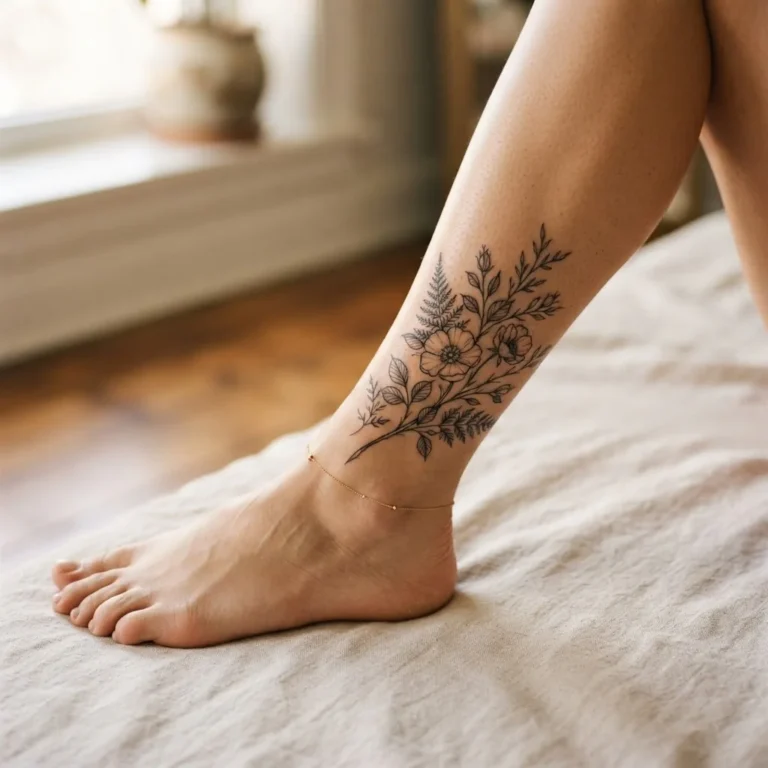
Rather than one focal flower, a scatter of small wildflowers, daisies, chamomile, lavender sprigs, poppies, and loose petals arranged in a loose cluster gives a more organic, gathered-from-a-field feeling. This design is very popular on Pinterest right now and fits beautifully on the side hip or upper hip.
The looseness of the design means it can be adjusted at the consultation stage to fit your exact canvas. More flowers can be added, petals can be removed, and the whole cluster can shift up or down depending on where it looks best on your body. This is the kind of design where bringing reference images to the consultation, several of them, rather than one rigid example, gives your artist room to create something truly custom.
7. Minimalist Crescent Moon
For someone who wants something small, personal, and beautifully simple, a crescent moon above the hip bone or tucked at the upper hip is a classic. Done in fine-line black, a simple crescent might be an inch or two at most. Done with a bit of negative-space shading or a botanical detail (tiny stars, a small flower resting in the curve), it becomes a complete, considered piece.
Moons carry meanings around cycles, intuition, femininity, and the passage of time. They are also genuinely lovely in a way that does not need justification. If the crescent moon is what keeps appearing on your saved board, that is probably telling you something.
8. Butterfly in Fine-Line or Blackwork
Butterflies are having a long moment in tattoo culture, and for good reason. They are visually versatile, working in everything from hyper-realistic full color to clean black-and-white geometric interpretations. They symbolize transformation and new chapters, which makes them a meaningful choice for people who are marking a significant period in their lives.
A butterfly at the hip, wings slightly open as if just landed, works at almost any size. A small, simple version can live on the upper hip with almost no visibility day-to-day. A larger, detailed version on the side hip becomes a real statement piece. This is one of the designs where size makes an enormous difference in impact. Ask your artist to stencil two or three sizes on your body before you decide.
9. Ornamental or Mandala-Inspired Design
Ornamental tattooing, patterns inspired by jewelry, filigree, dotwork, and architectural details, translates exceptionally well to the hip because the symmetrical, centered quality of these designs can anchor around the hip bone or radiate outward from a focal point. A mandala-influenced piece at the lower hip or pelvis looks intentional and geometric in the best way.
These designs age reasonably well when done with solid dotwork and consistent line weight. Ask your artist specifically about how the finer dot details will hold up in the long run, as very tiny dots in skin can migrate slightly over years. An experienced artist will design with that in mind.
10. Script or Single Word
A meaningful word or short phrase running along the curve of the hip is one of the most personal tattoos a person can get. The privacy of this placement is a big part of its appeal: this is not something you are announcing to the world. It is something you carry for yourself.
The key to a great script tattoo is taking font choice seriously. Serif fonts, calligraphy styles, and handwritten scripts all read differently on skin than they do on a screen. Ask your artist to print or sketch the exact lettering at the size and placement you are considering before the appointment. Lettering that is too small becomes illegible quickly as skin ages. Your artist will guide you on what works.
11. Geometric Shapes with Negative Space
Clean geometric work, triangles, diamonds, hexagons, and abstract compositions using negative space, is a strong choice for people who prefer an aesthetic that is more architectural and less organic. These designs sit beautifully on the upper hip or side hip and create a modern, editorial look.
One honest consideration: very thin geometric lines in skin can soften and spread slightly over years. Artists who specialize in geometric work will know how to account for this in the design, using slightly thicker lines or leaving more space between elements to allow for natural aging. Ask to see healed examples of their geometric work specifically, not just fresh photos.
12. Fine-Line Portrait or Face
Minimalist face tattoos (not realistic portraits, but simple illustrative female faces or goddess profiles with botanical framing) are one of the stronger trending styles right now according to current trend reporting from sources like Allure, which tracks the tattoo styles dominating 2025. A delicate female profile surrounded by flowers, moons, or flowing hair at the side hip is striking and deeply personal.
This is a design category where the artist’s specific portfolio matters enormously. Faces and figures are technically demanding and look dramatically different depending on the artist’s hand. Find someone who specifically showcases illustrative figure work before booking.
13. Watercolor-Style Floral
Watercolor tattoos use diluted ink washes and loose, painterly marks to simulate the look of a watercolor painting on skin. They can be breathtaking when done well. On the hip, where the broader canvas allows for movement and color bleeding, they can feel genuinely painterly.
The honesty check here is important. Watercolor tattoos, especially very light, pastel-toned ones, tend to fade faster than saturated or black-based work. The longevity depends heavily on the artist’s technique and how much darker line structure (called “anchor lines”) is underneath the color washes. Ask specifically how your artist approaches longevity in watercolor work and ask to see healed examples before committing.
14. Blackwork Floral with Bold Lines
On the opposite end of the spectrum from fine-line and watercolor sits blackwork: bold, fully saturated black ink with strong line weight and sometimes block-fill shapes. A blackwork floral, a large rose or peony with heavy outlines and solid black fill, on the hip makes a statement that is graphic, confident, and genuinely long-lasting.
Bold blackwork tattoos are among the most durable in terms of how they age. The lines stay crisp longer, the contrast remains strong, and the design reads clearly even decades later. If longevity is a priority for you, talking to your artist about incorporating at least some heavier line weight, even in a largely delicate design, is worth the conversation.
15. Celestial Composition (Sun, Moon, Stars)
A celestial grouping, a sun at the center with a crescent moon, stars, and maybe a planet or two, arranged in a cluster at the side hip or running vertically along the hip to the thigh, is one of those timeless concepts that never quite goes out of fashion. Celestial imagery has been part of tattoo culture for a long time, and its staying power comes from how personal it feels. Space imagery invites meaning without demanding a specific story.
This design works beautifully in both fine-line black and illustrated color. The vertical orientation makes it ideal for the side hip, where the design can elongate with the body’s natural line rather than working against it.
Thinking About Style Longevity: What Will It Look Like Later?
This is the question I wish more hip tattoo articles actually answered. Because a tattoo you love at 25 needs to still feel like yours at 45. Longevity is not about whether a tattoo “survives” aging. All tattoos change over time. It is about choosing a style and placement where the change is graceful rather than disappointing.
Fine-line work softens over years. The lines become slightly less crisp, and some fading is normal. In low-friction areas like the side hip flesh, fine-line tattoos generally age well, especially with consistent sun protection on the healed tattoo. Higher-saturation blackwork and traditional styles hold their clarity the longest because there is more ink in the skin to carry the design. Watercolor tattoos without strong anchor lines tend to fade the most significantly.
Body changes also matter. The hip is a zone where weight changes, pregnancy, and natural shifts in body composition can affect the skin. This is not a reason to avoid the placement. Millions of people have hip tattoos that they love through all kinds of body changes. It is simply a conversation worth having with your artist during the consultation, especially if you are planning a very large, detailed piece.
Finding the Right Artist for Your Hip Tattoo
This is the part that matters more than anything in this article. The best design idea in the world is only as good as the artist who executes it.
Here is how I think about finding the right person. Start with Instagram and TikTok, not to find viral artists, but to find artists whose healed work looks like what you want. Fresh photos are beautiful. Healed photos tell you the truth. Look specifically for healed examples of the style you want. Fine-line florals from one artist will look completely different from another.
Once you have a shortlist, verify their licensing. Tattoo artists are required to be licensed in most U.S. states, and studios must pass health inspections. The specific requirements vary by state, but licensing is the baseline of what you are looking for. Oregon, where I am based, has a formal board process through the Health Licensing Office. Your state will have a similar body. You can usually search a studio’s name on your state’s health department website to verify their license and inspection status.
Before booking, ask to see the studio. A clean studio should have an autoclave for sterilization of reusable equipment, single-use needles that are opened fresh in front of you, gloves worn throughout the session, and a general environment that looks and smells clean. These are not extras. They are the baseline standard every licensed professional should meet.
When you find an artist you trust, book a consultation before committing to the full appointment. A consultation gives you the chance to bring your reference images, talk through placement and sizing, ask questions, and see how the artist interprets your idea.

It is also your chance to assess whether they listen. An artist who talks over your ideas or dismisses your questions is telling you something important.
Questions to Bring to Your Consultation
Before your appointment, I always make a list. These are the questions I think about for any hip placement:
Where exactly will this land on my body, and will you mark it first with a stencil? What size do you recommend for this design at this placement? How will this style age over the years, and what can I do to support longevity? What should I wear to the appointment to give you the best access? How long do you expect the session to take, and will we need multiple sessions? What aftercare routine do you recommend specifically for a hip placement?
That last question matters because the hip has a specific healing challenge: clothing. Waistbands, underwear, and pants all sit right on this placement. Your artist will advise you on clothing choices for the healing period, but loose, high-waisted underwear that clears the tattoo, or swimsuit-style bottoms with adjustable ties, tends to help significantly. Their aftercare instructions are the final word. Whatever guidance your artist gives you, follow it.
Ink Safety: What Every New Collector Should Know
A note worth including in any tattoo article: tattoo ink is not regulated the same way food or medication is regulated in the United States. The FDA notes on its tattoo safety page that the agency has received reports of infections from contaminated inks and allergic reactions to pigments, and that even sealed, “sterile-labeled” ink containers can sometimes harbor bacteria. Red pigments are among the most common causes of allergic reactions, though reactions can occur with any color.
This is not meant to alarm you. Millions of safe, beautiful tattoos are done every single year. It is meant to underline why working with a licensed, experienced professional in a clean studio matters so much. A skilled artist uses reputable ink brands and practices proper hygiene at every step, which is your best protection.
The American Academy of Dermatology outlines the skin reactions that can appear after getting a tattoo: redness and swelling in the first days is normal. But if you notice persistent bumps, a rash, or anything that feels like more than typical healing tenderness, contact your artist and see a healthcare provider. Do not self-diagnose or ignore a skin response that feels off. Your artist and a dermatologist or doctor are your resources.
Aftercare Basics for a Hip Tattoo
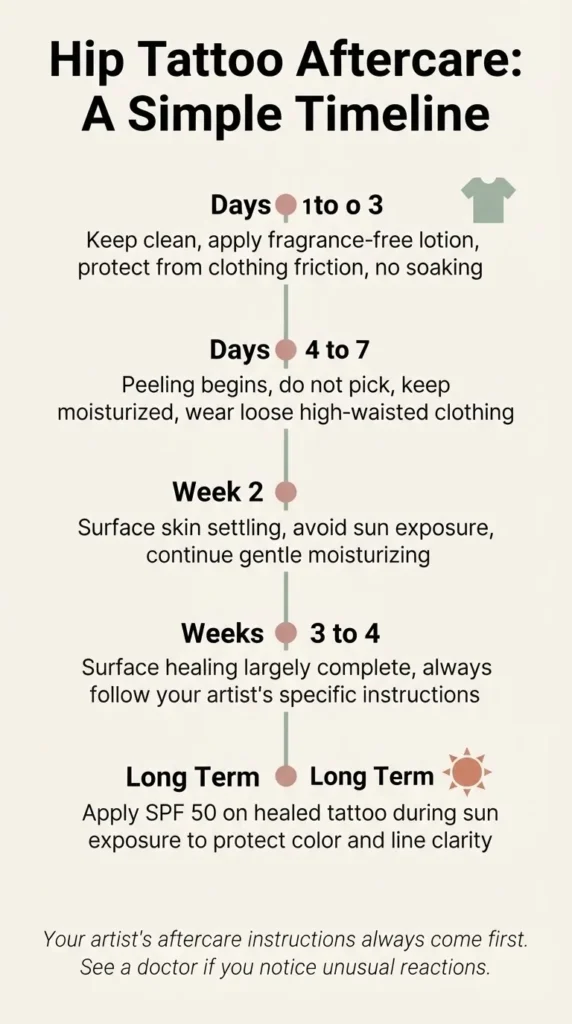
Your artist’s specific aftercare instructions come first and override everything below. These are general expectations, not prescriptions.
The hip healing period involves some specific considerations. For the first two to four weeks, the surface skin is healing. During this time the tattoo should be kept clean and gently moisturized, and direct sun exposure should be avoided. The bigger practical challenge is clothing friction. Even loose clothing can rub the healing area, especially while sleeping. Many people find that applying a non-stick bandage or breathable wrap over the tattoo helps protect it during the first few days, but ask your artist what they prefer.
The AAD recommends gentle aftercare for tattooed skin that includes washing with a fragrance-free cleanser and applying a water-based lotion rather than heavy petroleum-based products, which can pull ink from the skin. Long-term, the single most impactful thing you can do for a hip tattoo’s longevity is consistent SPF use on the healed area. UV exposure is one of the fastest ways to fade and age any tattoo, and this placement gets sun exposure in swimwear season.
The full healing process, including the deeper skin layers, can take several months.
Be patient with it.
A Thought Before You Book
Here is the thing I tell every friend who texts me before booking an appointment: the tattoo is the easy part. The artist does that. Your job is the preparation. It is saving the right references, thinking honestly about what the design means to you, choosing a trusted licensed professional, and walking into that studio ready to communicate clearly.
A good hip tattoo starts with good information, and you now have it. Take your time with the decision. Revisit your saved images. Notice which ones you still love three weeks after pinning them. Those are the ones worth talking to an artist about.