Wrist Tattoo Ideas: How to Pick One You’ll Always Love
The wrist is where so many tattoo stories begin. It was the placement of my very first piece, back when I was eighteen and convinced I had already thought through every detail. I had an idea. I loved the idea. I booked the appointment. What I did not have was a clear sense of what style I actually wanted, how the scale would translate to my wrist, or what questions to ask the artist. I ended up happy, but a little more by luck than by preparation. Years and several pieces later, the wrist is still the placement I get asked about more than almost any other, because it feels accessible and personal, and because the stakes feel just real enough to make people pause.
That pause is a good thing. It means you care about getting this right, and you will. This guide is here to help you move from “I love this idea” to “I know exactly what I want and why.” We are going to look at ten styles that genuinely shine on the wrist, talk honestly about placement and sizing, address pain and healing, and cover how to find and work with a licensed professional artist who will bring your vision to life.
Why the Wrist Works (and What Makes It Unique)
The wrist is one of the most personal placements on the body. It sits at the edge of visibility: easy to show off when you want to, easy to cover with a sleeve or a watch when the situation calls for it. For a lot of people, that combination of privacy and presence is exactly what they are looking for in a first tattoo or a meaningful addition to their collection.
But the wrist is also a specific canvas with specific characteristics, and understanding them will help you choose a design that looks as good in ten years as it does the week you get it done.
The skin on the wrist is relatively thin and sits close to bone and tendon. It moves constantly, flexing with every gesture you make throughout the day. It is exposed to more sunlight than almost any other tattoo placement, especially if you live in a place with real seasons and spend any time outdoors. All of that matters when you are planning your design, because it affects both how your tattoo heals and how it holds up over time. Choosing the right style and sizing is not just an aesthetic decision, it is a practical one too.
Placement Comes First: Inner Wrist, Outer Wrist, Side Wrist, or Wrap-Around?
Before you settle on a design, it helps to think about exactly where on the wrist you want it, because different spots feel different, heal differently, and suit different design shapes. Healthline’s medically reviewed guide to wrist tattoo pain breaks this down clearly: the inner wrist and the area directly over the outer wrist bone tend to be the most sensitive zones, while the side of the wrist and mid-wrist are generally more tolerable.
The inner wrist is the most popular choice by a significant margin. It is intimate, easy to glance at, and deeply personal. Small symbols, meaningful words, dates, and fine-line botanicals all look beautiful here. The trade-off is that this side is more sensitive during the session because of the nerves that run close to the surface near the palm. Most people find it very manageable, especially for a small or medium piece. Pain is subjective and individual, so your experience may be completely different from your friend’s.
The outer wrist, over the ulna bone, is where people who prefer a bolder or more visible placement tend to go. The bony surface means you may feel more of a vibrating sensation during the session, which some people find mildly intense. Designs that follow the natural curve of the wrist do especially well here.
The side wrist runs along the edge of your hand and wrist, often called the “karate chop” side. This is one of the gentler placement options on the wrist, and it is a lovely spot for a single fine-line botanical stem, a small constellation, or a short word. It is a bit more hidden than the inner wrist, which some people love.
A wrap-around or bracelet tattoo circles the wrist like a piece of jewelry.
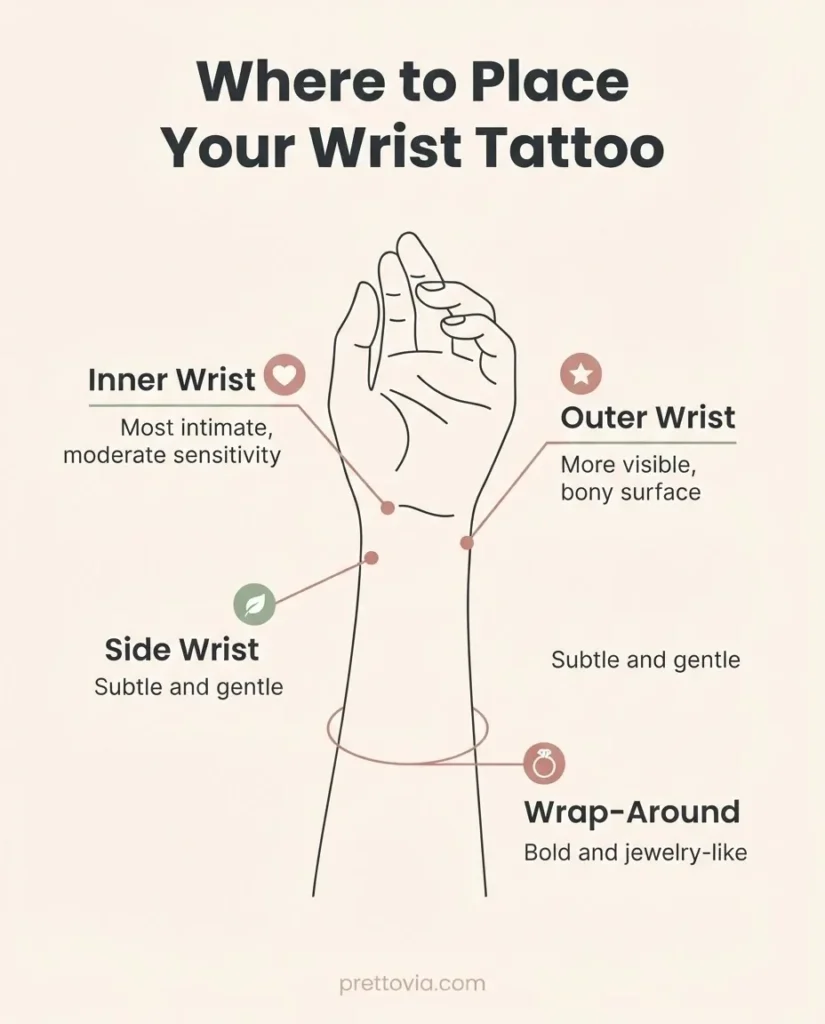
These pieces can be stunning, and they photograph beautifully, but they require an artist with strong experience in wrap-around work, because the design has to stay consistent across the curve while accounting for the fact that you will be moving and rotating your wrist during the session. When you are browsing artist portfolios, look specifically for wrap-around examples.
10 Wrist Tattoo Styles Worth Considering
1. Fine-Line Botanical
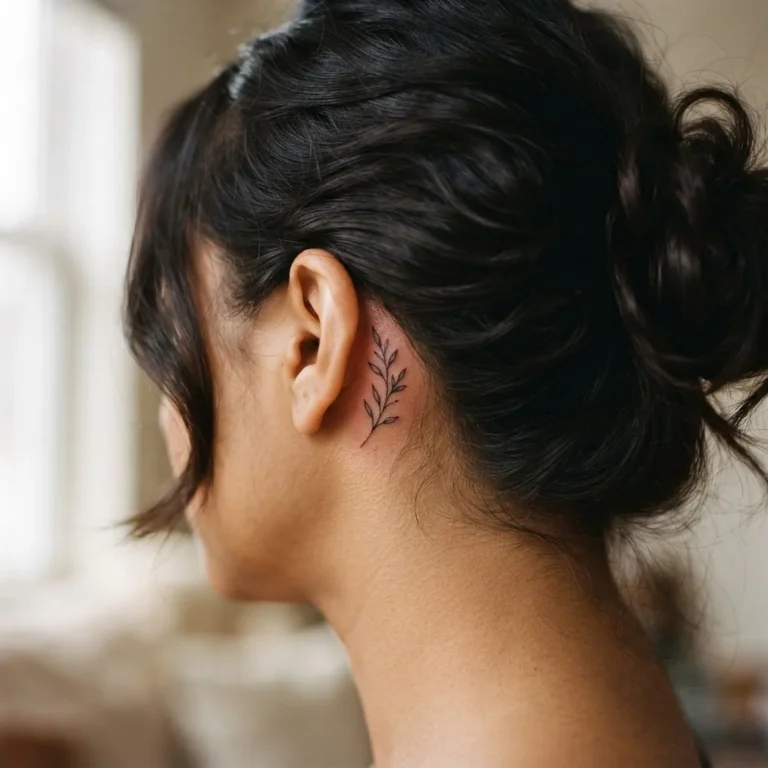
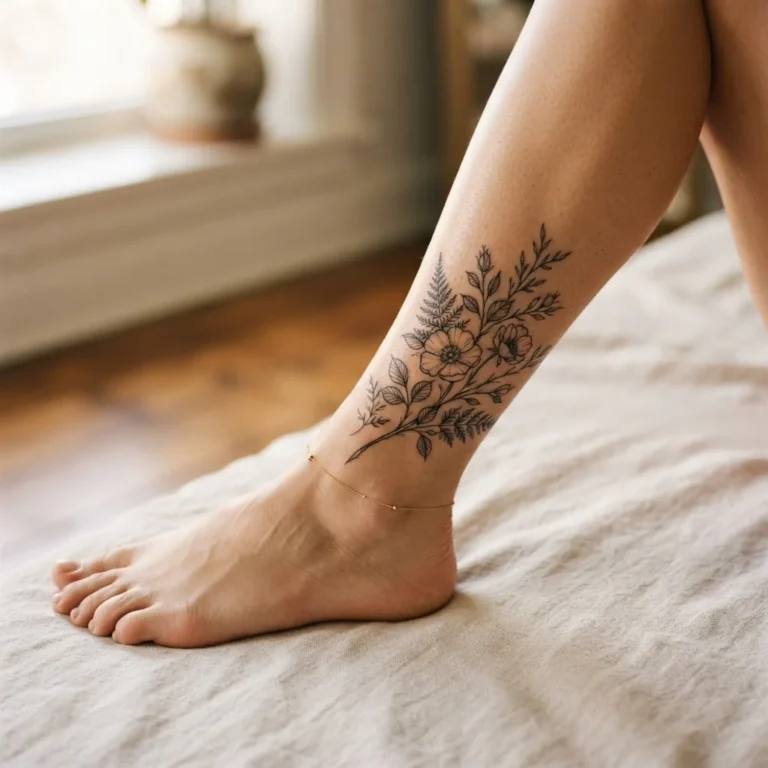
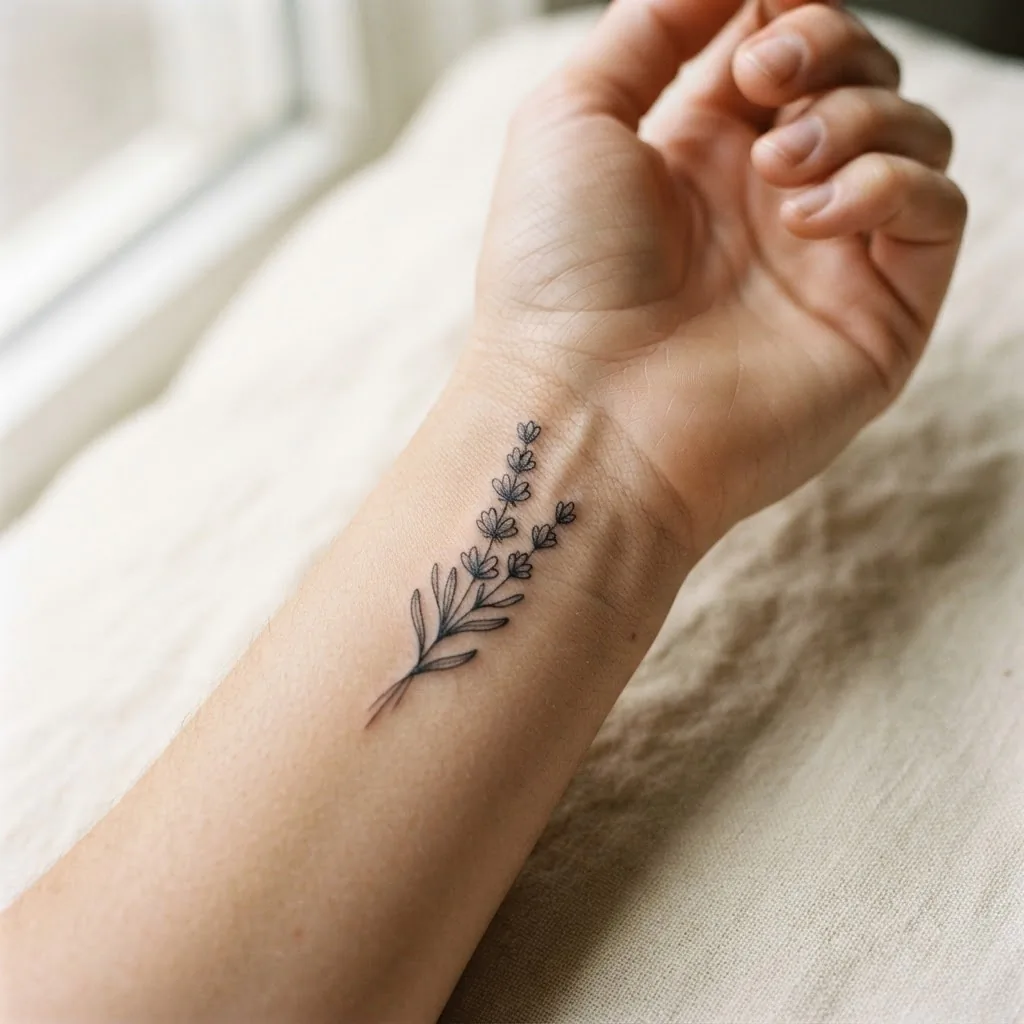
Fine-line botanical tattoos, think a single rose stem, a delicate fern frond, a sprig of lavender, are among the most requested wrist styles right now, and for good reason.
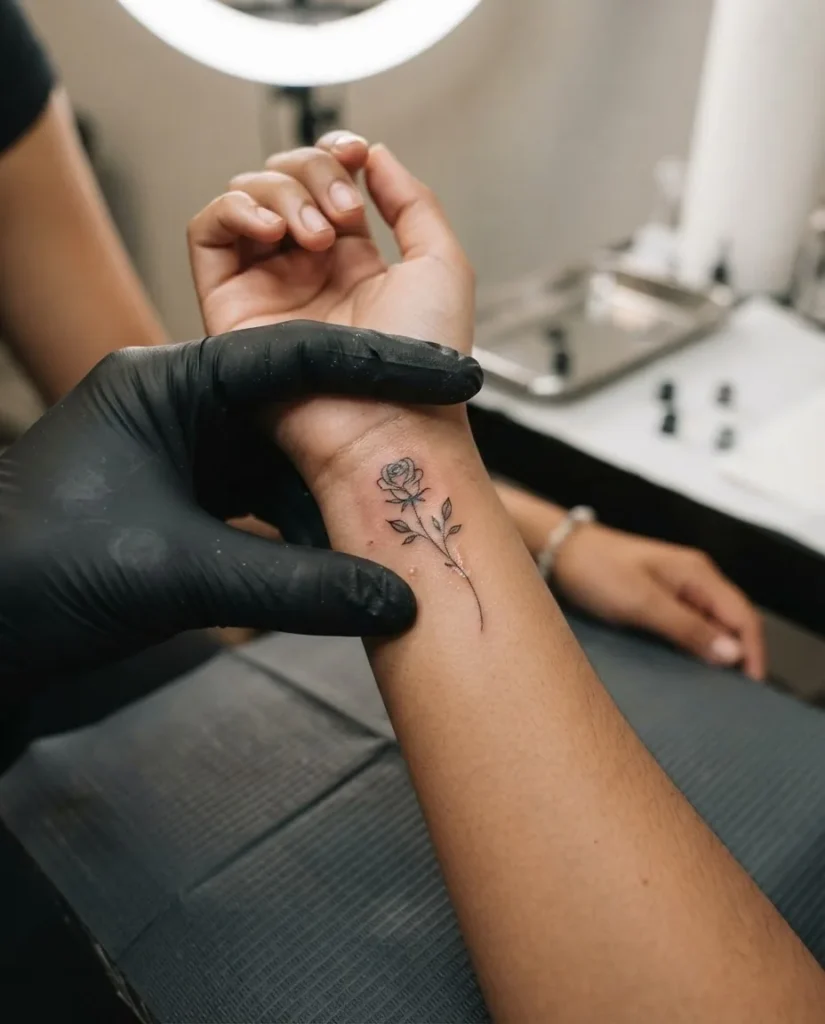
They are elegant, endlessly personal, and versatile enough to stand alone or eventually become part of a larger collection. The fine-line style uses very thin, precise linework that reads as refined and understated.
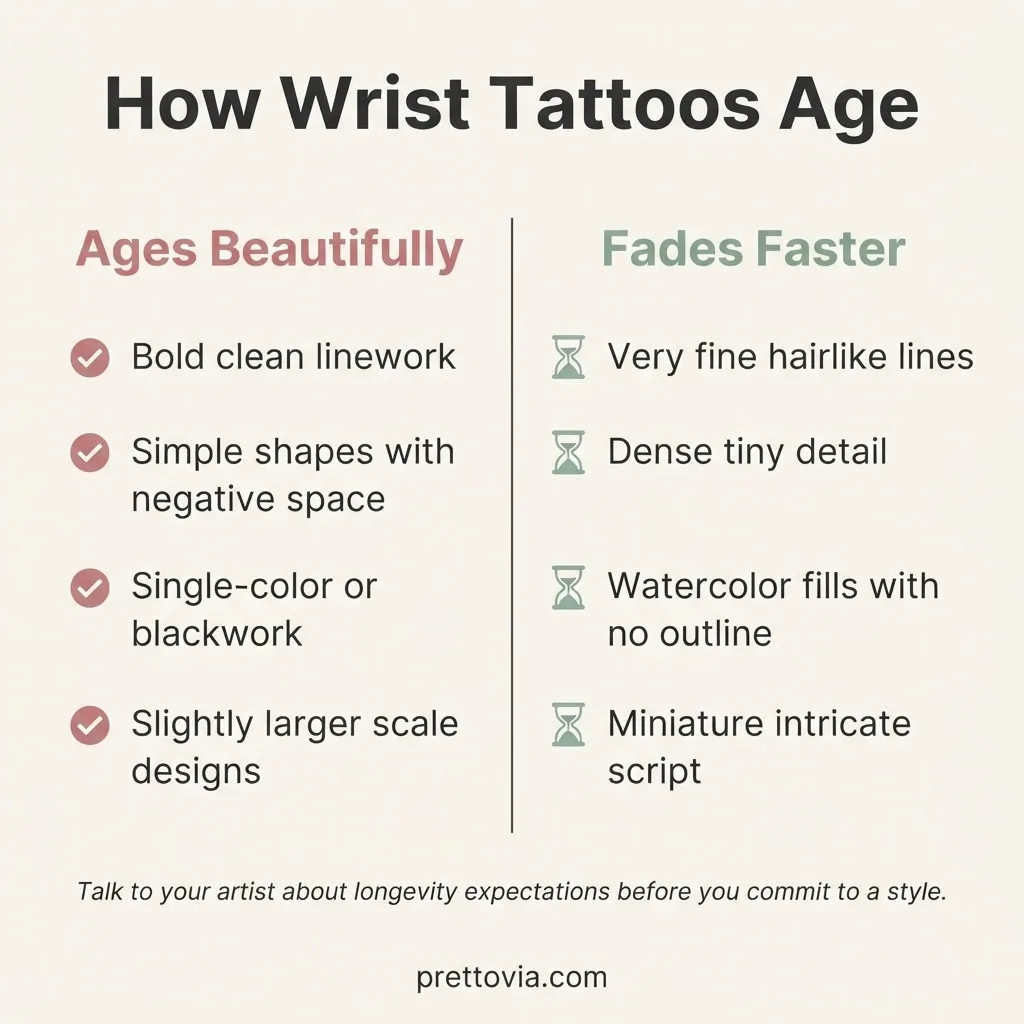
One honest note: fine-line tattoos, especially very intricate or densely packed ones, require a skilled artist who specializes in this style and require diligent aftercare, because thin lines are more susceptible to fading and spreading over time than bolder work. A good artist who specializes in fine-line will tell you exactly what to expect about longevity.
Ask them directly.
2. Minimalist Word or Phrase
A single word, a short phrase, or even a name in clean, simple lettering is a timeless wrist choice.
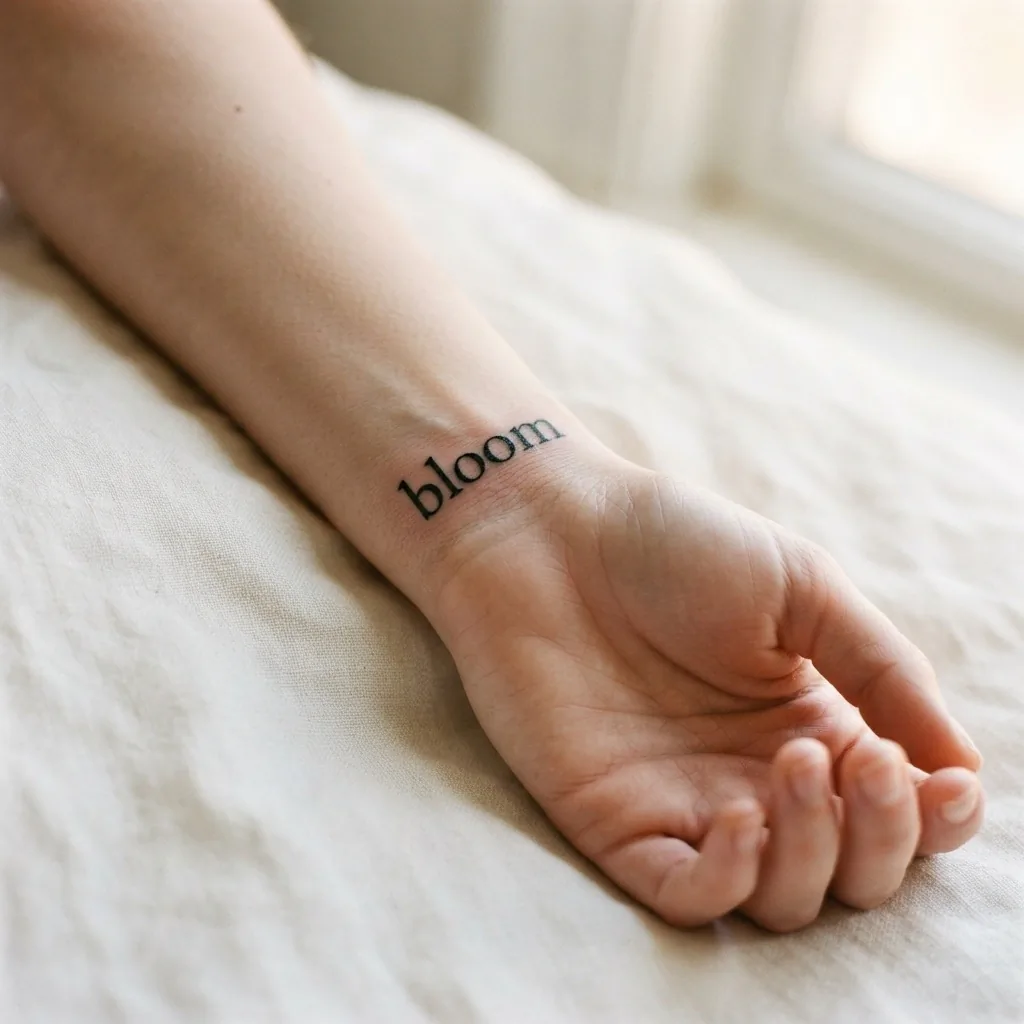
This is the style I see most on people who want their tattoo to serve as a daily reminder: a value they want to carry with them, a loved one’s name, a word in another language that carries personal weight. Script tattoos on the wrist work best when the lettering is not too small or too thin, because very tiny script can lose its readability as the skin changes over time. A slightly bolder, cleaner font will hold better for longer.
3. Celestial and Astronomical Motifs
Stars, crescent moons, constellations, small planets, and sun symbols have been a consistent favorite for wrist placement. They suit the wrist canvas beautifully because they tend to be small, self-contained, and deeply symbolic without needing to be literal. A tiny constellation that represents your birth month, a crescent moon that carries personal meaning, or a simple cluster of stars as a nod to something you love about the night sky are all quiet, meaningful choices that age well in a simple style.
Tattoos have served as symbols of meaning and identity across cultures for thousands of years. Smithsonian Magazine’s comprehensive history of tattooing traces the art form back over five millennia, noting that ancient cultures used marking to signify status, protection, devotion, and deeply personal milestones. A celestial tattoo sits in a long tradition of people using their skin to mark what they love and what they believe.
4. Birth Flower
Birth flower tattoos have moved from a niche request to one of the most consistently popular choices at studios, and the wrist is their natural home. Each month has an associated flower: January is carnation, February is violet, March is daffodil, April is daisy, May is lily of the valley, June is rose, July is larkspur, August is poppy, September is aster, October is marigold, November is chrysanthemum, and December is narcissus or holly, depending on the tradition. A birth flower can be your own or a loved one’s, and two flowers together can represent a relationship in a way that feels personal without being literal.
5. Geometric and Sacred Geometry
Clean geometric shapes, triangles, circles, mandalas, and minimalist sacred geometry patterns translate remarkably well to the wrist because the flat, linear nature of geometric work suits a narrow canvas. These designs tend to hold their lines well over time if done with confident, slightly bolder strokes rather than extremely hairlike lines. If symmetry and precision matter to you aesthetically, geometry delivers it in a satisfying way.
6. Small Animal or Bird
A small, meaningful creature can carry a world of personal symbolism. A hummingbird, a butterfly, a swallow, a dragonfly, a tiny bee, a moth, a koi: these designs are consistently beautiful on the wrist when an artist scales and simplifies them appropriately for the placement. Very detailed realism in a tiny wrist tattoo tends to blur over time, so the best approach for small animals is a clean, stylized rendering rather than photorealistic complexity.
7. Watercolor-Inspired
Soft washes of color that mimic the look of watercolor painting are visually striking and uniquely feminine in feel. A watercolor tattoo on the wrist can look like a splash of blossoms, an abstract color field, or a dreamy celestial scene. It is worth knowing that watercolor-style tattoos, because they typically use lighter ink saturation and less defined outlines, tend to fade and shift in appearance faster than bold-line or blackwork pieces. This is not a reason to avoid the style if you love it, but it is something to discuss honestly with your artist before you commit.
8. Wave or Nature-Inspired Line Art
A simple, continuous-line wave, a mountain range rendered in a single unbroken stroke, or a horizon line wrapping gently around the wrist can be quietly beautiful. These designs often photograph in a way that looks delicate and intentional. They suit people who feel connected to nature and prefer a tattoo that is more abstract than literal. When done in a clean, confident line rather than a very fine hairlike stroke, they hold up well.
9. Abstract Symbol or Personal Sigil
An infinity symbol, an arrow, a heartbeat line, an ampersand, a small anchor, a simple knot: abstract personal symbols remain popular on the wrist because they are compact, recognizable, and often carry a very specific story. The thing I always remind friends considering this route is that the most memorable symbol tattoos are the ones where the person can tell you exactly what it means to them. The design can be simple. The meaning can be layered.
10. Portrait of a Plant or Flower in Full Bloom
Different from a small minimalist botanical, this style features a single flower, a peony, a sunflower, a wildflower, a hibiscus, rendered with slightly more detail and presence. It can sit on the inner wrist as the central image or work its way up toward the forearm. This placement works best when the artist scales the design carefully to fit without crowding. Ask to see your artist’s stencil before the session begins so you can confirm the sizing feels right to you.
How Wrist Tattoos Age: What to Know Before You Choose Your Style
This is the conversation I wish someone had with me before my first appointments, and it is the one I have the most often with friends considering their own ink. Permanence is the whole point of a tattoo, but permanence works differently depending on placement and style.
The wrist is a challenging area for longevity for a few honest reasons. It flexes constantly, it is usually one of the first places the sun touches when you go outside, and the skin is relatively thin and close to the surface. All of this means that wrist tattoos, especially very fine or detailed ones, will likely show fading sooner than tattoos placed on your upper arm, thigh, or torso.
What ages best on the wrist: bold, clean lines; simple designs with clear negative space; blackwork and single-color pieces; designs that are not overly complex or miniaturized. What tends to fade and blur more quickly: very fine hairlike lines, very tiny intricate detail, soft watercolor fills with minimal outline, and densely packed small lettering. This does not mean you cannot have any of those things, it just means you should discuss the long-term honestly with your artist and ask about touch-up timelines and expectations.
The other thing worth knowing is that the wrist is more exposed to UV rays than nearly any tattoo location, and sun exposure is one of the biggest drivers of fading. Protecting your healed tattoo with sunscreen consistently makes a real difference over time.
A Realistic Look at Pain, Cost, and Healing
Pain on the wrist varies from person to person, and the honest answer is that it falls somewhere in the moderate-to-notable range for most people. The inner wrist near the palm and the outer wrist over the bone tend to be the spiciest spots. The sides and mid-wrist are generally easier. A small, simple design on the wrist is a relatively short session, which means even if the sensation is uncomfortable, it passes quickly. Most people are surprised by how manageable it is when they know what to expect.
For cost, wrist tattoos in the US typically range from around $75 to $300 for a small to medium piece, depending on complexity, detail, and the artist’s rate. Most professional studios also charge a minimum, commonly in the $50 to $100 range, for any session regardless of size. This is worth knowing so you are not caught off guard. A highly specialized fine-line artist in a major city may have higher rates and a longer waitlist, both of which are generally signs you are in the right place.
Healing on the wrist takes some extra thought because the area moves so much. The outer surface typically settles within 2 to 4 weeks, but the deeper layers of skin continue healing for closer to 3 to 6 months. During the initial weeks, you will want to keep the area clean, moisturized with what your artist recommends, and protected from direct sun exposure. The American Academy of Dermatology’s guidance on caring for tattooed skin is a solid reference point, though your artist’s specific aftercare instructions should always be your primary guide. If you notice anything beyond normal healing, such as spreading redness, swelling that worsens rather than improves, discharge, or fever, reach out to a healthcare professional rather than waiting it out.
The Safety Conversation: Why Your Artist’s Studio Matters
This is the part where I want you to stay with me for a moment, because it is genuinely important and not something to gloss over in the excitement of planning a design.
Tattooing involves piercing the skin, and that means the studio environment, the artist’s hygiene practices, and the quality of the materials they use all directly affect your health. The FDA, which oversees tattoo inks as cosmetics, has published clear guidance on tattoo safety, noting that infections have been linked both to unsanitary practices and to contaminated inks, including inks in sealed containers that appeared sterile. Allergic reactions to ink pigments are also a real possibility and can emerge right after getting a tattoo or even years later.
None of this is meant to frighten you. It is meant to make the case for what I genuinely believe: a licensed, reputable professional in a clean, inspected studio is not optional. It is the whole baseline. When I have gone with friends to scout studios, we always look for visible licensing and health certificates posted in the studio, sealed single-use equipment, a clean and organized space, and an artist who is wearing gloves and taking hygiene seriously without you having to ask. A professional who practices proper standards is proud to show you they do.
Research on bloodborne pathogen compliance in body art studios has found that not all studios meet infection control standards consistently, which is why going with a licensed, inspected professional matters beyond just the quality of the artwork. Do not let a low price or a very fast availability be the deciding factor. Your skin and health are the deciding factors.
How to Find the Right Artist for Your Wrist Tattoo
Finding the right artist for your specific idea is one of the most important steps, and it is also one I find genuinely fun. Here is how I think about it.
Start with style, not geography. If you want a fine-line botanical piece, search specifically for fine-line tattoo artists in your region on Instagram or Google. Look for someone whose portfolio is full of the kind of work you want, not someone who does everything and occasionally does fine-line. Artists who specialize are almost always a better fit for a style-specific piece.
When you find a few who excite you, look at their healed work, not just fresh tattoos. A fresh tattoo on anyone looks sharp. A healed tattoo tells you how the artist’s linework holds up over time and whether their fine lines stay crisp or blur into softness. Many artists post healed photos specifically because it demonstrates the quality of their work long-term.
Then book a consultation.

A consultation is not just a courtesy, it is the moment where you confirm the artist understands your vision and you confirm their approach aligns with what you want. Bring reference images, at least three to five that capture different aspects of what you are drawn to. Tell the artist what you love about each one and what, if anything, you want to be different. Ask to see examples of their wrist work specifically. Ask how they approach sizing for the wrist and what they recommend given your skin tone and the style you want. Ask about their aftercare instructions so you can plan ahead.
A good artist will have honest answers and will not rush you. An artist who pressures you to book immediately or dismisses your reference images without explanation is not the right fit for this piece. You have every right to consult with more than one artist before deciding.
Sizing Reality Check: What Actually Fits on a Wrist
This is something a lot of inspiration galleries skip entirely, and it leads to real disappointment. A design that looks perfect on a phone screen at a certain size may not translate to the dimensions of a wrist. The inner wrist canvas is roughly one to two inches wide depending on the person, which means very detailed designs with a lot of elements often need to be simplified or scaled up to remain legible.
The most common sizing mistake is going too small. A tattoo that is too small for its level of detail can blur together as it heals and ages, turning a crisp design into a muddy shape within a few years. A good licensed artist will flag this during your consultation and suggest appropriate sizing. Trust their professional judgment on this: they see the long-term outcomes of their work in a way that Instagram images do not always show.
If you are nervous about size commitment, you can ask the artist to apply the stencil before beginning and take a look in the mirror. Most professional artists do this as a standard step. It is a completely normal thing to ask for.
Can You Cover a Wrist Tattoo for Work?
This comes up constantly, and the honest answer is: it depends on the placement, the size, and your workplace culture, but a wrist tattoo is among the more coverable placement options. A long sleeve shirt, blazer, or cardigan covers inner and outer wrist placements completely. A wider cuff watch or bracelet can cover a small inner wrist piece in situations where you need something more casual but still want coverage.
It is worth thinking about this before you commit to placement and sizing, especially if you work in a field with stricter professional appearance standards. A side wrist placement tends to be slightly easier to cover than a piece centered on the inner wrist. This is a practical conversation worth having with yourself before your consultation.
Before Your Appointment: A Simple Planning Checklist
Taking a few practical steps before your session makes the whole experience better, from the moment you sit down to the way your tattoo heals.
Confirm that your artist is licensed and that the studio is inspected and in good standing. You can often verify this through your state or local health department’s website or by asking the studio directly to show their license and certifications. Arrive to your appointment well-rested, well-fed (do not go in on an empty stomach), and well-hydrated. Wear or bring clothing that gives your artist easy, unrestricted access to your wrist. Avoid alcohol for at least 24 hours before your session, as alcohol thins the blood and can increase bleeding and discomfort. If you take any medications that thin the blood, discuss this with your artist beforehand, and consult your doctor if you have any questions. Bring your reference images on your phone, but also be open to your artist’s professional input on refinements that will serve the design better.
For aftercare, the AAD’s guidance on tattoo and piercing care is worth reading before your appointment so you know what to expect, but again, your artist’s specific instructions are your primary guide. If you notice anything during healing that concerns you, contact your artist and, if needed, a healthcare professional. Reactions, while not common, do happen, and addressing them early is always the right call.
A Final Word Before You Book
A wrist tattoo is a visible, personal, permanent thing, and treating the decision with the care it deserves is the whole point of good planning. The good news is that the planning itself, the dreaming, the pinning, the research, the consultation, is genuinely fun when you approach it with curiosity instead of anxiety.
You do not need to have every detail figured out before you talk to an artist. You just need a direction you feel confident about and a licensed professional you trust to help you refine it into something real. That combination, good information in, thoughtful collaboration with a professional artist, is how the best tattoos happen.
Take your time. Do your research. Walk into that studio ready. You have got this.