12 Fall Hair Color Ideas That Are Actually Doable at Home
Every fall, my Pinterest boards go absolutely feral. Moody coppers. Glossy espresso browns. That deep cherry cola shade that makes someone’s eyes look like they belong in a Renaissance painting. I save them all, and I know you do too.
But here’s what I also know, because I’ve been in this world long enough to have heard it a thousand times: saving a fall hair color idea and actually doing something about it are two very different things. There’s always a small voice that says “that’s gorgeous, but probably not for me” or “I’d have to bleach for that, right?” or “I’d mess it up at home.” That voice is lying to you, by the way. Not always, not completely, but mostly.
I spent years as a salon assistant in Austin watching colorists work on every hair type and texture imaginable, and what I learned is that there are fall shades for everyone, at every budget, at every skill level, and at every damage threshold. The key is just knowing which ones are which. So that’s exactly what we’re doing today. I’m breaking down 12 of the most gorgeous, trend-forward fall hair color ideas right now, with honest notes on difficulty, whether you can do them at home, what they cost at a salon versus DIY, and how to actually take care of the color once you’ve got it.
Let’s get into it.
Before Anything Else: The One Thing You Should Never Skip
I’m putting this at the very top because it’s the thing that gets skipped the most and causes the most problems. If you are using a permanent or semi-permanent hair dye at home, please do a patch test before you apply color to your full head. This is not just a box-side suggestion you can ignore. The FDA’s hair dye safety guidance notes that one of the most common dye ingredients, paraphenylenediamine (PPD), can cause allergic reactions, and people can develop sensitivities even after years of using the same product without issues. You can check out the FDA’s full hair dye safety checklist for the complete picture, but the short version is this: apply a small amount of mixed color behind your ear or on your inner elbow 48 hours before you dye. If you get itching, burning, redness, or swelling, do not use the product. Also, if you’ve bleached, relaxed, or permed your hair recently, wait at least 14 days before applying a new color service. Your hair and scalp need that recovery window.
Okay. Now the fun part.
The Warm Browns: Where Fall Actually Lives
1. Espresso Brunette
If there is one shade that defines fall 2025, it’s espresso brown. This is a deep, rich, almost-black brown with just enough warm undertone to keep it from looking flat. It’s the hair equivalent of a cashmere sweater. Unlike true jet black, espresso has dimension. It catches light.

It reads as intentional, not just dark.
The great news for anyone who is already a medium or dark brunette is that this shade is almost entirely achievable without bleach. You’re adding depth and richness, not lifting. For lighter-haired readers, this is a significant color change that stylists consistently recommend doing in-salon to avoid patchiness, especially if you have highlights or color-treated ends that might absorb differently. L’Oréal Professionnel describes the espresso brunette look beautifully and notes that the key to a good espresso result is consulting an experienced stylist to get the precise tone right, particularly when you want that warm, dimensional finish rather than a flat dark result. If you’re going darker from a lighter base at home, a level 3 or 4 brown box dye in a warm or neutral tone (not cool/ash, which can pull oddly depending on your starting color) is your starting point. Expect to do a strand test first.
Difficulty: Low for dark-to-medium brunettes, Moderate for lighter bases. Can I DIY it? Yes, if you’re just going slightly darker. See a colorist if you’re making a big jump from light to dark. Ballpark salon cost: $80 to $150 for an all-over color service.
2. Mocha Mousse Brown
Mocha mousse is espresso’s softer, dreamier cousin. Think of it as a medium brown with genuine warmth baked in, not chocolatey-dark, not golden, but exactly in between. This was one of the most-referenced tones heading into fall 2025 and it flatters an enormous range of skin tones, especially warm, medium, and olive complexions. It also wears beautifully on natural hair, 3B through 4A curl patterns included, where the warmth of the brown plays off natural undertones in a genuinely stunning way.
This is largely a go-darker or maintain-depth shade, which means it is highly beginner-friendly at home. Box dyes in a medium warm brown range (think level 4 to 5, labeled “warm” or “golden” brown rather than “cool” or “ash”) will get you close.
Difficulty: Low. Can I DIY it? Yes, confidently. Ballpark salon cost: $75 to $130 for all-over color.
3. Chestnut Brown
Chestnut is the perennial fall brunette shade that never actually goes anywhere, because it works. It sits lighter than espresso, with a distinctly reddish-warm base that evokes autumn leaves and is exactly as cozy as that sounds. What makes chestnut different from a flat brown is the subtle red undertone. In sunlight, it almost glows amber. Indoor light gives it depth and richness.
Chestnut is achievable with most level 4 to 5 warm brown dyes at the drugstore. L’Oréal Paris Excellence, Garnier Nutrisse, and Clairol Natural Instincts are names that reviewers consistently point to for reliable, warm-toned results. Look for shades described as “warm brown,” “golden brown,” or “chestnut” on the box. Avoid anything with “ash” in the name if warmth is your goal.
Difficulty: Low. Can I DIY it? Yes, very confidently. Ballpark salon cost: $75 to $120.
The Reds and Coppers: The Boldest Fall Moves
4. Cowboy Copper
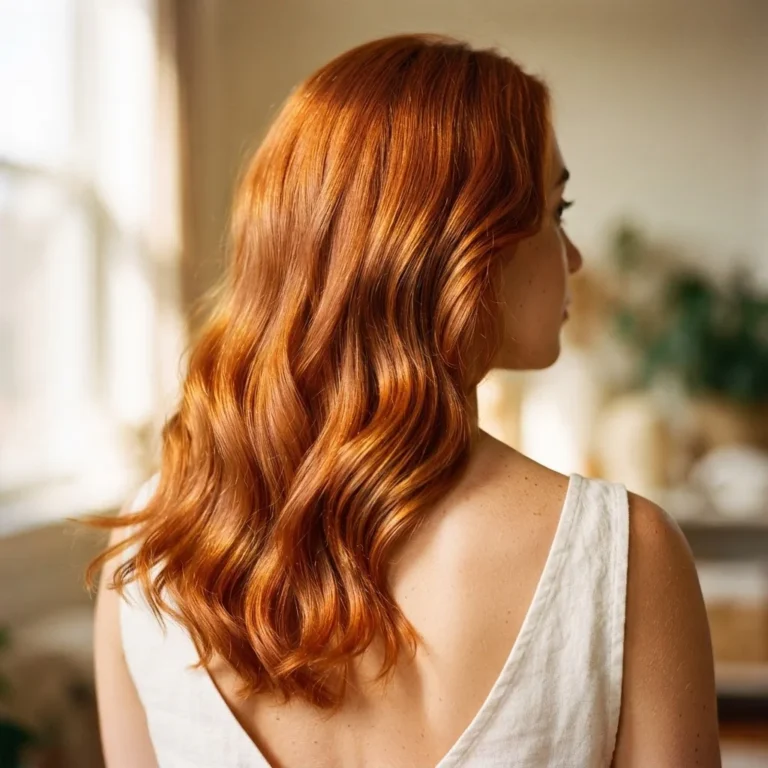
Cowboy copper is the fall trend that basically took over TikTok and Pinterest starting in late 2024 and refused to slow down through 2025. It’s a warm, medium-to-deep copper with Western-frontier energy, not the neon orange of a bad box-dye gone wrong, but a rich, burnished, dusty copper that reads as sophisticated and outdoorsy at the same time. Think Southwestern sunset, not traffic cone.
Getting this shade at home depends entirely on your starting point. If you’re already a medium to dark brunette, going copper requires some lightening first, which adds complexity. Garnier has a really clear breakdown of how to get cowboy copper at home step by step, including a note about doing a skin allergy test and applying on dry, unwashed hair for better uptake.
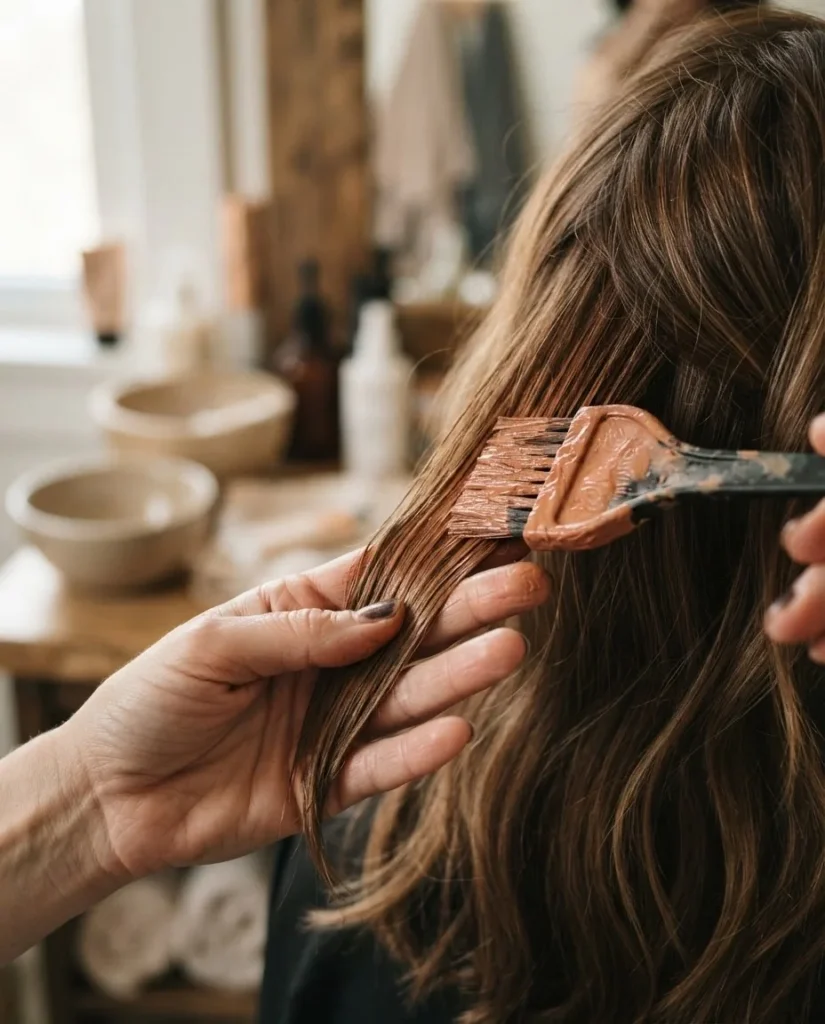
For lighter starting bases (level 6 and above), you can deposit copper tones more directly with a copper permanent dye or even a color-depositing conditioner for a semi-permanent version. The semi-permanent route is great for beginners because it fades gradually without harsh demarcation lines, so there’s no scary “grow-out regret.” For darker hair, stylists on forums and in editorial consistently recommend filling the hair with a light copper tone first before applying the darker copper, to prevent a muddy or uneven result.
Difficulty: Moderate for dark bases, Low to Moderate for medium bases. Can I DIY it? Conditionally yes. If you’re on a lighter base, go for it. Dark bases should seriously consider a salon first visit to get the lift right. Ballpark salon cost: $100 to $200 depending on lift and technique.
5. Cherry Cola
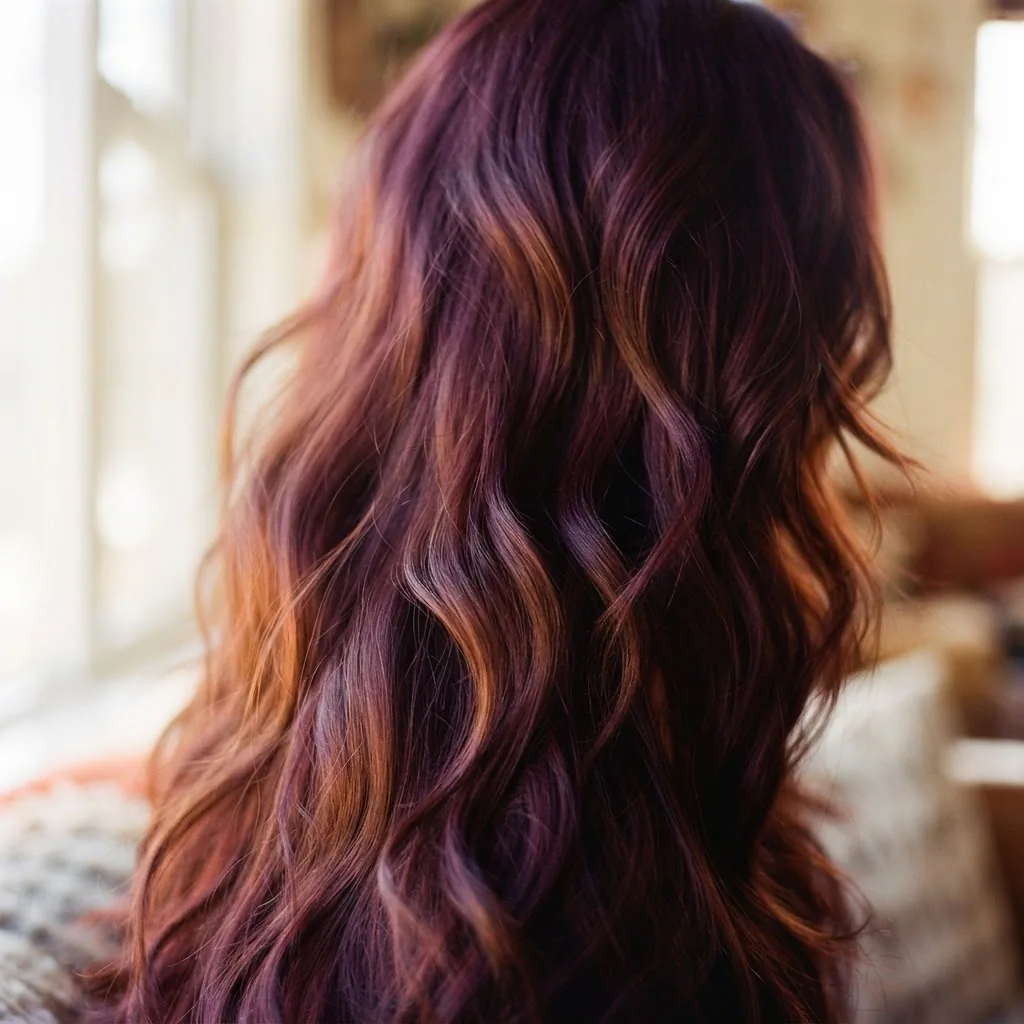
Cherry cola hair is exactly what it sounds like: a deep, glossy, cola-brown base with unmistakable cherry-red and violet undertones. It shows up in the light as a rich burgundy-red and in the shade it reads almost like a deep plum-brown. It’s moody, it’s romantic, and it is one of the most-pinned fall shades every single year because it photographs beautifully and flatters literally everyone.
The at-home version is more accessible than it looks. Garnier USA has a solid, detailed guide on how to achieve cherry cola hair color at home, including which products work on different base colors.

The general principle is this: cherry cola is built on a level 3 to 5 brown base with red and violet tones mixed in. On dark hair, you’re adding tonal depth. On medium hair, you’re layering burgundy-red warmth. On lighter hair, you can go in with a semi-permanent cherry-toned color for a softer effect. True cherry cola on very light or bleached hair does require real color commitment, so if you’re platinum or very light blonde, a consultation is worth it to get the tone balance right.
Difficulty: Low to Moderate. Can I DIY it? Yes, especially on dark and medium bases. Ballpark salon cost: $90 to $180.
6. Plum and Jewel-Tone Cabernet
If cherry cola is the warm, cozy version of fall red, plum and cabernet are the dramatic, evening-wear option. We’re talking deep violet-burgundies, wine-forward plums, and jewel-tone purples with just enough dark base to feel grounded rather than costume-like. Behind the Chair flagged this as one of the defining fall 2025 color directions: rich plum reds and jewel-tone cabernets with serious depth.
For naturally dark hair, this is a no-bleach zone, which is the biggest selling point. A semi-permanent violet-plum or a permanent dark burgundy shade deposits gorgeous jewel tones over dark hair with zero lift required. On medium hair, you might want to consider a semi-permanent first before committing to permanent, just to preview how the tone sits on your natural pigment. On light or bleached hair, the plum will be very vivid and very bold, which can be beautiful, but it’s a different look entirely.
Difficulty: Low for dark hair, Moderate for medium/light hair. Can I DIY it? Yes, especially if you’re embracing dark jewel tones over a dark base. Ballpark salon cost: $90 to $160 for all-over.
The Blondes and Multidimensional Looks: For When You Want Fall Without Going Dark
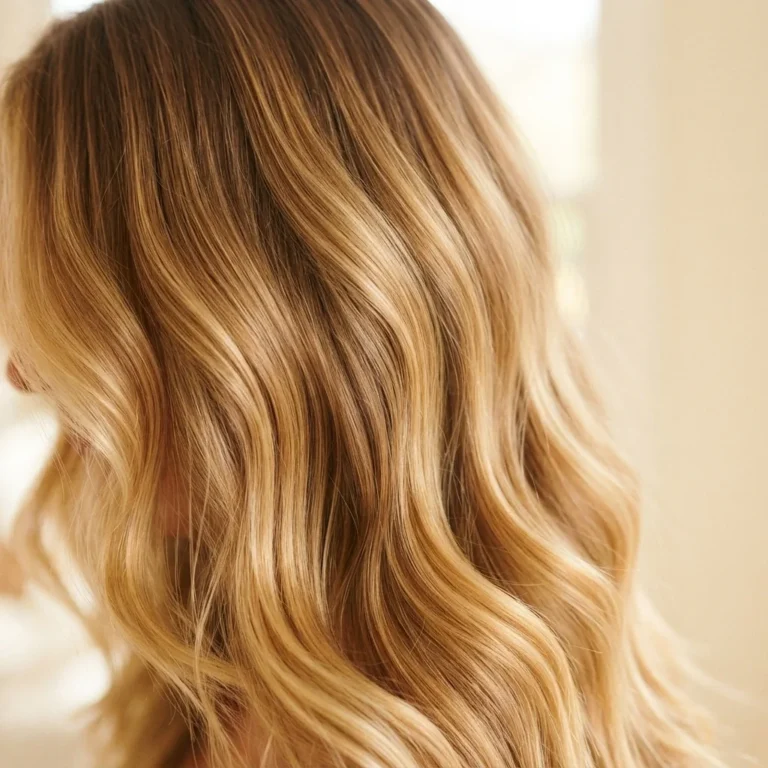
7. Caramel Balayage
Let me explain balayage really quickly because the word gets thrown around constantly and it genuinely confuses people. Balayage is a highlighting technique where color is painted freehand onto the hair surface rather than woven into foils. The result is softer, blended, and more natural-looking than traditional foil highlights because the color concentration is heavier at the ends and lighter near the roots. That “lived-in” grow-out that doesn’t leave a harsh line? That’s balayage.
Caramel balayage specifically means you’re adding warm, toffee-to-honey toned lightened pieces onto a brown base. It’s one of the most-requested fall looks in salons and with good reason. It’s flattering on every skin tone, it grows out gracefully, and it adds warmth and dimension without the commitment of an all-over color change. Wella Professionals describes caramel balayage as one of their top “lived-in” fall recommendations precisely for those low-maintenance reasons.

The honest word on at-home balayage: it’s technically doable with a balayage kit (several drugstore brands offer them) but the freehand technique takes practice and the results can be uneven if you’re new to it. I’d say: if you’ve never highlighted your hair before and you’re working with very dark hair, go to a salon the first time. If you have medium brown hair and you’ve done highlights before, a drugstore balayage kit with good instruction following can give you a really pretty result.
Difficulty: Moderate. This is the one on this list that benefits most from a professional first time. Can I DIY it? Conditionally. Medium brown bases, yes. Very dark or previously colored hair, start with a salon visit. Ballpark salon cost: $150 to $300 depending on hair length and technique.
8. Bronde: The Blonde-Brunette Blend
Bronde is not a vague middle ground, it’s an intentional blend of blonde and brunette tones that creates an expensive, sun-touched, like-you-were-born-with-it finish. It’s lower-maintenance than straight blonde because the dark roots are part of the look, not a problem. For fall 2025, the bronde direction is specifically monochromatic, meaning all the tones sit in the same warmth family rather than high-contrast. Soft, seamless, cozy.
Getting a true bronde generally involves some lightening, which puts this squarely in the “see a colorist if you can” category. At-home bronde kits exist, and they work best on medium brown to light brown starting hair. Very dark or natural black hair will need more lift than a box kit can provide safely.
Difficulty: Moderate to High. Can I DIY it? On lighter bases, yes. Dark bases really benefit from professional hands here. Ballpark salon cost: $175 to $350.
9. Butter Blonde
Butter blonde is the warm, creamy blonde that replaced platinum as fall’s cooler blonde option. Where platinum reads sharp and cool, butter blonde reads cozy and golden, like late-afternoon autumn light. It’s not brassy (the dreaded orange tone that’s the enemy of at-home blonde) and it’s not icy. It sits in a perfectly warm, muted middle.
This is a shade that generally requires either maintained blonde hair or a professional lightening session to land correctly. Trying to get butter blonde from dark brown at home is the exact kind of scenario where the “alarming shade of orange” I experienced in my college dorm bathroom becomes possible. I’m not saying that to scare you, I’m saying it because I’ve lived it and I want better for you. If your hair is level 7 (medium blonde) or lighter, you’re in great territory to tone toward butter blonde at home with a warm toner. Darker starting points need a colorist for the lift.
Difficulty: Low for existing blondes, High for dark bases. Can I DIY it? Only if you’re already in the blonde range. Ballpark salon cost: $200 to $400 for lift plus tone.
The Easy Wins: Low-Commitment Fall Color Upgrades
10. Cinnamon and Auburn Accents
Cinnamon and auburn are fall’s most wearable accent shades, meaning you don’t have to go all-in on a full color change to feel the fall energy. Cinnamon refers to warm, spiced red-brown highlights or a glaze over an existing brunette base that adds just a touch of red-warmth without making you a redhead. Auburn is a more pronounced red-brown that sits between copper and brown on the color wheel.
For brunettes who want to dip a toe into the copper/red territory without committing, a semi-permanent auburn rinse or a color-depositing conditioner in a warm copper-red shade is a genuinely brilliant starting point. Overtone, dpHUE, and Celeb Luxury are brands that reviewers consistently point to for at-home color-depositing products that add warmth and fade gradually without any of the chemical commitment of a permanent dye.
Difficulty: Low. Can I DIY it? Yes, very easily with semi-permanent or color-depositing options. Ballpark salon cost: $75 to $120 for a gloss or glaze.
11. Root Smudge
A root smudge is a technique where your colorist (or you) applies a slightly darker shade at the root and blends it down two to three inches into your existing color. The result looks intentional and dimensional, like your natural roots are part of the look rather than a grow-out problem. For fall, root smudging an espresso or dark mocha shade onto a balayage or highlighted base creates that perfect lived-in, cozy, autumnal feel.
This is a technique you can do at home with practice. Apply a shade one to two levels darker than your current mid-lengths to your roots, and use a brush or your fingertips to blend downward in a blurring motion. Watch one tutorial before you attempt it and do a strand test. The risk is applying too much or blending too low, which can darken the hair more than intended.
Difficulty: Low to Moderate. Can I DIY it? Yes, with patience. Ballpark salon cost: $60 to $120 as an add-on.
12. At-Home Gloss Treatment
The most beginner-friendly move on this entire list. A hair gloss is a semi-permanent treatment that adds shine, refreshes your tone, and makes any shade look more intentional and salon-finished. Think of it as a clear coat for your hair color. Redken describes a hair gloss as a semi-permanent or demi-permanent color service that enhances tone, adds shine, and improves overall hair condition. At the salon, it’s often called a gloss or glaze and is typically added at the end of a color appointment to seal the deal. At home, drugstore and mid-range brands like Garnier Nutrisse Color Reviver, John Frieda Colour Refreshing Gloss, and Kristin Ess Hair Gloss all get strong reviews for delivering real shine and tone correction without the commitment of a permanent dye.
A clear gloss on any base will add shine and smoothness. A tinted gloss (warm brown, copper, auburn) will gently refresh your tone and add warmth. This is the move I’d recommend as a starting point for anyone who is nervous about committing to a full color change. Try a gloss first. Get comfortable with the process. Work your way up.
Difficulty: Very Low. Genuinely beginner-friendly. Can I DIY it? 100% yes. Ballpark salon cost: $60 to $100 as a standalone service.
How to Keep Your Fall Hair Color Looking Good
All the effort in the world getting a color means nothing if it fades or brasses out after two weeks. Here’s what actually helps.
Switch to a color-safe shampoo the day after you dye. Regular shampoos with sulfates strip color faster than anything else. Color-safe or sulfate-free options are widely available at the drugstore (Pureology, Joico, and OGX all have strong options across price ranges) and they make a real difference in how long your color holds.
Also, the AAD’s coloring and perming tips guidance is genuinely helpful here: they note that adding time between touch-ups, especially when the air is dry, helps minimize cumulative damage to color-treated hair, and they recommend protective measures like wearing UV protection on your hair in the sun (yes, the sun fades color) and limiting heat styling.
Wash your hair in cool to lukewarm water, not hot. Hot water opens the cuticle and lets pigment escape faster. Use a weekly deep conditioning mask or bond-repair treatment if your hair went through any lifting process. Color-depositing conditioners in your shade family are a brilliant way to refresh warmth between appointments, especially for coppers and reds, which are the first to fade.
Quick Guide: Which Shades Don’t Require Bleach
Since this comes up so much and it matters a lot for anyone with dark or natural hair, here is a fast reference.
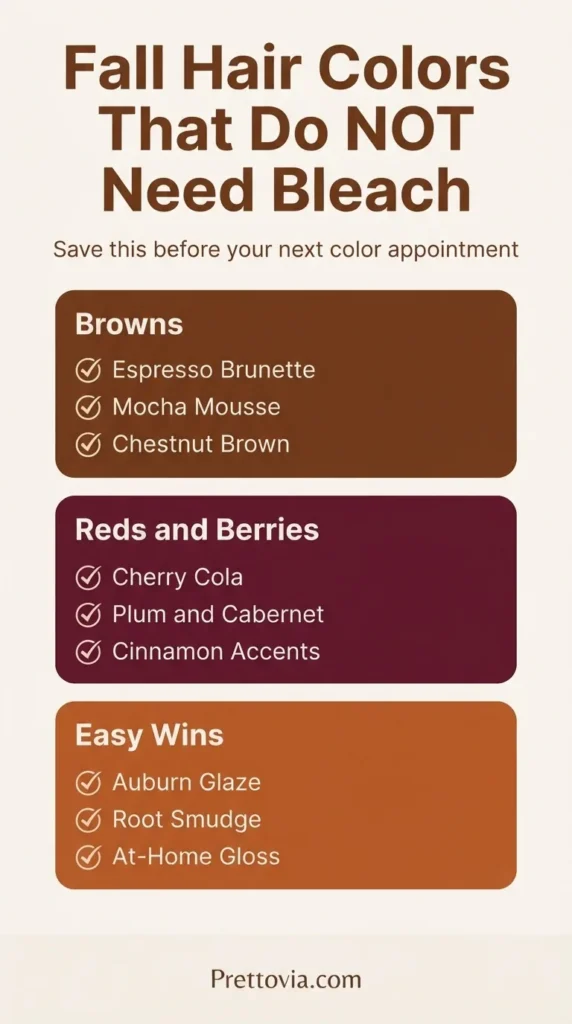
Espresso brunette, mocha mousse, chestnut brown, cherry cola, plum/jewel cabernet, cinnamon accents, auburn glaze, root smudge, and at-home gloss all work on dark hair without lifting or bleaching first. Cowboy copper on very dark hair typically needs some lift to show properly. Caramel balayage, bronde, and butter blonde all involve some degree of lightening, which generally means a professional hand is worth it the first time. You know your hair and your comfort level best. When in doubt, go semi-permanent first. It’s the kindest thing you can do for your hair on a first color experiment.
You Are More Ready Than You Think
Here’s what I want you to take away from this: fall is genuinely one of the easiest times to experiment with hair color, because the trend palette is all warmth, depth, and richness. It’s forgiving. Going a little darker or adding a little warmth is almost always flattering, and the low-commitment options (glosses, color-depositing conditioners, semi-permanent rinses) give you a real on-ramp to the look without the full chemical commitment.
Pick the idea that makes you feel the most excited when you look at the pin. Then find it in the difficulty ratings above and start there. You’ve got this.