Collarbone Tattoo Ideas: Styles, Sizing, and What to Know First
The collarbone might be the most quietly powerful placement there is. It sits right at the edge of everyday visibility, close to your heart, following one of the most elegant natural curves on the human body. A delicate piece of fine-line botanicals along the clavicle. A single word in a script that only shows when you want it to. A scattering of tiny stars that trace the bone just so. I have had friends text me photos of collarbone tattoos from their Pinterest boards for years with the same message every time: “I want this. But I have so many questions.”
This post is for exactly that person. Whether you have been quietly building a board of collarbone inspiration for months or you just saw something on Instagram that made you stop scrolling, the best thing you can do right now is get informed before you get inked. That is always where I start, and that is what we’re doing here together.
Let’s talk about designs, placement decisions, sizing, pain expectations, how to choose an artist, and what to expect on appointment day. All of it.
Why the Collarbone Is Such a Special Spot
The clavicle has a few qualities that make it genuinely different from other tattoo placements. First, there is the curve itself. The collarbone does not lie flat. It arches, follows the shoulder, and connects differently on every body, which means a skilled artist has to think about how a design will read when it follows that natural line versus sitting more horizontally across it. Second, there is the visibility dynamic. Your collarbone tattoo can be completely hidden under a crew neck or a blouse collar, and then suddenly front and center in a V-neck, a sundress, or at the beach. That push-and-pull between private and public is part of what makes this placement so appealing to so many people.
Third, and this matters a lot for long-term happiness, the collarbone area does not tend to shift dramatically with weight fluctuation or the natural changes that come with aging, unlike the stomach or inner arm. The skin here is relatively stable, which is genuinely good news for the longevity of your design.
18 Collarbone Tattoo Ideas Worth Considering
These are not meant to be a list you copy wholesale. They are a starting point for finding your direction, a way to move from “I want something there” to “I want something like this, in this style, with this meaning.” Think of them as conversation starters with yourself before you walk into a consultation.
Fine-Line Florals
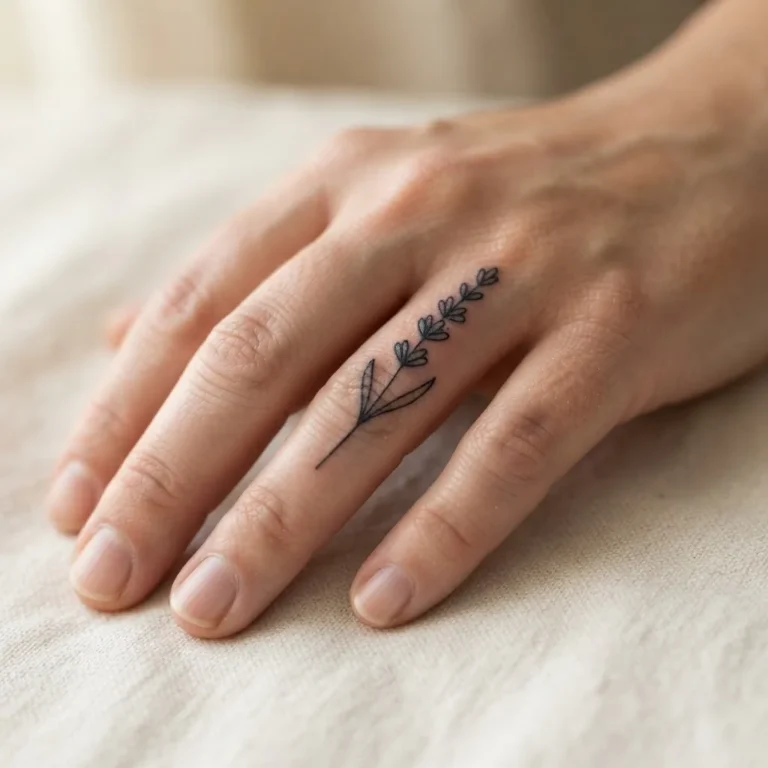
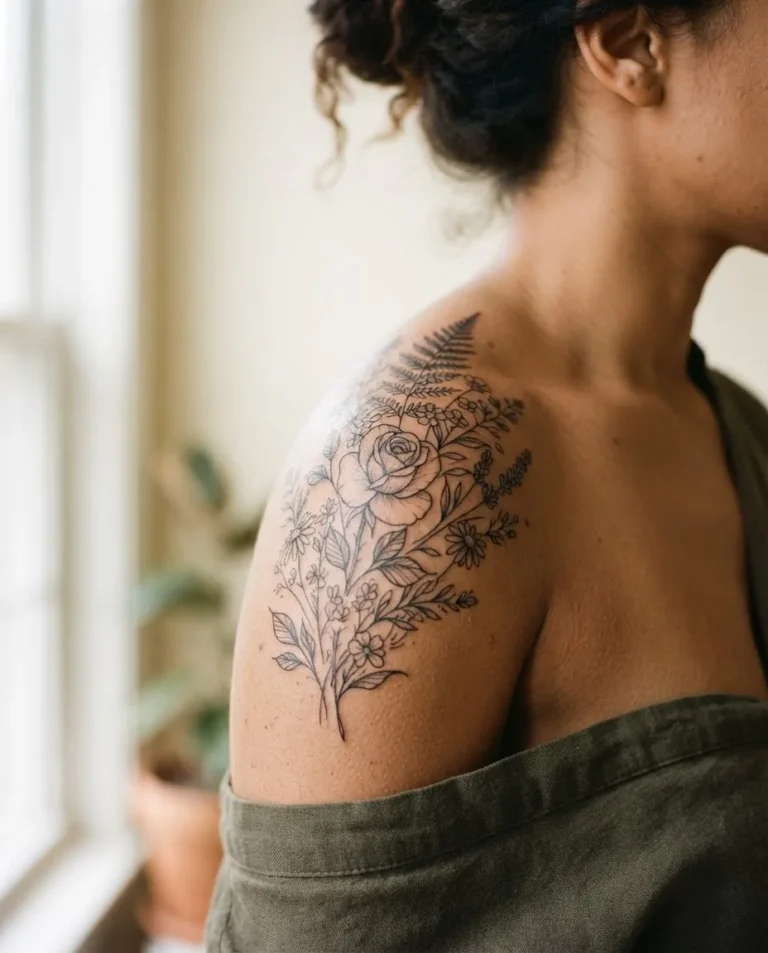
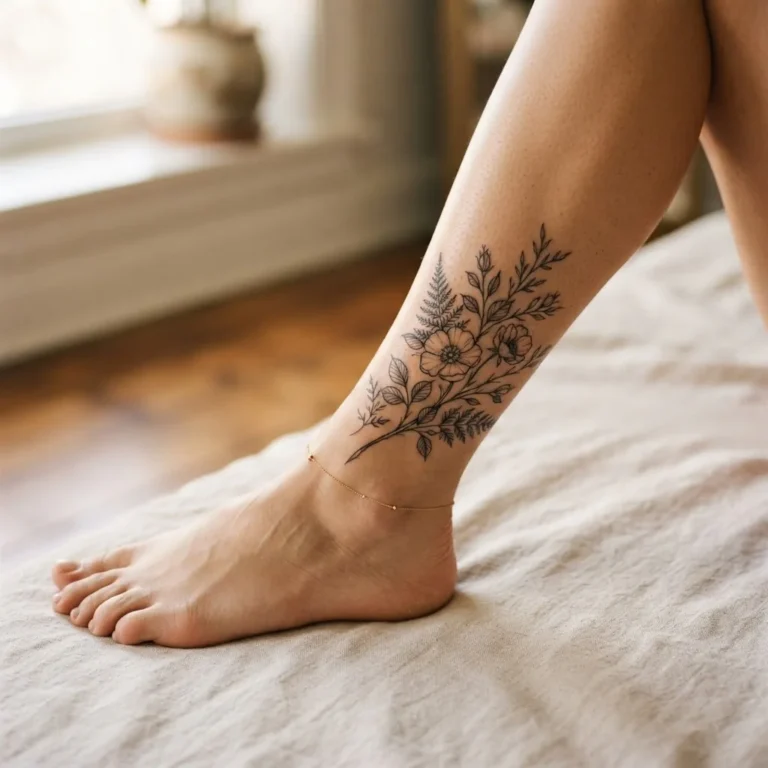
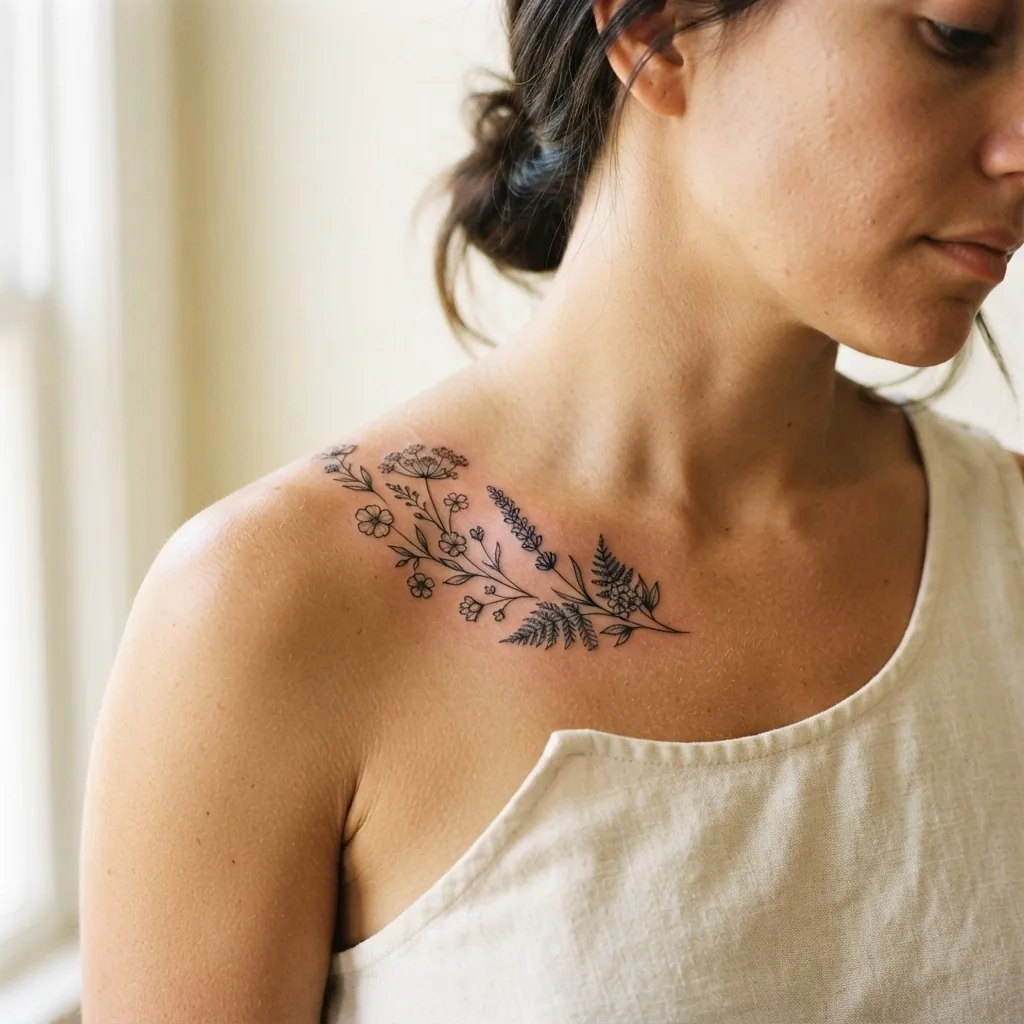
Fine-line floral work is currently one of the most requested styles for the collarbone, and for good reason. A single rose rendered in delicate, thin linework. A sprig of lavender. Wildflowers that seem to bloom along the curve of the bone. Fine-line designs suit the collarbone particularly well because the scale is naturally restrained and the elegance matches the placement. Artists who specialize in fine-line work use precision to create something that feels light and intentional rather than heavy.
One thing to discuss with your artist is how fine-line work ages over time. Very thin lines can soften and spread slightly as skin changes and as sun exposure occurs. Protecting a healed collarbone tattoo from UV rays consistently is genuinely important for maintaining the crispness of fine lines. More on that in the aftercare section.
Minimal Botanical and Vine Designs
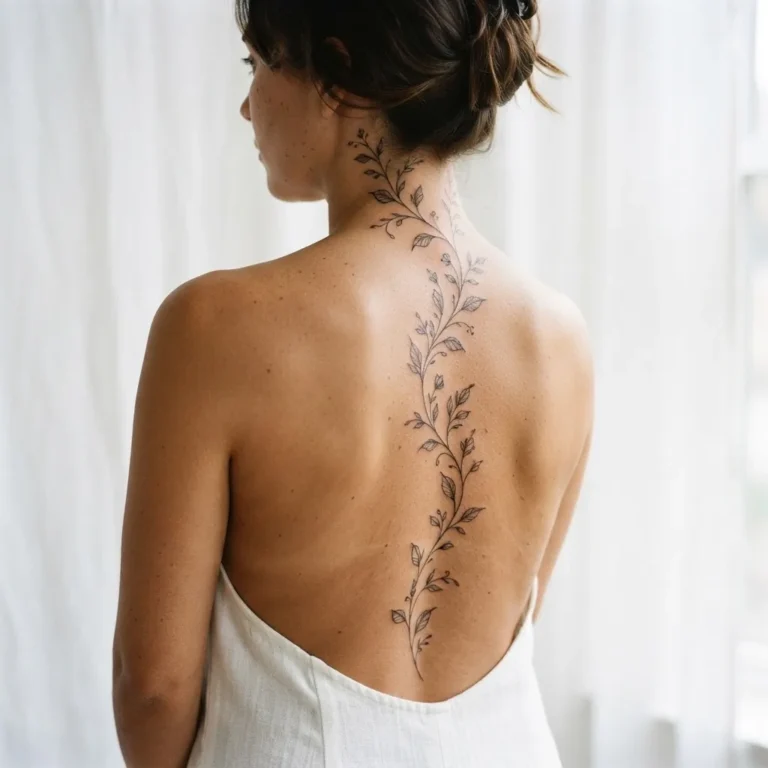
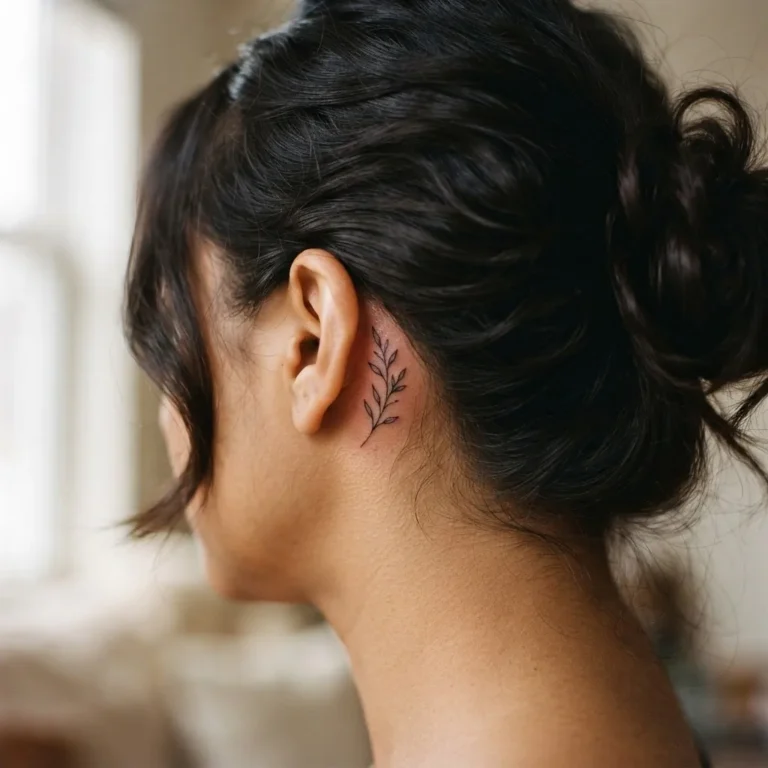
A thin trailing vine, a single eucalyptus branch, or a loose cluster of wildflowers that follows the natural curve of the collarbone makes for a design that feels organic rather than placed. These work beautifully because they have a built-in direction and can be scaled to follow your specific bone line, which makes the tattoo look like it belongs on your body rather than sitting on top of it.
Script and Lettering
A word, a phrase, a short line of poetry, a date in Roman numerals. Script along the collarbone is a classic for a reason. The challenge here is choosing a font that suits both the sentiment and the placement. Delicate serif fonts and light calligraphy read particularly well. One thing I always tell friends who want script: say the words out loud a few more times than you think you need to. You want to make sure the phrase still feels exactly right six months from now, not just on the day you decide.
Also worth knowing: highly detailed, tightly spaced lettering can blur slightly over the years as the ink settles into the skin. A good artist will advise you on spacing and sizing to help the text age gracefully.
Celestial and Moon Motifs
Crescent moons, constellations, tiny stars, a sun with fine rays, planetary rings. Celestial designs have real longevity in tattooing because they translate well to minimalist styles and tend to scale nicely along the clavicle. They also carry meaning that travels well. A constellation of your birth sign. The moon phase from a meaningful night. Stars that represent people you love. These feel personal without being so literal that their meaning becomes complicated to explain.
Butterfly and Moth Designs
Butterflies along the collarbone are having an enormous moment right now, and they genuinely work well for this placement because the symmetry of wings can echo the symmetry of the clavicle itself. Whether you want a single large butterfly centered on the sternum and reaching toward both collarbones, or a tiny minimalist butterfly sitting above the bone, the design translates. Moth designs bring a slightly moodier aesthetic and have their own rich symbolic history of transformation and following your own light.
Bird Motifs: Swallows, Sparrows, Cranes, and Swifts
Birds are one of the most meaningful and enduring choices for the collarbone placement, partly because of the symbolism and partly because the flight motion of a bird naturally echoes the upward sweep of the clavicle. Swallows have a centuries-long history in tattoo art, traditionally representing safe return and good fortune. Cranes carry associations with longevity, grace, and good luck across many East Asian traditions. Sparrows and swifts evoke freedom, resilience, and home. A pair of birds, one on each collarbone, reaching outward is a composition that artists love working with because it frames the chest beautifully. If you are curious about the deeper meanings behind different bird species, the team at Chronic Ink has a thorough breakdown of bird tattoo symbolism that is genuinely worth reading before your consultation.
Geometric and Sacred Geometry
Clean geometric forms, triangles, mandalas, minimal linework shapes, and sacred geometry patterns can look striking on the collarbone when sized thoughtfully. These suit someone who wants something more architectural and precise. The challenge with very intricate geometric designs on a curved surface is that they require an artist with strong technical precision to ensure lines read as clean and intentional. Bring this up directly in your consultation and ask to see examples of geometric work healed, not just freshly done.
Single Meaningful Symbols
Sometimes the most powerful collarbone tattoo is the simplest one. A small anchor. An arrow. An infinity loop. A tiny key. A single line of music. One meaningful symbol, placed deliberately, can carry enormous weight without competing with the natural elegance of the placement. These are also often more budget-friendly and faster to complete, which matters for anyone nervous about their first session.
Watercolor Style
Watercolor tattoos use soft, blended color without heavy black outlines to create something that looks almost painted on the skin. The collarbone can be a lovely canvas for a watercolor flower or abstract splash of color. One honest thing to know about watercolor style: without strong black linework anchoring the design, colors can fade more quickly than they would in traditional or neo-traditional styles. Talk to your artist honestly about this trade-off before committing. Some artists build in subtle linework to help the design hold up. A knowledgeable artist will be straight with you about what to expect over five and ten years.
Matching or Mirrored Bilateral Designs
Designs that span both collarbones, either as a single connected piece running across the chest or as two mirrored pieces, one on each side, are a beautiful and increasingly popular choice. Think two birds facing each other, symmetrical branches meeting in the center, or a line of text that curves along both bones. The composition challenge is ensuring balance, since most bodies are not perfectly symmetrical. This is a design that truly benefits from an in-person consultation where your artist can sketch directly on your skin with a marker before any ink touches you.
Abstract Line Art
Simple, flowing abstract linework, a single continuous line that traces the collarbone, an organic curve that follows the bone’s arc, or an expressionist brushstroke rendered in fine lines, can be quietly stunning. These designs photograph beautifully and feel modern and personal. They also tend to be relatively quick to complete.
Constellation Maps
A custom constellation map, the stars visible on a meaningful night or the arrangement of a zodiac sign, drawn precisely to scale and placed along the collarbone, is deeply personal. You can work with your artist to map it exactly. Apps and websites that generate star maps for specific dates and locations can give you something accurate to bring to your consultation as a reference.
Delicate Portrait Elements
Some people choose to incorporate a single delicate portrait element, a face in profile, a closed eye, a minimal hand, into a collarbone composition. These are advanced designs that require a highly skilled fine-line or blackwork artist. Research heavily before booking, and only choose an artist whose portfolio shows clear evidence of this specific style executed well.
Hummingbirds
Hummingbirds on the collarbone carry associations with joy, resilience, and the sweetness of small moments. They pair naturally with floral elements and can be rendered in fine-line blackwork or color depending on your preference. Their narrow, dynamic shape follows a curved placement beautifully.
Minimalist Animal Silhouettes
A tiny cat, a whale outline, a wolf in profile, a fox. Minimalist animal silhouettes in clean blackwork can be charming and personal on the collarbone. Size is the key conversation to have: most minimalist animals work best at two to four inches for this placement, small enough to feel intentional and not crowded, large enough to read clearly.
Snake and Serpent Designs
A serpent curving along the collarbone is a bold choice with deep symbolic roots, representing transformation, wisdom, rebirth, and duality across many cultures. Rendered in fine-line or blackwork, a snake design can follow the natural arch of the bone in a way that feels almost designed by the body itself. This is a statement piece rather than a quiet one, and it tends to look more intentional the more skillfully it is executed, so portfolio research matters a great deal here.
Sun and Solar Designs
A rising sun, a burst of rays, a fine-line solar circle. Solar imagery on the collarbone has a warmth and optimism to it that suits the placement. These also work well as centered designs sitting at the sternum and spreading outward toward both clavicles, or as a single small symbol on one side.
Wave and Nature Designs
A single clean wave, a mountain line, a rolling hill silhouette. Nature-inspired linework designs that echo a landscape can be minimal and deeply meaningful for people with a strong connection to a particular place or environment. A skyline of mountains from a home state. The outline of a coastline. These are the kind of tattoos that make people stop and ask about the story, and you’ll never get tired of telling it.
Thinking About Placement: On the Bone, Below It, or Spanning Both Sides
The phrase “collarbone tattoo” actually covers several distinct micro-placements, and understanding the difference helps you make a choice you’ll genuinely love.
A design placed directly on the clavicle, sitting right along the top of the bone, tends to be more prominent and follows the bone’s natural arc.
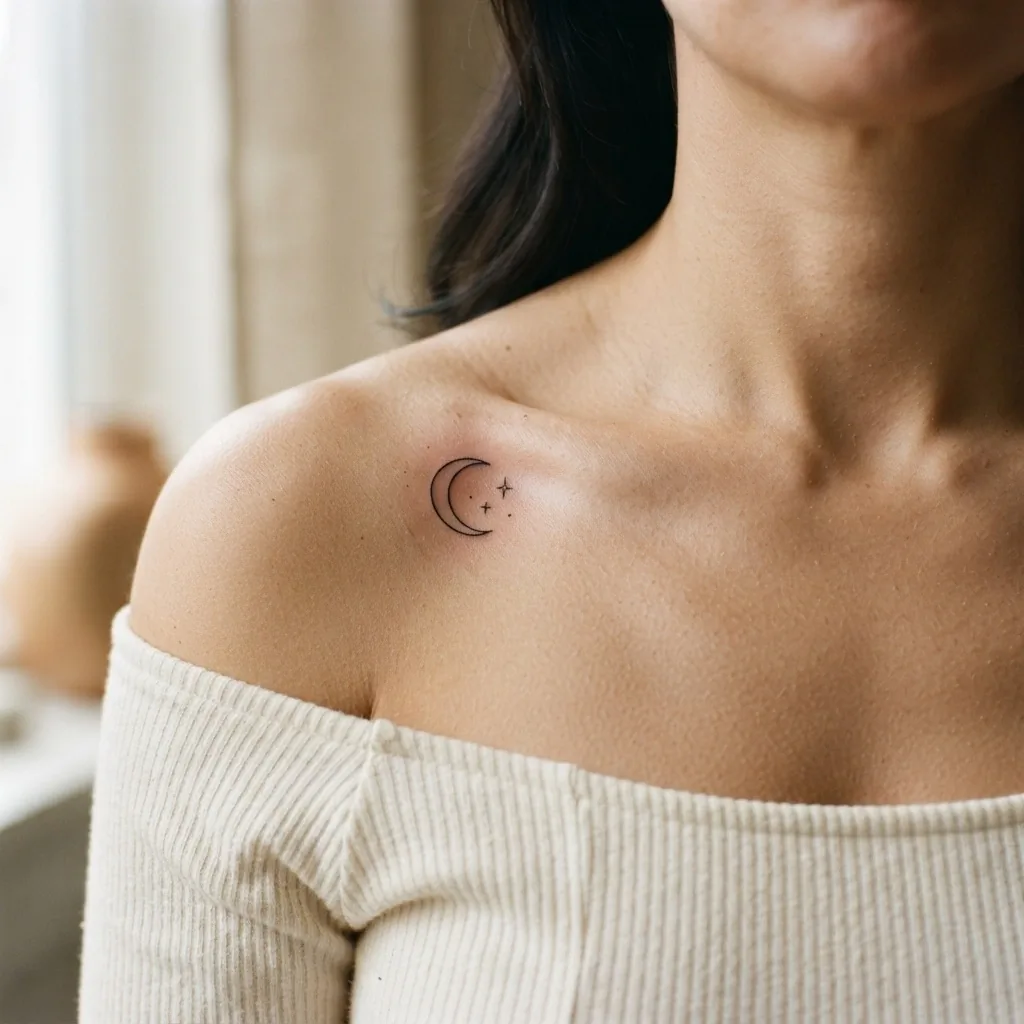
This is the placement that reads most clearly when you are wearing a scoop neck or off-shoulder top. A design placed slightly below the collarbone, on the upper chest area just beneath the bone, sits on slightly more padded skin and can sometimes hurt a little less in that specific spot, though this varies by individual.
A design centered on the sternum and extending toward one or both collarbones creates a different visual effect entirely. It frames the chest rather than accenting one side, and it tends to look more intentional as a standalone composition.
Asymmetric placement, just one collarbone, is by far the most common choice and is extremely versatile. Left or right is truly personal. Some people choose the side closest to their heart for sentimental reasons. Others choose based on which side photographs better or which sits closer to another existing piece they want to complement.
Talk through all of these options at your consultation. Bring reference images of placements you love, not just designs you love. The placement conversation is just as important as the design conversation.
Sizing: What Actually Works on the Collarbone
This is the question I hear most often, and the honest answer is that scale depends on your specific body, not just a general guideline. That said, most collarbone designs fall into one of three general ranges.
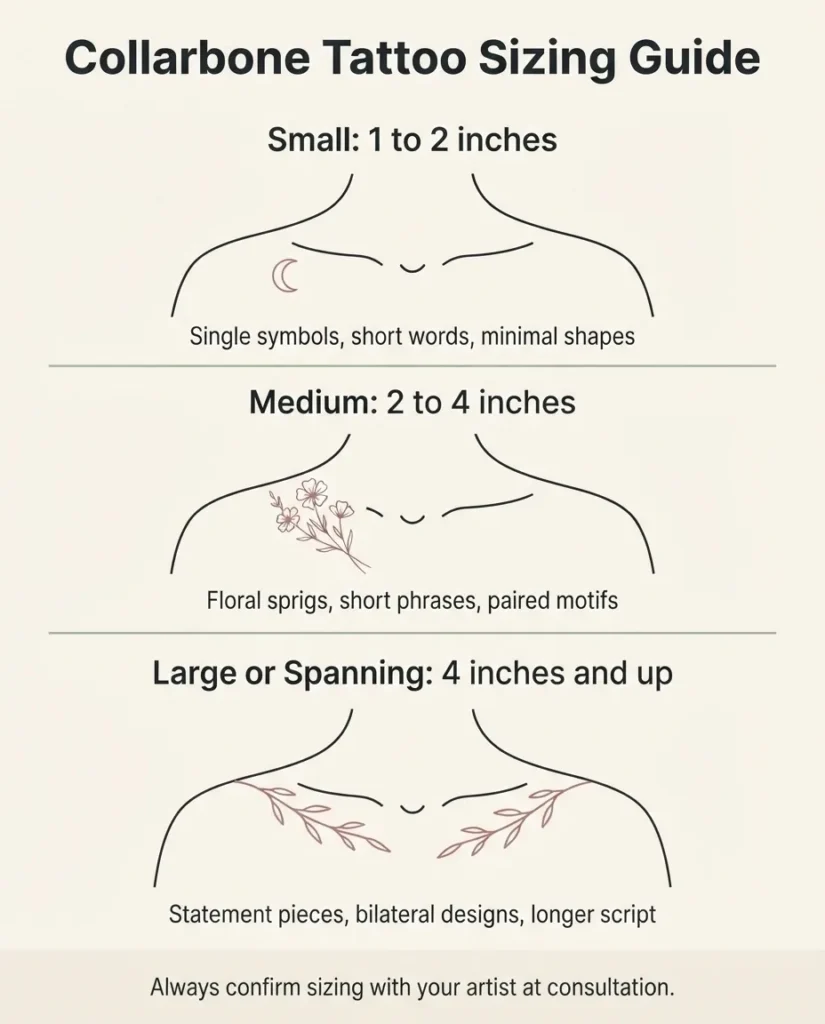
Small pieces, roughly one to two inches, work beautifully as single symbols, small birds, minimal moons, or short words. They feel intimate and personal. Medium pieces, roughly two to four inches, suit floral sprigs, short phrases, paired birds, or botanical designs with a little more detail. Large or spanning pieces, four inches and up across one or both collarbones, are statement pieces and require more planning, more session time, and an artist experienced with larger compositions on curved body areas.
One important sizing note: very small, highly detailed designs on the clavicle can lose clarity as they age and the lines soften slightly. Ask your artist to be honest about what level of detail is realistic at your desired size. A good artist will sometimes recommend going slightly larger than you planned to ensure the design holds its integrity over the years.
Pain: What to Actually Expect
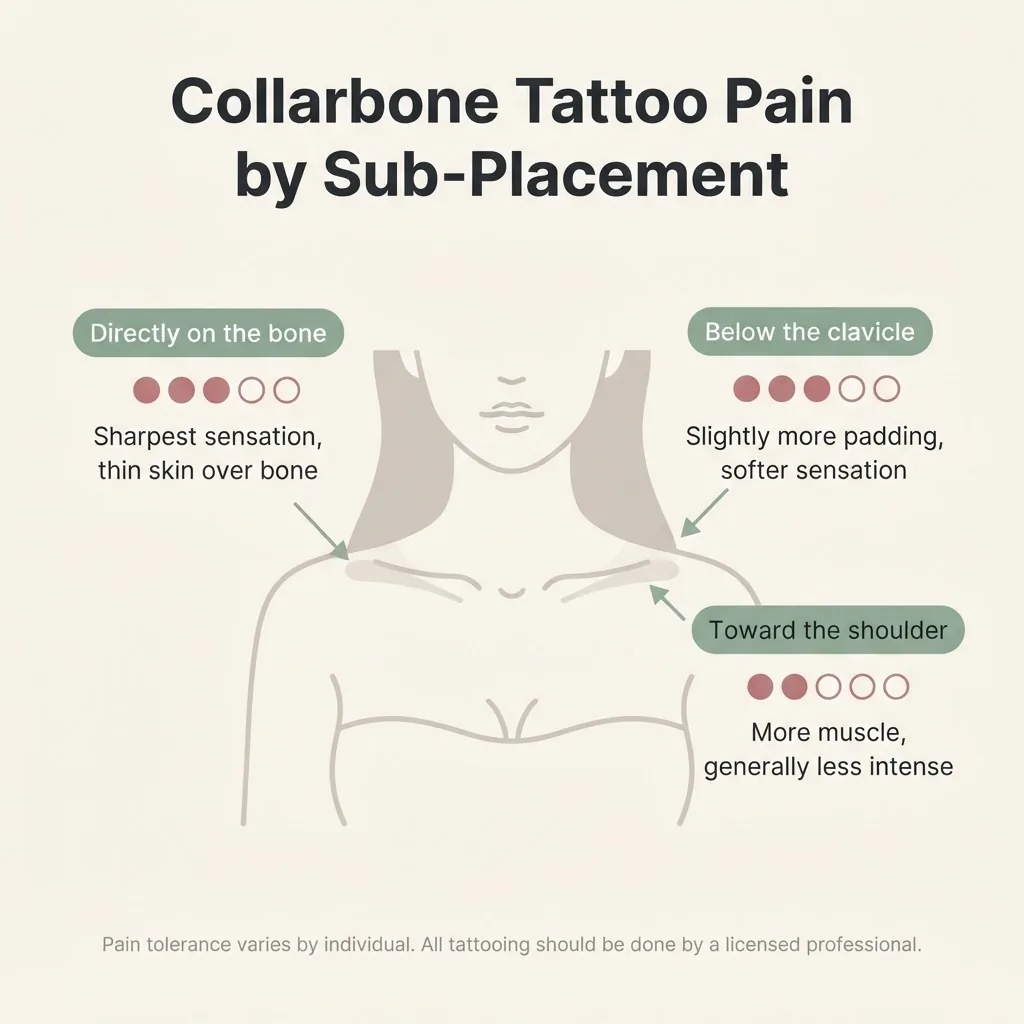
I am not going to tell you the collarbone is a walk in the park, because that would not be honest. The collarbone ranks among the more uncomfortable tattoo placements for most people, primarily because the skin is thin over the bone, there is not much padding, and the nerve proximity can make the sensation sharper than it would be on a fleshier area. Healthline’s medically reviewed pain chart ranks bony areas with thin skin, including the collarbone, among the higher-pain placements.
That said, a few things matter a great deal here. First, pain is deeply individual. People’s pain tolerance varies genuinely and significantly. Second, the sub-placement matters. Work that sits closer to the shoulder, where there is more muscle and padding, tends to feel less intense than work directly on the bone. Third, the style of tattooing affects the experience. Fine-line work with single-needle passes can feel different from heavier shading or color packing.
Most people describe collarbone tattoo pain as sharp and scratch-like rather than a dull ache.
Short sessions are your friend, especially for a first tattoo. A small to medium collarbone piece might take one to two hours, which is genuinely manageable for most people with good preparation. Eat a solid meal beforehand, stay well-hydrated, and don’t hesitate to take short breaks during the session if you need them. Any licensed artist worth booking will accommodate that without making you feel bad about it.
Ink, Pigment, and What You Should Know Before You Choose a Color
Color choices matter more on the collarbone than people sometimes realize, because this area gets more sun exposure than many other placements. If you are outdoors often, lighter and more vibrant colors, particularly whites, yellows, and certain reds, can fade noticeably faster than black and grey work without consistent, dedicated sun protection.
It is also worth knowing that not all tattoo ink pigments are created equal. The FDA’s consumer guidance on tattoo safety notes that pigments used in tattoo inks are subject to FDA oversight as cosmetics, and that they have received reports of allergic reactions to inks as well as contamination concerns. Certain pigments, particularly some reds and yellows, have a somewhat higher rate of allergic reaction than others. This does not mean you cannot or should not get a color tattoo. It means that choosing a licensed, reputable studio that uses high-quality, reputable inks matters genuinely and practically.
If you know you have sensitive skin, a history of allergic reactions, or any skin conditions like eczema or psoriasis, a conversation with your dermatologist before booking your appointment is a thoughtful step. The American Academy of Dermatology’s page on tattoo skin reactions is a genuinely useful resource for understanding what kinds of reactions can occur and when to seek care. These reactions are not common, but being informed means you will recognize the signs if anything unexpected happens during your healing process.
One more thing worth knowing if you have ever had an MRI or expect to need one: there is a small body of evidence, including a 2023 peer-reviewed study published in PMC, documenting rare cases of adverse sensations in tattooed skin during MRI scans. The risk is considered low, but it is worth mentioning to your MRI technician if you are scheduled for imaging. This is not a reason to avoid getting a collarbone tattoo. It is simply something to have in your information toolkit.
How to Find and Choose the Right Artist
This is where so many people rush, and it is the step that makes the biggest difference to whether you end up with a tattoo you love for decades.
Start with style. The collarbone is a placement that rewards specialization. If you want fine-line florals, you want an artist whose portfolio is full of fine-line florals, specifically healed examples. If you want bold blackwork, find someone whose blackwork is consistent and clean across multiple healed pieces. Looking at freshly done tattoos in a portfolio is informative, but healed photos tell you the real story of how the artist’s work holds up.
Look for licensed, regulated artists working in licensed studios. In the United States, tattoo artist licensing is regulated at the state level, not federally. Requirements vary by state, but in most states, artists must complete bloodborne pathogen certification, meet hygiene and sterilization standards, and operate in a licensed facility that is subject to health inspections. You can check licensing in many states through your state’s health department website. In Oregon, for example, the Oregon Health Authority’s Health Licensing Office maintains the database of licensed body art practitioners. If you are in another state, a quick search for your state plus “tattoo artist licensing” will show you where to verify.
When you find an artist you are interested in, look at their full body of work, not just their best five photos. Read reviews. Look at how they respond to inquiries and consultation requests. An artist who takes time to listen and asks questions about what you want is a better sign than one who seems impatient or dismissive of your uncertainty.
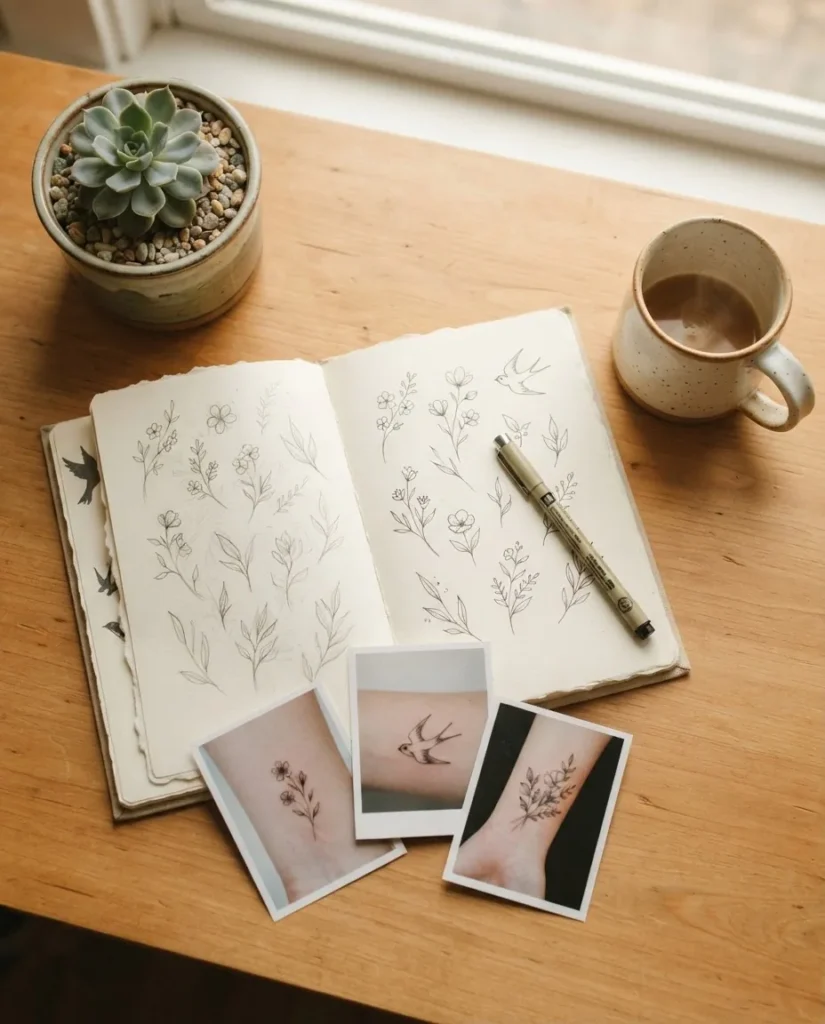
Book a consultation before you commit to a booking deposit. Most reputable artists offer consultations, either in person or via direct message with reference images. Use that conversation to ask everything you are wondering, how they would approach the curve of your specific clavicle, what size they recommend for your desired design, what the healing process looks like for this placement, and what their aftercare instructions are. A good artist loves a prepared client.
Questions to Ask Your Artist at the Consultation:
A few that I always tell friends to bring with them. How will this design follow the natural curve of my collarbone? What size do you recommend and why? Do you have healed examples of this style I can see? What is your aftercare protocol? What should I wear to my appointment? How do you handle touch-ups if something needs refreshing after healing?
What to Wear on Appointment Day
This is practical and genuinely matters. Wear something with a very low neckline, a scoop neck, a wide V-neck, or even a strapless or bandeau top, so your artist has easy access to the collarbone without asking you to hold your shirt awkwardly or remove it entirely. Wearing something comfortable helps you stay relaxed during the session. If you are self-conscious about the process, know that your artist is entirely focused on the work and not on anything else.
How Collarbone Tattoos Age Over Time
I want to be honest with you here rather than just inspiring. Collarbone tattoos can age beautifully when you make good choices from the beginning and take care of them afterward. The skin in that area is relatively stable compared to higher-movement zones, which is a genuine advantage.
What works against longevity: sun exposure (the collarbone is frequently exposed in summer), friction from certain necklines like tight turtlenecks or rough collars rubbing directly on the tattoo, and neglecting sun protection on a healed piece. Very fine lines can soften over time, and very small detailed designs can lose some crispness.
What helps: choosing a skilled artist who executes appropriate detail for the size, using SPF on your healed tattoo consistently when it will be in the sun, and committing to a touch-up if anything needs refreshing after a few years. Many artists include a touch-up in their pricing for exactly this reason, so ask about their policy upfront.
The Healing Process and General Aftercare
A collarbone tattoo heals along the same general timeline as most other placements. Surface healing, meaning the outer layer of skin looks and feels closed, typically takes around two to four weeks. The deeper layers of skin continue healing and settling for several months beyond that. Ink may appear slightly less vivid during healing, and then settle into its final depth as the skin fully recovers. Healthline’s guide to the tattoo healing process offers a clear, stage-by-stage overview of what to expect week by week.
For aftercare specifics, your artist’s instructions are your first and most important guide. Every artist has a protocol they trust, and you should follow theirs. General aftercare principles from dermatologists, like those outlined by the American Academy of Dermatology, include keeping the area clean with a gentle, fragrance-free cleanser, moisturizing with a water-based lotion when the skin feels dry, avoiding submersion in pools, hot tubs, or natural bodies of water during healing, and staying out of direct sun on the healing tattoo.
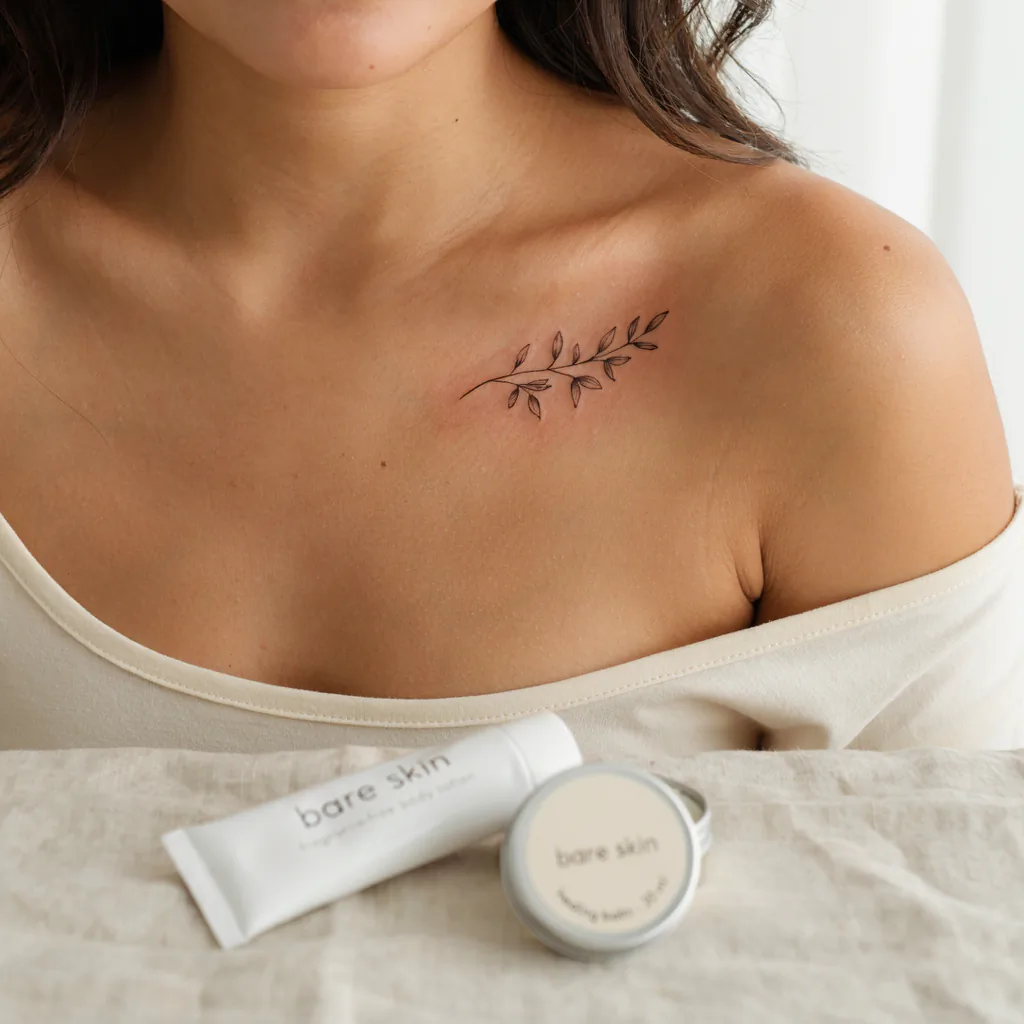
Note that the AAD also cautions against petroleum-based products like petroleum jelly on healing tattoos, as these can affect the ink.
One collarbone-specific consideration: watch your clothing choices during healing. Necklines that sit directly on a fresh tattoo and rub repeatedly during the day can cause irritation and disruption to the healing skin. Loose, soft fabrics that do not contact the tattoo directly are your best friends for the first few weeks.
If anything looks genuinely wrong during healing, including spreading redness beyond the tattooed area, unusual swelling, warmth, discharge, or signs of an allergic reaction, do not wait. Contact a doctor or dermatologist rather than trying to manage it yourself. These complications are not common, but they exist, and getting prompt medical attention is always the right call.
A Word on Permanence, Cost, and Making Sure You’re Ready
I always say this and I mean it every time: the best tattoo decision is a considered one. That does not mean you need to wait years or talk yourself into a panic of overthinking. It means sitting with the design, the placement, and the meaning for long enough that you feel sure, not just excited.
The cost of a collarbone tattoo varies widely based on your location, the complexity of the design, and the experience level of your artist. Most studios have a shop minimum, often in the range of $75 to $150, which covers very small, simple work. A small to medium collarbone piece from an experienced artist typically runs anywhere from $150 to $400 or more.
Highly sought-after fine-line artists in major cities may charge significantly more. The quality of your artist is not the place to find savings on a permanent piece. A price that feels too low for the complexity you are asking for is worth a second thought.
Take your time with your reference images. Take your time with your consultation. Ask every question you have, no matter how basic it feels. The right artist will not make you feel silly for asking. They will see it for what it is: someone who cares about getting it right.
That is the whole point. That is what makes the difference between a tattoo you’re proud of for the rest of your life and one you wish had a different story. Good info in, great tattoo out.