Thigh Tattoos: What to Know Before You Book That Spot
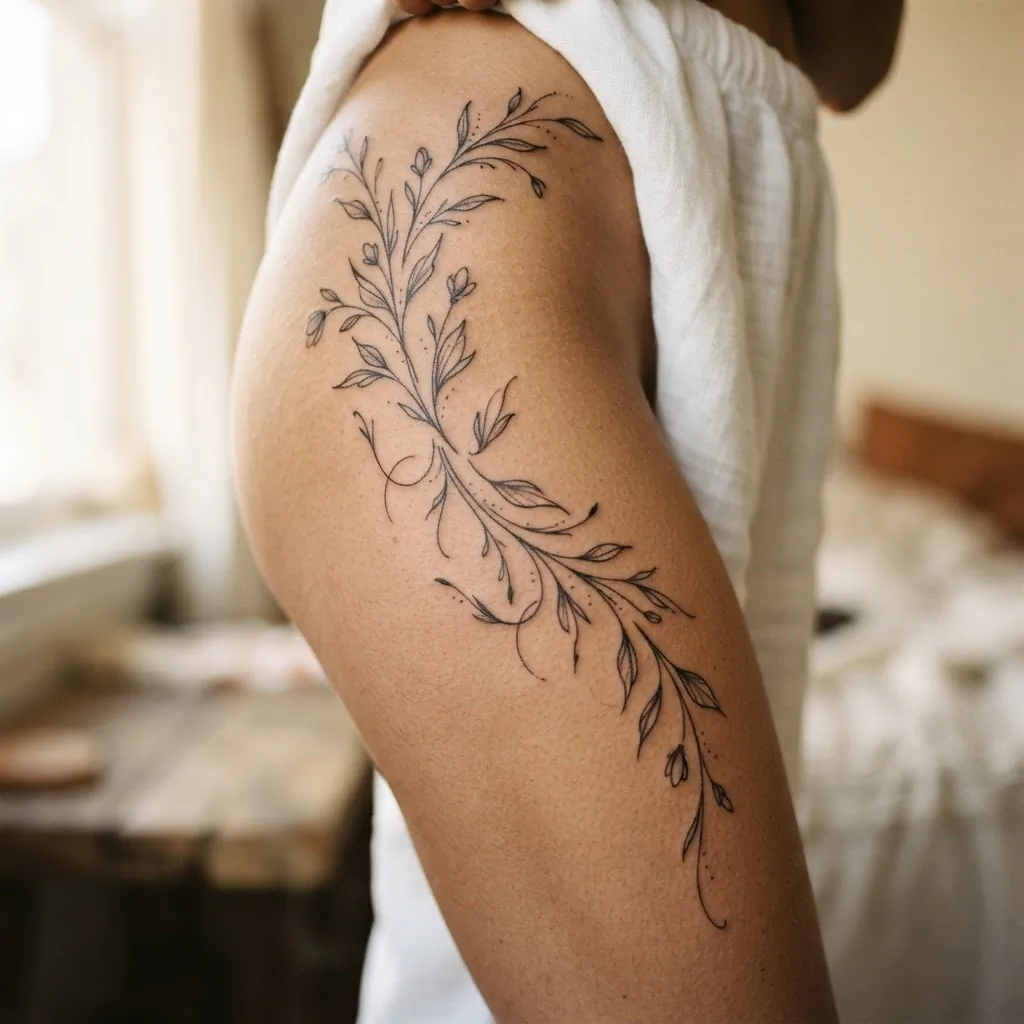
I remember staring at a saved photo on my phone for about three weeks before I finally committed to my first thigh piece. It was a botanical wrap, fine-line leaves that curved from my outer hip down toward my knee, and I loved the idea. What I did not have was any real sense of how big it would actually look on my body, whether it would hurt as much as I was quietly dreading, or how to walk into a studio and explain what I wanted without sounding like I did not know what I was doing.
Here is the thing: most people searching “thigh tattoo ideas” already know they are drawn to the placement. What they actually need is the practical layer underneath. How does the outer thigh differ from the inner thigh in terms of pain and healing? What sizing decisions make or break a thigh piece? Which styles hold up over years and which ones soften faster than you would hope? And how do you go from a saved photo to a real conversation with a licensed artist who can bring your vision to life?
That is what this article is for. Let’s start with the ideas and work toward the decisions.
Why the Thigh Is One of the Most Loved Tattoo Placements
The thigh is enormously popular for good reason. It offers one of the largest, flattest natural canvases on the body, which gives artists real room to work with. It sits at a placement sweet spot between visibility and privacy. On the beach or in a skirt, it shows. In trousers or tights, it disappears entirely. For anyone who wants to control when and how their tattoo is part of their public presence, whether for a conservative workplace or just personal preference, the thigh gives that option in a way that a forearm or neck placement does not.
It is also, for most people, a lower-pain zone compared to many other placements. More on that in a moment. All of that together explains why thigh tattoos consistently rank among the most-searched placements, and why studios book them constantly. But “the thigh” is not one single thing. There are four distinct zones, and each one comes with its own considerations.
The Four Thigh Zones: Placement Matters More Than You Think
Outer Thigh
The outer thigh is the most popular zone for good reason.

It has a generous layer of muscle and fat, which means the needle is working through padded tissue rather than thin skin over bone. Most people describe outer thigh tattooing as a manageable, scratchy sensation rather than sharp or intense pain. It is widely considered one of the more beginner-friendly placements on the body, and the flat, broad canvas works beautifully for medium to large designs. If you are building toward a thigh-to-hip wrap, or you want a statement piece with room to breathe, the outer thigh is usually where artists recommend starting. Healthline’s tattoo pain chart by body location confirms that the outer thigh consistently lands on the lower end of the pain scale compared to spots like the ribs, spine, or inner elbow.
Inner Thigh
The inner thigh is a genuinely different experience. The skin here is thinner and more sensitive, nerve endings are closer to the surface, and the area is close to lymph nodes, which can make the sensation more intense. People who have tattoos on both the inner and outer thigh consistently report the inner thigh as noticeably more tender. That does not mean it is a placement to avoid, just one to go into with clear expectations and, ideally, not as your very first tattoo. Inner thigh pieces also have a specific healing consideration: the thighs naturally press together when you walk, which creates friction on a healing tattoo. Your artist will have specific guidance for managing this, including appropriate wound covering and clothing recommendations, and those instructions are worth following carefully.
Front Thigh (Quad)
The front of the thigh, sometimes called the quad placement, is a middle ground. It is less padded than the outer thigh but generally less sensitive than the inner. Designs placed here catch the light well when you are sitting, making it a nice choice for script, portraits, or anything with detail you want to be able to see and share easily. The slightly curved surface of the quad can be a factor for very geometric designs, so it is worth discussing with your artist during consultation to make sure the design will sit and read the way you want it to.
Back of the Thigh
The back of the thigh is an underused and genuinely beautiful zone that deserves more attention. It flows naturally toward the knee and the back of the leg, making it ideal for flowing, organic designs like botanicals, script, or soft illustrative pieces. Pain-wise, it sits in a similar range to the outer thigh for most people, though the area just behind the knee gets notably more sensitive. Placement here is also a bit of a surprise reveal, visible from behind but not front-facing, which some people love.
18 Thigh Tattoo Ideas Worth Saving
Fine-Line Botanical Wraps
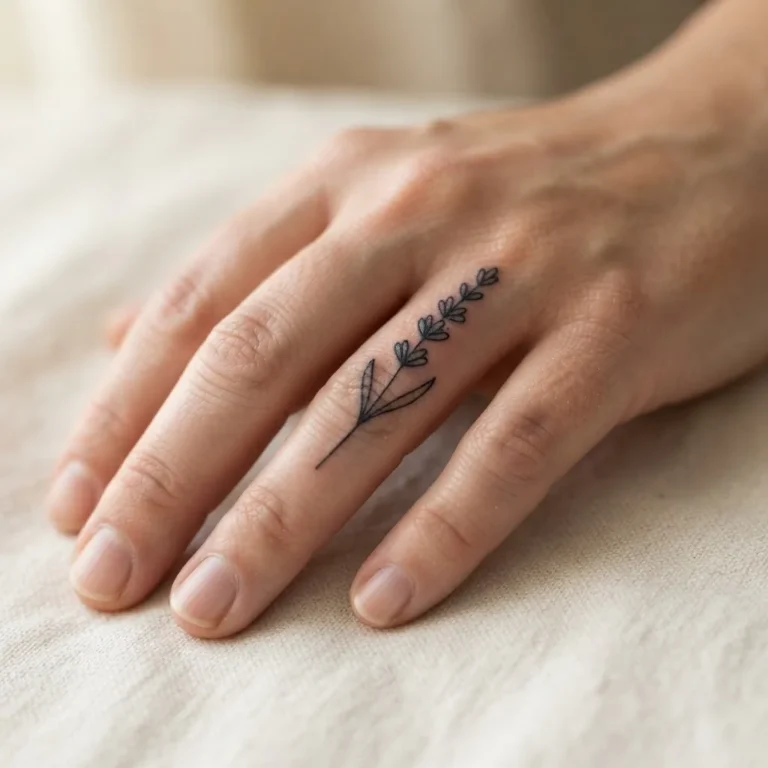
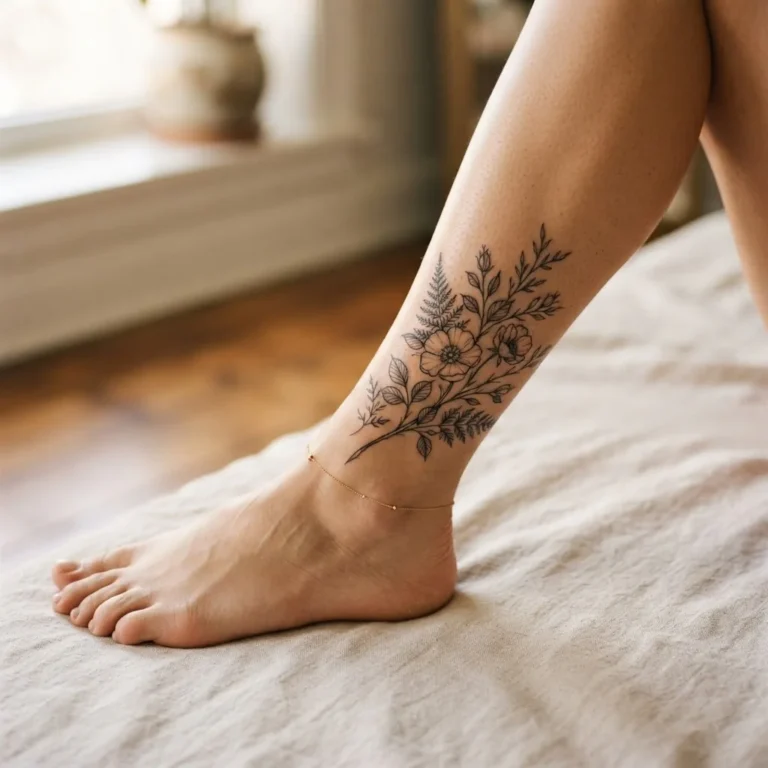
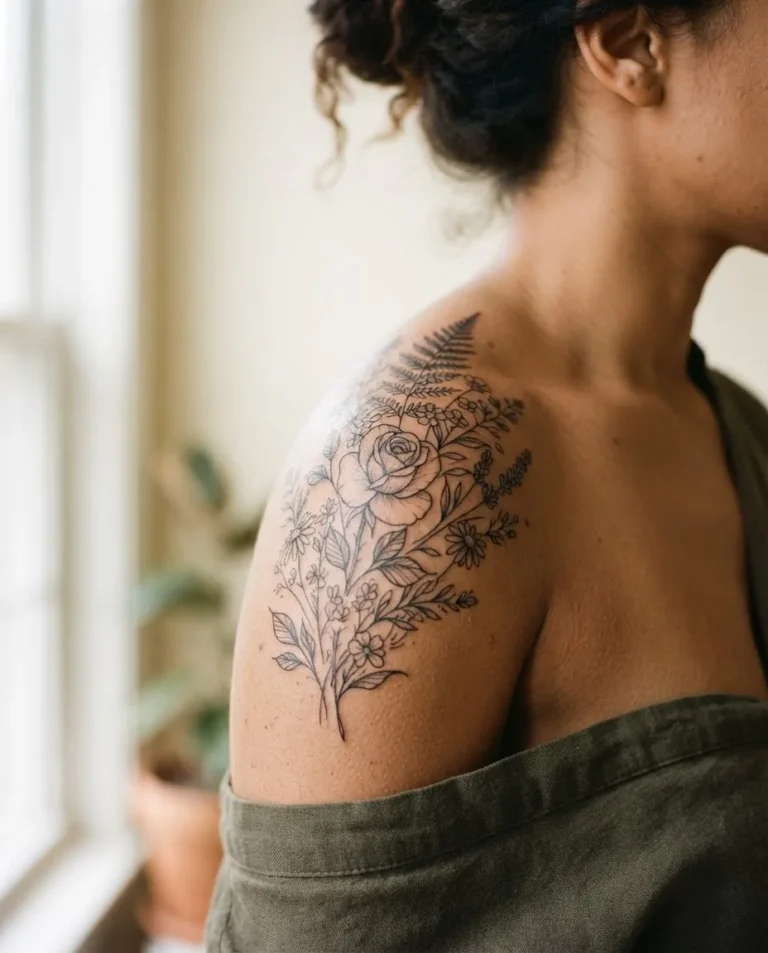
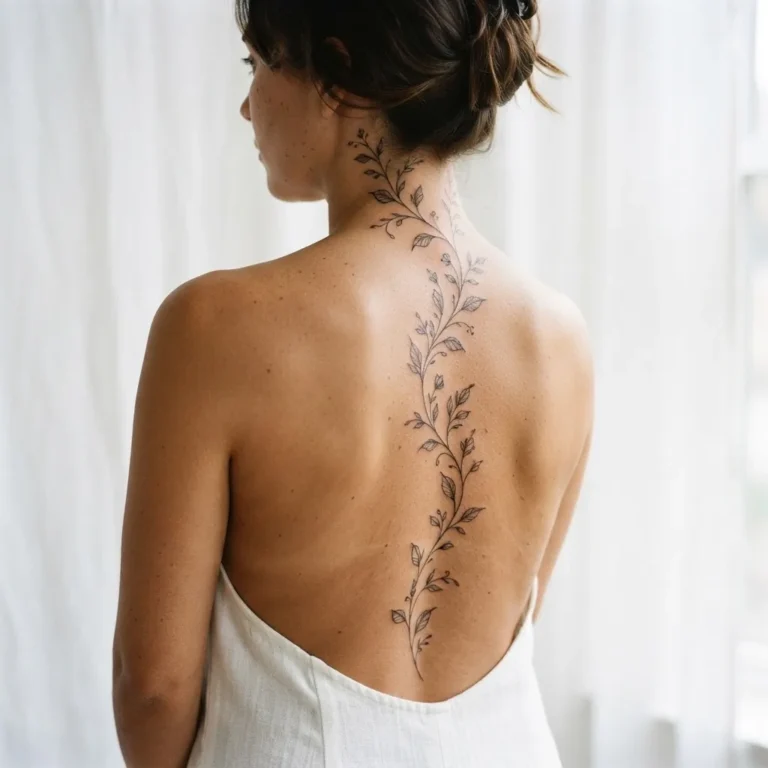
A botanical wrap that curves from the hip down toward the mid-thigh or knee is one of the most consistently beautiful thigh designs I have ever seen executed well. Think slender stems, single leaves, small buds, and trailing tendrils. Done in fine-line single-needle work, it feels alive and natural. The thigh’s elongated canvas is perfect for designs that “grow” down the body. This style works in pure black ink or with a wash of very subtle color, and it photographs beautifully.
Single Rose, Outer Thigh
A single large rose on the outer thigh is a classic that has genuinely never stopped feeling current.
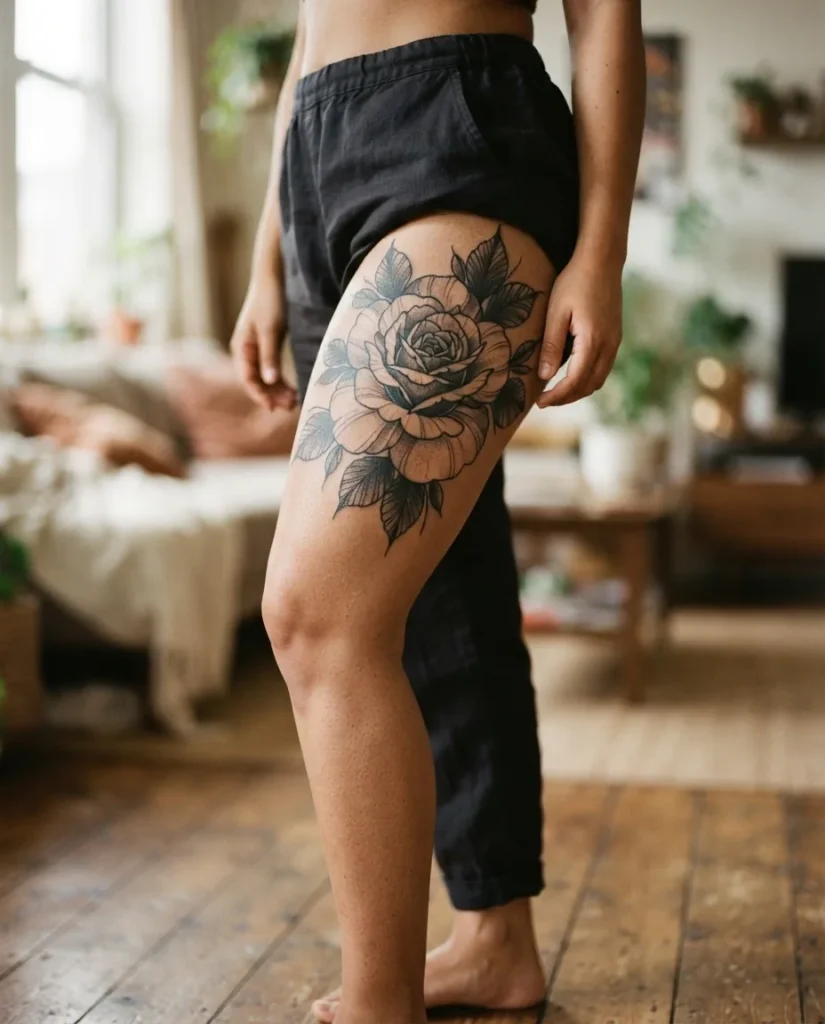
The design scales well, from a 4-inch illustrative rose to a full 8-inch traditional-style piece, and the subject matter carries centuries of meaning. A rose tattoo can represent love in its most personal sense, deep affection for a specific person, or simply beauty for its own sake. If you are drawn to this idea and want to understand the full symbolic range before you commit to a specific interpretation, Inked Magazine’s A–Z guide to flower tattoo meanings and symbolism is a genuinely good resource to spend time with before your consultation.
Peony in Neo-Traditional Style
Peonies have become one of the defining thigh tattoo subjects of the last several years, and I think it is because they sit so naturally on a large canvas. Neo-traditional peonies, with their rich, slightly exaggerated petal shapes and deep ink saturation, hold up beautifully over time because the lines are bold enough to resist blurring. They traditionally carry associations with prosperity, good fortune, and feminine strength, which resonates with a lot of people choosing a meaningful first or second tattoo.
Serpent Wrap
A serpent that winds around the thigh, either spiraling up from below the knee or curling across the outer thigh, is one of the more dramatic thigh designs that consistently reads as intentional and considered rather than random. Serpents carry layered symbolism across cultures, representing transformation, duality, protection, and cycles of rebirth. As a design, they also adapt naturally to the thigh’s length and curve in a way few other motifs can match.
Minimalist Moon Phase Strip
A horizontal or slightly arched moon phase strip along the outer thigh, from new moon to full moon and back again, is a popular choice for people who want something meaningful but restrained. These work beautifully in fine black line work and tend to run 6–10 inches across, making them a medium-to-large piece in terms of footprint but visually spare and elegant. Moons carry intuitive, cyclical, and introspective meanings that feel personal without requiring explanation.
Fine-Line Script or Quote
A meaningful phrase, a single word, or a short quote in fine-line script sits beautifully along the inner thigh or across the upper front thigh. The key decision here is font style, how the letters will sit, and whether the text reads when the leg is straight versus slightly bent. This is a design where the consultation conversation really matters because artists who specialize in lettering have specific expertise in how script behaves on curved or moving surfaces.
Delicate Spider Web, Upper Thigh
A fine-line spider web anchored at the upper outer thigh corner, where the hip and thigh meet, has a quiet graphic quality that reads differently depending on how much of it shows. Spiderwebs carry meanings of patience, creativity, and fate. Done in single-needle or fine-line work, they are airy and elegant rather than heavy.
Lotus Flower
The lotus is one of the most symbolically loaded flowers in tattoo history and culture, drawing from Buddhist, Hindu, and Egyptian traditions to represent spiritual growth, resilience, and the ability to bloom from difficult conditions. On the thigh, a single lotus, a lotus and water combination, or a lotus paired with a moon works particularly well in either fine-line minimalist style or in a more illustrative approach with shading and detail.
Butterfly, Illustrative or Micro-Realism
Butterflies have experienced a genuine aesthetic revival, particularly in micro-realism and illustrative styles that push beyond the flat designs of earlier decades. A butterfly placed on the outer thigh, with shading that gives the wings genuine dimension and texture, can be a striking statement piece. Butterflies traditionally carry meanings of transformation, freedom, and rebirth, which makes them popular for milestone tattoos marking a personal turning point.
Blackwork Floral Panel
A blackwork floral panel, bold, high-contrast, no color or shading gradients, just confident black ink, is one of the styles that ages most reliably. Because the lines are heavier and the fills are solid, the design retains its visual clarity even as the skin changes over the years. Blackwork florals on the thigh can range from a single oversized bloom to a full botanical panel that covers most of the outer thigh.
Fine-Line Portrait or Figure
The thigh’s flat, broad canvas makes it one of the more practical placements for a fine-line portrait or figurative piece, whether that is a realistic portrait of a person or pet, or a more illustrative figure inspired by art history. Fine-line portraits on the thigh require an artist who genuinely specializes in that style, and the portfolio review before booking is especially important for this category.
Geometric or Mandala
Geometric designs and mandalas, with their precise symmetry and repeating patterns, are a strong fit for the front thigh because the relatively flat quad surface helps the pattern read cleanly. A mandala on the front thigh, visible when sitting, creates a visual that is almost meditative in its structure. These designs require an artist who is meticulous about linework precision, so specialization matters here.
Watercolor Wash with Fine-Line Outline
Watercolor-style tattoos, with their soft color bloom and intentionally uneven edges, create a distinctive, painterly aesthetic that many people love. On the thigh, a watercolor floral or abstract piece works well as a statement that feels almost gallery-like. One honest note for anyone considering this style: watercolor tattoos can fade more quickly than designs with strong black outlines because they rely heavily on color saturation without the structural anchor of a bold line. Discussing longevity and touch-up expectations with your artist before booking is always a good idea.
Sunflower, Traditional Style
A traditional-style sunflower with bold outlines and a limited, saturated palette is a piece that tends to age gracefully because of the weight of the linework. Traditional-style tattoos were designed for longevity before the science of tattooing was formalized, and they still hold up that way. A sunflower carries associations with warmth, joy, loyalty, and following the light, which makes it a popular and personally meaningful choice.
Patchwork Thigh
The patchwork aesthetic, a collection of small, distinct designs placed together but not connected by a unified background, is one of the most popular evolving approaches to thigh tattooing right now. It lets you build a meaningful collection piece by piece rather than committing to one large design all at once. Each element, a small heart, a tiny snake, a minimal flower, a crescent moon, can be added over time and with different artists, creating something that is genuinely personal in its accumulation.
Abstract Line Art
Abstract single-continuous-line or broken-line art, where the design is rendered in a spare, almost sketch-like style, is a good option for someone who wants something visually interesting but not immediately recognizable as a traditional subject. These designs are typically more restrained in scale, working well in the 3–6 inch range, and they pair beautifully with fine-line technique.
Dragon, Eastern-Influenced
An Eastern-influenced dragon, rendered in either a traditional Japanese-inspired style or a more contemporary illustrative approach, works beautifully as a thigh wrap. The dragon’s elongated, serpentine body naturally follows the thigh’s shape. Dragons carry meanings of strength, wisdom, protection, and transformation across multiple cultural traditions, and this is a design where discussing the stylistic and cultural references with your artist during consultation is genuinely worthwhile.
Leaves and Branches, Minimalist
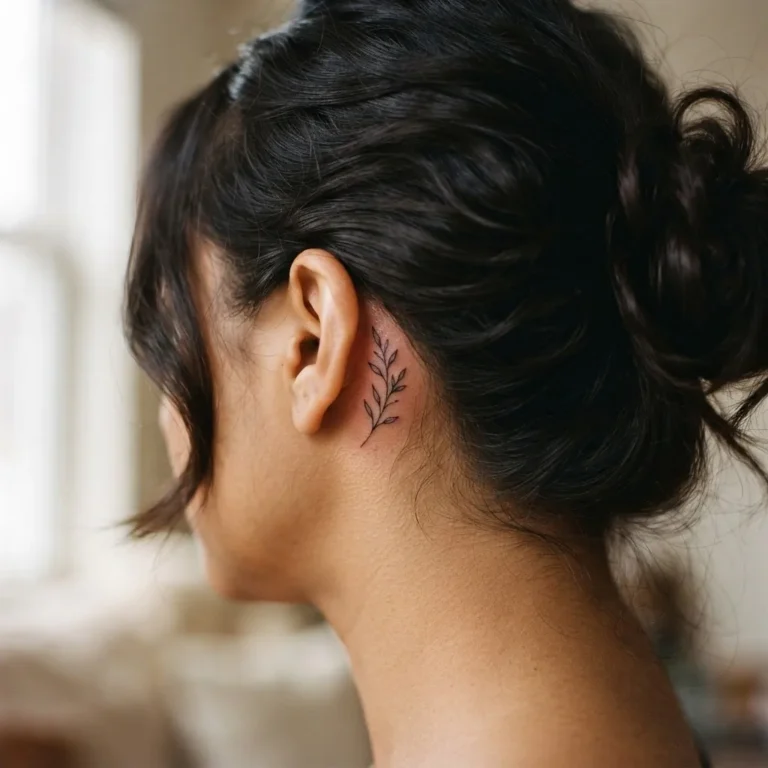
Simple, spare branch-and-leaf work, the kind that looks like it was drawn with a very fine pen, is one of the most quietly elegant thigh choices available. It is a style that translates beautifully to the long format of the thigh, flowing up or down the outer surface, and it tends to suit people who want something that feels personal and organic without being overtly symbolic.
Thinking About Style: Which Thigh Tattoos Actually Age Well
This is the question I get asked the most, and it deserves an honest answer before you fall too far in love with a specific aesthetic. Every tattoo changes over time. The skin it lives in changes, the pigment migrates very slightly, and exposure to sun and friction all contribute to how a piece looks at five years, ten years, and beyond.
Fine-line tattoos are genuinely beautiful, and they are everywhere right now. But they do require realistic expectations. Because the lines are so delicate, they can soften and blur more noticeably over time than bold-line work. This does not mean fine-line tattoos age badly, because with a skilled, experienced artist who understands how to design for longevity, they can age gracefully.
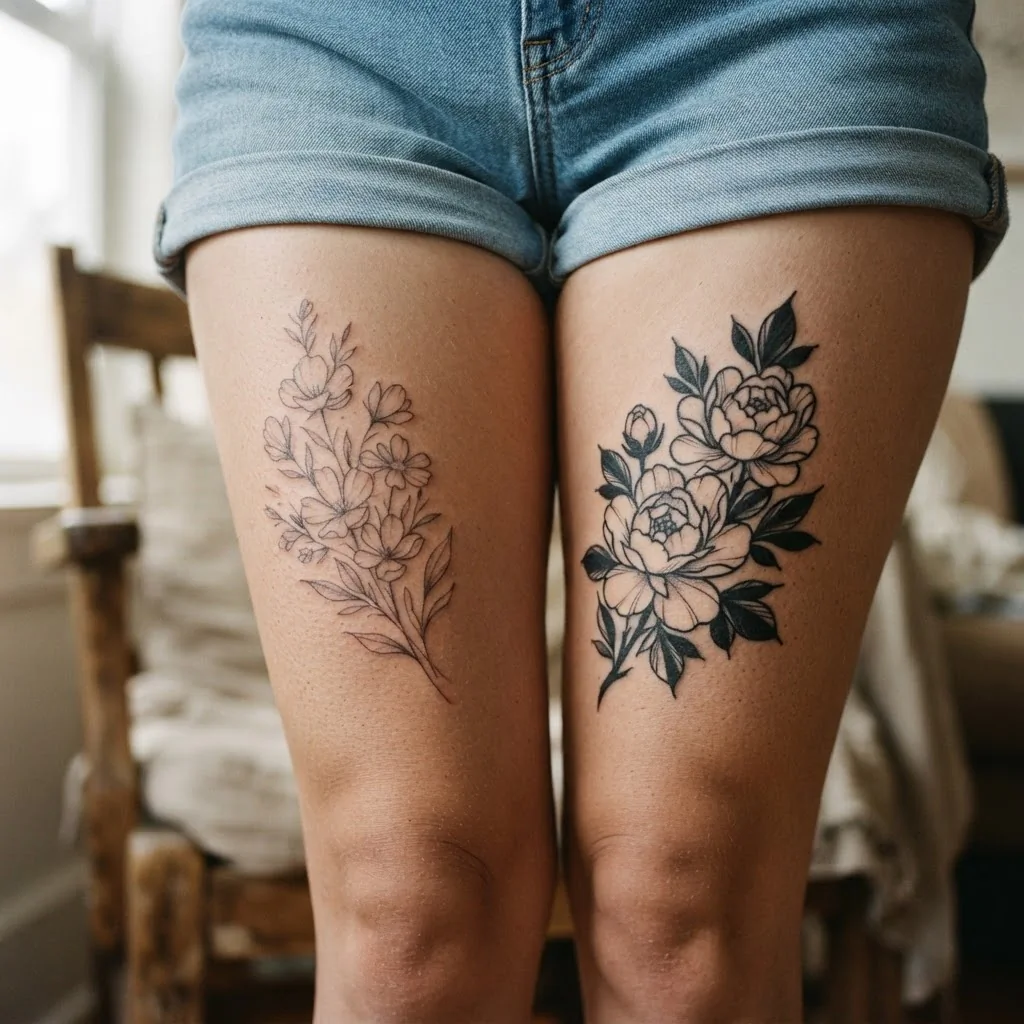
The key is choosing an artist who genuinely specializes in fine-line work and who can explain their approach to line spacing and design with the future of the piece in mind. This article on how fine-line tattoos age covers what to realistically expect at the five-year and ten-year marks, and it is worth reading before you book.
Bold-line styles, traditional, neo-traditional, and blackwork, age the most predictably and reliably. The heavier ink deposit and the weight of the outlines give the design structural integrity that resists the natural softening effect of time better than fine, single-needle work does. If longevity is a major priority for you, this is worth weighing in your style choice.
Sizing Your Thigh Tattoo: Getting the Scale Right
The thigh is a large canvas, and that can be disorienting when you are trying to figure out how a design from a photo translates to your actual body. A piece that looks delicate and spare on a reference image might be smaller than you think, or it might be sized for a body type different from yours. There are a few useful ways to think about this.
Small thigh tattoos, in the 2–4 inch range, work well for minimalist single images, a tiny serpent, a small botanical sprig, a single flower, or a short word. They feel personal and private at that scale. Medium pieces in the 4–7 inch range are the most versatile and the most commonly requested. Large statement pieces from 7–12 inches and above start to become focal points, and anything at the upper end of that range typically requires multiple sessions or longer single sessions, which affects both cost and healing time.
A useful exercise before your consultation is to print your reference image at the size you are envisioning and hold it against your thigh.
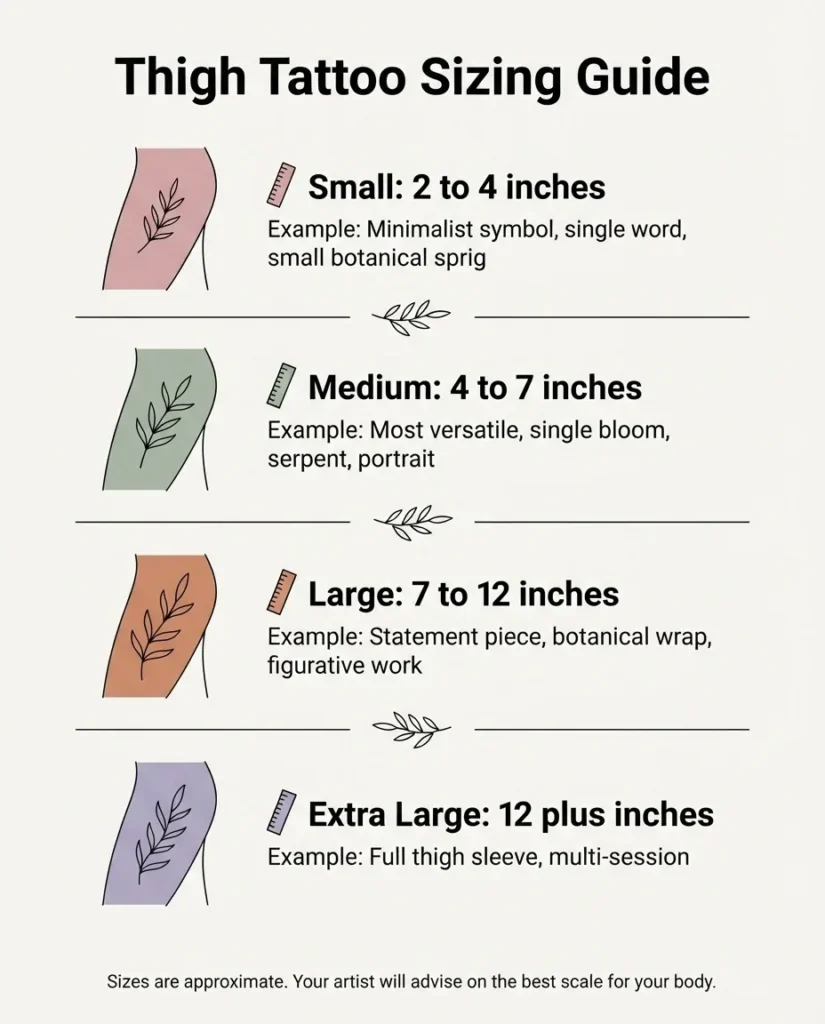
It sounds simple, but it genuinely helps you understand how the design will sit relative to your body rather than trying to visualize it abstractly. Your artist will do a final sizing in the studio before they begin, and a good artist will tell you honestly if a design needs to be adjusted to work correctly at your chosen scale and placement.
Pain: What to Actually Expect, Zone by Zone
I want to be honest here because I think this part gets either dramatized or minimized, and neither is helpful. The outer thigh is one of the friendlier placements on the body in terms of pain. For most people, it feels like a persistent scratching sensation, something you are very aware of but can manage. Sessions in the two-to-three-hour range on the outer thigh are manageable for most first-timers with good preparation: eating a full meal beforehand, staying hydrated, wearing comfortable clothing you can easily move, and going into the session well-rested.
The inner thigh is a genuinely different experience. The skin is thinner, the nerve endings are denser, and the sensation tends to be more sharp and intense than the outer thigh. I would not encourage anyone to choose the inner thigh as their very first tattoo placement. It is not off-limits for newcomers, but it is worth being honest with yourself about your pain tolerance before committing.
The back of the thigh, the area just above the knee especially, gets more sensitive the further down you go toward the joint, because the skin thins out and bone becomes more of a factor. The broad back-of-thigh area itself is typically in a similar range to the outer thigh.
Pain is also affected by session length, the artist’s technique, your own state on the day (tired, dehydrated, or stressed will all intensify the experience), and the density of the design. Talk through your pain expectations honestly with your artist before and during the session. Good artists are not bothered by those conversations.
A Note on Ink Safety and Skin Reactions
Before you book any tattoo, and especially if you have sensitive skin or a history of skin reactions, it is worth knowing that tattoo ink safety is more nuanced than most inspiration content acknowledges. The FDA’s consumer guide on tattoo safety explains that no pigments have been formally approved for injection into the skin for cosmetic purposes, and the agency has received reports of infections from contaminated inks as well as allergic reactions to specific pigments.
Red pigments in particular are associated with the highest rate of allergic reactions, including mercury-sulfide-based reds, as documented by dermatology sources including the American Academy of Dermatology’s resource on unexpected tattoo skin reactions. These reactions can develop immediately or weeks, months, or even years after the tattoo is placed. If you have sensitive skin or are planning a design with significant red or other color pigments, that is a specific conversation to have with your artist at the consultation stage. If you ever notice an unusual reaction, spreading redness, swelling, or anything that concerns you after a tattoo, a dermatologist is always the right first call rather than trying to manage it yourself.
Reputable studios use professional-grade inks and should be transparent about the brands they stock if you ask. This is a reasonable question to raise during your research phase.
Finding and Vetting a Licensed Tattoo Artist for Your Thigh Piece
A good thigh tattoo starts with a good artist, and I do not mean just aesthetically. The licensed professional who does your tattoo is also the person responsible for the hygiene standards that protect you from infection, bloodborne pathogen risks, and contamination. This is not a category where saving money on the artist is ever the right call.
When you are researching artists, start by looking for someone whose portfolio shows actual examples of the style you want on placements similar to where you want yours. A stunning portfolio of full blackwork sleeves does not tell you how that artist handles fine-line botanicals. Specialization genuinely matters. Instagram and studio websites are good starting points, and the consultation appointment is where you take everything further.
Verify that the studio is licensed and inspected by your local health authority. In most US states, tattoo studios and individual artists are required to hold health department permits and maintain bloodborne pathogen certifications. The specific requirements vary by state, but a licensed, professionally run studio should be able to answer questions about their sterilization practices and certifications without hesitation. You can check with your state or local health department to understand what the licensing requirements are in your area, because they do vary.
At the consultation itself, bring reference images that show both the design idea and the style you are drawn to.

A clear photo of the placement area, whether you want it on the outer thigh, inner thigh, or front, helps the artist visualize the design in context. Be ready to talk about sizing, your lifestyle (how active you are, what clothing you typically wear, sun exposure habits), and any skin sensitivity history. Ask to see healed examples of similar work from their portfolio, not just fresh tattoos, because fresh work always looks sharper than healed work and the healed examples tell you more about long-term quality.
Questions worth asking at your consultation: Have you done similar styles or placements before? What would you change about this reference to make it work better for my body? How do you approach sizing for the thigh specifically? What is your recommended aftercare protocol? What does your touch-up policy look like?
Healing a Thigh Tattoo: General Expectations
The thigh has some specific healing considerations that are worth knowing going in. The surface layer of skin typically takes 2–4 weeks to close and look healed from the outside.

The deeper layers of skin can take up to 3 months to fully settle, which is why the tattoo might look slightly different at 6 weeks than it does at 3 months.
Because the thighs naturally contact each other when walking, inner thigh tattoos in particular require attention to keeping the area covered and protected from friction during the first week or two of healing. Your artist should send you home with specific aftercare instructions, and those instructions are the ones to follow. Not a friend’s advice, not a generic blog post (including this one), your artist’s specific guidance for your specific piece.
The American Academy of Dermatology’s guidance on caring for tattooed skin is a helpful, reliable baseline for understanding general good practice around moisturizing, sun protection, and what to avoid. It should complement, not replace, whatever your artist tells you. Sun exposure on a healing tattoo, and even on a fully healed one, is a significant factor in long-term color and clarity. Keeping a healed thigh tattoo protected from the sun with clothing or SPF on exposed days is one of the simplest and most effective things you can do for its longevity.
What Thigh Tattoos Cost: A Realistic Range
I want to give you a realistic sense of cost because the range is genuinely wide and going in without expectations can be disorienting. In the US, a medium-sized thigh tattoo, in the 4–7 inch range, from a reputable mid-level artist, typically starts around $300–$600 and can go higher depending on complexity and the artist’s rate. Larger, more detailed pieces from experienced or sought-after artists routinely run $800–$2,000 or more, and pieces from artists with strong reputations and waitlists can go higher still.
Most professional artists charge either by the hour (rates in major US cities typically range from $150–$300+ per hour) or by the piece for smaller, straightforward designs. Many studios have a shop minimum, often $100–$200, regardless of how small the tattoo is. Tipping your artist is standard practice and appreciated, typically 15–20% of the total cost, similar to the service industry.
The single most important thing to understand about tattoo cost is that price and quality are genuinely connected at the professional end. The goal is to find a licensed professional whose work you love and whose rate fits your budget, not to find the cheapest rate possible. If an artist’s rate feels beyond your current budget, it is completely reasonable to save up, because this is a permanent decision.
Before You Book: A Short Planning Checklist
Taking a few deliberate steps before you commit to an appointment means you will walk in feeling genuinely prepared rather than hoping for the best. Here is what I recommend:
First, spend real time on your reference images. Gather 5–10 photos that show the style, the approximate scale, and the general placement you want. They do not need to be perfect matches, because good artists love working from a collection of references to build something custom. Second, identify artists who specialize in the style you want and review their healed work specifically, not just their fresh pieces. Third, book a consultation before a session, especially for larger or more complex work, because a good consultation is where the real creative conversation happens. Fourth, ask your questions honestly, including the ones that feel basic or embarrassing. A good artist has heard every question and genuinely wants you to feel informed. Fifth, understand what aftercare looks like for a thigh placement specifically, including the clothing and friction considerations, before you schedule the session date.
The Takeaway
Thigh tattoos are popular because they genuinely work. The placement offers real creative freedom, a manageable pain experience for most people on the outer zone, the privacy-to-visibility balance that many people want, and enough canvas for designs ranging from a small minimalist symbol to a fully realized statement piece. The decisions that shape whether you love it for decades or eventually have regrets are almost all made before the needle touches your skin: the design, the style, the sizing, the artist, and the information you carry into the room.
Take your time with this. Let the ideas sit. Pull the references, find the artist whose work makes your stomach flip a little, book the consultation, ask the questions, and walk into that studio informed and excited. That combination is what turns a great idea into a great tattoo.