Couple Tattoos: 14 Designs That Feel Personal, Not Cliché
The question I get more than almost any other is some version of this: “Riley, we want to get a couple tattoo. Where do we even start?”
It’s one of my favorite questions to answer, because it tells me something important about the person asking. They are thoughtful. They are not just pulling a design off the internet and booking tomorrow. They want to make a decision they will both love for years, and they already sense there’s a right way and a rushed way to do this.
Getting a tattoo with someone you love is genuinely beautiful. A shared piece of art, carried on two bodies, is one of the most intimate things you can do in the tattoo world. But “couple tattoo” as a Google search will send you straight to gallery after gallery of images with no guidance about what actually makes a couple design work, age well, or feel personal rather than borrowed. That’s the gap I want to close here.
Below are 14 ideas worth serious consideration, organized by style and approach, along with the honest planning context that helps you choose something you will still love a decade from now.
The First Decision: Matching vs. Complementary
Before you fall in love with a specific design, it’s worth understanding the fundamental choice in front of you, because it shapes everything else.
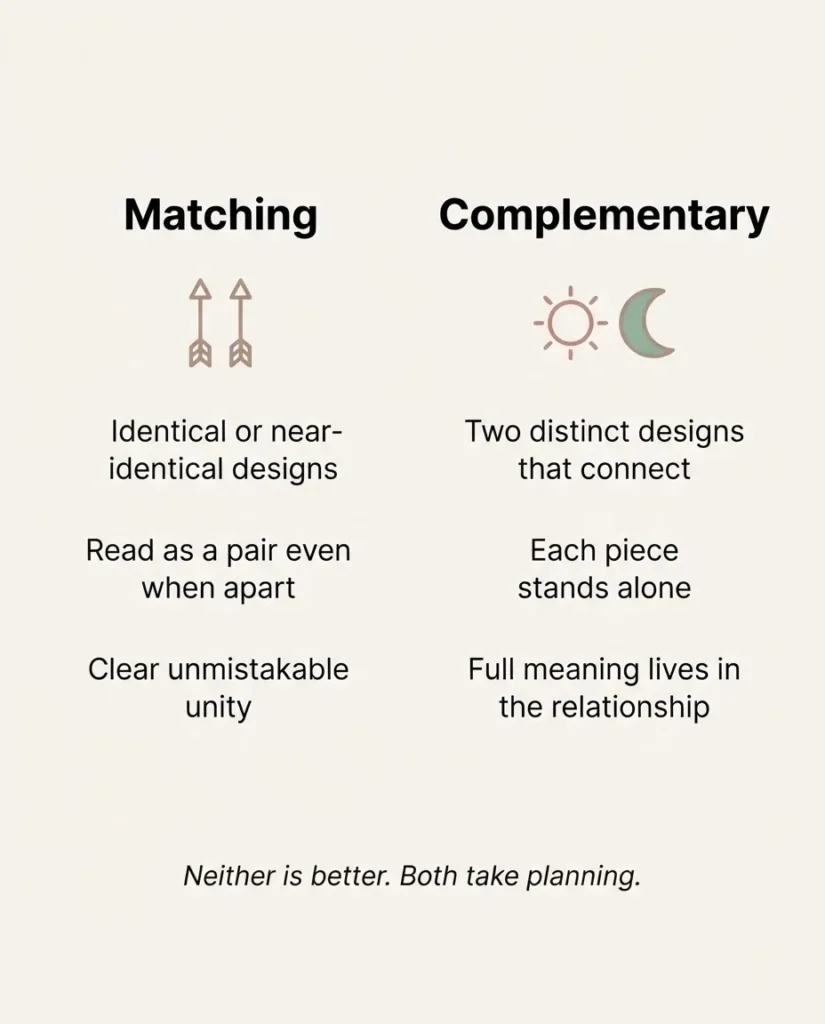
Matching tattoos are identical or near-identical designs placed on both people. They read as a pair by being the same. Two identical small arrows on the inside wrist, the same phrase on the same spot, the same tiny constellation on corresponding ankles. The meaning is clear, the visual unity is strong, and the design is recognizable as a set even when you are apart.
Complementary tattoos are two distinct designs that connect or complete each other only when the two of you are together or understood as a pair. A sun on one wrist, a moon on the other. A lock on one forearm, a key on the other. Half of a quote each. The whole image or message only exists in the relationship. When you are apart, each piece stands beautifully on its own.
Neither is better. But they suit different people. Matching designs tend to suit couples who want an unmistakable shared symbol and are comfortable with that clarity. Complementary designs often appeal to people who want to preserve a sense of individual identity in their ink while still sharing something deeply connected. Knowing which one resonates with both of you before you start looking at designs will save you a lot of confusion.
A Note on Safety, Hygiene, and Choosing the Right Studio
Before we get to the ideas themselves, I want to be honest with you about something that does not come up in most couple tattoo roundups, and I think it should.
Getting tattooed together is an emotionally exciting experience, and it is easy to let that excitement rush you into booking with the first studio that looks pretty on Instagram. I want you to slow down for just one paragraph, because this part matters.
A licensed tattoo artist working in a regulated studio follows strict bloodborne pathogen protocols: single-use needles, sterile equipment, gloves, and proper surface disinfection between every client. These standards exist for real reasons. The FDA has published clear guidance on tattoo safety, including the risks of contaminated inks and allergic reactions, and you can review their consumer information at the FDA’s tattoo safety resource before your appointment. Read it. It is short, genuinely useful, and will help you ask smarter questions when you contact a studio.
Before you book, verify that your artist is licensed in your state or local jurisdiction (licensing requirements vary by location), that the studio is inspected, and that you can see a clean, professional workspace. Ask about their sterilization process. A good artist will welcome the question.
14 Couple Tattoo Ideas Worth Considering
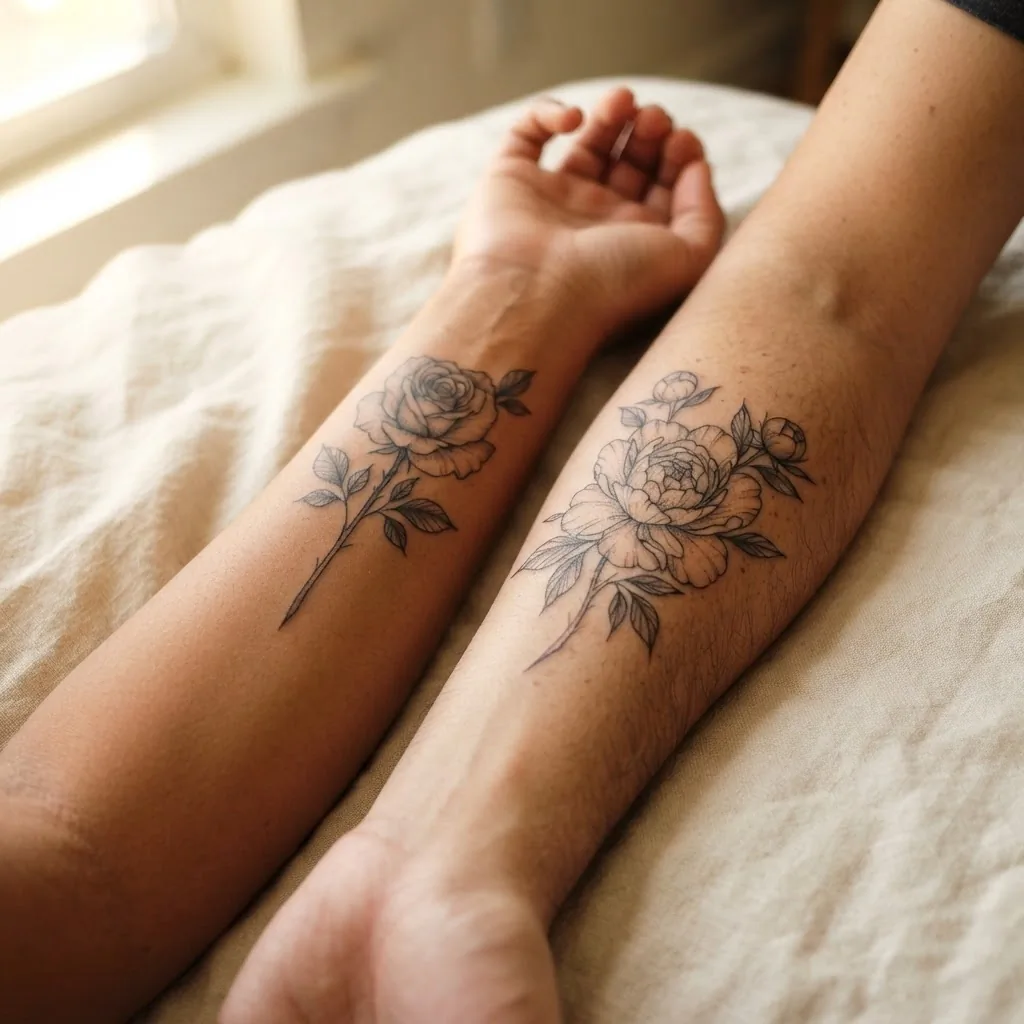
1. Fine-Line Botanicals: Matching or Paired Flowers
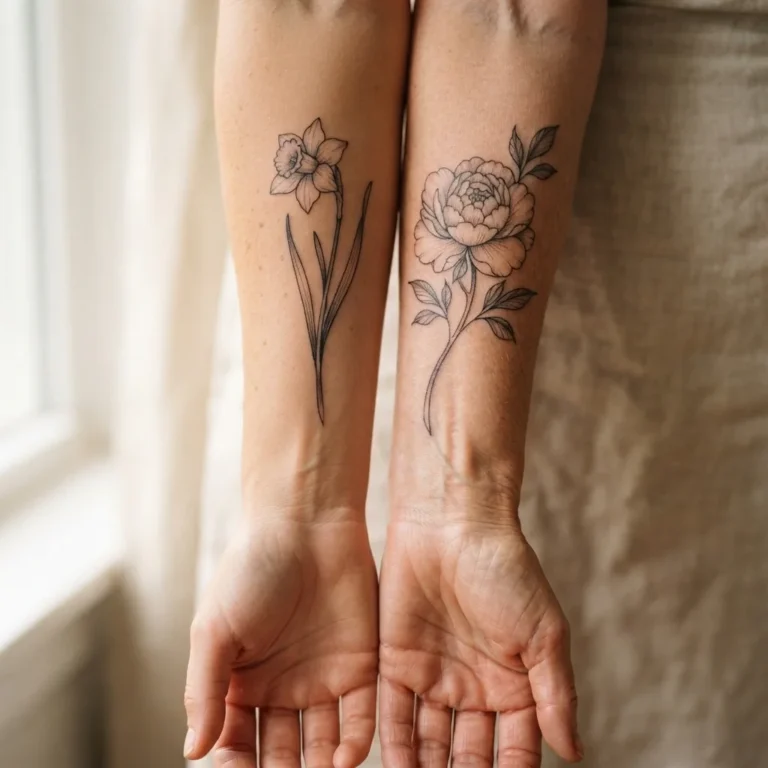
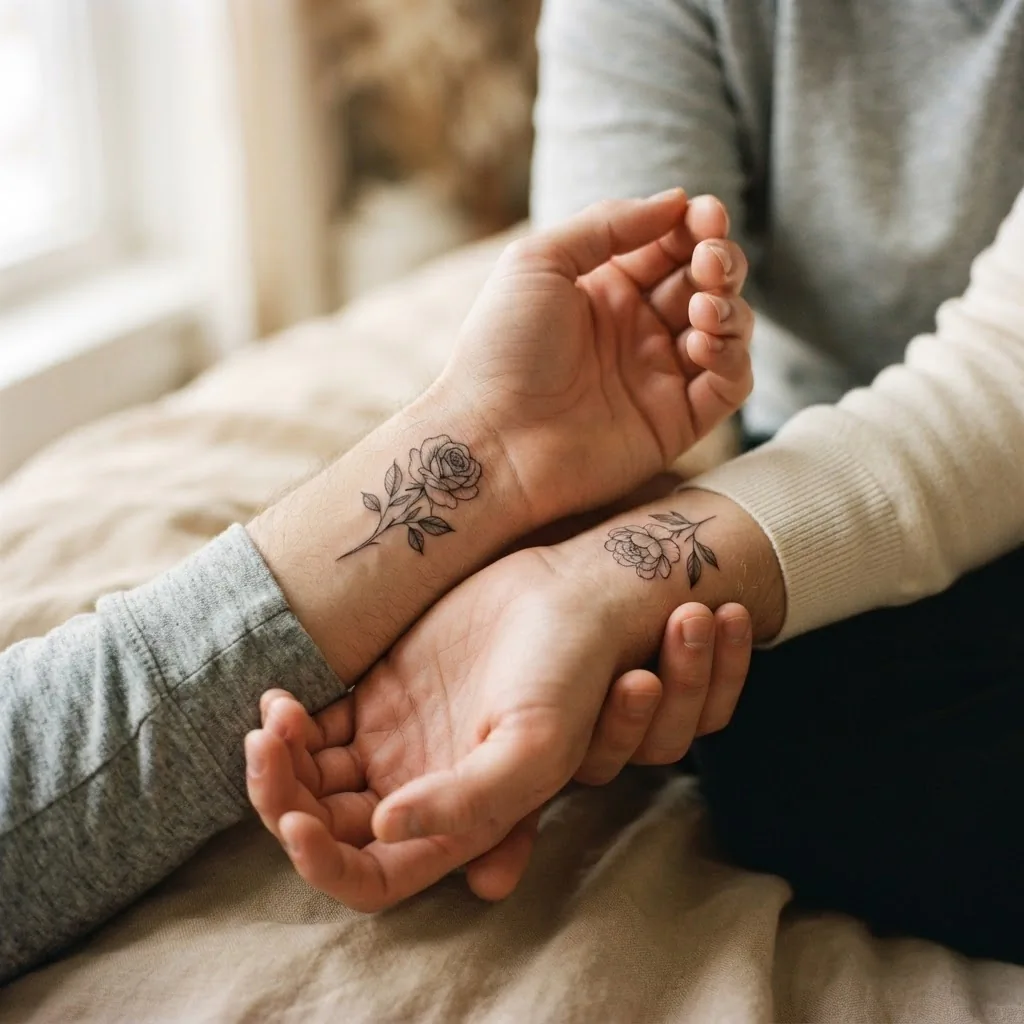
Fine-line botanical tattoos are one of the most popular couple designs right now, and for genuinely good reasons. Each person chooses a flower with personal meaning, and the artist executes them in the same delicate, matching style so the pieces are clearly a pair even if the blooms are different. Your birth flowers are a natural starting point. Roses and peonies for romance. Lavender for calm. Whatever has meaning to your story.
The honest consideration with fine-line work: it requires an artist who specializes in this style. Fine lines created by a generalist artist can blur faster than the same work done by someone with a deep portfolio in this approach. When you are researching artists for this design, look specifically for healed photos in their portfolio, not just fresh-ink images.
2. Sun and Moon: The Classic Complementary Symbol
The sun and moon pairing is one of the oldest complementary symbols in human culture, representing balance, the harmony of opposites, and the way two different energies complete a whole. It is popular for a reason, and there is no shame in choosing something beloved.
What makes a sun-and-moon couple tattoo feel personal rather than generic is execution and placement. A heavily detailed, artist-interpreted version in their signature style is going to look entirely different from a minimalist fine-line version. Bring reference images and have a real conversation with your artist about how they would approach it, not just what the symbol is.
3. Complementary Constellations
Your birth constellations (or any two constellations with significance to your relationship) make for a beautiful complementary pairing that feels both personal and visually sophisticated. They work beautifully as fine-line or dot-work pieces, and they carry meaning that is entirely specific to you.
A Scorpio constellation and a Pisces constellation. Orion and the Big Dipper from the night sky on the night you met. This kind of specificity is what separates a couple tattoo that feels like yours from one that could belong to anyone.
4. Coordinates of a Meaningful Place
The latitude and longitude of a place that matters to you both, the city where you met, the place where you got engaged, the town where you grew up together. Coordinates as a tattoo work because they are simultaneously meaningful and visually minimal, which gives them longevity. Anyone who sees it sees a clean set of numbers. You know exactly what they mean.
Coordinates tattoos age particularly well as fine-line or simple serif-font text pieces. The placement matters a lot for text legibility over time, and the inner forearm or upper arm tends to hold text more cleanly than the finger or wrist, which see more movement and friction.
5. A Shared Phrase or Single Word, Split Between You
One of the more quietly powerful couple tattoo concepts is taking a single phrase and splitting it between two people. “You are my” on one person, “greatest adventure” on the other. The first word of a quote that is significant to your relationship on each wrist. Or simply one word that is yours, the same word on both of you, placed in the same spot.
If you go the split-phrase route, talk through it carefully before committing. Consider how each half reads as a standalone tattoo when you are not standing next to each other. You want each piece to feel complete enough on its own that it does not require explanation to strangers every day of your life.
6. Lock and Key
Lock and key is a classic for a reason. It reads visually even to someone who does not know it is a couple tattoo, it works in nearly every style from fine-line to traditional to ornamental, and the meaning (access to someone’s heart, the idea that you are each other’s answer) is both universal and intimate. It also scales well, working as a tiny micro piece or a more detailed mid-size design.
7. Pinky Swear or Linked Hands
A pinky swear is one of the sweetest micro-tattoo concepts for couples, because it is joyful rather than heavy. A tiny linked pinky on the outer edge of each ring finger, or on the inner wrist, is a quiet promise that also just reads as cute rather than overly serious. It works particularly well for couples who have a playful, lighthearted energy together.
The finger placement caveat is important here, and I want to be straightforward about it: finger tattoos fade and blur faster than almost any other placement. The skin on fingers moves constantly, sees sun, and does not hold ink the way the inner forearm or upper arm does. They often need touch-ups. If you love the concept of a finger tattoo but want longevity, talk to your artist about whether the inner wrist or outer hand might give you a similar visual effect with better staying power.
8. Matching Micro Animals or Birds
Two tiny sparrows. Matching hummingbirds. The same small cat or fox or wolf, one on each of you. Animal symbolism gives a couple tattoo an extra layer of meaning beyond the shared-image effect, and when both people love the same creature for their own reasons, the design becomes genuinely personal.
Birds in particular have rich symbolic associations across many cultures: freedom, loyalty, the idea of returning home. If you both love birds or a specific animal has meaning to your relationship, a matched pair of micro illustrations can be a beautiful, understated design.
9. Yin and Yang, Separated
Rather than both people getting the full yin-yang symbol, some couples take half each. Each person wears one half of the circle, and together they form the whole. This is a complementary design concept that carries a lot of meaning about balance, interdependence, and the way two people complete each other, without requiring you to be physically next to each other for each tattoo to look finished.
10. Matching Abstract Shapes or Geometric Forms
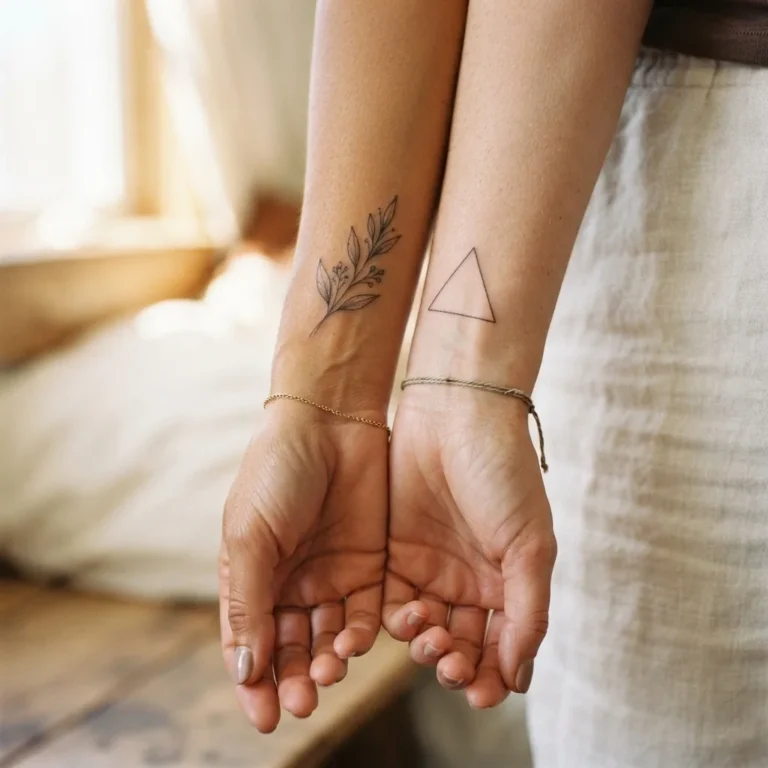
Not every couple tattoo needs to be a recognizable symbol. Matching or mirrored geometric shapes, two halves of a circle, a pair of abstract line drawings that your artist designs specifically for you, or two interlocking geometric forms can feel modern, personal, and sophisticated in a way that conventional symbolic tattoos do not.
This is also a category where going to an artist who creates custom work (rather than flash designs) makes the biggest difference. A geometric or abstract couple tattoo that was genuinely designed for you, from a conversation about your story, is going to be more meaningful than one pulled from a reference sheet.
11. Complementary Elements: Earth and Water, Fire and Air
Drawing from elemental symbolism, one person gets a delicate earth or mountain motif and the other gets a wave or water design. Or fire and wind. The idea of complementary natural forces, each complete on its own but part of a larger whole, works beautifully as a couple tattoo because it honors individuality while expressing connection.
These work especially well for couples who feel like their personalities naturally balance each other: the grounded one and the dreamer, the bold one and the calm one.
12. Your Initial or Initials, Artistically Rendered
Initials are simple, but “simple” does not mean generic when execution is involved. A beautifully hand-lettered initial from an artist who specializes in calligraphy-style tattoos can be stunning. Entwined initials. A single initial in a font that was custom-drawn for you. Your partner’s initial in your handwriting, their handwriting on you.
The handwriting variation is something I think is genuinely underrated in the couple tattoo world. Wearing someone’s actual handwriting is extraordinarily personal. If you love this idea, talk to your artist about transferring handwriting accurately, because that requires a specific skill set and not every artist has it.
13. Matching Dates in Roman Numerals
A date that matters: your anniversary, the day you met, a date that only the two of you know the meaning of. Roman numerals have a visual formality that makes them feel more like art than a simple number tattoo, and they are adaptable to almost any size or placement. Small enough to be subtle, large enough to be a statement.
Roman numeral tattoos age very well as clean, bold-line work. Ask your artist about line weight for legibility over time, because very fine lines in number tattoos can blur together as the skin ages.
14. A Custom Design Built Around Your Story
This is my personal favorite, and I say it as someone who has spent years watching people fall in love with the right tattoo. The best couple tattoo is often not one you found on Pinterest. It is one you described to a talented artist who then created something entirely specific to your relationship. An object that was there on a meaningful day. A reference to a shared joke or a line from a book you both love. Something small that only you two would understand.
This requires finding the right artist, booking a proper consultation, and spending time in conversation before you book the session. It takes more planning. It is worth every extra step.
How to Think About Placement as a Couple
Placement for a couple tattoo has an extra layer of consideration that solo tattoo placement does not: you are choosing for two bodies that may be very different in size, skin tone, muscle mass, and how much surface area is available in any given spot. What looks beautiful on one person’s wrist may need to scale differently to look balanced on their partner’s.
The most important thing I can tell you about placement is to discuss it with your artist at the consultation before any designs are finalized. A good artist will consider both of your bodies, not just one, and may suggest adjustments to size, proportion, or placement that you would never have thought of but will be grateful for.
Some placement principles for couple tattoos:
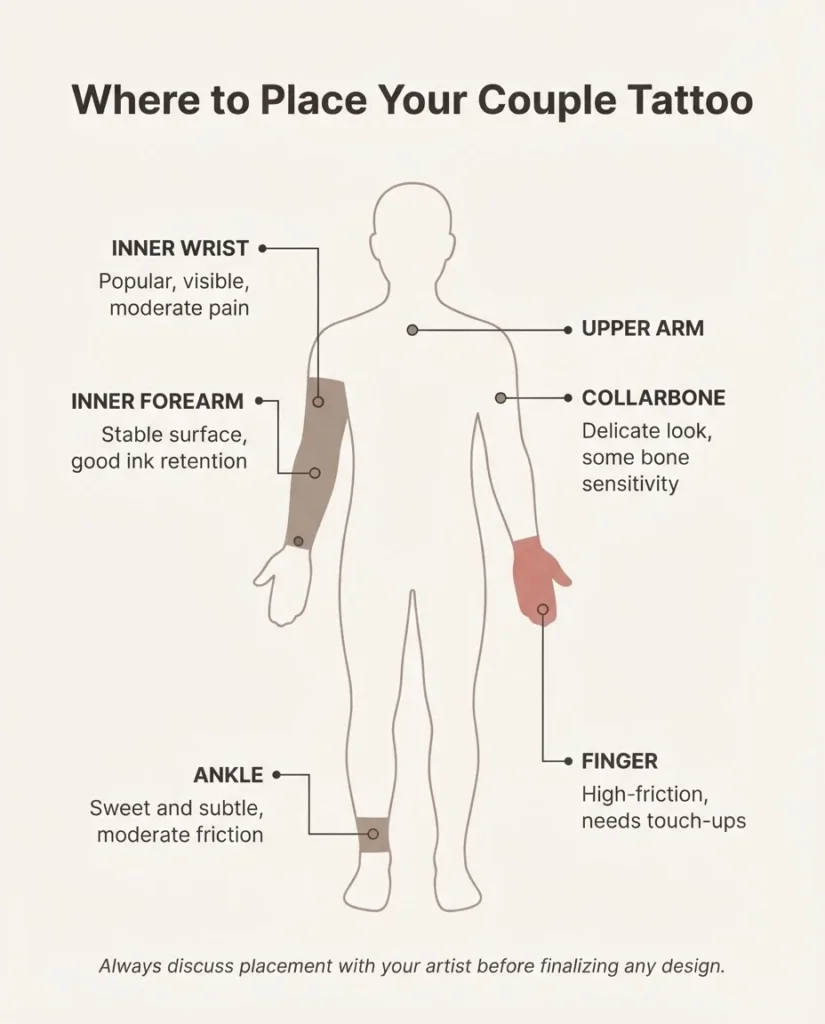
The inner wrist is one of the most popular placements for fine-line couple tattoos, and it works well because it is easy to see, relatively easy to care for, and has enough consistent skin surface for small-to-medium designs. It does see sun and friction, so SPF is essential on healed tattoos in this area.
The inner forearm is an excellent choice for designs with slightly more detail or size, because it offers a relatively flat, stable surface with good ink retention compared to bony or high-movement areas.
The upper arm, the ribcage, the collarbone, and the ankle are all options with different pain considerations and visibility levels. The ribcage tends to hurt more than most other areas due to proximity to bone, while the upper arm tends to be one of the more comfortable placements for most people.
Fingers and the outer hand are visually appealing for certain designs but are genuinely high-maintenance placements that will need touch-ups more often than other areas. Go in with realistic expectations if you choose them.
The Honest Conversation About How These Age
One of the things I try to do in every planning conversation I have (and it is the reason my friends keep texting me before they book) is tell the truth about how a tattoo will look not just on day one but on year ten. For couple tattoos specifically, this matters because the design is meant to mark something lasting.
Fine-line tattoos, which are by far the most popular style for couple tattoos right now, age differently than bold traditional pieces. On well-placed, well-cared-for skin, fine-line work can maintain defined lines for roughly five to ten years before you notice any softening. After that, many people opt for a light touch-up, which is normal and expected. The realistic guide to fine-line tattoo aging at Igla Tattoo is one of the more honest pieces of content I have found on this specific topic, and it is worth reading before you commit to the style.
High-movement, high-sun, and high-friction areas (fingers, hands, the backs of wrists, forearms that see a lot of direct sun without protection) will show change faster than placement on the upper arm, ribcage, or upper back.
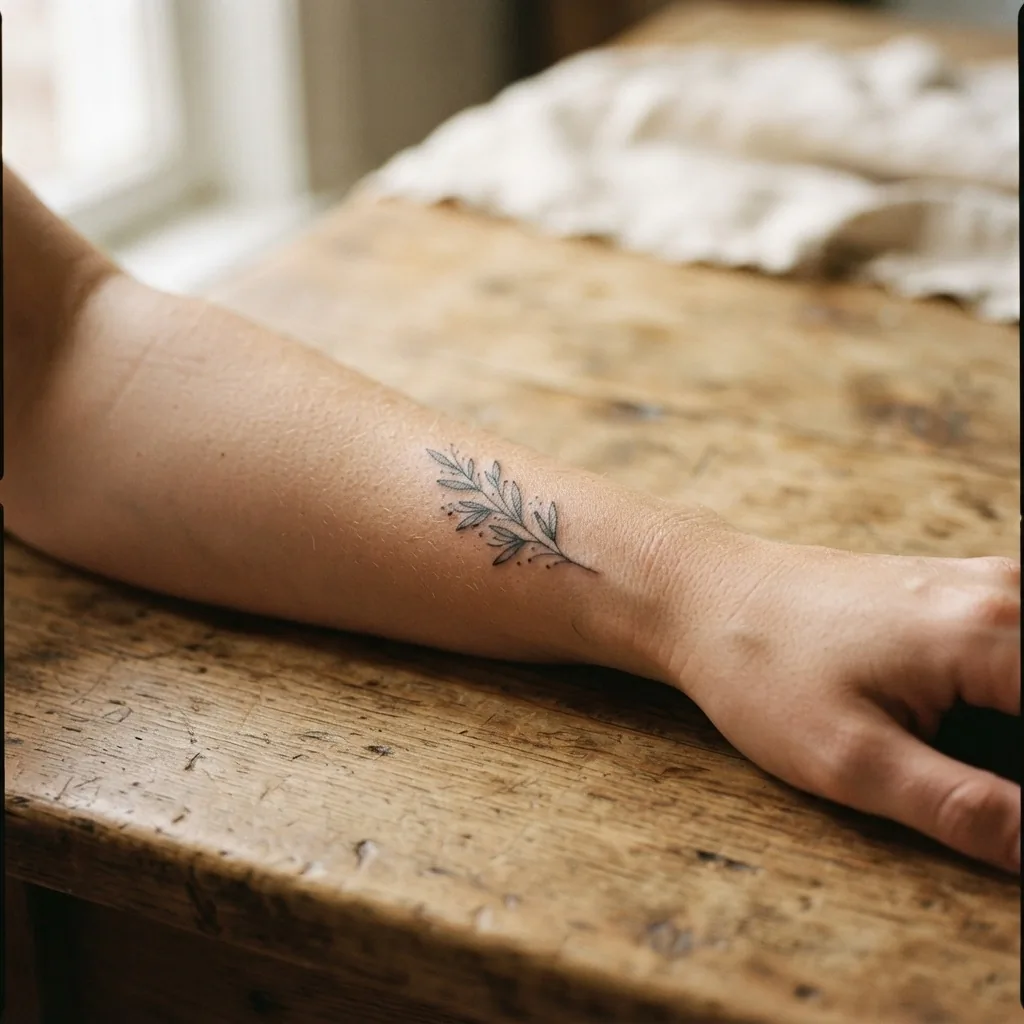
Bold, traditional-style linework tends to age more predictably than very fine, delicate lines, though it has a different aesthetic entirely.
None of this is a reason not to get the tattoo. It is a reason to choose your artist and your placement carefully, and to talk honestly with your artist about what to expect.
A Few Words on Ink Pigments and Skin Reactions
This section is a small one but an important one, and it applies to couple tattoos specifically because two different people may have different skin sensitivities.
Allergic reactions to tattoo pigments are not common, but they do happen. The American Academy of Dermatology’s page on tattoo skin reactions is one of the clearest, most accessible resources I have seen on what to watch for, and I genuinely recommend reading it before your appointment. Red pigment is the most frequently reported trigger for allergic and hypersensitivity reactions, including itching, swelling, and in some cases a persistent rash. Other colors can also cause reactions, sometimes years after the tattoo is placed.
University of Utah Health’s 2025 reporting notes that as many as 10% of people who get tattoos experience a painful or itchy skin reaction. Most reactions are mild and resolve, but any reaction that persists, spreads, or is accompanied by significant pain should be evaluated by a dermatologist or doctor. Do not self-treat a suspected ink reaction based on internet advice.
If either of you has a history of skin sensitivities, eczema, psoriasis, or known allergies, that conversation belongs in your consultation with your artist and possibly with your dermatologist before you book.
How to Find the Right Artist for a Couple Tattoo
Finding the right artist for a couple design is arguably more important than finding the right design. The design can be refined. The artist creates the permanent result.
Here is how I think about the search. Start by identifying the style you want (fine-line? geometric? botanical? traditional?) and look specifically for artists who have a strong, consistent portfolio in that style, with healed photos included. Fresh-ink photos are beautiful but healed photos are honest. Many artists post both on Instagram, and it is worth spending time looking at work that is at least several months old.
For a couple tattoo specifically, I would look for an artist who has experience tattooing pairs, because there is a compositional sensibility involved in creating two pieces that read as intentionally connected. Not every artist thinks about the pair as a whole. Ask in your inquiry or consultation whether they have done couple or matching work, and ask to see it.
Licensing and studio hygiene are non-negotiable. A licensed artist in a regulated, clean studio is not a nice-to-have. It is the baseline. Regulations and licensing requirements vary by state and locality, so look up your local requirements and verify your artist meets them.
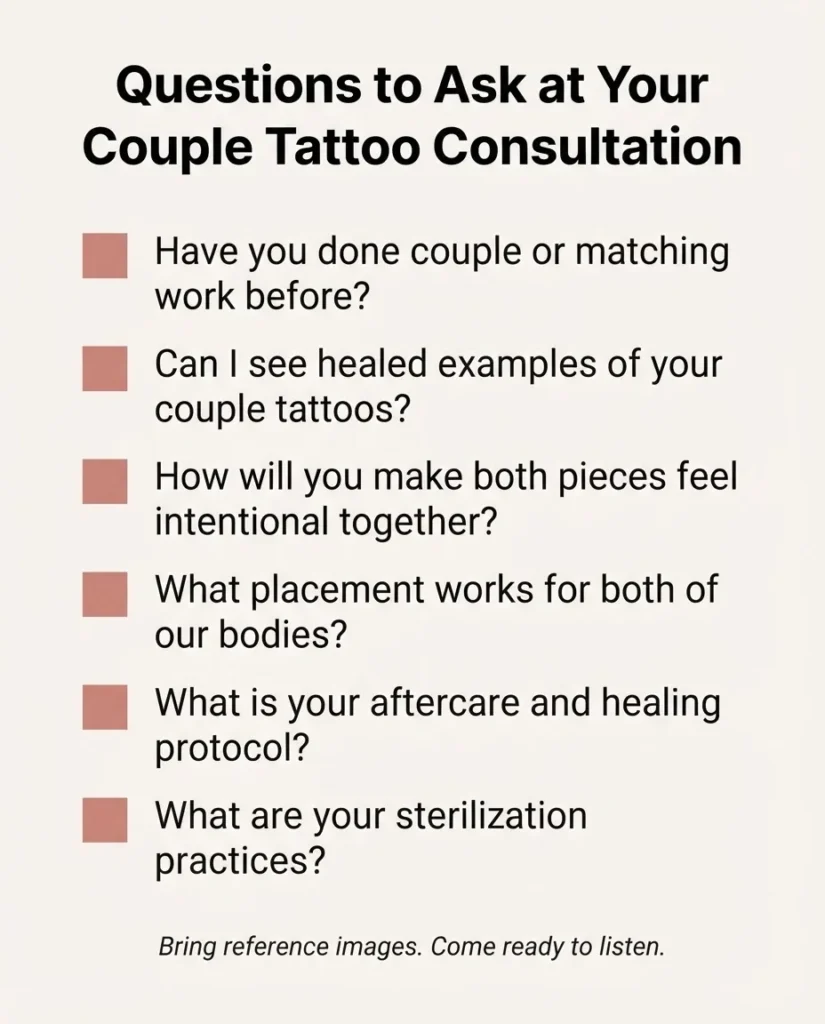
Questions worth asking at the consultation:
- Have you done couple or complementary tattoos before, and can I see healed examples?
- How would you approach making these two pieces look intentional together, not just identical?
- What placement would you recommend for both of us given our sizing needs?
- What is your healing and aftercare protocol?
- What are your sterilization practices?
- What would a touch-up look like down the road if needed?
Bring reference images, but also come prepared to listen to what the artist suggests. The best consultations are conversations, not presentations.
The “What If” Question
I am going to address this one directly, because it is the thing people think about but rarely say out loud. “What if the relationship ends?”
I hear this from almost everyone who is thoughtful enough to actually plan a couple tattoo carefully. And my honest answer is the same one I give my friends: this is a real consideration, and you are not silly for having it.
There is no shame in acknowledging that you are making a permanent mark in honor of something that, like all human relationships, carries no guarantee. Some people feel that a couple tattoo should only happen with someone they are prepared to carry that mark for, even in a hypothetical future where things change. Others feel that a tattoo honors who they are right now, in this relationship, in this chapter, and that is worth marking regardless of what comes later.
Neither position is wrong. What matters is that both of you think about it clearly, agree, and go in with open eyes rather than just excitement. If either of you has a significant hesitation that is not just nerves, that is worth a real conversation before you book, not after.
The designs that tend to age most gracefully through life’s changes, if that matters to you, are the ones with personal meaning beyond just the relationship itself. Coordinates of a place you each love independently. Your birth flowers. A symbol that belongs to who you are as individuals who chose each other. These carry meaning in multiple directions.
Preparing for Your Appointment and What to Expect
Once you have chosen your design and your artist, here is what the actual experience tends to look like.
Most couple tattoos are done in the same session by the same artist, working on one person at a time. Some studios have two artists work simultaneously. Ask ahead of time how your artist typically handles this, and whether they recommend booking both in the same appointment or scheduling back-to-back.
Come well-rested, well-fed, and hydrated. Wear clothing that gives easy access to the placement area. Bring any reference images you want to review one last time before the artist begins. It is normal to see a stencil first, and it is absolutely appropriate to ask for adjustments before any work begins.
Pain levels vary significantly by placement and by person. Areas close to bone (ribcage, ankle, collarbone, spine) tend to hurt more than fleshy, muscle-rich areas (upper arm, thigh, calf). The inner wrist and inner forearm are generally considered moderate.
Neither of you should feel pressure to choose a placement that feels wrong physically just because it looks beautiful on someone else.
Healing: What to Expect and Why the Artist’s Instructions Come First
After the session, both of you will receive aftercare instructions from your artist. Follow them. I cannot say this more directly. Those instructions are specific to the ink used, the style of work, and your artist’s preferred healing protocol. They supersede anything you read online, including here.
Broadly speaking, most fresh tattoos involve keeping the area clean and moisturized, avoiding soaking in water (baths, pools, the ocean) during initial healing, and protecting the area from direct sun. The surface typically heals within two to four weeks, though full dermal healing takes longer. The American Academy of Dermatology’s guide to caring for tattooed skin is one of the clearest general references available.
If either of you notices signs of infection (excessive redness, warmth, swelling, or discharge beyond normal early healing) or an unusual skin reaction, contact a doctor or dermatologist promptly. Do not wait.
Healed tattoos, especially in sun-exposed areas, benefit significantly from consistent SPF application. Sunscreen protects the pigment and extends the life of the design. This is not optional advice if you want your couple tattoo to look sharp for as many years as possible.
The Part That Matters Most
I have been the person everyone texts before booking for a long time now, and if there is one thing I have learned it is this: the couples who are happiest with their tattoos are not the ones who got the trendiest design. They are the ones who slowed down enough to choose something that actually meant something to both of them, found an artist who genuinely understood what they were going for, and walked into the studio feeling sure rather than swept along by excitement.
A couple tattoo is a beautiful thing. It is also a permanent thing. Those two facts are not in conflict. They just mean it deserves the planning that any permanent decision deserves.
Take your time. Build your Pinterest board. Ask your questions. Find your artist. Then go do the thing.