How to Strengthen Weak Nails (Without Wrecking Them)
Let me start with something nobody really says out loud: weak nails can feel deeply personal. Like your body is betraying you, or you simply lost the genetic lottery while someone else’s nails grow long and flawless without a second thought. I know this because I have been there. Back in my internship days, my nails were thin, bendy, and peeled in little papery layers every time I looked at them sideways. I wasn’t skipping biotin. I wasn’t biting. They were just… weak. And I had no idea why.
Here’s what I eventually figured out: nail strength is not a personality trait. It’s a result of specific habits, and those habits are completely learnable. You don’t need expensive salon treatments, a magic polish, or particularly good luck. You need to understand what’s actually making your nails weak, and then address it in the right order. That’s exactly what this guide is going to do.
Why Your Nails Are Weak in the First Place:
Before we talk about fixes, we need to talk about causes, because “my nails are weak” is not one problem. It’s several, and each has a different solution. Treating them all the same is why a lot of people try something for two weeks, see nothing, and give up.
The nail plate, which is the hard part of your nail you can see and paint, is made up of roughly 25 layers of tightly packed keratin cells called onychocytes. When those layers stick together properly, your nail is strong, smooth, and flexible enough not to snap. When something disrupts that bonding, the layers start to separate, your nail peels, cracks, or splits, and things can spiral from there.
Here are the actual culprits, ranked by how commonly they apply to people who are searching this exact question.
The Wet-Dry Cycle Is the Number One Villain
This is the thing I wish someone had told me years ago. Your nails absorb water when they get wet and then lose that water as they dry out. Sounds harmless. But when this happens repeatedly throughout the day, those layers of keratin cells contract and expand over and over, and eventually the bonds between them start to break down. This is why people who wash dishes a lot, swim regularly, or work in healthcare tend to struggle with brittle nails more than others. According to Cleveland Clinic dermatologists, this wet-dry cycling is one of the primary mechanical causes of nail brittleness, and it is one of the most overlooked. Hand sanitizer makes it worse, by the way, because the alcohol strips oils from both skin and nails faster than plain water.
This is also, for what it’s worth, why “drink more water” is not actually the answer.
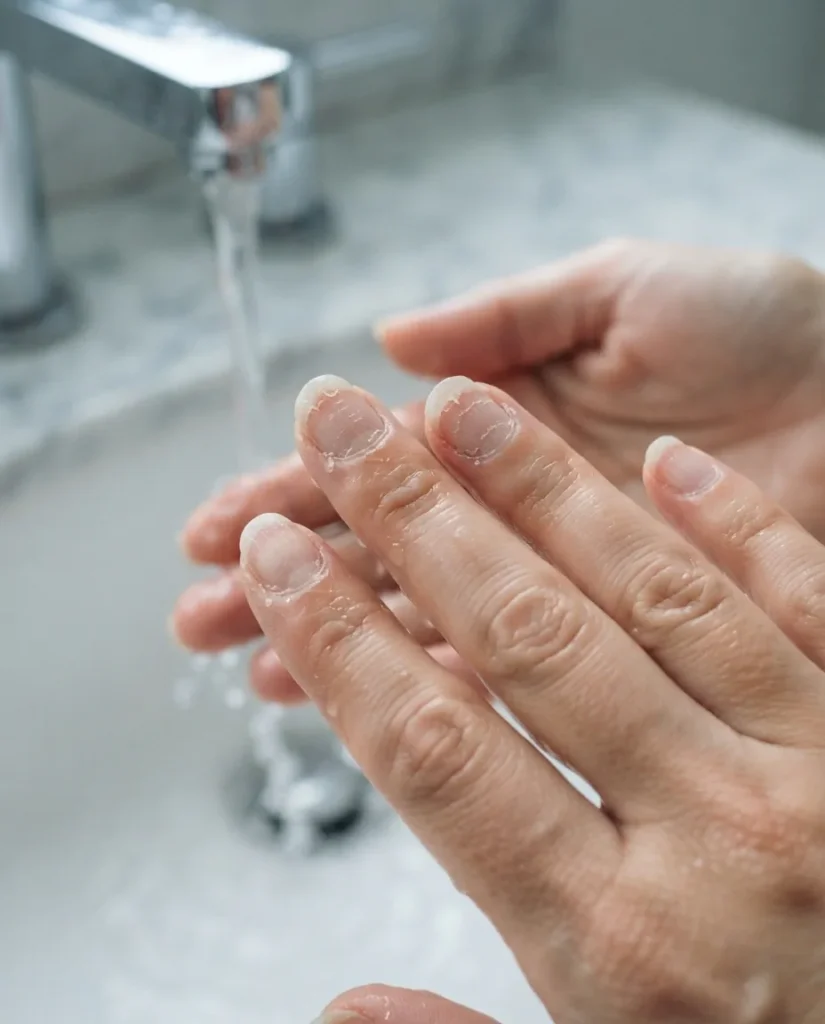
Your nails do not hydrate from the inside the way skin does. Staying well-hydrated overall matters for your health, but you cannot drink your way out of peeling nails.
Gel and Dip Removal Damage Is a Huge Factor
If you’ve recently removed gel or dip powder nails, especially if they were pried, picked, or peeled off rather than properly soaked, your nails are going to feel thin, bendy, and fragile for a while. That’s not damage to the nail plate’s growth center at the base, it’s surface damage to the layers that are already grown out. It will grow out, but it takes time, and the way you care for your nails in the meantime determines how much more damage happens before they’re back to normal. The American Academy of Dermatology’s guidance on reducing artificial nail damage is a good starting point if you’re in this exact situation and wondering where to begin.
Nutritional Gaps
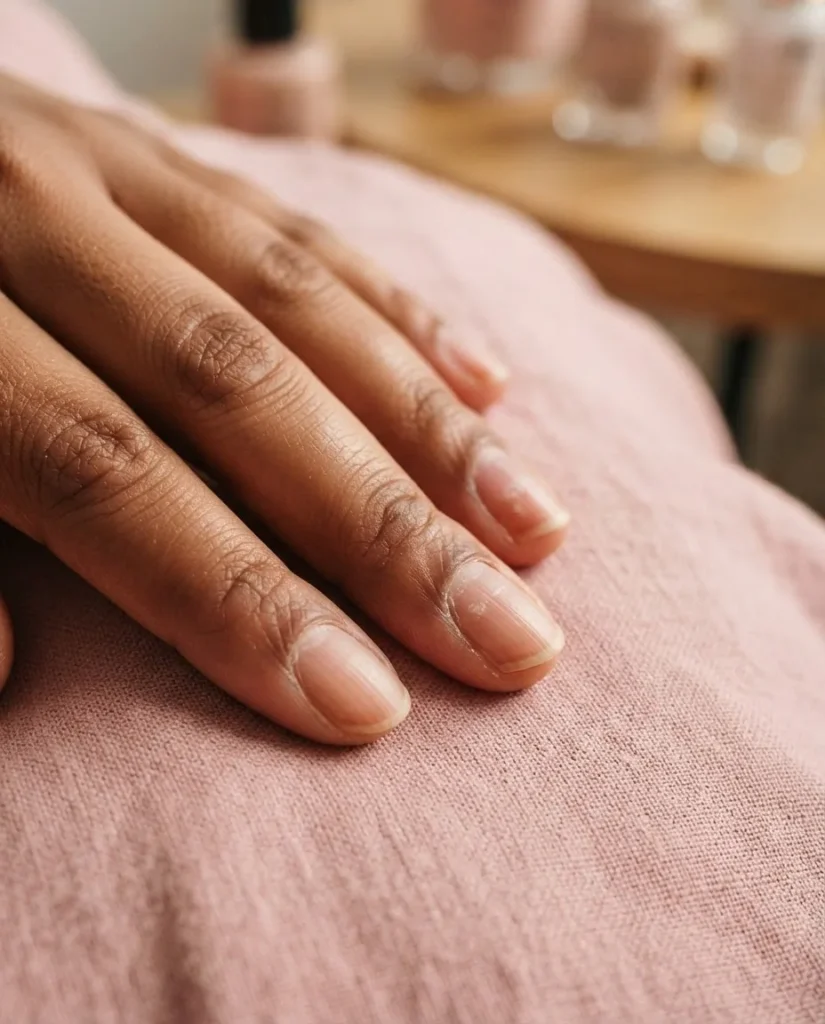
This one is real but often overstated. Your nails are made of keratin, a protein, and they need certain nutrients to build and maintain it properly. Iron deficiency is one of the most common nutritional links to brittle nails, and it is frequently missed because most people don’t get their ferritin levels checked unless they’re obviously symptomatic. Biotin (vitamin B7), zinc, and protein more broadly also play supporting roles. A published review in the journal Dermatology and Therapy found that among people with idiopathic nail fragility, meaning no obvious external cause, oral supplementation with biotin, zinc, iron, and amino acids like cysteine showed meaningful improvement, though the studies were relatively small and researchers noted that more controlled trials are still needed.
Occasionally, weak and brittle nails are a sign of something systemic going on, like thyroid dysfunction, psoriasis, or a fungal infection. If your nails are changing color alongside the brittleness, thickening, separating from the nail bed, or if the fragility showed up suddenly and doesn’t respond to anything you try, that’s worth mentioning to a doctor rather than troubleshooting at home.
Products and Habits You Might Not Realize Are an Issue
Acetone-based nail polish remover used frequently strips natural oils from the nail plate. Wearing very long nails means more surface area exposed to the drying effects of water and air. Filing in both directions (sawing back and forth) causes micro-fractures at the nail tip. Even certain nail polishes worn for months without a break can cause something called keratin granulation, a surface-level brittleness that looks like white patches on the nail once the polish comes off.
The Six-Step Plan to Actually Strengthen Your Nails:
Now that you know why your nails are struggling, here is a practical, honest approach to fixing it. This is not a weekend project. Nails grow roughly 3 millimeters per month, so the timeline for seeing real improvement is typically six to eight weeks at minimum, sometimes three to six months if you’re starting from significant damage. Expect gradual change, not overnight transformation.
Step 1: Stop the Wet-Dry Cycle in Its Tracks
This is step one because no other strategy will fully work if you skip it. Every time you do dishes, clean the bathroom, or spend extended time with wet hands, the nail plate is getting weakened. The fix is genuinely simple: rubber or nitrile gloves for cleaning and dishwashing. Ideally, wear thin cotton gloves underneath them if your hands are going to be in gloves for a long time, because moisture trapped against the nail from sweat can cause a different kind of softening. This might feel like a small thing, but in my experience it is the single habit change that makes every other effort worthwhile.
After washing your hands, pat them dry and immediately apply a hand cream or cuticle oil. The goal is to replace the oils and moisture before the drying process completes. This is not just nice skincare. It directly impacts how well your nail layers hold together.
Step 2: Cuticle Oil Is Not Optional
I know cuticle oil can feel like a nice-to-have rather than a need-to-have, but the science here is genuinely solid. A clinical study published on PMC (National Institutes of Health) found that topical nail and cuticle moisturizing treatments, particularly those that combine occlusive ingredients with hydrating ones, meaningfully improve nail plate flexibility and reduce brittleness over time. Cuticle oil works by penetrating the softer, living tissue around the nail and keeping the environment where new nail cells are forming healthy and well-supplied.
The best cuticle oils for this purpose tend to be based on jojoba oil (which has a molecular structure very close to your skin’s natural sebum, so it absorbs well), sweet almond oil, or argan oil. These are plant-based, widely available, and you can find budget-friendly versions at any drugstore. Apply a drop to each cuticle and the skin around the nail at least once a day, ideally twice.
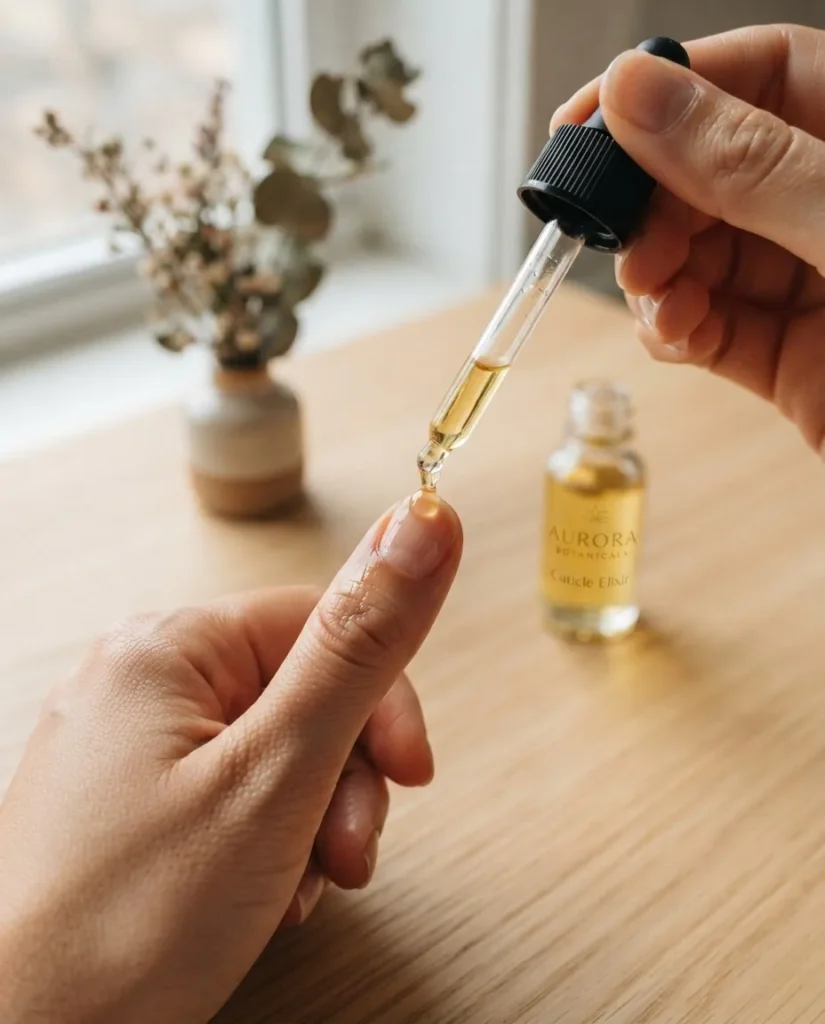
Massage it in gently. Night time is a great habit because your hands aren’t being washed afterward. If you want to go all in, try “nail slugging”: after applying your cuticle oil or hand cream, seal it in with a thin layer of petroleum jelly and wear cotton gloves to bed. It sounds absurd. It genuinely works for people with very dry, brittle nails.
Step 3: File Properly or Make Things Worse
The direction you file your nails matters more than most people realize. Filing in one direction only, from the outer edge toward the center on each side, prevents micro-tears at the nail tip that become the starting point for splits and peeling. Use a fine-grit file (240-grit is ideal for fragile nails) rather than a coarse emery board. Glass or crystal nail files are worth mentioning here because they create a very smooth edge and can be sanitized, making them a genuinely good long-term investment.
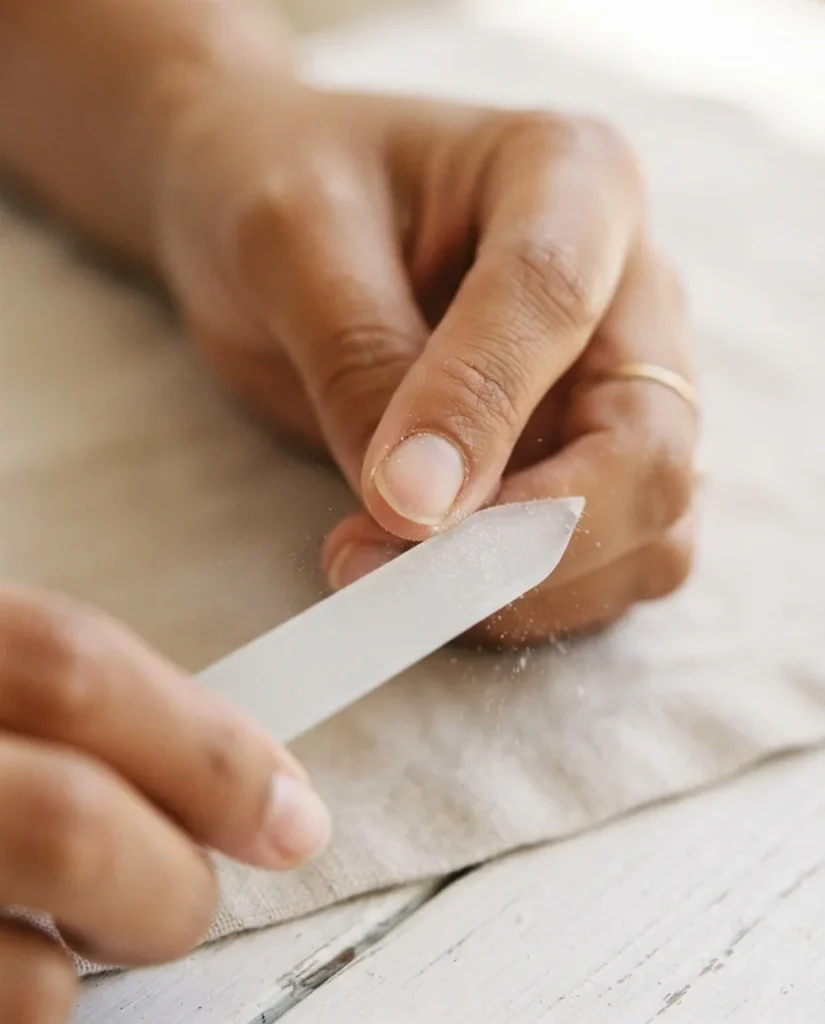
Keep nails a bit shorter than you might want to while you’re rebuilding strength. Shorter nails have less leverage against impact and are dramatically less likely to crack or peel back. You can grow them out as they get stronger. This is the one piece of advice that feels like a sacrifice but is actually the fastest route to where you want to be.
Board-certified dermatologists at the American Academy of Dermatology recommend filing with an emery board to keep nails shaped and snag-free, and also to cut nails straight across rather than deep curves at the corners, which can stress the nail structure at the sides. You can find their full nail care tips here.
Step 4: Choose the Right Protective Coat
Here is the clarification most people never get: nail hardeners and nail strengtheners are not the same thing.
A nail hardener typically contains formaldehyde resin (or sometimes formaldehyde itself), which works by creating rigid cross-links between the keratin chains in your nail.
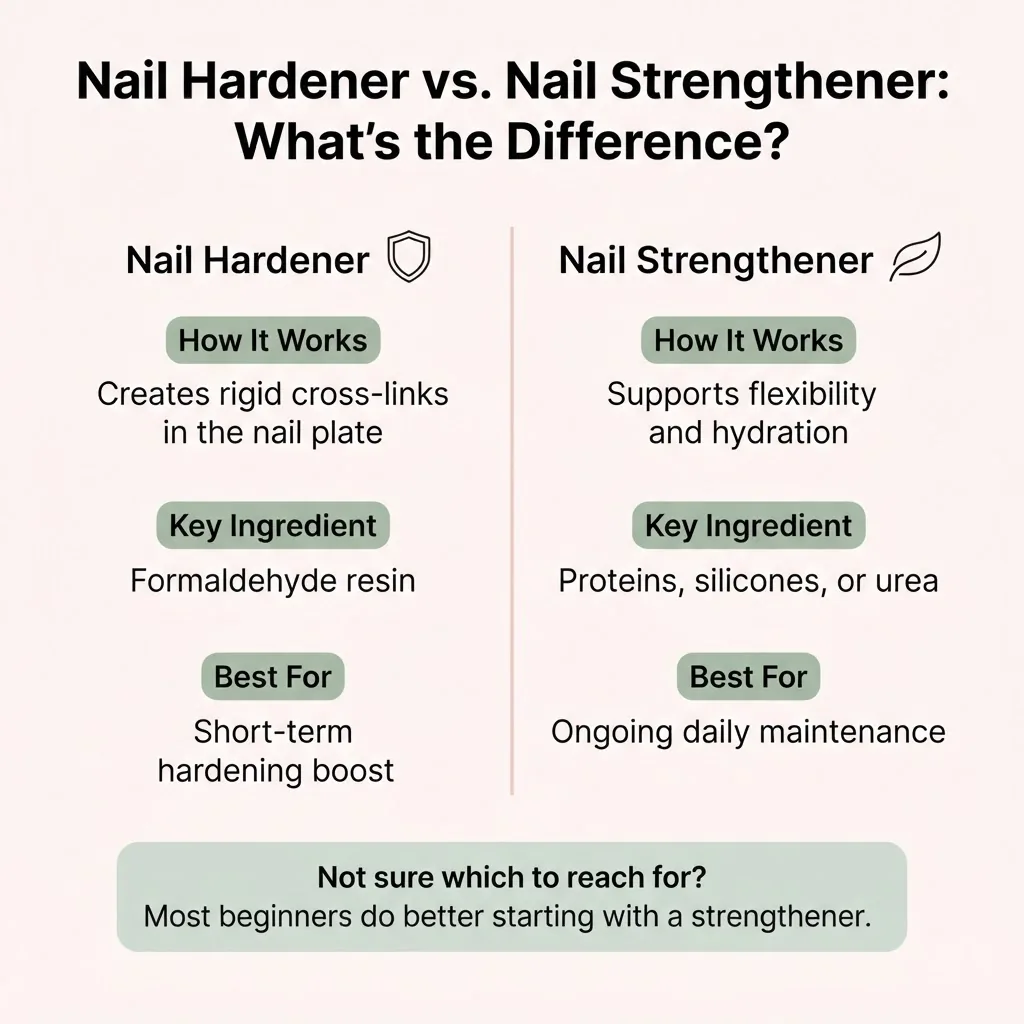
This makes the nail harder in the short term, but used continuously, it can actually make nails more brittle and prone to snapping rather than bending because they lose flexibility. These products are not for daily, long-term use. They’re more of a short-term boost, used for two to four weeks maximum, then given a break.
A nail strengthener or fortifier works differently. It tends to include ingredients like silicone compounds, hydrolyzed proteins, or alpha-hydroxy acids that support the nail’s structure while allowing it to retain some flexibility. These are generally safer for ongoing use. Some also include moisturizing agents like urea or glycerin.
For most people dealing with weak, peeling nails, a flexible strengthener or a good protective base coat is a better daily choice than a traditional hardener. If you choose a hardener, follow the usage instructions carefully and cycle off it. The FDA’s guidance on nail care products is worth reading if you want to understand what’s actually regulated in these formulas and what “free” claims (like “5-free” or “10-free”) actually mean.
If you want something closer to nail art without the pressure of intricate designs while your nails recover, a sheer tinted strengthener or a clean glossy base coat with fortifying ingredients is a completely valid option. Your nails look put-together, they’re protected, and they’re getting support.
Step 5: Feed Your Nails From the Inside
This section deserves both honesty and nuance. Supplements are not a replacement for the habits above, but for some people, they are a meaningful supporting strategy.
Biotin (vitamin B7) is the most researched supplement for nail health. It plays a role in keratin biosynthesis and the cohesion between nail cells. A peer-reviewed review in Dermatology and Therapy, available via the National Institutes of Health, found that a dose of around 5 to 10 mg daily for three to six months was the range used in most positive studies. Cleveland Clinic’s dermatologists suggest around 5,000 micrograms (which is 5 mg) daily as a starting point. There is a caveat worth mentioning clearly: very high biotin intake can interfere with certain lab tests, including thyroid panels and cardiac troponin tests, because it affects the technology some immunoassays use. If you’re taking high-dose biotin and you have blood work scheduled, let your doctor know beforehand.
If you suspect an iron deficiency specifically, it’s worth getting your ferritin checked rather than self-supplementing blindly, because the right dose matters and iron can be harmful in excess. The same applies to zinc. A varied, protein-rich diet is the baseline, and supplements work best when filling a specific gap rather than acting as a general cure.
Mayo Clinic also notes that some research supports biotin supplementation for weak nails, though results can take up to a full nail growth cycle to become visible. You can read their full nail care guidance at Mayo Clinic’s fingernail health page.
Step 6: Give Your Nails a Real Break (Sometimes)
If you’ve been in gel or dip continuously without breaks, your nails may need time without any coating to recover. A few weeks of wearing nothing or a breathable treatment coat, while applying cuticle oil daily and protecting your hands from wet work, can make a noticeable difference. This doesn’t mean gel is bad forever. It means that like most things, it’s about how you use it and how you remove it. Proper soak-off removal, never peeling, never picking, is non-negotiable. The damage from picking off a gel manicure can peel away the top layers of your nail plate, leaving the surface thin and vulnerable for weeks.
What Actually Doesn’t Work (So You Can Stop Wasting Money):
A few myths worth laying to rest directly.
Drinking gelatin will not strengthen your nails. This has been tested, including informally by Cleveland Clinic’s own Dr. Rosemary Keskinen, who tried it herself as a teenager and can confirm it does nothing. Nail polish itself does not damage nails when applied over a good base coat and removed properly. The damage usually comes from the removal process, not the polish. And “whitening” nail treatments that claim to remove keratin granulation (those chalky white patches you get after wearing dark polish for months) are largely cosmetic, they buff the surface rather than treating any underlying issue.
A very long soak in water is often suggested in DIY beauty content as a way to soften and strengthen nails, but this is the opposite of helpful. Extended water exposure is exactly what causes brittleness in the first place.
A Timeline to Set Your Expectations:
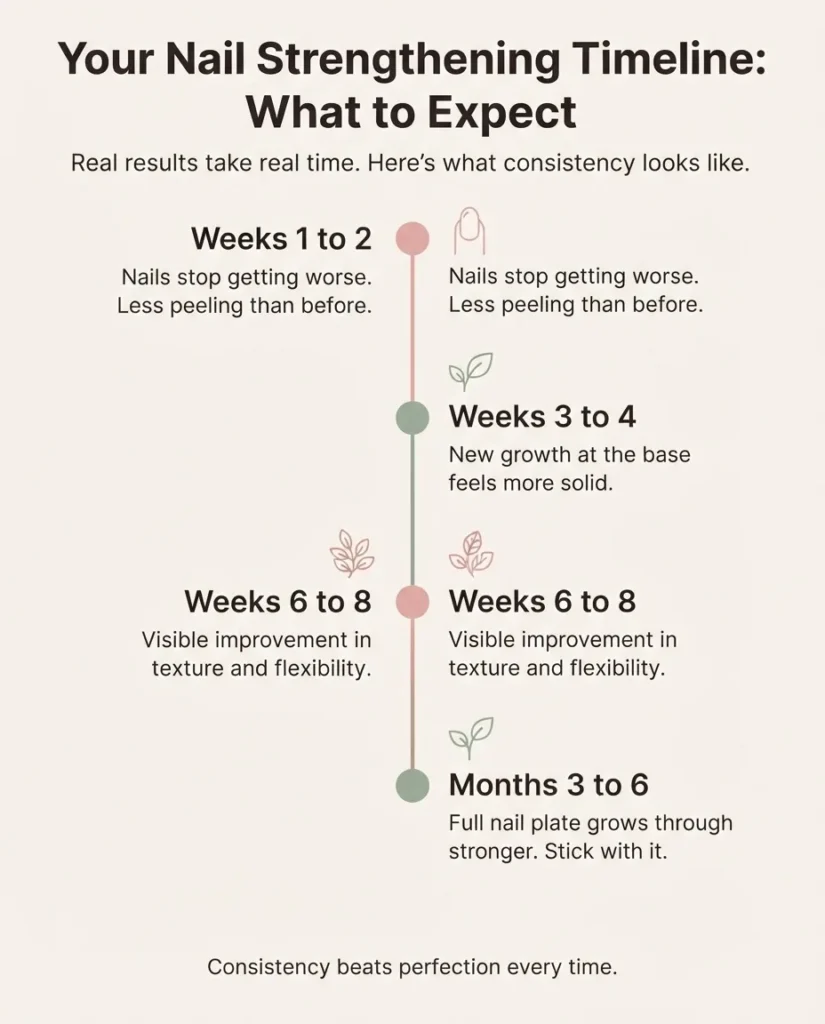
This is the part nobody tells you. In the first two to four weeks, you probably won’t see dramatic change. What you should notice is that your nails stop getting worse, they stop peeling as fast, and new growth coming in at the base starts to feel a little more solid. By six to eight weeks, if you’ve been consistent with the gloves, the cuticle oil, the correct filing, and a protective coat, most people see meaningful improvement in nail texture and flexibility. A full nail plate takes roughly three to six months to grow out completely, which is why dermatologists consistently say to give any nail strengthening routine at least that long before concluding it isn’t working.
If I can build strong enough nails to run my own nail lab testing on a very long workday, so can you. You just need to start with the right foundation and give it some patience.
When to See a Doctor:
A few situations where home care is not the right first move. If your nails are yellowing, thickening, or separating from the nail bed alongside being brittle, that could be a fungal infection and needs an actual diagnosis. If the brittleness is accompanied by changes in hair texture, energy levels, or unexplained weight changes, ask your doctor to check your thyroid and iron levels. And if you notice redness, swelling, pain around the nail fold, or anything that looks like an infection, see a professional rather than trying to treat it yourself. Pain, discoloration, and sudden changes in nail texture are always worth getting checked.