8 Curly Girl Products Under $15 That Actually Work
I want to say something upfront that I wish someone had said to me earlier: you do not need a $40 leave-in conditioner to start the Curly Girl Method. I know the internet will have you convinced otherwise. Every comment section, every YouTube haul video, every “starter kit” roundup seems to assume you have eighty dollars to blow on hair products before you even know if this routine is going to work for your texture.
You don’t. And you shouldn’t have to.
I’ve been deep in the hair world for years, from my salon-assistant days in Austin (where I watched stylists work with every curl type imaginable) to obsessively researching budget-friendly routines ever since. And I can tell you with full confidence that some of the best curly girl products on the market cost less than a fast food lunch. The trick is knowing which ones to grab and why they work, so that’s exactly what we’re doing here.
This list covers eight real products, all under $15, that you’ll find at a drugstore or big-box store. No sketchy online-only brands, no products that went out of stock three years ago, and no vague advice like “just use a good conditioner.” We’re getting specific.
Before We Get Into the Products: The Very Short Version of What CGM Actually Is
If you’re totally new to the Curly Girl Method, here’s the quick background. The CGM, originally outlined by Lorraine Massey, is a hair care approach built around avoiding ingredients and habits that dry out and damage naturally wavy, curly, and coily hair. The big ones to skip are sulfates (harsh cleansers that strip moisture), water-insoluble silicones (the things that coat your strands and cause buildup if you’re not using sulfates to wash them out), and drying alcohols.
The basic routine involves a gentle cleanse, plenty of conditioner applied using techniques that help it actually penetrate the hair, and a styling product applied to soaking wet hair to encourage your natural curl pattern. Then you let it dry without touching it too much.
That’s it at its core. The advanced layers, like understanding your hair’s porosity level, balancing protein and moisture, and figuring out your specific gel-to-cream ratio, come later. For now, the goal is just to get started with products that won’t fight against your hair.
One thing I always recommend before buying anything: paste the ingredient list of any product you’re considering into CurlsBot, a free ingredient analyzer built specifically for CGM.
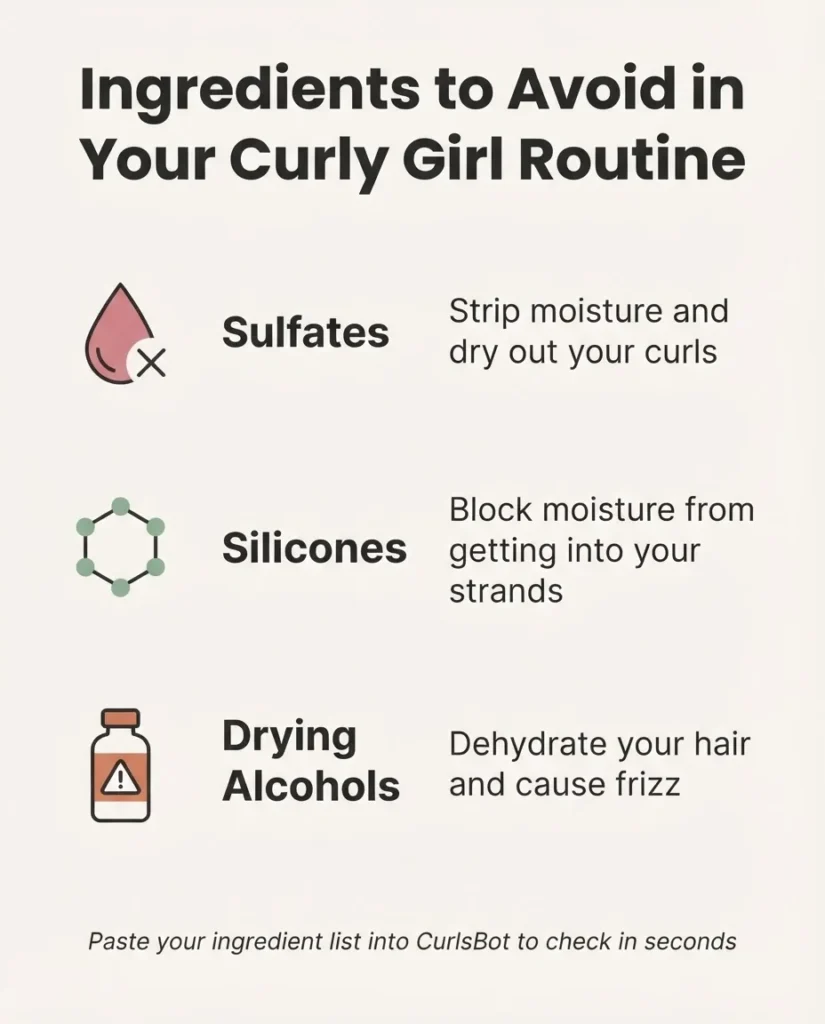
It will tell you in seconds if a product contains silicones, sulfates, or other ingredients that could work against your routine. I use it constantly when I’m evaluating new drugstore finds.
The 8 Products (And Why Each One Earns Its Spot)
1. Garnier Fructis Pure Clean Styling Gel ($3 to $5)
This is the one I point every single beginner toward first, and I mean every single one. It’s about $3 to $5 depending on where you shop, it’s CG-approved (meaning no silicones and no drying alcohols), and it provides a strong enough hold to actually define curls and fight frizz without leaving a sticky residue that never goes away.
The key ingredient that makes it work is carbomer, a water-based polymer that creates hold without coating your hair in anything that needs a heavy cleanser to remove. That matters a lot in CGM, because everything you use needs to be removable by a gentle, low-lather cleanser.
For wavy hair (types 2a through 2c), use a smaller amount, maybe a quarter-sized dollop distributed through soaking wet hair with a “praying hands” motion, smoothing it over your waves without disrupting the pattern.

For curlier types (3a and up), scrunch the gel in generously from the ends upward while your hair is absolutely dripping wet. Don’t be shy with it. The white cast it leaves while drying will disappear once your hair is fully dry, and you can scrunch out the crunch at the end for soft, touchable curls.
If it’s leaving your hair feeling stiff after it fully dries, you’re either using too much or applying it to hair that isn’t wet enough. Try more water, not less product.
2. TRESemmé Botanique Nourish and Replenish Conditioner ($5 to $7)
Finding a CG-approved drugstore conditioner used to be genuinely hard. A lot of the affordable ones sneak silicones in, which then coat your hair and prevent moisture from getting in, and then your routine stops working and you don’t know why. This one from TRESemmé’s Botanique line is the exception. It’s CG-approved, it’s widely available, and it costs around $5 for a big bottle, which is an incredible deal given how much conditioner the CGM uses.
The reason you go through so much conditioner in CGM is a technique called “squish to condish,” where you apply a generous amount of conditioner to soaking wet hair and then scrunch upward, using the water in your hair to help the conditioner distribute and actually work its way into the strand. This technique is especially helpful for high-porosity hair, which tends to absorb water fast but lose it just as quickly.
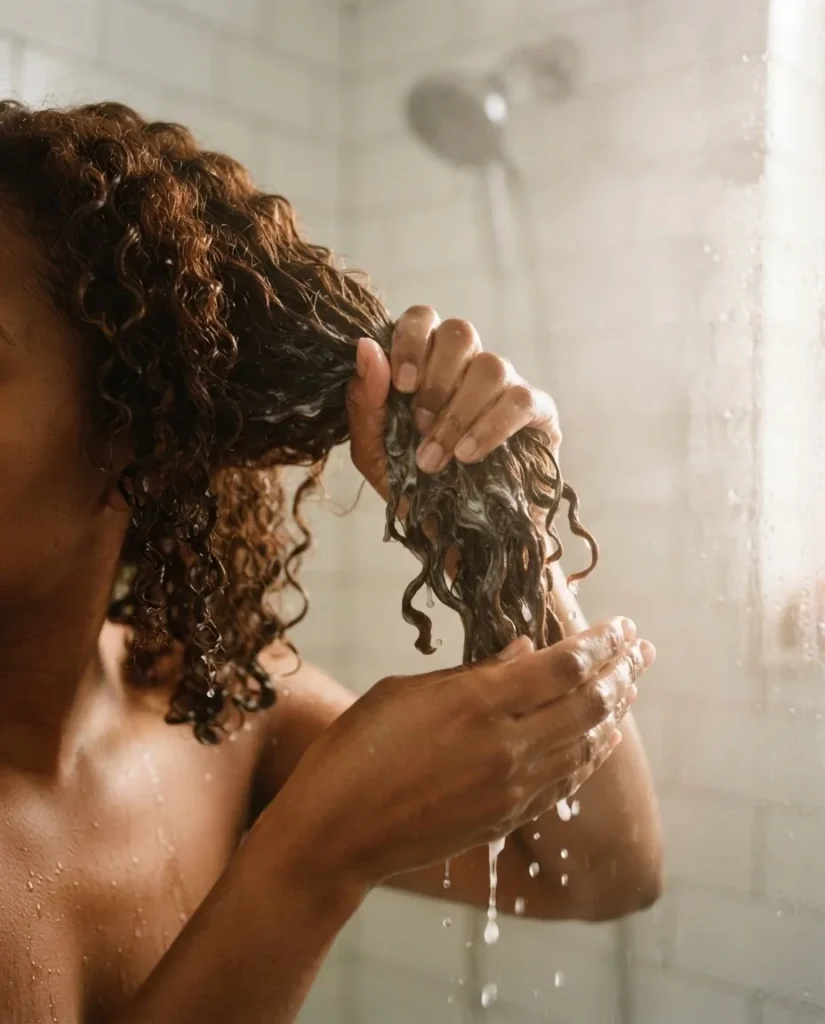
The TRESemmé Botanique conditioner is rich enough to work as a rinse-out and also as a co-wash (a conditioner-only wash) on non-shampoo days.
Tip for finer wavy hair: you might find this a bit heavy if you use it all the way to your roots. Apply it mid-length to ends and rinse it slightly less completely than you think you need to, leaving a little slip still in the hair before you style.
3. SheaMoisture Coconut and Hibiscus Curl Enhancing Smoothie ($10 to $15)
This is the “curl cream” of the lineup, and it’s genuinely one of the most beloved affordable curly products that’s been around for years. At roughly $10 to $13 at Target or Walmart (and sometimes on sale), it sits right at the edge of the budget but it delivers.
Curl cream is the product you apply to wet hair before your gel. Think of it as the “nourisher” in your routine: it helps your curls clump together, adds definition, and keeps things softer and more moisturized than gel alone would. The Curl Enhancing Smoothie contains coconut oil, neem oil, and silk protein, which together add shine and help fill in rough, raised cuticles.
This one performs best on hair types 3a and above, as well as 4a and 4b coils. If you have fine 2b wavy hair, it can be a lot. Start with a very small amount, emulsify it between your palms until it’s almost transparent, and then apply it to dripping wet hair before your gel. If your waves fall flat after drying, use even less next time or skip the cream entirely and stick to gel only.
One honest note: this product is heavier than some in the CGM world, so if you find your hair feeling weighed down after a few uses, try doing a clarifying wash (more on that below) to reset and then reassess.
4. Garnier Fructis Sleek and Shine Argan Sulfate-Free Shampoo ($5 to $8)
At some point you will need to clarify your scalp with an actual shampoo, even in CGM. The idea that you never use shampoo is a common beginner misconception. What CGM actually asks you to avoid is harsh sulfates like sodium lauryl sulfate (SLS), which can strip the scalp’s natural oils aggressively and lead to more dryness and more frizz. But gentler sulfate-free shampoos are completely part of a healthy CGM routine.
Board-certified dermatologists consistently note that overwashing curly hair can lead to dryness and frizz because curly strands, by nature of their spiral shape, have a harder time distributing natural scalp oils down the length of the hair. If you want to understand more about why curly hair needs a gentler approach to cleansing, the American Academy of Dermatology’s curly hair care guide breaks it down clearly and is worth bookmarking.
This Garnier shampoo is one of the more affordable sulfate-free options at most drugstores. It lathers lightly, which is normal for a sulfate-free formula, and it cleans well without leaving your hair feeling like straw. Use it on your scalp only, and let the water rinse it down the length of your hair rather than scrubbing it through all the way to your ends.
5. Eco Styler Olive Oil Styling Gel ($4 to $8)
If the Garnier Pure Clean is the beginner gel, the Eco Styler Olive Oil is the intermediate one. It’s become a staple in the natural hair and CGM communities because it’s affordable, widely available, and creates a strong hold with great definition. You’ll find it at beauty supply stores, Walmart, and Target for roughly $4 to $8 depending on the size.
The olive oil component is a nice touch because it gives a tiny bit of conditioning while still setting your curls firmly. This gel tends to perform especially well for hair types 3b, 3c, 4a, and above, where you want serious clumping and hold.
For the best results, apply it in sections to absolutely soaking wet hair. Work from your ends upward, scrunching firmly. Then either air dry or diffuse. The gel will create a hard “cast” while your hair dries, which is exactly what it’s supposed to do. Once your hair is completely dry (not just mostly dry), scrunch the cast out gently with your hands or a microfiber cloth to reveal soft, defined curls underneath.

Beginners sometimes freak out during the cast stage and try to break it early, or they add more product to try to soften it while it’s still wet. Don’t do either. Trust the process and wait.
6. Giovanni Direct Leave-In Weightless Moisture Conditioner ($8 to $12)
A leave-in conditioner sits between your rinse-out conditioner and your styler. It adds an extra layer of moisture and helps with detangling before you apply gel or curl cream. For a lot of hair types, especially high-porosity or low-density hair, a lightweight leave-in can make the difference between curls that hold all day and curls that puff out by noon.
The Giovanni Direct Leave-In has been a community favorite in CGM circles for a long time. It’s lightweight enough for finer textures (unlike some leave-ins that immediately flatten waves), it’s fragrance-light, and it’s CG-approved. At around $8 to $12 at health food stores and online, it fits the budget.
Apply it to your hair after rinsing out your conditioner, while your hair is still very wet. A small amount goes a long way. Work it through with your fingers from mid-length to ends, then move straight into your styler without letting your hair dry between steps. The “wet over wet” layering is important in CGM because each product needs to be applied while your hair still has enough water in it to activate the technique.
Note: a small percentage of reviewers with fine wavy hair find this one a touch heavy. If that’s you, try applying it only to your ends, or dilute a small amount with water in your palm before applying.
7. LA Looks Extreme Sport Styling Gel ($3 to $5)
This one has quietly become a cult favorite in the curly and wavy hair community, and the price point alone is almost absurd: usually around $3. The LA Looks Sport gel is CG-approved (check the specific “Extreme Sport” blue variety, not all formulas in the line are the same) and delivers a strong, frizz-fighting hold that reviewers consistently describe as comparable to much more expensive curl gels.
It works similarly to the Garnier Pure Clean but with a stronger hold, which makes it a better option for thicker or denser hair that needs more control. Some people with fine wavy hair find it too heavy on its own but love it mixed with a lighter gel. The community trick of blending two gels, a lighter one applied first and a stronger one on top, is worth experimenting with once you’ve been doing CGM for a few weeks and have a better feel for what your hair needs.
Understanding how your hair’s porosity affects product absorption is key to getting the most out of any styler. Curlsmith’s hair porosity guide is one of the clearest free resources I’ve seen for understanding whether your hair tends to repel moisture (low porosity) or absorb it quickly but lose it just as fast (high porosity), both of which affect which products and techniques will work best for you.
8. A Microfiber Hair Towel ($7 to $15)
Okay, technically this isn’t a hair product, but I’m including it because it might be the single most impactful thing you can do for your curl definition for under $15, and it often gets left out of these lists. Most beginners are drying their hair with a regular cotton towel, and cotton creates friction that roughens the hair cuticle, causes frizz, and physically disrupts your curl clumps before they’ve even had a chance to set.
Microfiber towels are made with extremely fine fibers that absorb water gently without creating that friction. After applying your styling products, use your microfiber towel to do a loose “plopping” technique: lay the towel flat, flip your hair forward so it falls into the center, then wrap and twist the towel up into a loose turban and leave it for 10 to 20 minutes.

This helps remove excess water without disrupting your curl pattern, gives your curls a head start on clumping, and speeds up drying time.
If you want to see exactly how plopping works before you try it, Christophe Robin’s breakdown of the plopping technique includes a solid visual walkthrough of the steps.
You can find microfiber hair towels at TJ Maxx, Marshall’s, Target, and online for anywhere from $7 to $15. Any brand works. Just make sure it’s a towel designed for hair (they tend to be longer and lighter than microfiber cleaning cloths).
The Ingredient Check You Should Do Every Time You Shop
One habit I really want you to build from the start is checking product ingredients before you buy, not after. It sounds fussy but it takes about 30 seconds. Here’s what you’re scanning for:
Any word ending in “-cone,” “-conol,” or “-zane” is almost always a silicone, such as dimethicone, cyclomethicone, or amodimethicone. Water-insoluble silicones are the main concern in CGM because they coat the hair shaft and block moisture from getting in. Some silicones are water-soluble (PEG-modified ones, for example) and are generally considered fine in CGM because they rinse out without a sulfate shampoo. Sulfates, specifically sodium lauryl sulfate and sodium laureth sulfate, are the harsh cleansers you want to avoid in your everyday products. They’re fine occasionally for a clarifying reset but not as your regular wash. Drying alcohols like isopropyl alcohol or propanol can dehydrate your strands.
To check any product in seconds, paste its ingredient list into the free IsItCG ingredient checker. It highlights problem ingredients immediately and explains why each one matters. This is especially helpful when you’re standing in a drugstore aisle trying to figure out if a product works.
A Quick Word on Starting Slow
The most common beginner mistake I see with CGM isn’t using the wrong product. It’s changing everything at once, having one rough wash day, and quitting before your hair has had time to adjust. Your hair has likely been coated with silicone buildup for years, and it can take two to four weeks of consistent CGM before your natural texture starts to fully emerge.
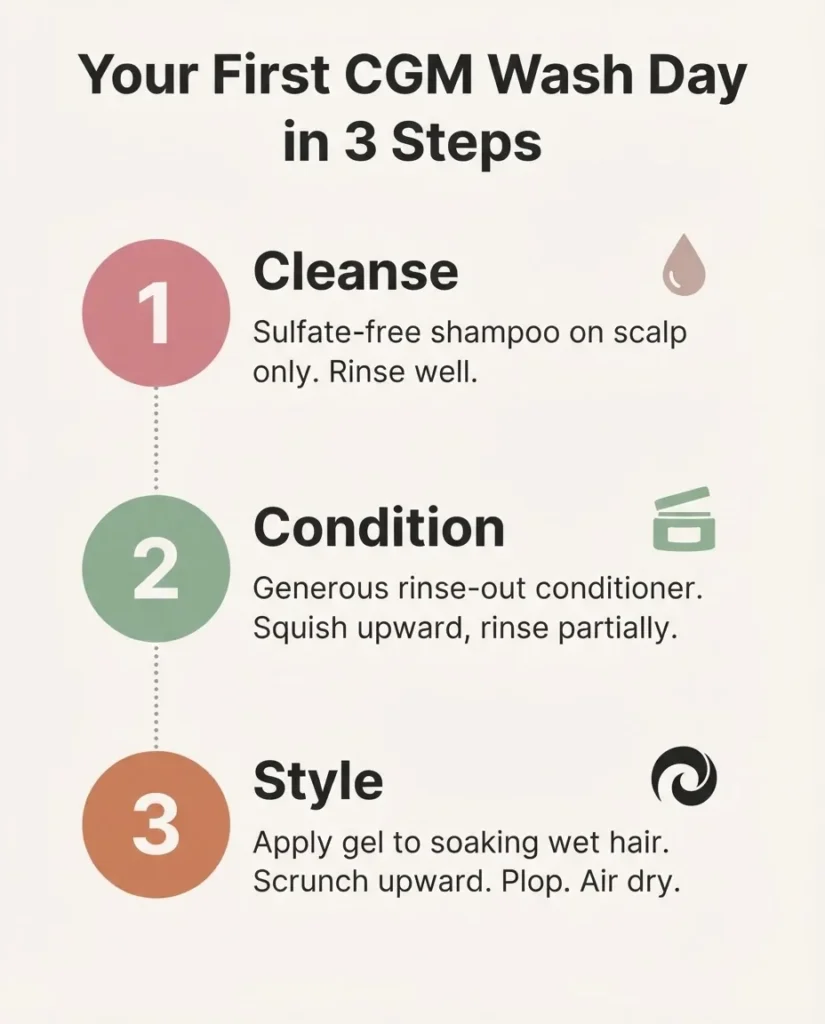
Start with just three products: a gentle sulfate-free shampoo, a rich rinse-out conditioner, and one styling product.
Get those working together before you add a leave-in or a curl cream. Build the routine slowly and take notes on what your hair looks like after each wash day. That’s how you learn what your hair actually needs, which is always more useful than any product list.
If at any point your scalp feels itchy, irritated, or develops unusual flaking, stop using new products and give it a rest. Any kind of scalp reaction that doesn’t resolve on its own is worth checking with a dermatologist, especially when you’re overhauling your routine.
Putting It All Together: A Beginner Starter Routine
Here’s a simple way to use these products on your first CGM wash day.
Start by clarifying. On your very first CGM wash day, do a clarifying wash to remove any existing silicone buildup. Use a clarifying shampoo (some people use a cheap sulfate shampoo just this once, just this first time, to get a clean slate) and rinse well. This is the only time you’re intentionally using a sulfate.
On wash days going forward, use the Garnier Sulfate-Free Shampoo on your scalp only, massage it in gently, and rinse. Follow with a generous amount of the TRESemmé Botanique Conditioner, let it sit for a couple of minutes, then scrunch it in using the squish-to-condish technique, and rinse partially (leave some slip in your hair). If you’re using the Giovanni Leave-In, apply a small amount now while your hair is still dripping wet. Then apply your styling gel (Garnier Pure Clean or LA Looks Extreme Sport) by scrunching upward firmly through soaking wet hair. Plop in your microfiber towel for 10 to 20 minutes. Diffuse or air dry without touching your hair. Once completely dry, scrunch out the crunch.
That’s it. Simple, under $30 total for the whole lineup, and it covers every step of a real CGM routine.