How to Grow Nails Longer at Home, Even From Scratch
I want to be upfront with you right at the start, because I think you deserve honesty more than you deserve hype. There is no serum, no vitamin, no olive oil soak that will make your nails literally grow faster overnight. Anyone promising that is selling you a fantasy. What IS absolutely real, and genuinely life-changing for your nail length, is learning how to stop breaking the nails you already have, how to keep the nail bed healthy enough for strong growth, and how to give your nails a real fighting chance every single day.
Because here is the thing. Most people do not have a nail growth problem. They have a nail retention problem. Your nails are growing right now, about 3.47 millimeters per month on average, or roughly the thickness of a ballpoint pen cap per day. That is actually not nothing. The issue is that they snap off almost as fast as they come in, so it feels like they are not moving at all.
That is exactly the cycle I was stuck in for years before I figured any of this out. And once I understood why my nails kept breaking, the whole game changed. So let me walk you through what actually works, what is mostly myth, and how to build a nail routine that holds up even if you are doing dishes, typing all day, or functioning like a normal human being.
First, Understand What Your Nails Are (And Are Not)
Your nail is made almost entirely of a protein called keratin. The hard part you can see and paint, called the nail plate, is already dead tissue by the time it is visible. That means you cannot “heal” or “nourish” the nail plate itself with topical products the way some marketing would have you believe. What you are actually nourishing when you use cuticle oil or hand cream is the nail bed and the surrounding skin, and the nail matrix at the base of the nail, which is where all new nail growth actually begins.
Think of the nail matrix as the factory. If the factory is healthy, well-supplied, and undamaged, it produces strong, smooth nails.
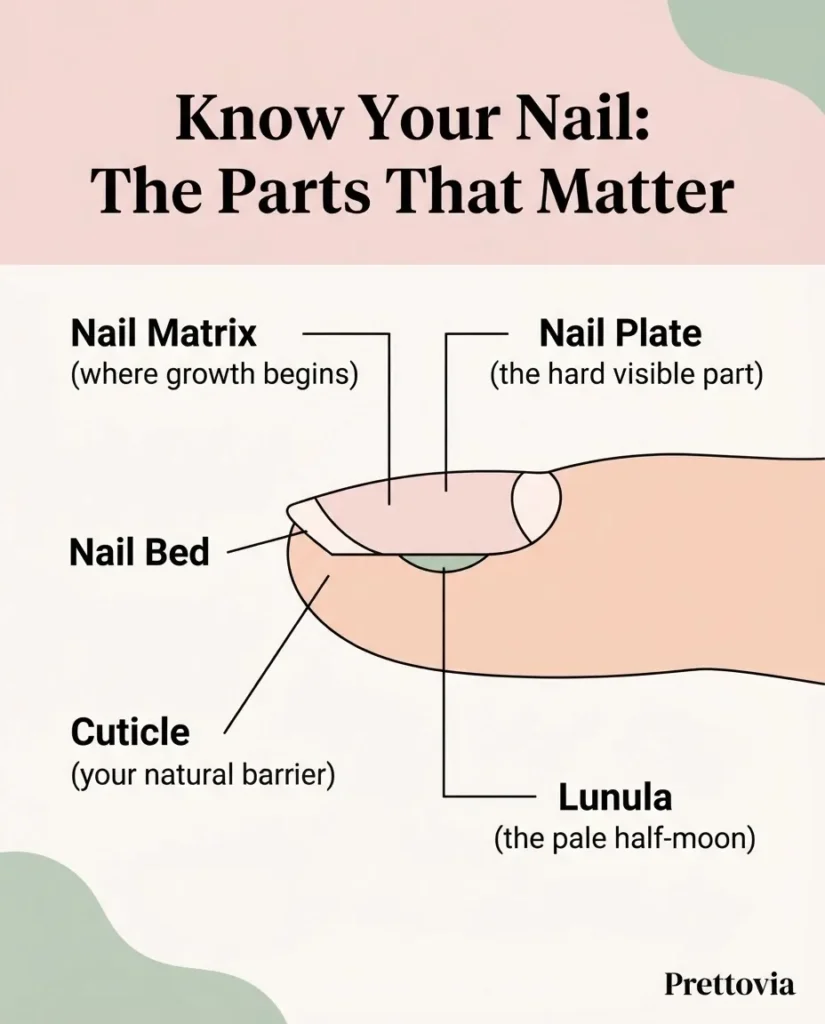
If it is dry, stressed, or traumatized (by aggressive cuticle cutting, for example), the nails that come out of that factory will be thin, ridged, or brittle before they even get a chance to grow.
This is why nail growth is really a long game played in the nail bed and skin, not a quick fix painted on top.
According to a 2010 peer-reviewed study on nail growth rates, fingernails grow an average of 3.47 mm per month, and the nails on your dominant hand actually grow slightly faster than the others, likely because more frequent use and minor everyday trauma drives extra circulation to that hand. Your nails also grow faster in summer than in winter, and faster during the day than at night. That is just biology, and it means timing and season genuinely play a small role in what you see.
The Honest Truth About “Growing Nails Faster”
Here is what I want you to bookmark in your brain so you can stop chasing shortcuts that do not exist. As Medical News Today notes in their medically reviewed guide to nail growth, there is currently no proven method to make nails grow faster than your body’s natural rate. What the evidence does support is making nails stronger and more resistant to breaking, which is the real way to end up with longer nails over time.
Longer nails come from nails that do not snap. Full stop.
So every tip in this article is aimed at one of two things: keeping the nail structure strong so it survives daily life, or supporting the nail bed and body well enough that the nail growing in is healthy from the start. When both of those things are true at the same time, you will be amazed at how much length you can actually retain.
What to Do About Your Diet (Without Overcomplicating It)
Your nails are literally built from the food you eat, so nutrition is genuinely the first place to look if your nails are consistently thin, peeling, or slow to recover from damage.
The most important building block is protein. Keratin, the stuff nails are made of, is a protein, and your body cannot manufacture it without adequate dietary protein. If you are under-eating protein or going through a restrictive diet phase, your nails are often one of the first places that shows it.
Beyond protein, certain micronutrients have real research behind them. Iron deficiency is well-documented as a cause of spoon-shaped, brittle, or slow-growing nails. Zinc plays a role in tissue repair and growth. Vitamin C helps your body synthesize collagen, which supports the nail bed. Omega-3 fatty acids from sources like salmon, flaxseeds, and walnuts help keep the nail plate flexible rather than dry and crack-prone. Healthline’s medically reviewed guide to vitamins for nails covers all of these in detail, including which food sources to prioritize and when supplementing might make sense.
Biotin (vitamin B7) is the one that gets the most marketing attention, and it deserves its own honest conversation. Biotin can genuinely help with brittle nails, but the research is more nuanced than the gummy bear ads would have you believe. A review published in PMC by the National Institutes of Health found that in the published cases where biotin supplementation improved nails and hair, patients had an underlying deficiency or pathology. If your diet is already adequate and you do not have a biotin deficiency, the evidence that extra biotin will do much for you is limited. That said, if your nails are soft and bendy and your diet is not great, it is a reasonable thing to try (the commonly studied dose is around 2.5 mg per day). Just do not expect miracles in a week.
A general tip I stand behind from my own routine: eat your protein, drink enough water, get leafy greens in when you can, and if you are going through a stressful season, a basic multivitamin that includes B vitamins, zinc, and iron is a reasonable safety net. None of this is revolutionary. But it works over time, and it is the foundation everything else builds on.
The Cuticle Oil Habit That Actually Changes Things
If I had to pick one single product that shifted my nail length journey, it would be cuticle oil. Not because it is magic, but because consistently moisturized nail beds produce noticeably more flexible, resilient nails that bend before they break.
The cuticle is not just cosmetic. It is a seal that protects the nail matrix from bacteria and environmental damage. When dermatologists at the American Academy of Dermatology talk about nail care, they consistently emphasize keeping cuticles moisturized and never cutting them aggressively. Cutting the cuticle away creates a gap in that protective barrier and puts you at genuine risk of infection and inflammation near the nail matrix, which can affect the quality of the nail that grows in.
So please put down the cuticle nipper unless a trained professional is doing minor snag removal. Instead, use cuticle oil every single day.
Here is how I actually use it, not just a vague “apply it” instruction. At night before bed, I put a small drop on each cuticle and gently massage it in using small circular motions for about 30 seconds per hand. The massage piece matters because it helps stimulate circulation to the nail bed.
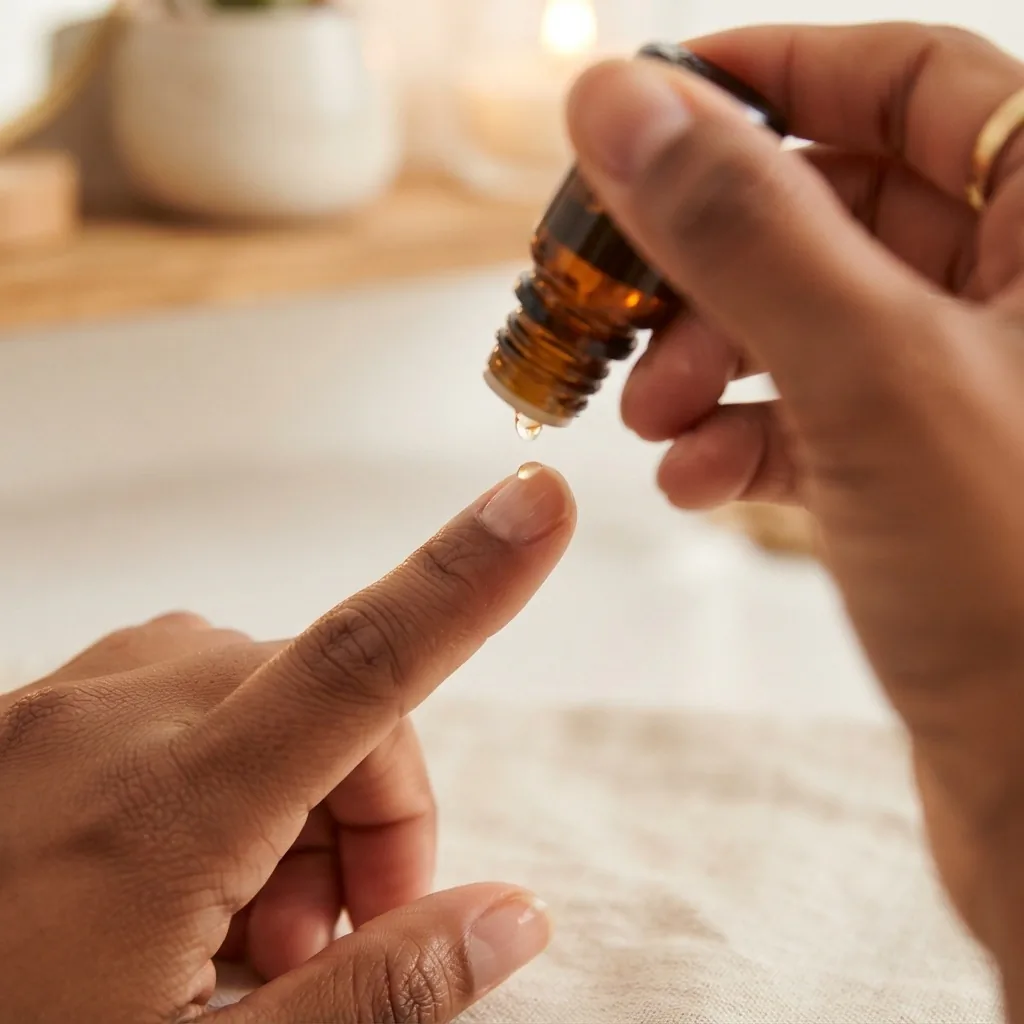
In the morning, I follow up with a rich hand cream after washing my hands.
For cuticle oils, you do not need to spend a lot. Budget-friendly jojoba or vitamin E based oils work beautifully. You can find them at Sally Beauty or even the drugstore for a few dollars. If you want to treat yourself, brands like CND SolarOil and Essie Apricot Cuticle Oil are well-loved. But I genuinely reach for the cheap stuff just as often and my nails cannot tell the difference.
Protect What You Have: The Breakage-Prevention Playbook
Growing nails is one thing. Keeping them intact is the real art. Here are the habits that matter most, written in the order I would actually introduce them into your life.
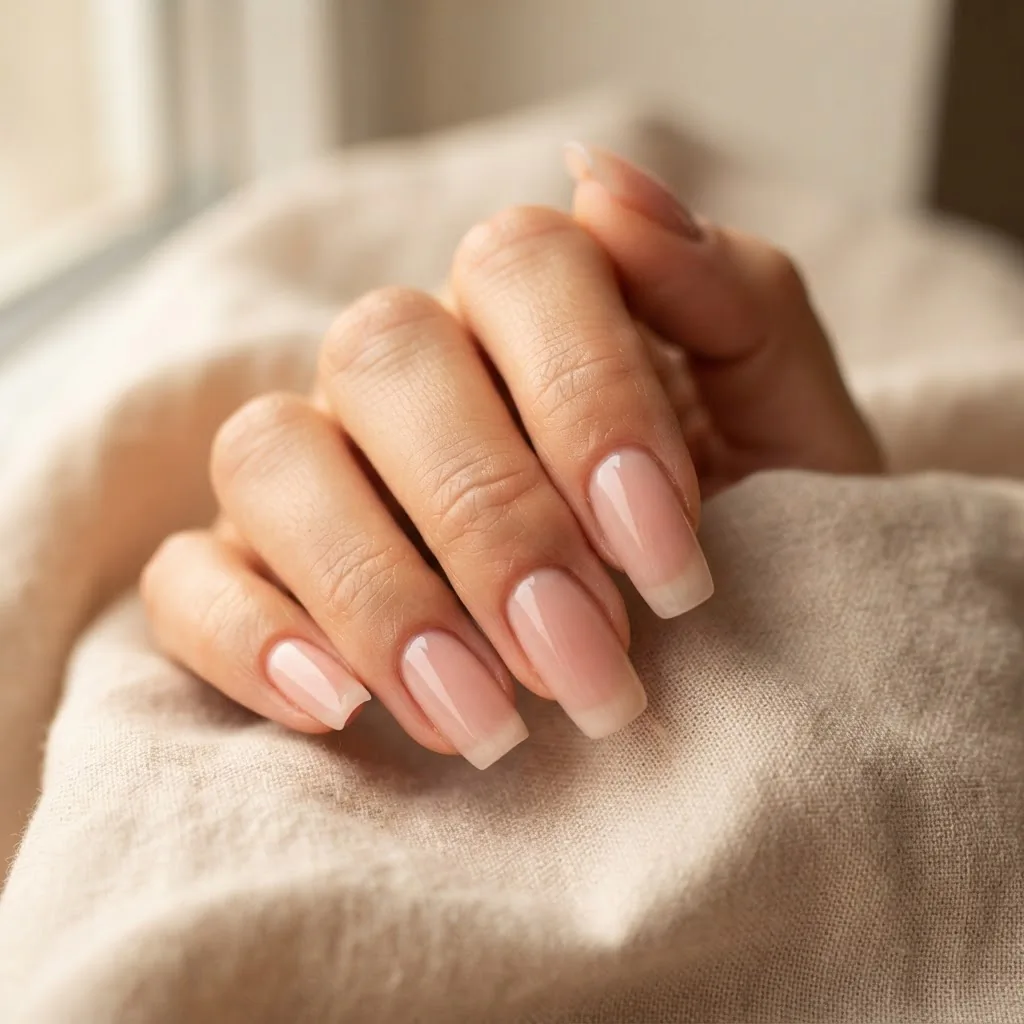
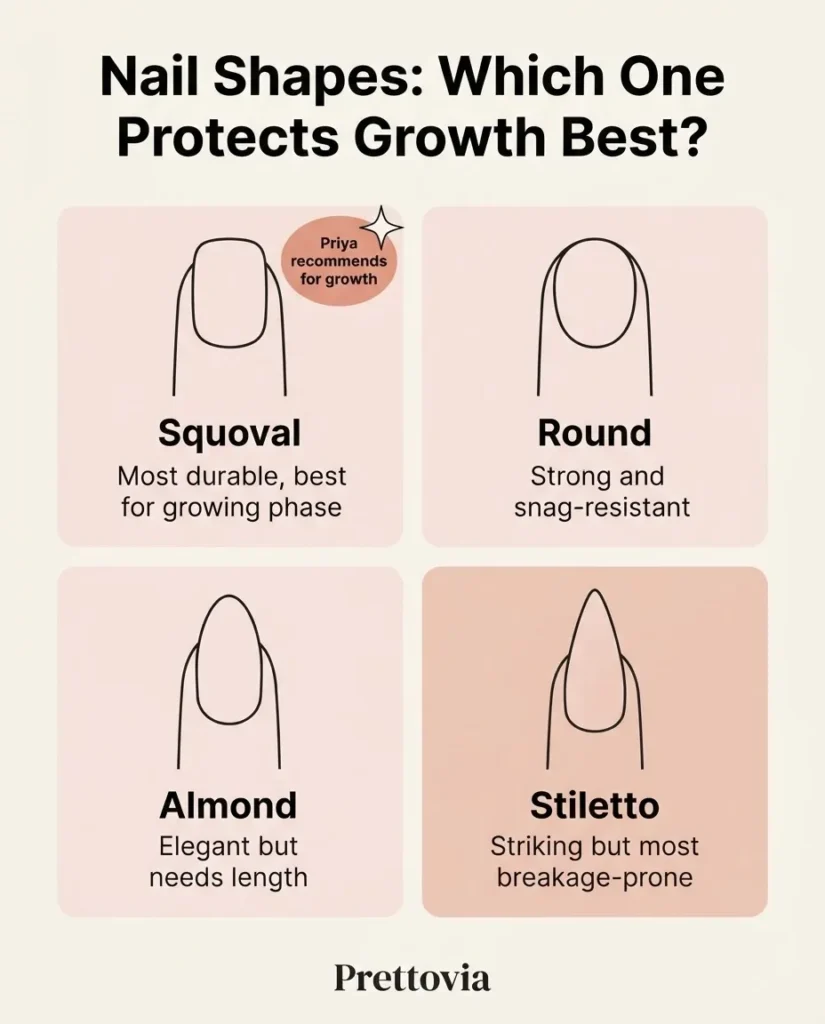
Shape your nails strategically. Pointed shapes like stiletto and almond look incredible but they create structural weak points at the tip. If you are trying to grow length, keeping your nails in a squoval or rounded shape (straight across with slightly rounded corners) gives them dramatically more durability during the growth phase. You can transition to a more dramatic shape once you have the length you want.
File correctly. Always file in one direction, not back and forth like a saw. The see-saw motion creates micro-tears in the edge of the nail that cause peeling and breakage over time. Use a fine-grit file (180 to 240 grit is a good range for natural nails) and use light pressure.
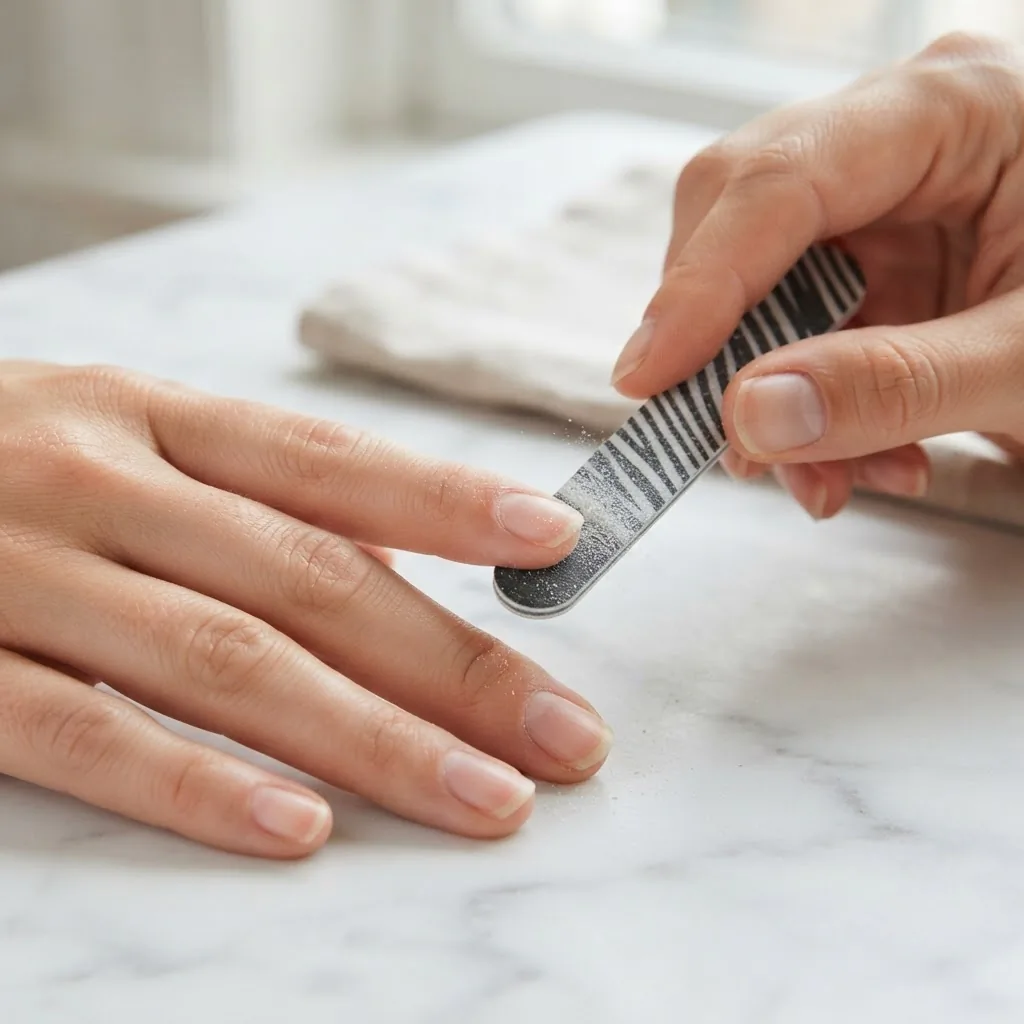
File when your nails are dry, not after a bath or shower when they are softened by water and more vulnerable to splitting.
Wear gloves for wet work. This one sounds fussy but it genuinely changes everything. Repeated exposure to water makes nails swell and then contract as they dry, and over time that cycle weakens the nail structure significantly. Dishes, cleaning surfaces, even long showers all add up. Keep a pair of rubber-lined rubber gloves under the kitchen sink. The Mayo Clinic’s nail care guidance specifically recommends keeping nails dry and clean and protecting them from prolonged water exposure as a core healthy-nail habit. It sounds basic but it is one of the most underrated things you can do.
Use a base coat every time. Even if you are wearing regular polish, a good base coat seals the edge of the nail, adds a small layer of protection, and helps prevent the peeling and discoloration that comes from direct dye contact with the nail plate. Thin nails especially benefit from a strengthening base coat. Look for ingredients like hydrolyzed wheat protein or keratin rather than formaldehyde-based hardeners, which can actually make nails more brittle over time with prolonged use.
Moisturize your hands obsessively. Your nails are surrounded by skin, and when that skin is dry and tight, your nails suffer too. Keep hand cream at your desk, your kitchen counter, and your bedside table. Apply after every hand wash. It takes ten seconds and it makes a real, visible difference in how healthy the surrounding skin and cuticle area stays.
The Nail Strengthener Question
Nail strengtheners can be genuinely helpful during a growth phase, especially if you are recovering from gel or dip damage and your nails are currently thin, bendy, or peeling. They work by adding a temporary hardening layer over the nail plate that helps it resist flexing and snapping while the new nail grows in underneath.
The nuance is in the formula. Some older nail strengtheners rely on formaldehyde or formalin as the hardening agent, which does work in the short term but can over-harden and then brittleize the nail with extended use. If you are using a hardener, aim for a few weeks on, a week off, and look for newer formulas that use protein-based ingredients or calcium instead.
A 2024 study published in PMC by the National Institutes of Health found that a multivitamin supplement containing biotin, magnesium, zinc, and copper showed measurable improvements in nail growth and strength, with 75% of participants reporting stronger nails and 71% noticing improved growth. This is useful context for thinking about both topical and internal support together, rather than relying on one magic product alone.
Recovering from Gel and Dip Damage
I have to talk about this because so many people come to me asking how to grow their nails after they have spent months in back-to-back gel or dip sets. If this is you, the most important thing to know is that the thin, peeling, bendy nails you are seeing right now are not your permanent nails. The damage is in the existing nail plate. Healthy new nail is already growing in at the matrix, and your job is just to protect what is there while that new growth emerges.
Keep them shorter during recovery. I know that feels like going backwards, but it protects the thin damaged section from snapping and taking healthy nail with it. Apply cuticle oil twice a day without fail. Use a non-acetone remover if you want to wear regular polish during this phase. Be extremely gentle with filing and avoid anything that creates friction or stress on the tip of the nail. Depending on how much of your nail is damaged, full recovery can take anywhere from three to six months, since a full fingernail takes roughly that long to grow from matrix to tip.
Be patient with yourself during this phase. The nails will come back.
Myths Worth Letting Go Of
A few things I want you to stop worrying about, because they are genuinely not backed up by evidence.
Cutting your nails does not make them grow faster. Trimming does keep them neat and prevent snagging, which indirectly helps retention, but the act of cutting does not accelerate the matrix or the growth rate. Nails are not hair, and regular trims are not a growth hack.
Soaking your nails in anything overnight, whether it is olive oil, garlic, lemon juice, or a viral mystery mixture, does not speed up growth. At best, an oil soak moisturizes the surrounding skin, which is fine, but it is not causing your nail matrix to produce keratin any faster.
Applying vitamins directly to your nails does not feed them. The nail plate is dead tissue. It cannot absorb and use vitamins the way living skin does. Your nutrition matters at the systemic level, through what you eat and how your body processes it, not through what you rub onto the plate itself.
A Realistic Timeline (Because You Deserve to Know)
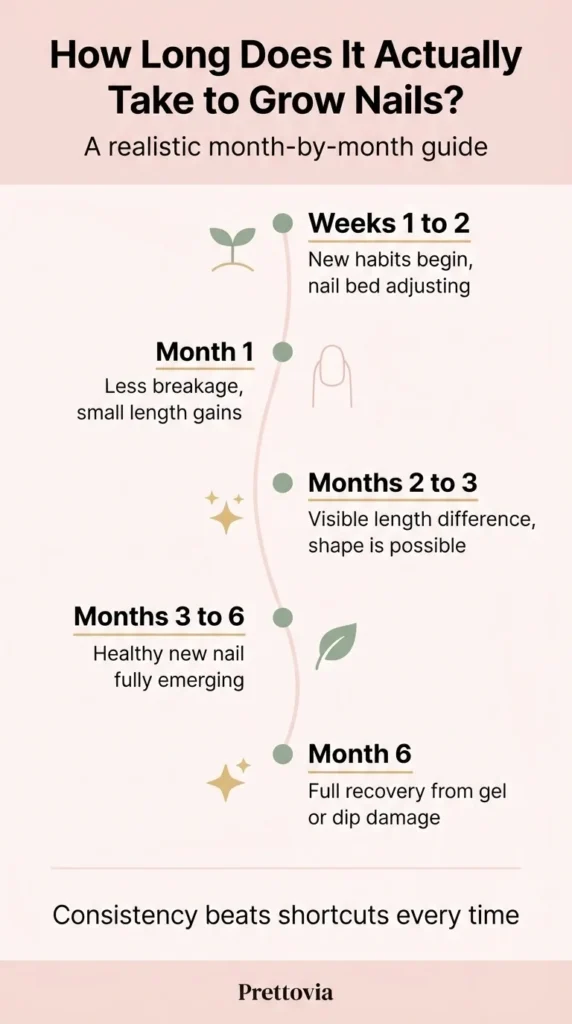
Week one and two: your nails are adjusting to new habits. Not much visible difference yet, but the nail bed is responding.
Month one: if you have been consistent with cuticle oil, moisturizing, gloves during wet work, and no aggressive filing, you should start to notice your nails making it further without snapping. Even a couple of millimeters of retained length is a win here.
Month two to three: this is where most people start to genuinely see a difference. Nails that are breaking less and being well-supported internally and externally will start to look visibly longer and more uniform. Shape becomes more possible.
Month three to six: if you are recovering from gel/dip damage, this is when your healthier new nail really starts to push through. If you are starting fresh with natural nails that were just previously neglected, this is when the habit pays off in a way that feels genuinely exciting.
The honest answer to “how fast can I grow nails” is: as fast as your body naturally allows, with the ceiling being much closer to your reach than you think, once you stop breaking what you grow.
One Thing I Want You to Walk Away With
I started learning nail care because I was bored at a desk with a cheap dotting tool, and I ended up obsessed because I realized how much of it came down to very ordinary, very patient daily choices. Cuticle oil before bed. Gloves at the kitchen sink. Filing in one direction. Eating enough protein. Nothing glamorous.
But every person I have ever walked through this with tells me the same thing: once the nails started staying, everything changed. They felt more confident showing their hands. They stopped hiding their nails in photos. They started experimenting with color and art because there was finally something to work with.
That can be you. It is not about being naturally gifted with strong nails. It is about understanding what nails actually need, and then just showing up for that routine consistently. If I can build this habit after a ten-hour workday and approximately zero natural patience, I genuinely promise you can too.
Start small. Nail oil tonight. Gloves tomorrow at the sink. Give it a month before you judge the results.
Your nails are already growing. Let’s just help them stay.