Quote Tattoos: What to Know Before You Book Your Artist
There’s a particular kind of person who saves quote tattoos on Pinterest for months before telling anyone. I know, because I have been that person. Before one of my own pieces, I had a private folder going for almost a year. I kept cycling through the same feelings: I love this, but will I still love it? I want something meaningful, but what if the font blurs? I know what I want to say, but I don’t know how to say it in ink.
If any of that sounds familiar, you’re in the right place. Quote tattoos are one of the most personal things you can put on your body, and that is exactly why they deserve more thought than most tattoo types. This isn’t me telling you to wait forever or second-guess yourself into paralysis. It’s me handing you the information that makes a confident decision possible.
Let’s work through everything, from finding words that will still feel like yours a decade from now, to choosing a font that will actually hold up, to walking into your consultation knowing exactly what to say.
Why Quote Tattoos Are a Different Kind of Decision
Most tattoo styles give you some interpretive distance. A botanical piece, a geometric shape, a portrait, all of these communicate something about you, but viewers bring their own reading to them. A word or quote tattoo eliminates that distance entirely. It is a statement. It speaks for itself, in your name, every single time someone reads it.
That’s not a reason to avoid them. That’s a reason to love them. Quote tattoos are among the most intimate and intentional pieces a person can get, and when they’re done thoughtfully, they genuinely do become anchors. People touch their wrists or their collarbones and feel steadied by the words there. The key is making sure the words you choose are yours, truly yours, rather than something that felt right in the moment but was really borrowed.
The question I ask everyone who texts me about a quote tattoo is this: can you tell me, in your own words, why this specific phrase matters to you right now, and do you think it will still be true in ten years? Not every tattoo needs to be a life philosophy. Some people get a word that meant something during a hard chapter, and they want to honor that chapter forever, which is completely valid. But knowing your own reason, whatever it is, is what separates a tattoo you’ll love from one you’ll spend years explaining away.
10 Meaningful Quote and Word Tattoo Ideas to Inspire You
These aren’t prescriptions. Think of them as sparks. Your version might be completely different, in a different language, a different font, a different placement. That’s the whole point. Use these to start the conversation with yourself.
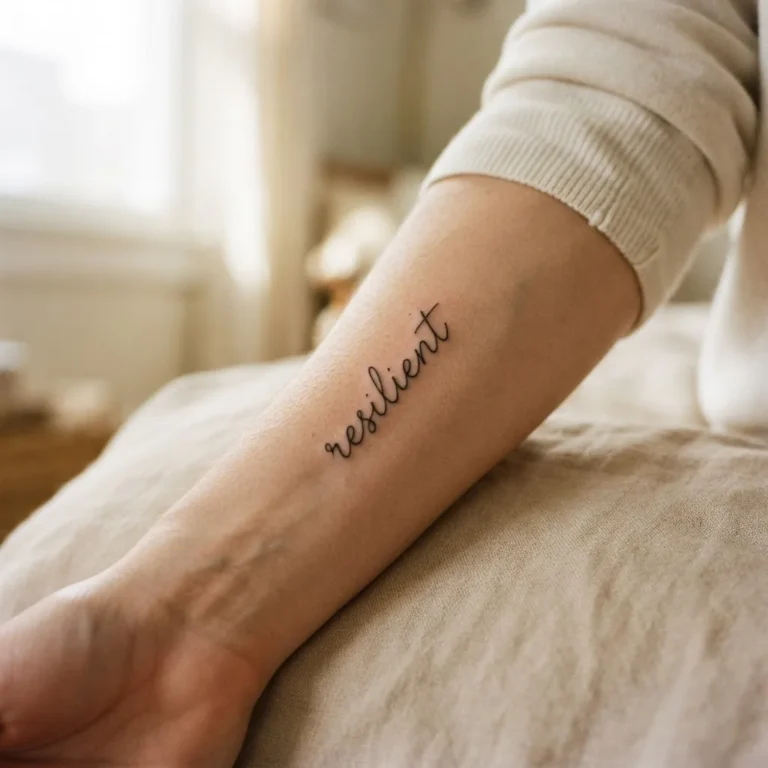
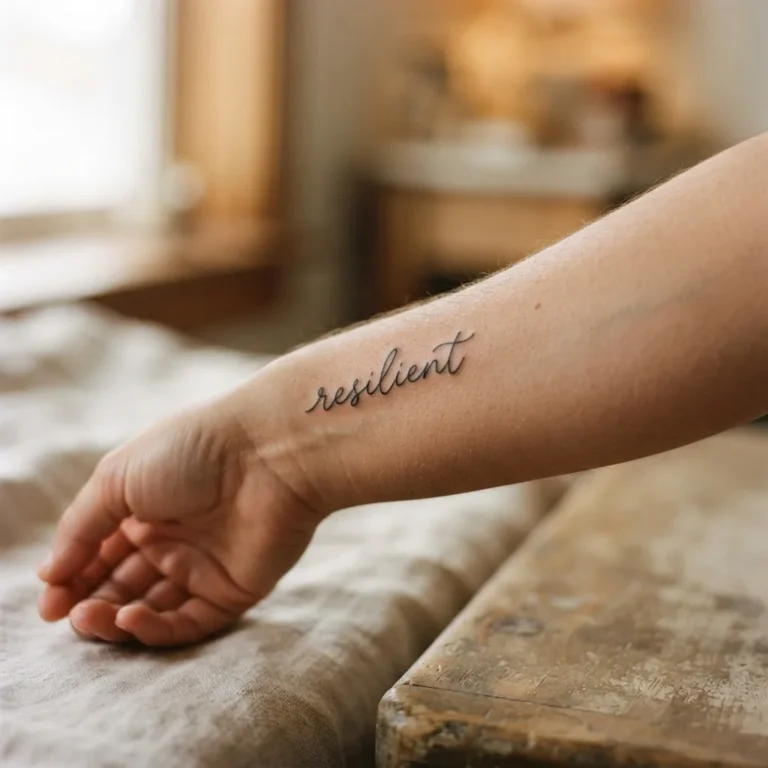
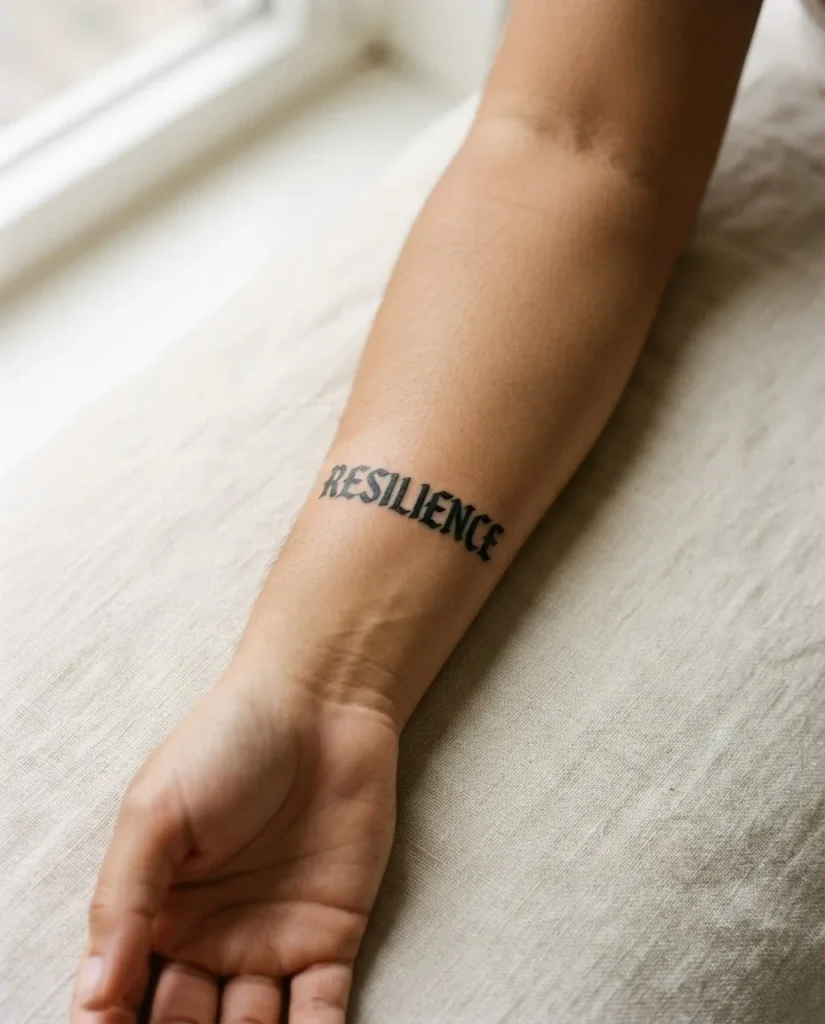
1. A single word that changed how you see yourself. “Resilient.” “Worthy.” “Enough.” One-word tattoos are deceptively powerful. They’re also among the most legible over time, which is a real practical bonus.
2. A short phrase in your native language or a language with personal significance. Something in Italian, Japanese, Arabic, or Spanish can carry meaning that feels layered and private. If you go this route, please have the translation verified by a native speaker before your appointment, not just a translation app.
3. A line from a poem that has lived with you for years. If you’ve returned to the same few lines repeatedly over the course of your life, that’s your signal. Mary Oliver, Rumi, Sylvia Plath, Pablo Neruda, and Emily Dickinson are consistently popular sources, but the best poems are the ones that found you specifically.
4. Something a person you love used to say. A grandmother’s phrase. A parent’s voice. A friend who’s gone. The informal, imperfect cadence of real speech can make the most beautiful tattoo because it sounds exactly like them.
5. Coordinates or a date written out in words. “The year I finally believed in myself.” The date a child was born, spelled fully. These feel personal in a way that numbers alone sometimes don’t.
6. A word from nature. “Tidal.” “Root.” “Bloom.” Words connected to the natural world carry something elemental. They tend to age gracefully both visually and emotionally.
7. A line that helped you survive something. This one needs no justification to anyone. If a sentence got you through, it belongs on your body if you want it there.
8. Your own words. I love when people bring me sentences they wrote themselves. A journal entry. A note they left themselves on a bad night. That’s the most original thing you can tattoo, because literally no one else has it.
9. A quote about the particular thing you love most. Writers quote writers. Gardeners quote people who wrote about soil and seasons. Athletes quote coaches. Tether it to the specific obsession of your life and it will almost never feel wrong later.
10. One word in a language you don’t speak, with a concept that doesn’t translate. “Hiraeth” (Welsh: a longing for home that may not exist). “Saudade” (Portuguese: a melancholy love for something absent). “Meraki” (Greek: putting your soul into what you do). These carry entire emotional worlds in a single word.
The Font Question: What Your Lettering Style Actually Does
This is where most quote tattoo planning goes wrong, and I say that gently. Font is not decoration. For a word tattoo, font is structure. It is the difference between something that reads clearly in twenty years and something that turns into a blur of loops you can’t untangle.
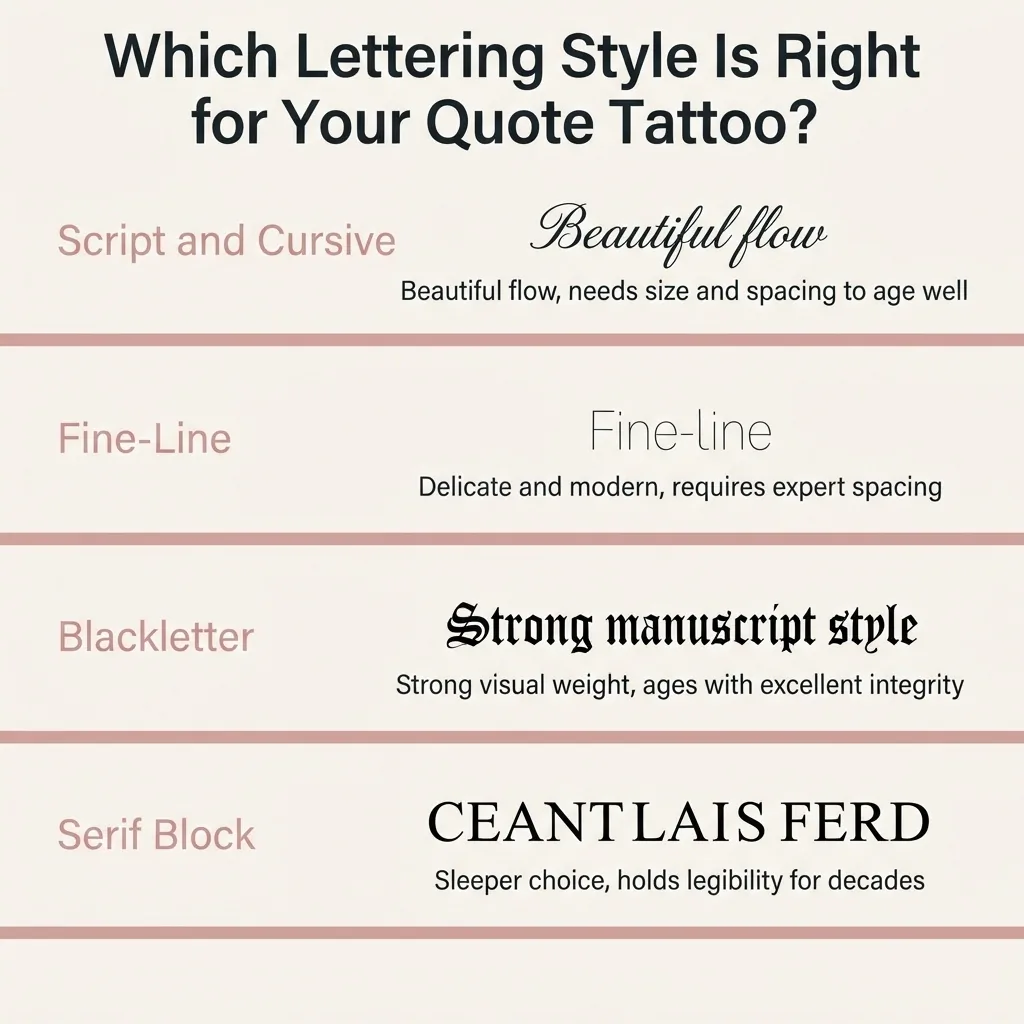
Script and cursive fonts are the most requested style for quote tattoos, and they can be genuinely stunning, especially in a flowing italic or fine calligraphic hand. The honest thing to say about script is that it requires more space, more letter height, and more care than people anticipate. Tight, tiny script is the most common source of quote tattoo regret. Letters that are too close together or too small tend to “spread” as the skin ages and the ink migrates slightly in the dermis over years. What reads beautifully fresh can become muddled. A good lettering artist knows how to compensate for this with letter spacing and sizing.
Fine-line lettering is very much in its moment right now, and it can produce breathtaking, delicate results. It requires an artist with specific expertise in fine-line work and, again, it requires enough size and spacing to age with integrity. Fine-line letters need more negative space around them than you might think.
Blackletter, the style that echoes medieval manuscript writing, carries centuries of history behind it. As a style reference, Wikipedia’s overview of blackletter traces its origins to Western European manuscripts of the twelfth century, which gives you a sense of how deep the roots go. Bold blackletter actually ages well in tattoo form because the strokes are thick enough to hold their shape. It reads strong and graphic and is worth considering if you want something with visual weight.
Serif and sans-serif block lettering are the sleeper options that consistently age the best. They look clean, they hold their legibility over decades, and they let the words do the work rather than the font. They’re not the most immediately exciting choice on a Pinterest board, but a lot of long-tattooed people quietly love them.
The bottom line on fonts: bring reference images to your consultation, be open to your artist’s sizing and spacing recommendations, and trust that a lettering specialist knows how a font behaves in skin in a way that a font website cannot.
Placement for Quote Tattoos: Where Words Actually Work
Text tattoos have specific placement logic that’s different from image tattoos. Words need to be readable, which means thinking about orientation, body curves, and how the skin moves.
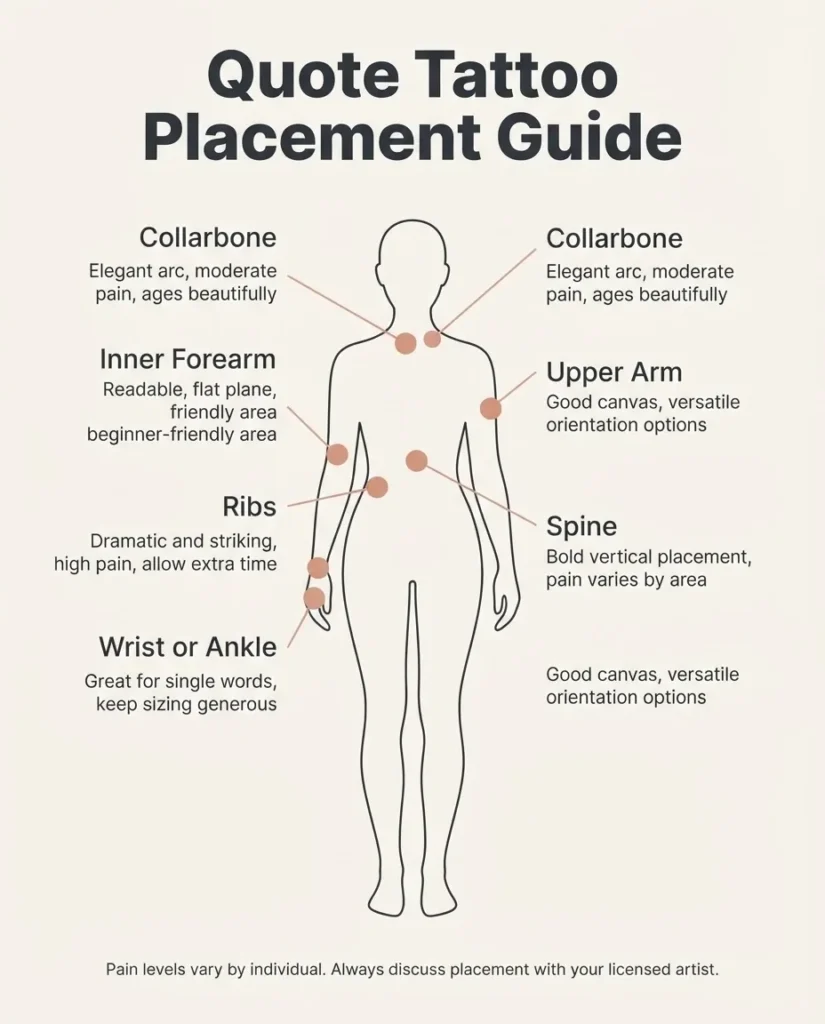
Forearm and inner forearm are the most functional placements for quote tattoos. The flat plane of the forearm holds text horizontally and readably. Inner forearm pieces feel intimate, visible to you when you look down. This is one of the most requested placements for a reason.
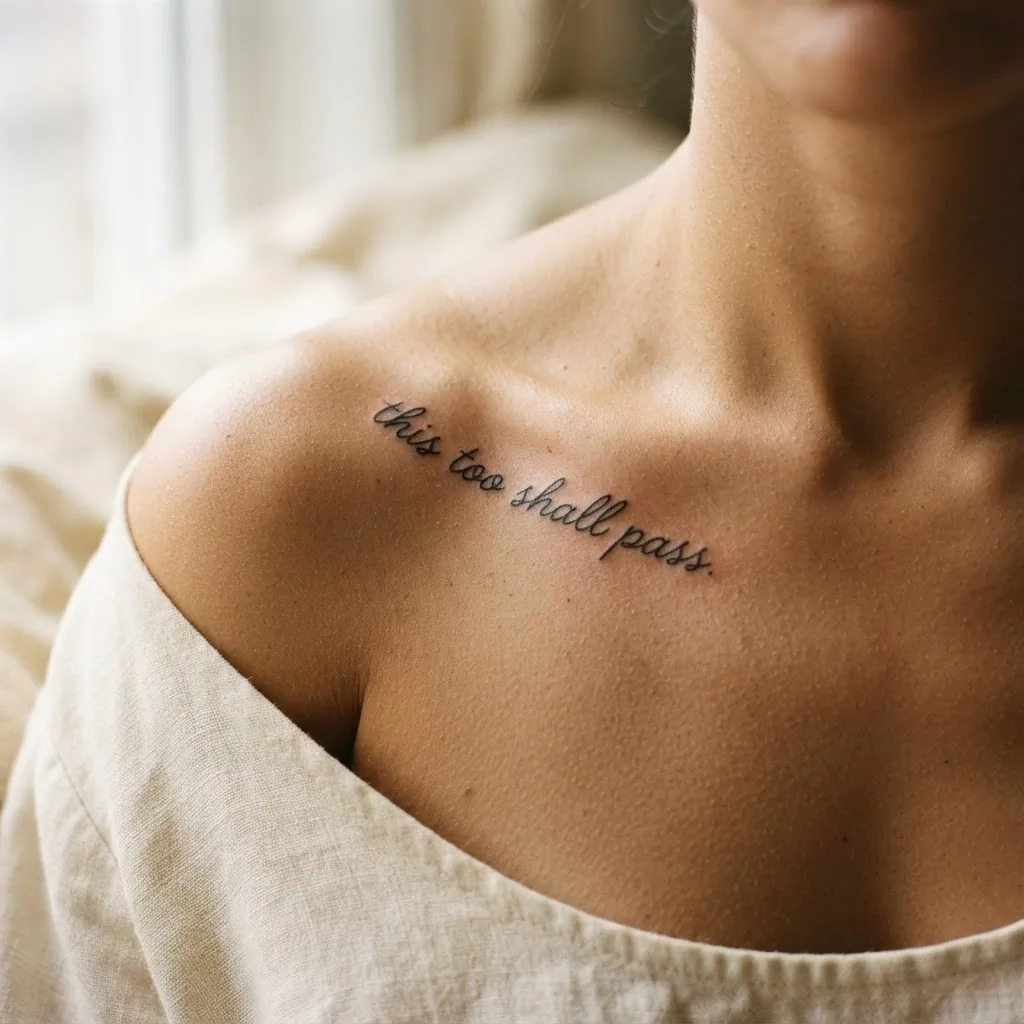
Collarbone and chest are among the most beloved aesthetic placements for quote tattoos. A line of text along the collarbone follows the natural arc of the bone beautifully. It is a moderate to high pain area because the skin is thin and close to bone. But the placement reads as intentional and elegant, and it ages well because the area doesn’t stretch dramatically.
Ribs are a more dramatic choice and, honestly, a more painful one. The ribcage is widely considered one of the most challenging placements pain-wise, because the skin is thin, the bones are close to the surface, and every breath moves you slightly during the session. The result, though, can be stunning: a long quote following the curve of the ribs is a classic and beautiful choice. Go in knowing what you’re committing to.
Wrist and ankle are great for very short pieces: a single word, a date, a tiny phrase. The skin here is thinner and moves a lot with everyday motion, so keep text minimal, appropriately sized, and trust your artist’s guidance on spacing.
Spine is dramatic, readable from behind, and increasingly popular. Pain varies quite a bit along the spine depending on the specific area. This placement works beautifully for a longer quote running vertically.
For a clear, medically-reviewed breakdown of what to expect pain-wise by body location, Healthline’s tattoo pain chart is a genuinely useful reference when you’re making your placement decision.
The one rule that applies everywhere: text tattoos need to be larger than you think.
Most people’s instinct is to go smaller. Most people’s artists nudge them up in size. The minimum letter height recommended by experienced lettering artists is generally around half an inch, and that’s the low end. Tiny text at tiny sizes almost always blurs over time.
How Quote Tattoos Age: The Honest Truth
I believe you deserve real information here, because this is one of the questions people most often don’t ask until after the fact.
All tattoos fade and evolve over time. The ink sits in your dermis, the layer beneath your skin’s surface, and over years it naturally disperses slightly as skin cells turn over. Sun exposure, skin hydration, and the natural aging of your skin all affect how an inked piece looks over decades.
For text tattoos specifically, the aging factors to understand are ink spread, fading, and line integrity. Ink spread is when the edges of a line soften and the letter slightly expands outward. In thin script with tight letter-spacing, this can cause letters to touch and blur together. In bolder lettering with generous spacing, the same spread is barely noticeable. This is why your artist’s sizing and spacing guidance isn’t just aesthetic preference: it is directly related to how your tattoo reads in twenty years.
Fine-line and hairline text pieces are genuinely beautiful, but they do require touch-ups over time more frequently than bolder work. A good artist will tell you this upfront. If they don’t mention it, ask.
The best protection for any healed tattoo is consistent sun protection on exposed areas. SPF 30 or higher on healed ink, applied as part of your regular routine, makes a real difference in preserving color and line sharpness over years. The American Academy of Dermatology’s guidance on caring for tattooed skin recommends water-based moisturizers and sun protection as the foundation of long-term tattoo care, and I’ve found that to be practical advice that actually fits into daily life.
A Word About Ink Safety You Should Know
Before any tattoo appointment, it’s worth knowing a few things about tattoo ink from a safety standpoint. This isn’t meant to scare you. It’s meant to make you an informed person walking into a studio, which is always better than an uninformed one.
Tattoo inks are regulated as cosmetics in the United States, but the FDA does not approve specific inks or pigments before they go to market. The FDA’s tattoo safety consumer update notes that reactions to tattoo inks can happen right after getting a tattoo or even years later, and that certain ink colors, particularly red and some other vibrant pigments, carry higher rates of reactions than black ink. A peer-reviewed study published in PubMed Central on cutaneous adverse reactions associated with tattoos similarly documents that allergic reactions, granulomatous responses, and other skin complications, while not the norm, are documented risks worth being aware of.
None of this means don’t get a quote tattoo. The vast majority of people get tattooed by licensed professionals with quality inks and heal without complications. What it means is: go to a licensed, reputable studio that uses quality inks, disclose any known skin sensitivities or allergies to your artist at the consultation, and pay attention to your healing skin. If anything looks or feels unusual during healing, including expanding redness, warmth, oozing beyond the first day or two, or a rash, contact your artist and, if symptoms persist or worsen, see a doctor or dermatologist. The American Academy of Dermatology’s page on unexpected tattoo skin reactions is a helpful reference for knowing the difference between normal healing and something worth having checked.
How to Find a Lettering Artist Who’s Right for Your Quote
This is where so many quote tattoos go sideways, not because the artist is bad, but because they’re not a lettering specialist. Tattooing is a broad field with many styles, and a floral artist and a fine-line lettering artist have very different skill sets.
When you’re looking for an artist for a quote tattoo, your search starts with their portfolio, specifically their lettering and text work. Open Instagram or their studio website and look for past text tattoos. You want to see clean baseline consistency (the letters sit evenly, the line doesn’t drift), confident stroke weight, and spacing that gives each letter room to breathe. Healed photos are worth more than fresh photos. Fresh ink always looks crisp. A healed piece shows you how the work settles into skin.
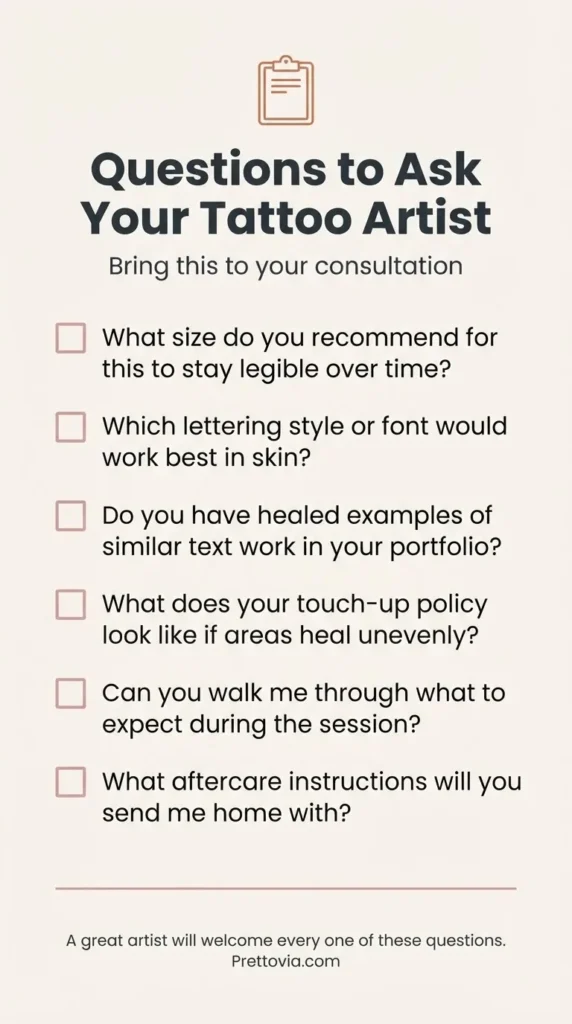
Look for artists who list lettering, script, or typography as part of their specialty. Book a consultation before committing. Most studios offer consultations at no cost, and this conversation is incredibly valuable. Come with your quote written out clearly, reference images of fonts or styles you like, and any ideas about placement. Ask the artist directly: what size do you recommend for this to stay legible over time? What font or lettering style would you suggest? A great lettering artist will have opinions and share them. Engage with those opinions. They are protecting your tattoo’s future.
Check that the studio is licensed in your state or locality, that the artist has completed bloodborne pathogen training, and that the studio uses single-use needles and sterile equipment. In most states and cities, tattoo studios are required to pass health inspections and artists must hold valid licenses. If you’re unsure how to verify this in your area, your local health department’s website is the right place to start.
What to Bring to Your Consultation (and What to Say)
Walking into a consultation prepared makes the whole experience better, for you and for your artist.
Here’s what I always tell friends before they go.
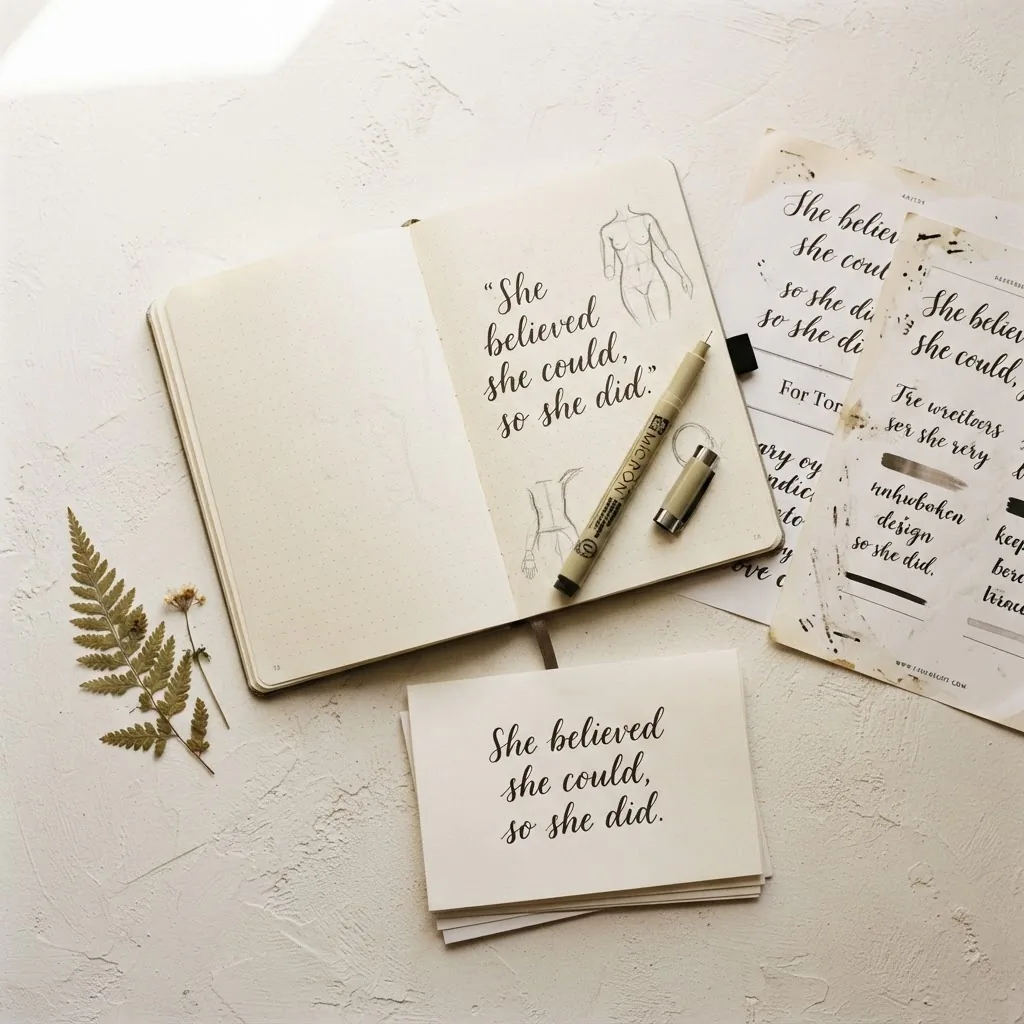
Bring the quote written out exactly as you want it, including any punctuation, capitalization choices, or line breaks. If you want specific words on separate lines or in a particular arrangement, sketch that out simply even if you can’t draw. Bring printed or screenshotted reference images for fonts and styles you’re drawn to. Bring reference images for placements you’re considering. Show the artist the actual body area and let them look at it.
Be ready to talk about size. Tell them you’re open to their sizing recommendation, because you want it to age well. This signals to the artist that you’re a thoughtful client and they’ll give you their honest guidance rather than just executing exactly what you asked for regardless of long-term outcome.
Ask about their aftercare instructions and whether they provide written aftercare guidance to take home. Ask about touch-ups and their policy if any area heals unevenly. Ask about the healing timeline in general terms. These are all completely normal questions and any experienced artist will welcome them.
The Basics of Healing: What to Expect
Your artist’s aftercare instructions are the final word, always. What I’m sharing here is general context so you know roughly what to expect.
Most people experience initial redness, swelling, and sensitivity in the first couple of days after a session. The tattooed area will likely feel like a sunburn. Surface healing, where the outer layer of skin closes and any peeling finishes, generally takes about two to three weeks. The deeper layers of skin continue healing for months afterward, which is why a tattoo can look slightly duller or milky before it settles into its final clarity.
During the healing period, keeping the area clean with fragrance-free products, moisturizing gently as recommended by your artist, and protecting the tattoo from direct sun are the consistent pillars. Soaking in pools, hot tubs, or the ocean during the healing phase is generally not recommended, and your artist will tell you specifically when it’s safe to resume those activities. If you have any concerns about how your tattoo is healing, reach out to your artist first, and see a doctor if anything seems like it might be an infection or a reaction.
One Last Thing Before You Book
The most common regret I hear from people about quote tattoos isn’t the quote itself. It’s rushing. Going to whatever artist was available fastest rather than the right lettering artist. Choosing a font from a reference image without asking the artist how it performs in skin. Going too small because it felt safer.
Good information changes that. You now know how to evaluate a quote for longevity, how to read an artist’s portfolio for lettering quality, what questions to ask at the consultation, how to think about placement and sizing, and what the realistic aftercare and aging picture looks like.
That’s what I mean when I say a good tattoo starts with good info. The art comes from the artist. The meaning comes from you. The confidence to bring both of those things together comes from doing exactly what you just did: learning first.
Whenever you’re ready, that studio appointment is going to feel very different from the inside.