Wave Tattoos in Fine Line, Blackwork, and Japanese Style
I have wanted a wave tattoo for longer than I have wanted most things in my life. I grew up in the Pacific Northwest, close enough to the coast that the sound of water felt like a baseline hum I only noticed when it was missing. When I finally got my first tattoo at eighteen, it wasn’t the ocean piece. I wasn’t ready. I didn’t know enough yet. And looking back, I’m genuinely glad I waited on it.
Wave tattoos are one of those ideas that seem straightforward until you start actually planning one. Then you realize you’re not just choosing a design. You’re choosing a style, a scale, a placement, a meaning, and an artist who specializes in exactly the kind of line work that will make it look right ten years from now. That’s a lot of decisions. And the internet, for all its gorgeous inspo reels, doesn’t do a great job of helping you sort through them.
This is my attempt to fix that. I want to walk you through the major styles, what each one actually looks like when it heals and ages, where on your body a wave works best depending on the design, what the ocean means across different tattooing traditions, and how to take all of that into a consultation and come out with something you love.
Why Wave Tattoos Keep Pulling People In
There’s something about water imagery that doesn’t go out of style the way other tattoo trends do. Part of that is symbolic: waves carry genuine meaning for a lot of people. Part of it is compositional: a wave has built-in movement, rhythm, and contrast. It gives a skilled artist something to work with.
The ocean also holds personal weight for most people who choose it. I’ve talked to collectors who got wave pieces to mark the end of something, the death of a parent who loved the sea, a divorce, a cross-country move away from the coast. And I’ve talked to others who simply grew up surfing and couldn’t imagine a better visual representation of who they are. The tattoo doesn’t have to carry a specific story to be meaningful. But for wave tattoos especially, most people have one.
The Styles: What They Actually Look Like and How They Age
This is where most inspiration galleries let you down. They show you a beautiful freshly-healed tattoo and don’t tell you that three of the styles shown will look very different in five to ten years. Style choice matters enormously for wave tattoos specifically because the whole subject depends on line quality, contrast, and the suggestion of movement.
Fine Line Minimalist Waves
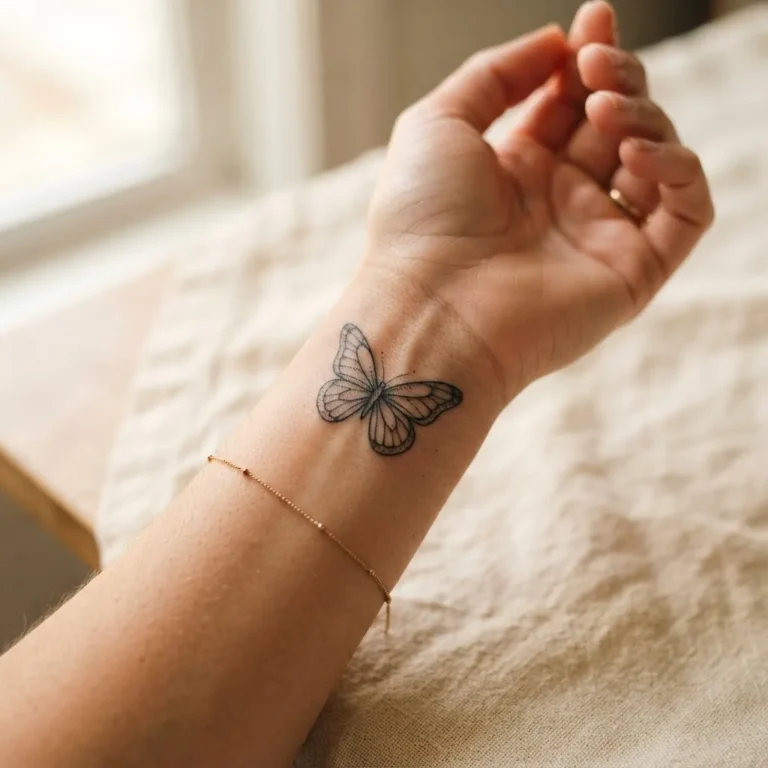
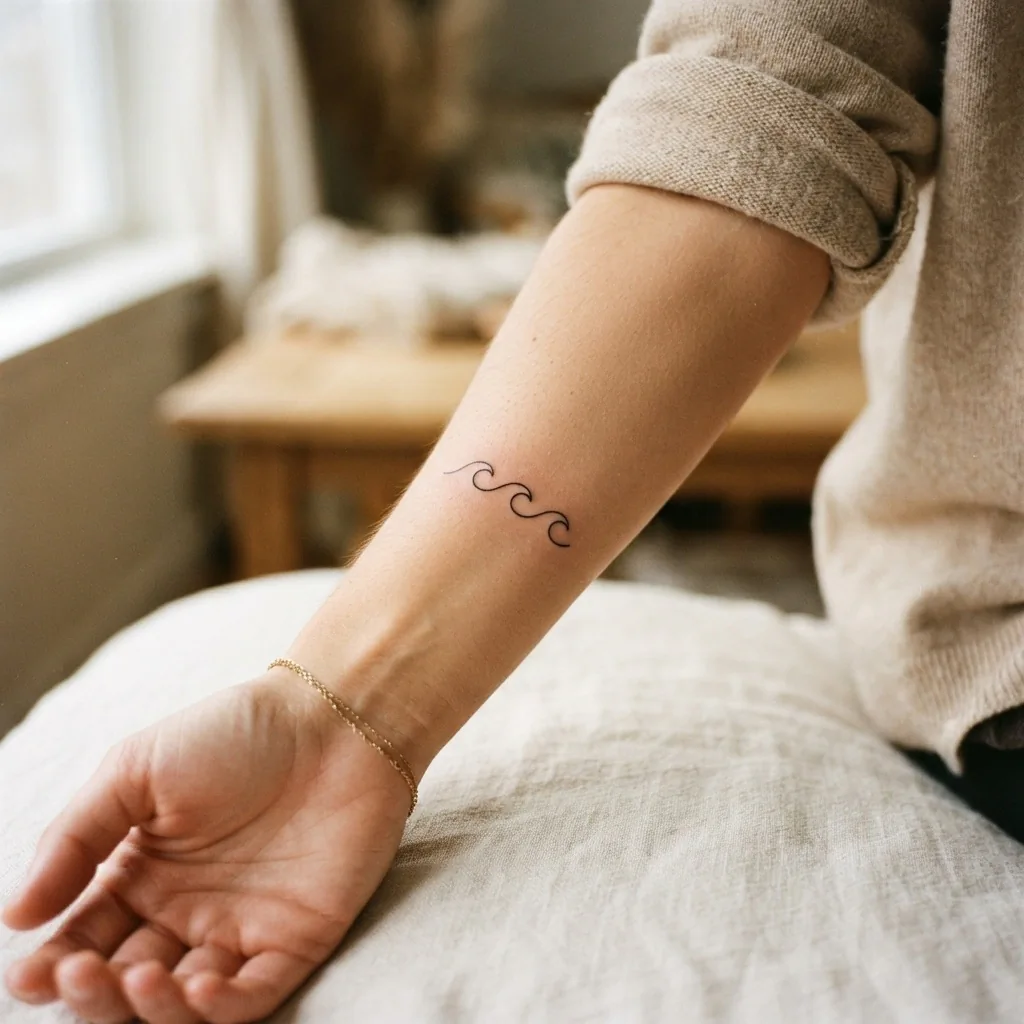
Fine line wave tattoos are the style you see most often on smaller placements: a single curling wave on the inner wrist, a stack of three waves on the ankle, a delicate shoreline looping the calf. The appeal is real. They’re elegant, subtle, and can fit into spaces where a bolder design wouldn’t work.
The honest conversation to have is about aging. Fine line work, by its nature, uses thinner deposits of ink closer together. Over time, especially on high-movement areas or skin that sees a lot of sun, fine lines can blur and soften. This isn’t a reason not to get one. But it is a reason to go to an artist with a strong portfolio of healed fine line work specifically, not just fresh photos. When you’re browsing portfolios, look for pictures taken six months to a year after the session. That’s the real test.
Placement matters more for fine line than for any other style. A thin wave on the inner forearm in a low-friction spot, away from the wrist crease and protected with SPF on the regular, holds up meaningfully better than the same design on the hand or the side of a finger.
Japanese Traditional and Irezumi-Influenced Waves
This is the style most directly descended from one of the most recognizable works of art in human history. Katsushika Hokusai’s “Under the Wave off Kanagawa” (c. 1830-32) is a polychrome woodblock print made during Japan’s Edo period, roughly 10 by 14 inches, depicting a cresting wave with fishing boats and a distant, dwarfed Mount Fuji. As Smarthistory’s in-depth analysis explains, Hokusai’s composition reflects a synthesis of traditional Japanese ukiyo-e aesthetics with European linear perspective absorbed through Dutch trade, including the distinctive Prussian blue that became the print’s visual signature. That single image has arguably influenced more wave tattoos than any other source in the world.
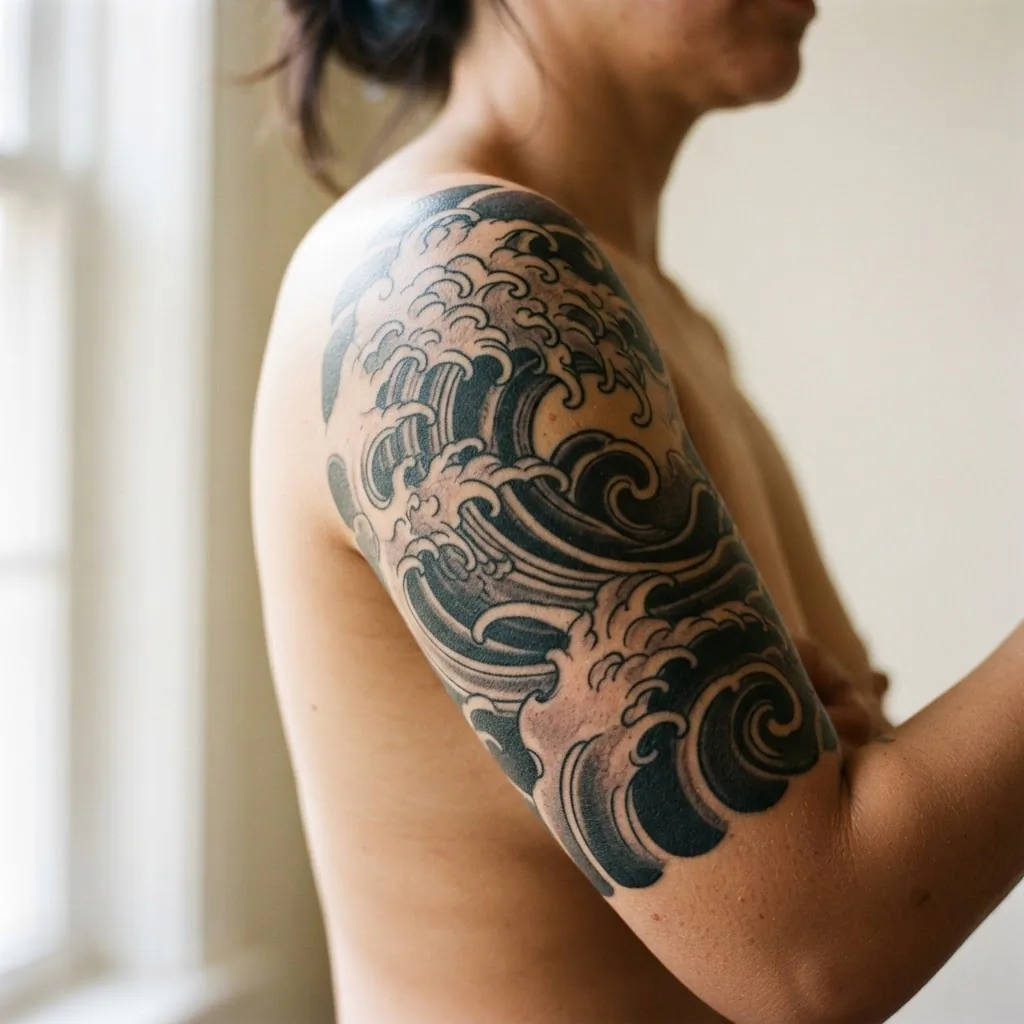
Japanese-style wave tattoos draw from this visual lineage: thick, curved lines that define the crest; structured, rhythmic foam curls at the tips; deep contrast between the solid dark of the wave’s body and the negative space of the spray. In full Irezumi tradition, the wave sits inside a larger composition with carp (koi), dragons, or floral elements layered around it.
These tattoos age exceptionally well.
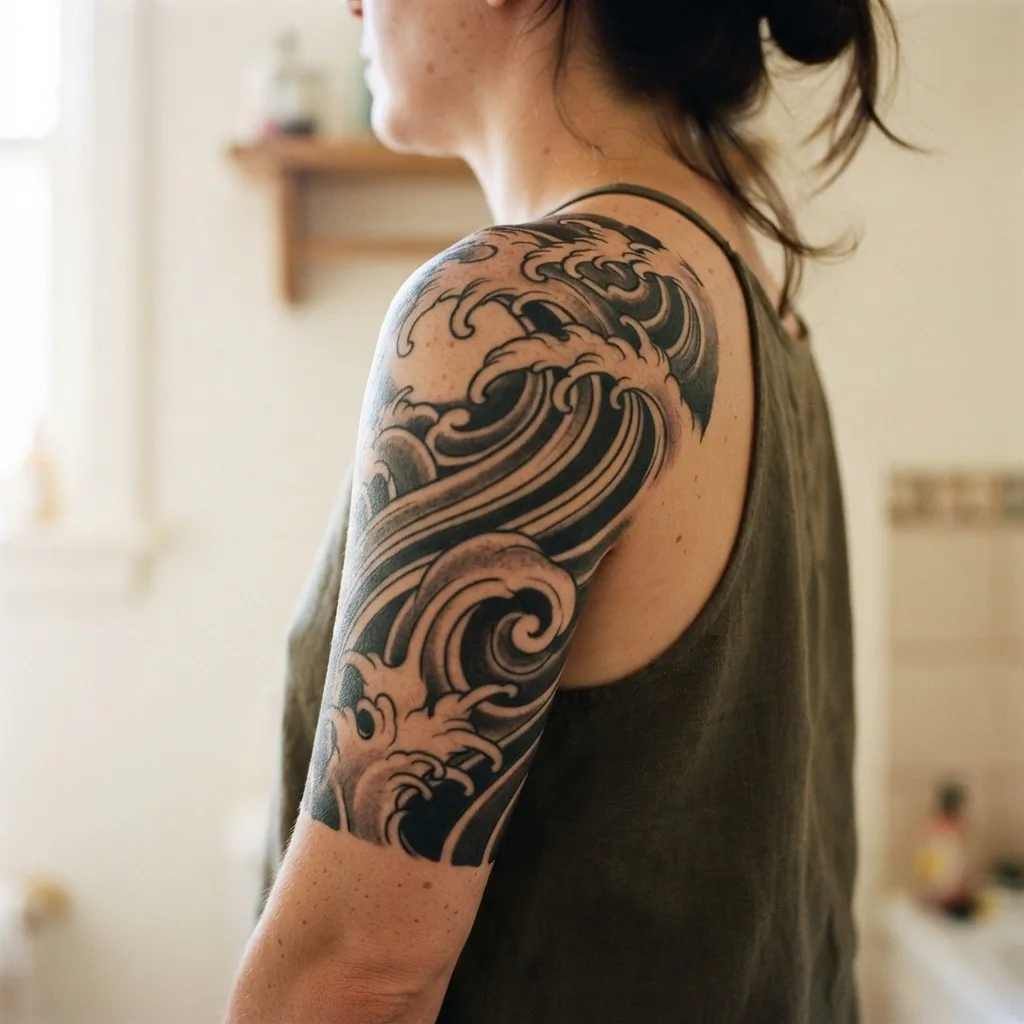
Bold black lines hold their definition for decades when applied correctly, and the high contrast of the design means that even if the finer details soften slightly with time, the overall image stays powerful. If you want a wave tattoo you’ll still love at sixty, this style rewards the patience to find the right artist.
Blackwork and Neo-Traditional Waves
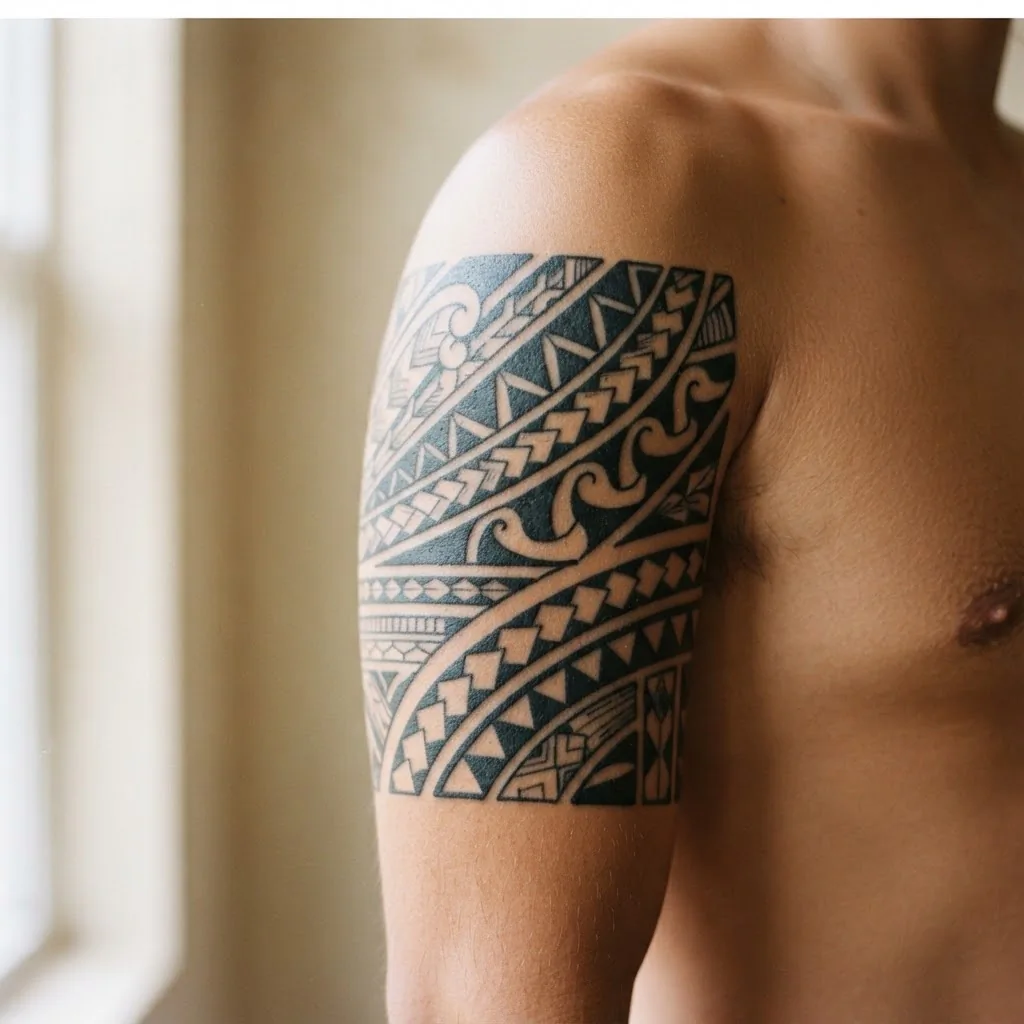
Blackwork is a broad category, but in the context of wave tattoos it usually means strong, graphic, ink-saturated designs. Think solid black crests, geometric wave forms, or Polynesian-influenced patterns where the wave is rendered through repeating angular shapes rather than representational curves. These read boldly, photograph dramatically, and tend to hold their definition over time for the same reason bold Japanese work does: the ink volume creates lasting contrast.
Neo-traditional waves split the difference between Japanese structure and more illustrative, slightly cartoonish exaggeration of form. The lines are still defined, the palette might include deep teals or navy blues alongside black, and the composition tends to be more freeform than classic Irezumi.
Watercolor and Illustrative Ocean Scenes
Watercolor wave tattoos are gorgeous when they’re fresh. Loose washes of teal, blue, and seafoam layered over fluid brushstroke-style linework genuinely look like a painting on skin. They’re also the most contested style in terms of longevity. Without a strong black line foundation beneath the color, the washes of pigment can migrate and fade more quickly than structured work. Some artists approach this by building in a subtle black anchor layer that isn’t visible in the final result but helps the color hold. Ask any artist you’re considering about their specific approach to watercolor longevity before you commit.
Color ink, broadly speaking, fades more than black ink over time because pigments other than carbon-black are less stable under UV exposure and more reactive to the immune system’s natural attempt to break them down. This doesn’t mean color is wrong for your wave. It means SPF on healed tattoos is non-negotiable, and you should have a direct conversation with your artist about what to expect.
What Waves Mean: The Cultural Depth Behind the Design
Wave tattoos can be purely aesthetic. But if you’re drawn to the idea of meaning, there’s genuine substance here from multiple tattooing traditions.
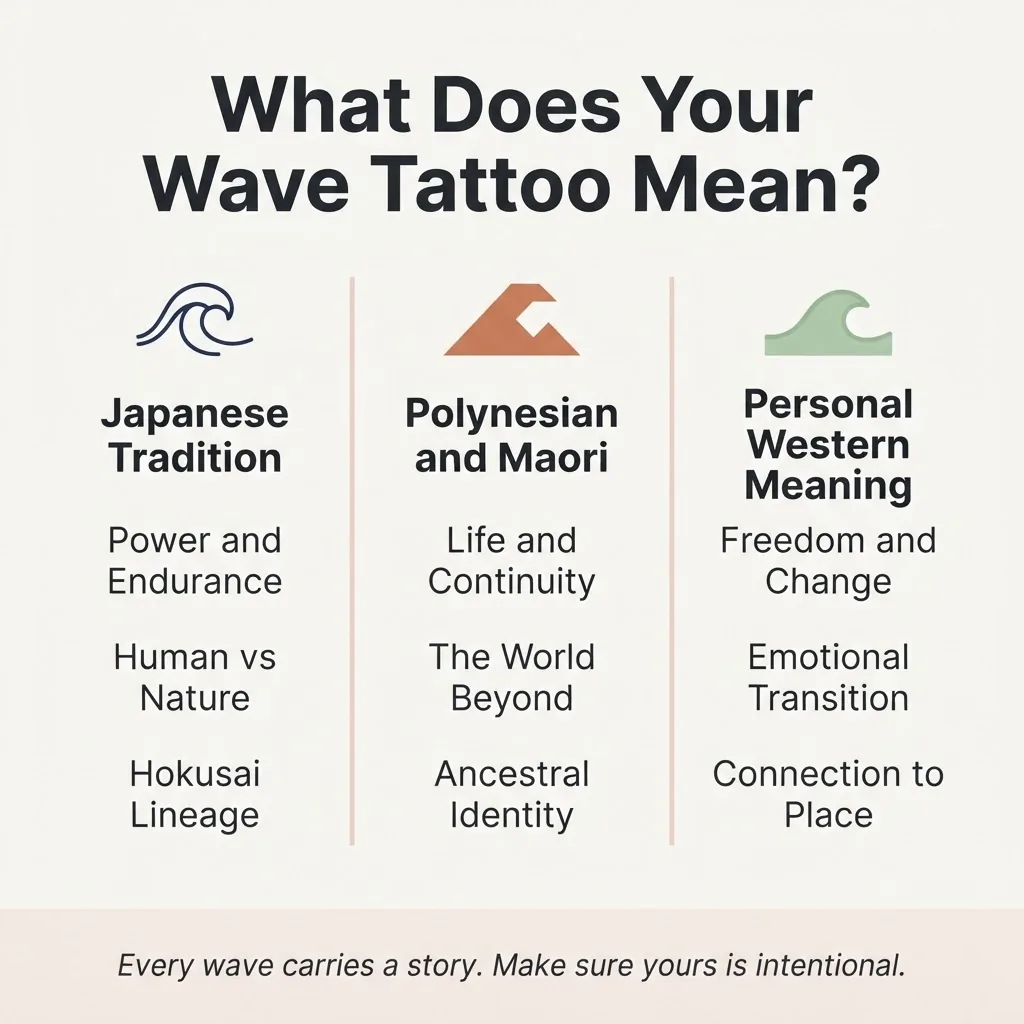
In the ukiyo-e tradition Hokusai worked in, the wave represented the tension between human smallness and natural power. The fishermen in the Great Wave are not drowning; they are enduring. That’s not a bad thing to carry on your skin.
In Polynesian tattooing, the ocean holds some of the most layered symbolic weight in the entire tradition. As the Polynesian tattoo history maintained by Zealand Tattoo, one of New Zealand’s most respected Maori and Polynesian tattooing studios, describes, the ocean is a second home to Polynesian people, the place from which sustenance comes and, symbolically, the place of rest at life’s end. Wave motifs specifically represent life, change, and continuity through change. They can also represent the world beyond. The Maori ngaru (wave pattern) is a specific design element within ta moko and kirituhi traditions, carrying ancestral and spiritual weight that goes well beyond the generic “freedom” meaning that most Western tattoo content assigns to it.
This is worth knowing before you choose a Polynesian-style wave design. If you have Polynesian or Maori heritage, speak with an artist from that tradition who can create something genuinely meaningful within it. If you don’t, you can still be inspired by the visual language, but be thoughtful about the difference between inspiration and appropriation. Many Polynesian artists are happy to discuss this openly in consultations.
Placement and Sizing: Where the Wave Lands Best
Wave designs are inherently directional, which means placement is more compositionally important than it is for many other subjects. A wave that flows with the natural contour of your arm reads very differently from one that cuts against it.
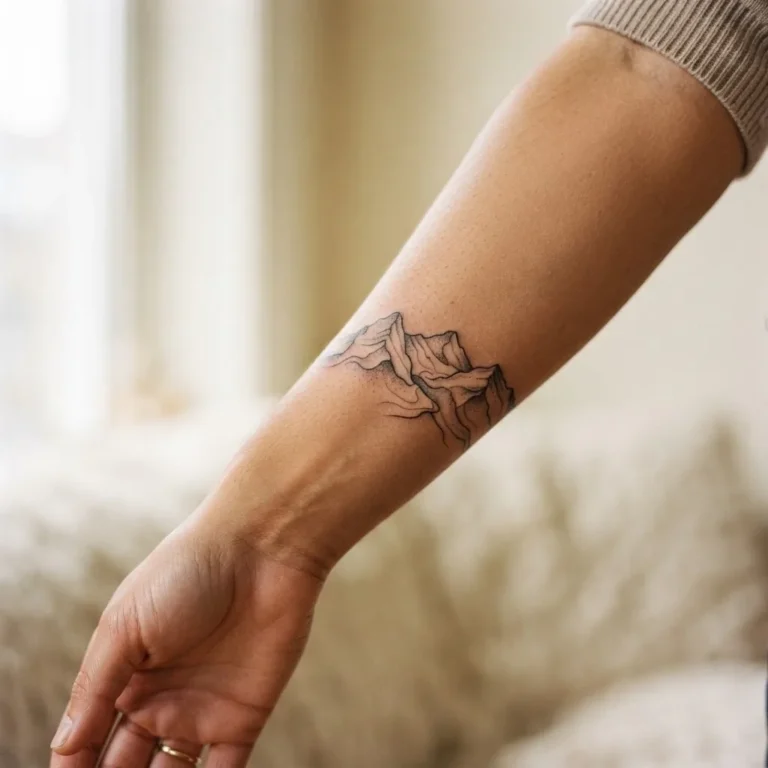
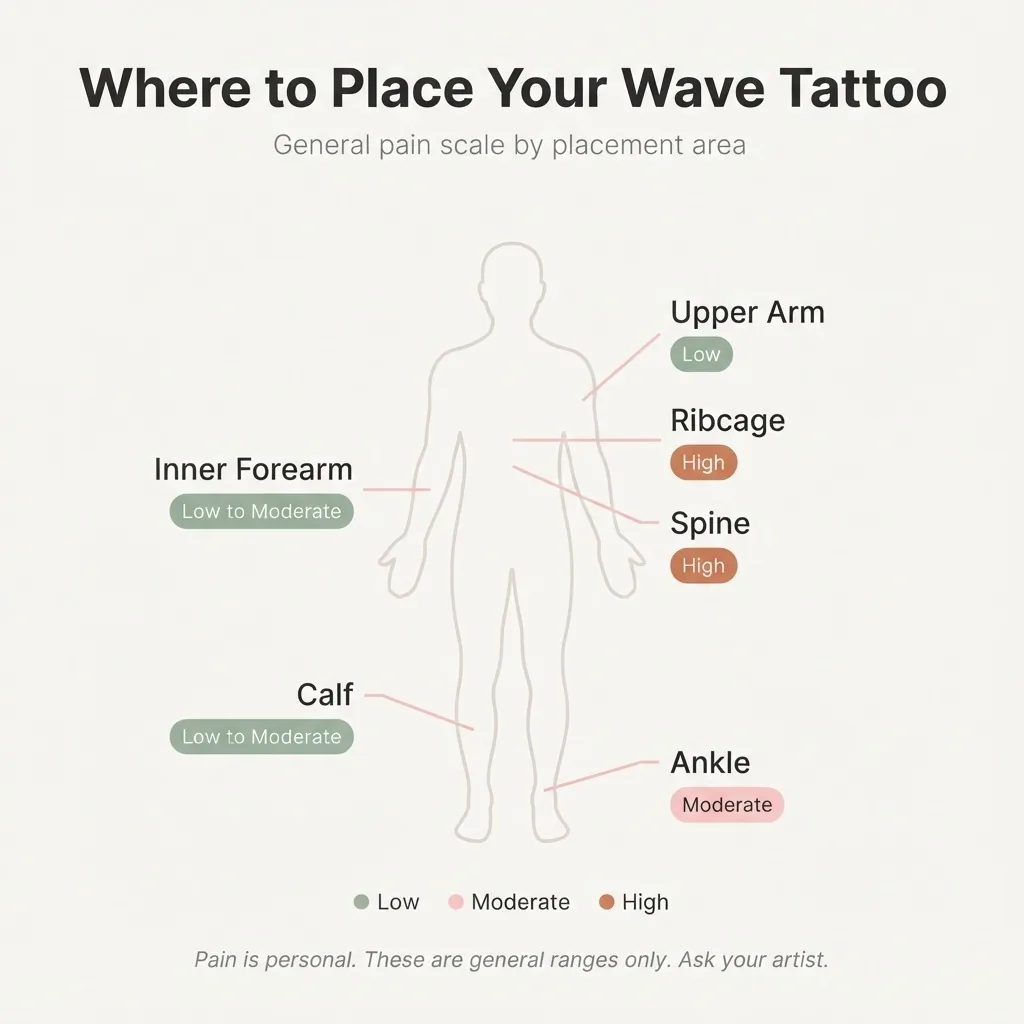
Forearm (inner and outer): One of the most practical placements for a medium-sized wave. The forearm has enough flat surface to let a design breathe, it’s easy to show and easy to cover, and it heals relatively smoothly compared to joints and bony areas. Pain on the outer forearm is generally low to moderate. The inner forearm is slightly more sensitive for some people. A horizontal wave band wrapping the forearm, or a vertical shoreline running wrist-to-elbow, both work well here compositionally.
Upper arm and shoulder cap: Great for larger Japanese-style waves that need room to move. A wave that crests over the shoulder and continues either down the bicep or up toward the neck has a natural flow that follows the body. Pain is generally low in the fleshy upper arm area; the shoulder cap gets slightly more intense over the bone.
Ribcage and side: Genuinely one of the most dramatic placements for a wave. The rib cage, with its natural curving structure, can echo the shape of a wave in a way that feels almost compositional rather than tattooed. I won’t sugarcoat the pain expectation here: the ribs are consistently rated among the more intense areas to tattoo, with thin skin over bone and movement from breathing throughout the session. Most people find it very manageable, especially in shorter sessions. But go in knowing. As Healthline’s medically reviewed tattoo pain guide notes, bony areas with the least fat and most nerve density tend to be the most intense, and the ribs rank near the top of that list.
Spine: A vertical wave running along the spine is striking and unusual. It’s also one of the more painful placements because the spine itself is a column of bone and nerve endings with very little cushion. Worth it for the right design. Best discussed carefully with your artist because positioning during the session requires specific care on both sides.
Shin and calf: Underrated placement. The shin is painful (bone close to surface, limited fat), but the calf is genuinely one of the more comfortable spots with good surface area for a flowing design. A wave that wraps the lower leg, especially a Japanese or blackwork style, can look extraordinary.
Behind the ear, wrist, ankle: These micro-placement options suit fine line minimalist waves. They heal with more variability than larger placements and require an artist experienced in small delicate work specifically. Pain at the wrist and ankle can be sharp given the concentration of bones and nerve endings near the skin surface.
On sizing: Don’t scale down a design that needs space to breathe. A wave is about motion and rhythm. A wave that’s too small loses both.
Talk to your artist honestly about the minimum size they recommend for the style you’ve chosen. Most experienced artists will tell you directly if a design won’t hold at a certain size.
Budgeting Honestly: What Wave Tattoos Cost
A small fine line wave (a few inches, simple) will typically fall in the $100-$300 range at most studios, though shops usually have a minimum charge of $60-$100 regardless of size. A medium forearm piece runs $250-$500 depending on detail and the artist’s hourly rate. A large Japanese-style shoulder-to-upper-arm composition can start at $400-$600 for a single session and go well beyond that for multiple sessions. Top-tier artists with strong wave portfolios in major cities can charge $200-$500+ per hour.
These ranges are general. The most accurate number comes from a consultation with the specific artist you want. Ask directly, get a quote in writing, and build in a tip budget of 15-20% if the work is excellent.
Choosing the Right Artist: The Research Process
Not every tattoo artist is equally suited to every style. This matters more for wave tattoos than for many designs because the quality of a wave depends almost entirely on line control and understanding of how movement is rendered in ink.
For Japanese-style waves, look for an artist with a deep and dedicated Japanese or neo-traditional portfolio. The wave curls, the foam rendering, the sense of weight and motion in the water all require specific knowledge that generalist artists may not have. For fine line work, find someone whose healed photos show crisp, clean lines that haven’t blurred. For Polynesian geometric waves, look for artists who have genuine cultural knowledge or formal training in that tradition.
Spend real time on portfolios. Not just the highlight reel on Instagram, but the full body of work, including healed photos and pieces similar in scale and placement to what you want. If an artist’s gallery doesn’t include wave work specifically, that’s a question to raise in a consultation: show them your references and ask honestly whether it’s a style they work in regularly.
Once you find two or three candidates, book consultations. Most studios offer these either free or for a small deposit credited toward your session. This is where you bring your reference folder, a curated collection of images showing the style, scale, placement, and specific elements you love, and let the artist react to it. A good artist will push back on things that won’t translate well to skin. That pushback is a feature, not a problem.
Good questions to ask at a consultation include: How do you approach movement in a wave design? What size would you recommend for this placement? What’s your experience with healed fine line work? How do you handle touch-ups if anything doesn’t settle the way we planned?
Studio Safety: What You’re Entitled to Know
This part of the conversation matters and it deserves more than a footnote. A tattoo is a skin procedure. The studio you choose should have a valid license displayed, use single-use needles opened in front of you, work with sterilized equipment, and wear gloves throughout. This is the minimum standard, not an extra.
The FDA has a publicly accessible guide, “Think Before You Ink: Tattoo Safety,” that covers what’s in tattoo inks, contamination risks even in sealed containers, and what to look for as a consumer. It’s worth a read before you book, especially if you’re considering a style that uses significant color pigment. The FDA notes that inks can be contaminated even when a container is sealed and labeled sterile, which is why the artist and studio you choose matter as much as the ink brands they use.
If you’re prone to skin sensitivities or you have any existing skin conditions, a conversation with your dermatologist before booking isn’t overcautious. It’s practical. The American Academy of Dermatology’s resource on tattoo skin reactions points out that allergic reactions to tattoo pigments, including delayed reactions that appear weeks or months after the session, are real. Red and yellow pigments are the most frequently implicated. If you’re building a colorful ocean scene with vibrant teals and warmer accent tones, that’s worth knowing ahead of time.
Healing and Aftercare: The General Picture
Surface healing for most tattoos takes two to four weeks. Full deeper skin repair can continue for up to three to six months. During those first weeks, your skin will go through stages that include redness, some plasma weeping in the first day or two, peeling, and itching as the surface heals over.
Your artist will give you their specific aftercare instructions, and those instructions are the ones to follow. What I’ll add from a general standpoint is what the AAD’s guidance on caring for tattooed skin reinforces: wash gently with fragrance-free soap, moisturize consistently, keep the area out of direct sun while it heals, and skip soaking in pools, oceans, or baths until your artist clears you. For a wave tattoo in particular, there’s an irony in avoiding the ocean while your ocean tattoo heals. But it’s usually four to six weeks before submerging in natural water is safe, and your artist will tell you when you’re ready.
If anything about your healing seems wrong, whether that’s unusual swelling, heat, discharge that concerns you, or a skin reaction that spreads or persists, see a doctor or dermatologist. Don’t wait it out and don’t treat it yourself.
Bringing It All Together Before You Book
Here’s what I’d suggest doing before you book anything. Build a reference folder of 10-15 images that show the style, placement, and scale closest to what you want. Note which elements you love in each one. Then narrow your artist list to two or three people whose healed work you genuinely admire in that specific style. Book consultations, bring your folder, and let the conversation tell you who you trust.
The planning is part of it. I’ve watched people rush this and end up with something they tolerate. I’ve watched other people spend three months researching and walk out of the studio with something they show strangers on the street because they can’t stop themselves. The second group didn’t spend three months because they were indecisive. They spent it because they cared. That’s exactly the right approach.
Wave tattoos have staying power because water itself does. It’s one of the oldest things humans have tried to capture in permanent mark-making, from the carved ocean motifs in Polynesian tradition to Hokusai’s blue crests printed by the thousands in Edo-period Japan to the fine-line wave on your coworker’s inner forearm that you’ve been quietly admiring for a year. Whatever style you land on, the story behind it belongs to you.
Take the time to make sure it’s the right one.