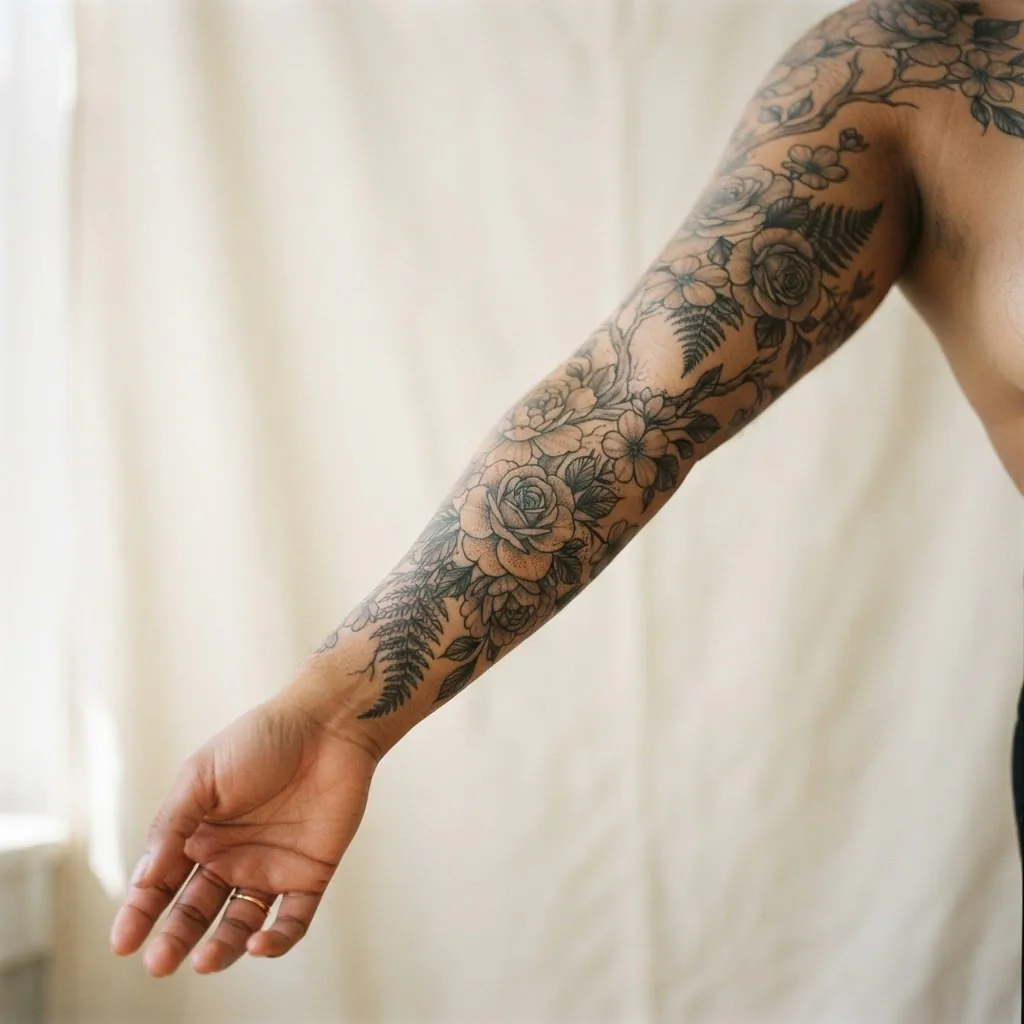
What Every Woman Should Know Before Getting a Sleeve Tattoo
I booked my first serious consultation for a sleeve when I was twenty-three, sitting across from an artist in a Portland studio with a crumpled stack of printed reference photos and absolutely no idea what questions to ask. I knew I wanted something that would feel like me for the rest of my life. I did not know the difference between a half sleeve and a quarter sleeve, I had no concept of what multiple sessions would feel like, and I definitely had not thought about how my chosen style would look in ten years. That appointment was a turning point, but a lot of the learning happened the hard way.
If you are here, you are probably somewhere between “I’ve been thinking about this for a while” and “I’m finally ready to do something about it.” That is exactly where this guide starts. Sleeve tattoos are one of the most ambitious, personal, and genuinely beautiful things you can do with your body. They are also a real commitment of time, money, and skin real estate. So before we get into the designs that will make your heart race, let’s talk about everything that makes a sleeve a success long before the needle touches your arm.
Understanding the Different Sleeve Sizes
Not all sleeves are the same commitment, and getting clear on what each one actually covers is the first thing to sort out before you get too far into planning.
A quarter sleeve generally runs from the shoulder down to the mid-bicep, or from the elbow down to the mid-forearm depending on the artist.
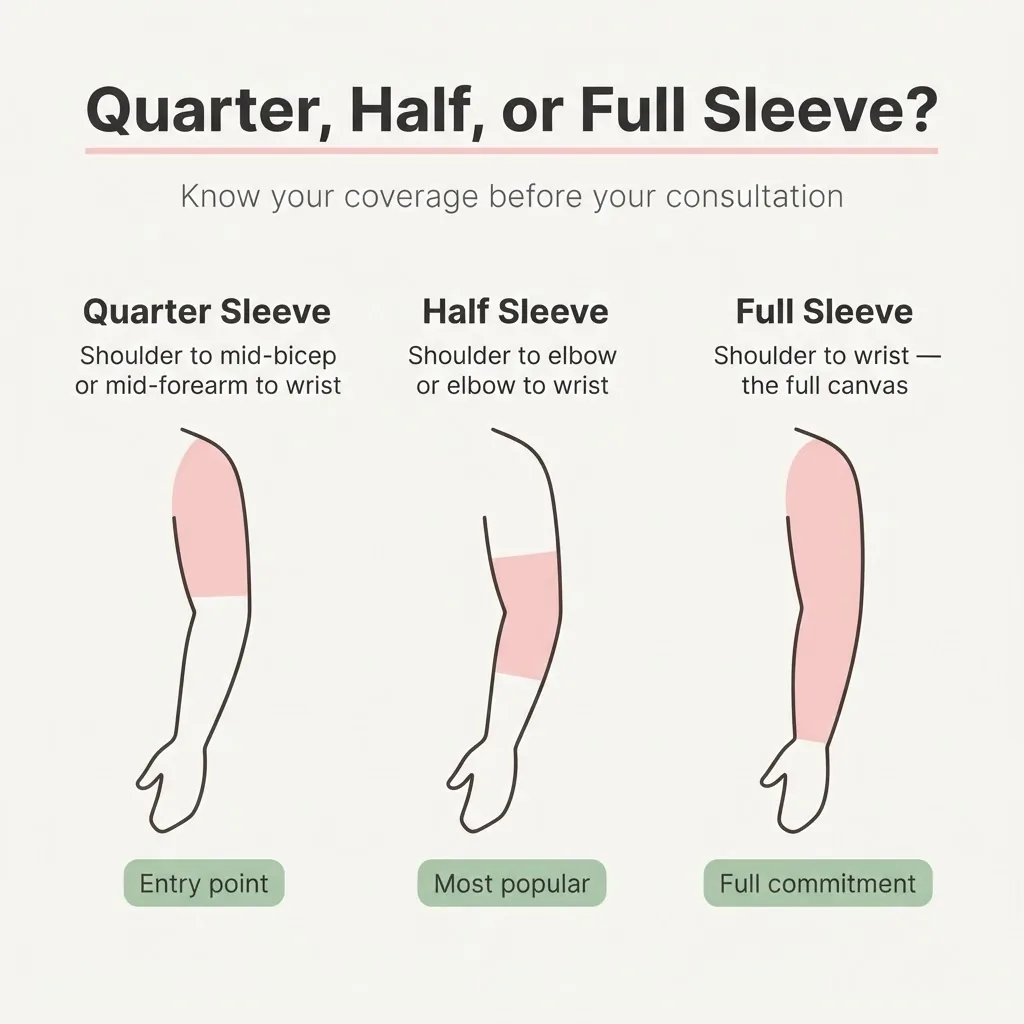
It is the most subtle entry point and often works beautifully as a standalone piece or as the seed of something larger. A half sleeve covers either the shoulder to the elbow (upper arm) or the elbow to the wrist (forearm), and this is where the word “sleeve” really starts to live up to its name. The forearm half sleeve is one of the most popular choices right now because it is fully visible when you want it to be and not particularly difficult to cover when a situation calls for it. A full sleeve runs from shoulder to wrist and is exactly what it sounds like: an entire arm wrapped in cohesive ink.
The decision between these is not just aesthetic. It is a question of budget, pain tolerance, life circumstances, and how much you want your tattoo to be visible in professional settings. None of those factors make one option better than another. They just help you choose the right scope for where you are right now. And one thing worth knowing: a half sleeve you love can absolutely grow into a full sleeve over time. Many collectors build their sleeves session by session over years, and there is something genuinely beautiful about that process.
The 12 Sleeve Styles Worth Knowing
Understanding the style landscape is not about picking whatever is trending. It is about knowing what each style actually does to your skin over time, what it demands from your artist, and whether it will still feel true to you a decade from now. Here are the twelve styles that come up most often in sleeve conversations for women, with honest notes on each.
1. Japanese and Irezumi-Influenced
Japanese-style sleeves are among the most structurally sophisticated tattoos in the world. They use large-scale imagery drawn from Japanese history, folklore, and nature, including koi fish symbolizing perseverance, dragons representing wisdom and strength, peonies for prosperity, cherry blossoms as a reminder of impermanence, and chrysanthemums representing longevity and loyalty. If you are drawn to this style, I would encourage you to read about the specific motifs before your consultation, because the symbolism in traditional Japanese tattooing is genuinely deep and worth understanding. Inked Magazine’s guide to Japanese tattoo symbolism is one of the better introductions I have come across. This style ages exceptionally well because bold outlines and saturated black and grey or color fills hold their structure as skin changes over decades.
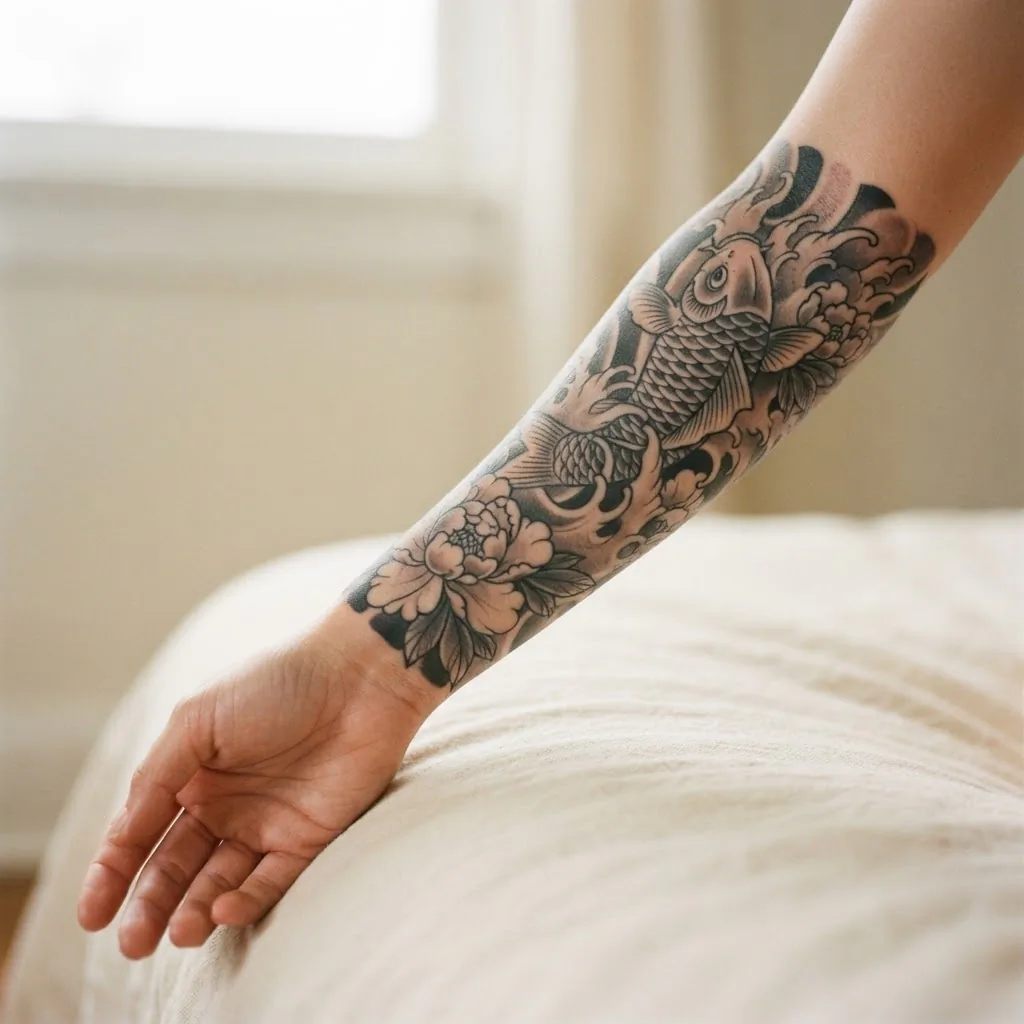
It also demands an artist who specializes in this tradition specifically, not just someone who can approximate the look.
2. Blackwork Botanical
Botanical blackwork is one of the most consistently beautiful styles for a sleeve on any skin tone. It works with highly detailed renderings of plants, flowers, leaves, fungi, and natural specimens rendered entirely in black ink, often with a scientific illustration or woodblock print quality. The contrast is striking, the healing tends to be predictable, and the style ages well because the density of black holds.
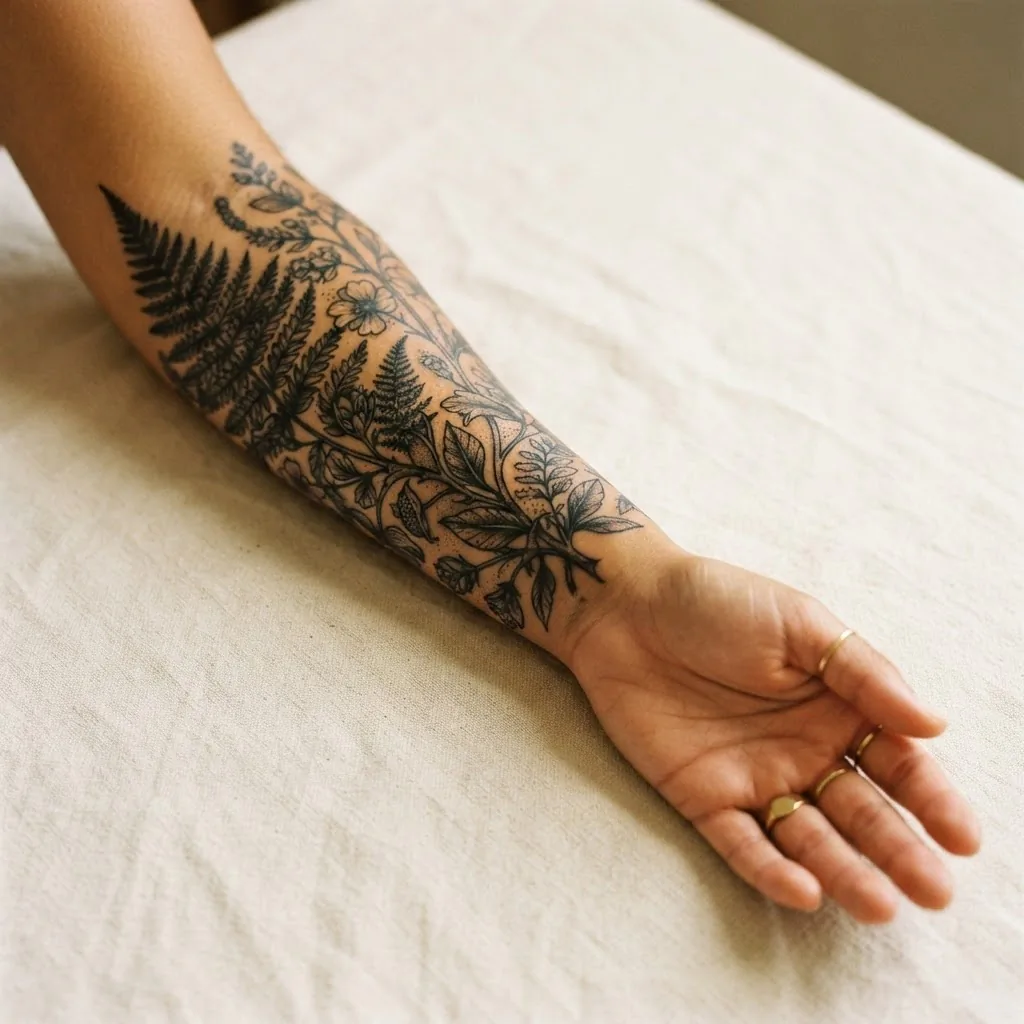
It also gives your artist a lot of design flexibility, since botanicals can grow and flow organically to fill the arm’s natural curves.
3. Neo Traditional
Neo traditional tattooing takes the bold outlines and confident color palette of classic American traditional work and layers in more illustrative detail, sophisticated shading, and a wider color range. Floral neo traditional sleeves for women are stunning: think richly colored roses, poppies, and magnolias with deep jewel tones and clean black outlines that will stay legible for life. This is a style that genuinely rewards you for its longevity. Those bold outlines act like a skeleton that keeps the piece readable even as skin ages naturally.
4. Fine Line
Fine line sleeves have had an enormous cultural moment, and for good reason. The delicacy, the intimacy, the way a fine line botanical or portrait sits on skin feels unlike anything else. But I would be doing you a disservice if I did not share what I know about how they age. Fine line tattoos are not as permanent as bold work in the traditional sense: the ultra-thin lines soften and can spread slightly under the skin over years, especially in areas with friction or consistent sun exposure. That does not mean do not get one. It means choose your artist very carefully, protect it from the sun religiously once it is healed, and go in with realistic expectations about what a touch-up down the road might look like.
5. Watercolor
Watercolor sleeves look breathtaking in fresh photos: soft washes of color, painterly blends, no hard outlines. The honesty I owe you is that watercolor tattoos fade faster than any other style, because the lack of bold outlines means there is no structure to anchor the color as it softens. A skilled artist can compensate by packing pigment more densely than it might look at first glance, but even then this style requires the most maintenance and sun protection of any sleeve on this list. If you love the aesthetic, ask specifically about an artist’s healed watercolor work, not fresh photos.
6. Patchwork
Patchwork sleeves are the collector’s choice right now, and according to industry trend sources, they are among the most dominant sleeve formats in 2025. Instead of one unified design flowing across the arm, a patchwork sleeve is built from individual standalone flash pieces or custom panels arranged with intentional breathing space between them.
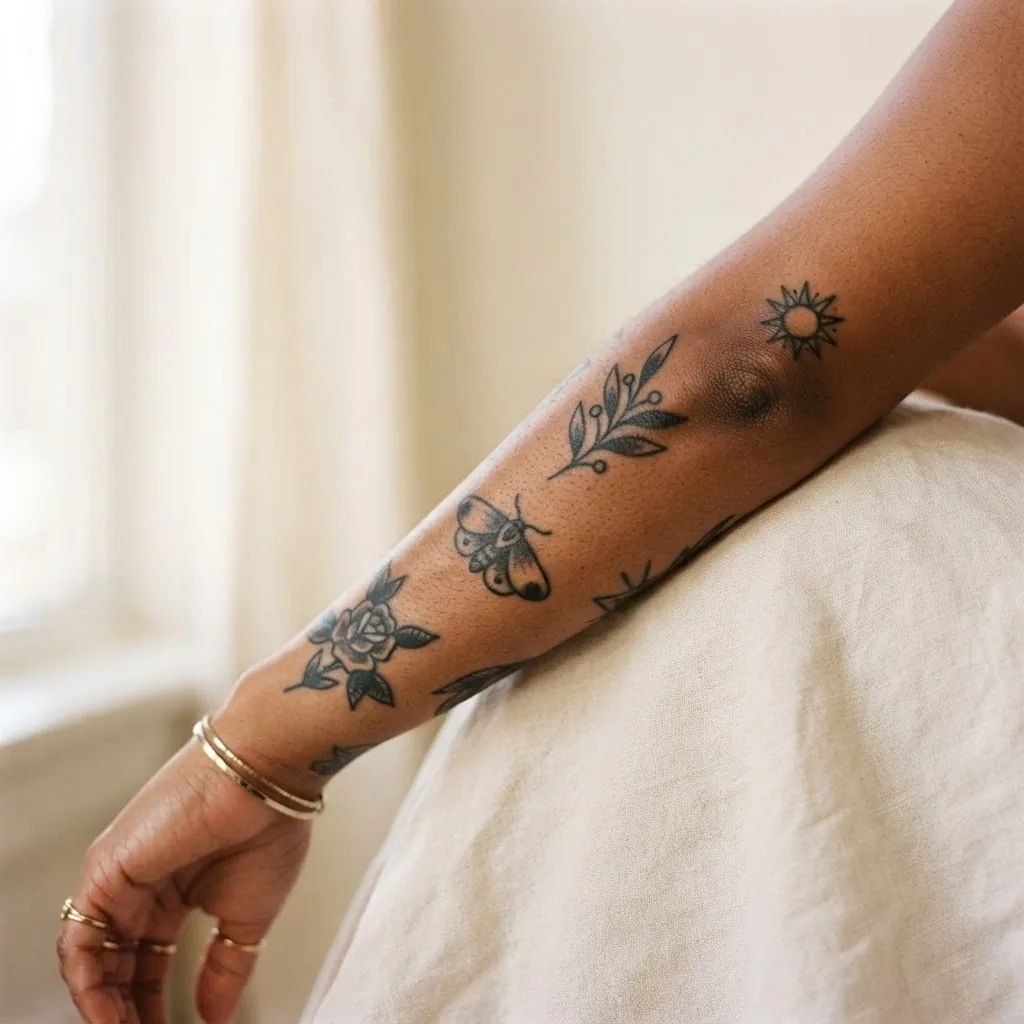
The appeal is flexibility: you can collect pieces from multiple artists, vary styles across the sleeve, and build slowly over years without every session depending on the last. It also tends to be a slightly more accessible entry point because each individual session is its own complete piece.
7. Geometric and Dotwork
Geometric and dotwork sleeves use mathematical precision and the stippling of thousands of individual dots to build pattern, shadow, and form. Mandalas, sacred geometry, compass roses, and flowing linework are common anchors. The intricate nature of this work means it is slower and more technically demanding, but the results are unlike anything else. Healing can vary because fine detail and dense dotwork need careful aftercare to stay crisp.
8. Realism and Portraiture
Photorealistic sleeves featuring portraits, wildlife, landscapes, or botanicals rendered in exquisite detail are genuinely awe-inspiring. The technical bar is also the highest on this list. A realism artist who is not exceptional can produce work that fades, loses detail, and muddies quickly. If this is the direction you want to go, portfolio vetting is everything. Ask specifically to see healed realism work from that artist, not just fresh session photos.
9. Floral Traditional (American Traditional)
The bold, flat-color roses, pansies, and dahlias of American traditional tattooing have been on skin since the early 1900s and still look incredible on pieces from that era. This is not an accident. Traditional tattooing was designed to last. If you want a sleeve that will look strong and readable for the rest of your life, traditional florals are an underrated choice that tends to be overlooked in favor of trendier styles.
10. Illustrative and Storybook
This is a broad style category that sits between fine line and neo traditional: think fairy tale imagery, soft detailed portraits of women or animals, celestial motifs, illustrated botanicals with whimsy. The aesthetic is very popular right now and suits artists with an illustrative background. Longevity depends heavily on how boldly the lines are drawn. Ask your artist about what holds best in their personal style.
11. Black and Grey Realism
Black and grey realism differs from color realism in that it works entirely in ink diluted to varying grey values. The tonal range that skilled artists achieve in this style is genuinely remarkable, and black and grey work tends to age more gracefully than color realism because you are not managing the additional complexity of color fade. Portraits, animals, flowers, and landscapes all translate beautifully.
12. Abstract and Mixed Media
Some of the most interesting sleeves being made right now do not fit neatly into a style category at all. They mix linework with abstract color blocking, collage visual elements, or surrealist imagery. If your aesthetic references are more art school than tattoo magazine, this might be your direction. Finding the right artist matters enormously here because this style lives and dies by individual artistic vision.
The Pain Reality: What Arm Placement Actually Feels Like
I am not going to tell you it does not hurt. It does. But it hurts differently depending on where on the arm you are being worked on, and having a real map of that in your head before you go in makes the whole experience easier to manage.
For a detailed breakdown of pain by body location, the Healthline tattoo pain chart is one of the more honest and thorough references I have found.
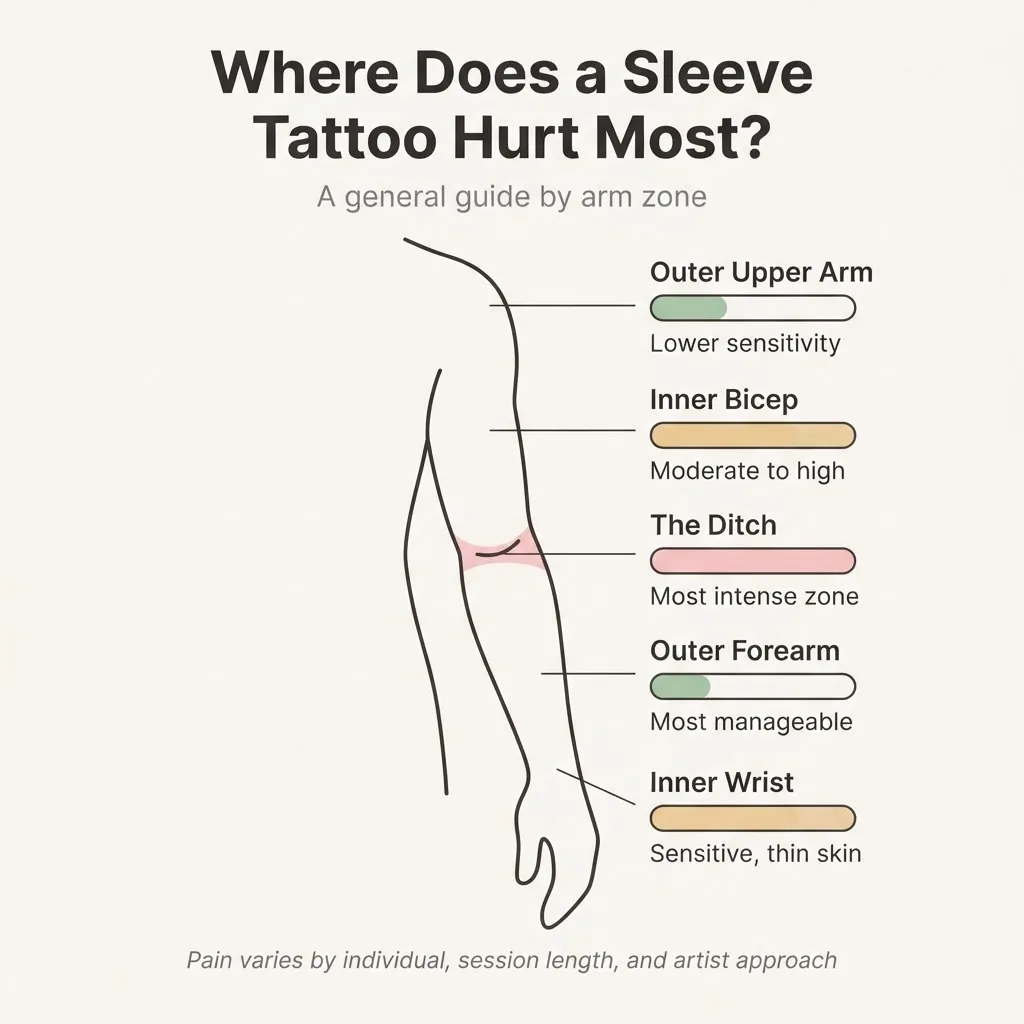
As a general orientation based on what most collectors report: the outer upper arm and outer forearm are consistently the most manageable areas, which is good news because they cover a large portion of most sleeves. The inner forearm is more sensitive. The inner bicep can be genuinely intense. And the ditch (the inner elbow crease) and the wrist are where most people find their tolerance tested most.
Session length also matters. A three-hour session feels very different in the final thirty minutes than it did in the first. Many experienced artists working on sleeves will structure sessions thoughtfully and may suggest starting with the easier placements and working toward the more sensitive areas as your sleeve develops. This is worth asking about in your consultation.
Understanding Cost and What You Are Paying For
A sleeve tattoo is not a small financial commitment, and going in with a realistic sense of what things cost will help you find the right artist at the right moment for your budget rather than compromising the work to hit a number.
For reference, most experienced tattoo artists charge between roughly $150 and $300 per hour, though exceptional specialists and highly sought-after artists often charge more. A half sleeve, depending on style and complexity, typically runs somewhere in the range of $700 to $2,000 total across one or more sessions. A full sleeve can range from around $1,500 for simpler blackwork done efficiently to well over $4,000 to $6,000 or more for highly detailed color or realism work from an experienced artist. Some full sleeve projects from sought-after artists exceed that significantly, particularly if built over several years.
The most important framing here: you are not just paying for ink. You are paying for skill, vision, sterile equipment, quality materials, and someone’s years of practice making decisions that will live on your body permanently. The shop minimum exists because every session has baseline costs regardless of the size of the piece. Tipping is standard and genuinely appreciated.
How to Vet an Artist for Sleeve Work Specifically
Finding a good tattoo artist is different from finding the right tattoo artist for a sleeve. Here is what I actually look for when I am evaluating someone for large-scale work.
First, look for healed photos. Fresh tattoos always look their best. A sleeve requires an artist who can show you what their work looks like six months to two years after the session, when lines have settled and colors have shifted. Healed photos are the real portfolio.
Second, look at the weakest piece in their portfolio, not the best one. If their least impressive healed piece is still technically solid, that tells you more about their consistency than any single showstopper piece.
Third, look for sleeve-specific experience. Building a cohesive design that flows across the curves of an arm, accounts for how different areas take ink, and maintains visual harmony across multiple sessions is a genuinely specialized skill. Ask if they have completed full sleeves from start to finish, and ask to see them.
Fourth, look at the studio itself. It should be clean, organized, and open about its hygiene practices. Single-use needles, fresh ink caps for each session, and proper PPE are not optional. The FDA’s information on tattoo ink safety and regulation makes clear that contamination risk comes not only from poor needle hygiene but also from contaminated ink itself, and that licensing is regulated at the local and state level. Choosing a licensed studio in your jurisdiction is a baseline, not a bonus.
Planning Your Consultation
The consultation is where your sleeve either clicks into place or where you realize you need a different artist. Come prepared.
Bring reference images, but be honest with yourself about what they show. Are you bringing them because you love the style, the specific motif, the color palette, or the composition? Being able to articulate that clearly helps your artist understand your vision rather than just reproducing someone else’s tattoo.
Bring a sense of your theme or feeling, even if you cannot name a specific style. “I want something that feels like the Pacific Northwest forest” or “I want it to feel feminine but not delicate” is genuinely useful to a skilled artist.
Ask about their process for building a sleeve over sessions. Some artists map the full sleeve design before starting and execute it in stages. Others prefer to work organically, completing pieces that build on each other. Neither approach is wrong, but you should know which one you are signing up for.
Ask about deposits, rescheduling policies, and touch-ups. Understanding these before you start avoids misunderstandings later.
A Note on Ink, Skin Health, and Knowing When to Call a Doctor
Large-scale work like a sleeve means more ink, more sessions, and more skin surface involved. Most people heal without complications when working with a clean, skilled, licensed artist and following aftercare properly. But being an informed adult means knowing that reactions do happen. Research published in peer-reviewed dermatology literature, including studies on cutaneous adverse reactions associated with tattoos, documents that allergic reactions, localized irritation, and in rare cases more systemic responses are real possibilities, with red pigments historically associated with a higher reaction rate than others. If you notice unusual swelling, persistent itching or rash in a tattooed area, or any sign of infection, see a licensed healthcare provider or dermatologist promptly. This is not meant to scare you. It is meant to ensure you know what to watch for.
Taking Care of a Sleeve: The Long Game
Your artist will give you specific aftercare instructions and those instructions take priority over anything else you read, including this. What I can share is the general framework that dermatologists and the broader professional community consistently recommend.
Keep your fresh tattoo clean and moisturized, protect it from prolonged water exposure during initial healing, and avoid direct sun on new work. Once it is fully healed (which for a large piece can take closer to three months for the deeper layers of skin, even if the surface looks settled sooner), sun protection becomes your most important long-term tool. The American Academy of Dermatology recommends applying broad-spectrum SPF to tattooed skin when you are in the sun, because UV light fades ink over time. For a sleeve that lives on an exposed arm, this is not optional if you want it to look the way it does now in ten years.
Stay hydrated, keep your healed tattoo moisturized regularly, and schedule touch-ups when your artist recommends them. A sleeve is a living piece of art that rewards the people who treat it like one.
A Few Things I Wish Someone Had Told Me
There are some things nobody tells you until you are already in the process. I am going to save you the learning curve.
Sleeves are socially visible in a way that smaller tattoos are not, and people will have opinions. Most of them will be wonderful. Some will be unsolicited and strange. Knowing your own reasons for this sleeve before you start means their opinions stay firmly where they belong: irrelevant.
Healing a large piece is a commitment. Multiple sessions means multiple two-week healing windows where you are being careful about sun, water, and clothing rubbing the area. Factor this into your timing if you have a vacation, a wedding, or a swim season you want to protect.
The process itself, sitting for multiple long sessions with someone you trust while something permanent is being created on your body, is one of the more meaningful things you can do. Many collectors describe it as meditative. You may feel the same way.
Choosing Your Moment
The right time to start a sleeve is not when you have every detail figured out. It is when you have done enough honest research to walk into a consultation with real clarity about what you want and genuine trust in the person holding the machine. The idea can evolve through that conversation. The trust needs to already be there.
Take your time with the research. Save the artists. Ask for consultations. Show up prepared. And then let the artist do what they do.