15 Delicate Minimalist Tattoos That Age Beautifully
I still remember the quiet panic of my first tattoo at eighteen. I had the design saved, I had the studio picked, and I still sat in the car for ten minutes asking myself if I would love it when I was forty. A good few pieces later, I am the friend everyone texts before they book, and I can tell you the question I hear most about delicate work is almost always the same one I asked myself in that car. Will something this fine and this small still look good in a decade?
That worry is fair, and it is exactly why I wanted to write this. Delicate minimalist tattoos are some of the most beautiful, personal, and beginner-friendly designs out there. They are also the style people most often rush into without the info that makes them last. So this is part inspiration board and part honest planning guide. I will show you fifteen ideas I genuinely love, and along the way I will walk you through placement, sizing, pain, and how to work with a licensed professional artist so the piece you pick ages the way you hope it will.
No pressure here. Whether you are one hundred percent ready or just daydreaming with a secret board open, let’s take this at the pace a permanent decision deserves.
What “delicate” and “minimalist” actually mean
These words get used loosely, so let’s get clear before we start dreaming. Minimalist tattoos strip an idea down to its simplest form, often a single clean shape or a few lines. Fine-line work uses very thin, precise linework, sometimes done with a single needle for that whisper-soft look. Micro-tattoos are simply tiny versions of any of these. Dainty is the vibe word that ties them all together.
The look is elegant, and it is also honest about its limits. Very thin lines carry less ink than bold traditional work, so they can soften and lighten a little faster over the years, especially in spots that get lots of sun or friction. That is not a flaw, it is just physics of skin and ink. The trick is designing with that reality in mind, which is what most Pinterest galleries forget to tell you. Keep that thought in your back pocket as we go through the designs.
15 delicate minimalist tattoo ideas to save
Think of these as starting points, not a menu you have to order from. The best tattoo is the one that means something to you, so let these spark your own version.

Botanical and floral designs
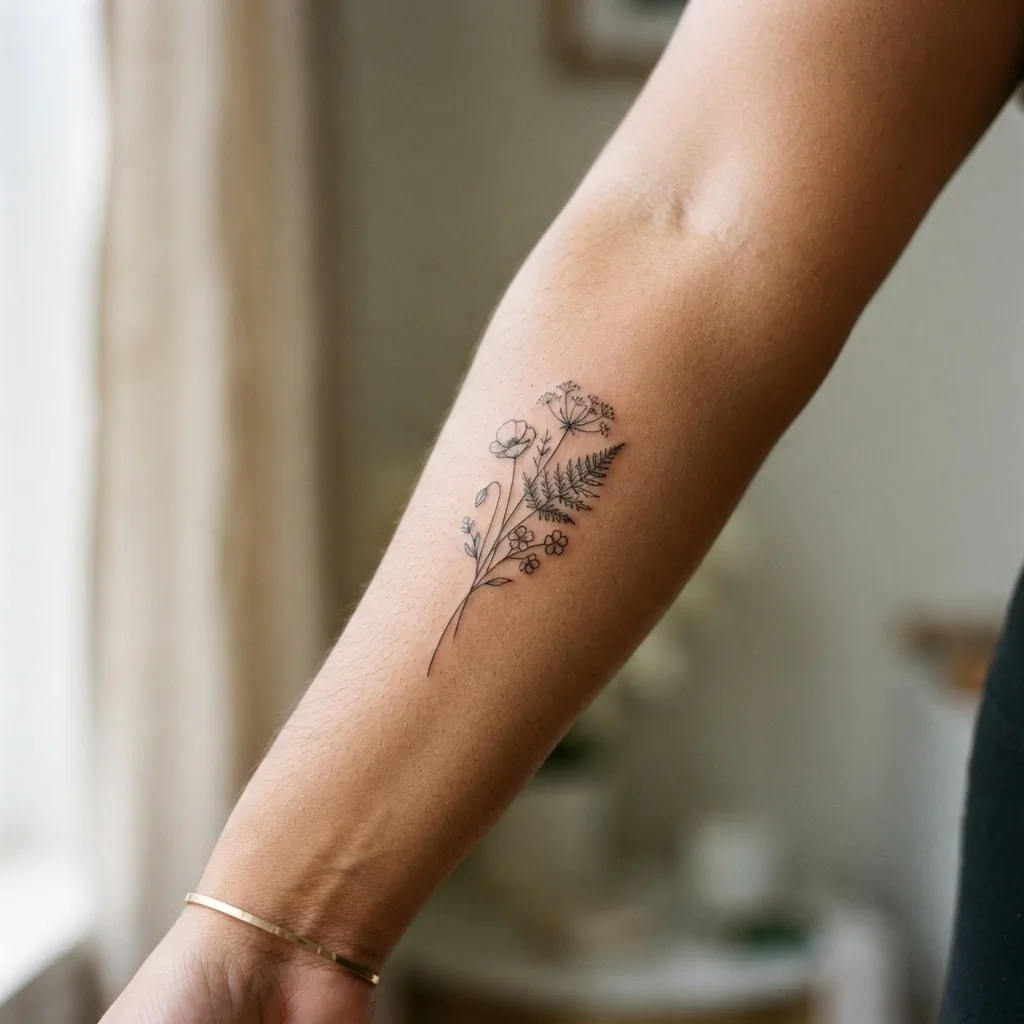
1. A single-stem wildflower. One slender stem, a few leaves, one bloom. Timeless, feminine, and forgiving as it ages because there is breathing room between the lines.
2. Your birth flower. This is one of my favorite meaningful choices because it is personal without needing explanation. Each month has its own bloom, like carnation for January or lily of the valley for May, and a fine-line version looks quietly special. If you want to map out family members’ months into one small bouquet, this is a lovely way to do it.
3. A tiny botanical sprig. Think olive branch, lavender, or a fern frond. Simple, calming, and it reads clearly even when small.
4. A pressed-flower silhouette. A minimalist outline of a daisy or poppy, almost like a botanical sketch. Delicate and a little vintage.
Celestial and nature motifs
5. A crescent moon. Small, clean, endlessly popular for a reason. Works beautifully in negative space or as a simple outline.
6. A scatter of tiny stars. Three or four little stars trailing up a forearm or behind an ear. Playful and easy to add to later.
7. A minimalist mountain range. A few peaks in thin line. Great for anyone who loves the outdoors, and the open composition ages gracefully.
8. A single wave. One flowing line that suggests water. Calm, simple, meaningful for ocean people.
9. A small sun. A little radiating sun, either solid or fine-line, for warmth and optimism.
Symbolic and personal pieces
10. A meaningful date in fine script. A birthday, an anniversary, or a day that changed everything, kept understated.
11. Coordinates of a place you love. Where you were born, where you got married, where you felt most yourself. Numbers in a slim font.
12. A tiny heart. Sometimes the simplest thing is the one you never tire of. Outline or solid, placed somewhere just for you.
13. Initials or a small monogram. For the people you carry with you. Delicate and discreet.
Line-art and abstract looks
14. A continuous single-line face or figure. One unbroken line drawing a profile, a flower, or a body. Modern, artistic, and striking in its simplicity.
15. A small abstract shape or symbol. A little geometric accent, a personal glyph, or a symbol that means something only you understand.
Tattooing has always been about carrying meaning on the skin, and if you enjoy that idea, I love the deep dive into how cultures across the world have marked themselves for thousands of years that the team at Smithsonian magazine put together. It reframes even a tiny tattoo as part of a very old human habit, which I find grounding when I am choosing something new.
Placement: where delicate tattoos live best
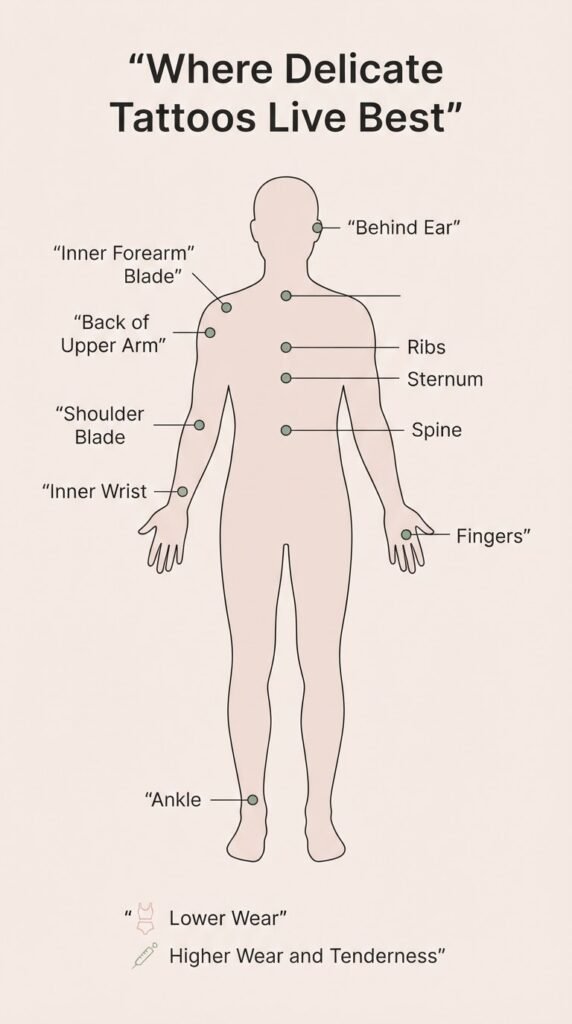
Placement is not just about looks, it changes how your tattoo ages and how much it will sting. Delicate work does best in areas with less friction and less daily sun.
Inner forearm, back of the upper arm, and the shoulder blade are lovely canvases that stay relatively protected. The inner wrist is gorgeous and popular, though it sees a lot of movement and sun, so factor that in. Behind the ear and the nape of the neck feel intimate and easy to hide. The ankle and inner ankle suit small botanicals, keeping in mind that feet and ankles rub against shoes and socks.
Then there are the high-visibility, high-wear spots. Fingers are the classic example. Finger tattoos look amazing on day one, but the skin there regenerates fast and takes constant use, so fine lines commonly blur or fade and often need touch-ups. I am not saying don’t, I have seen finger pieces I adore, I am saying go in knowing it is a higher-maintenance choice. Ribs, sternum, and spine make stunning placements for delicate work too, with the honest caveat that they tend to be more tender to sit through.
Sizing: smaller is not always safer
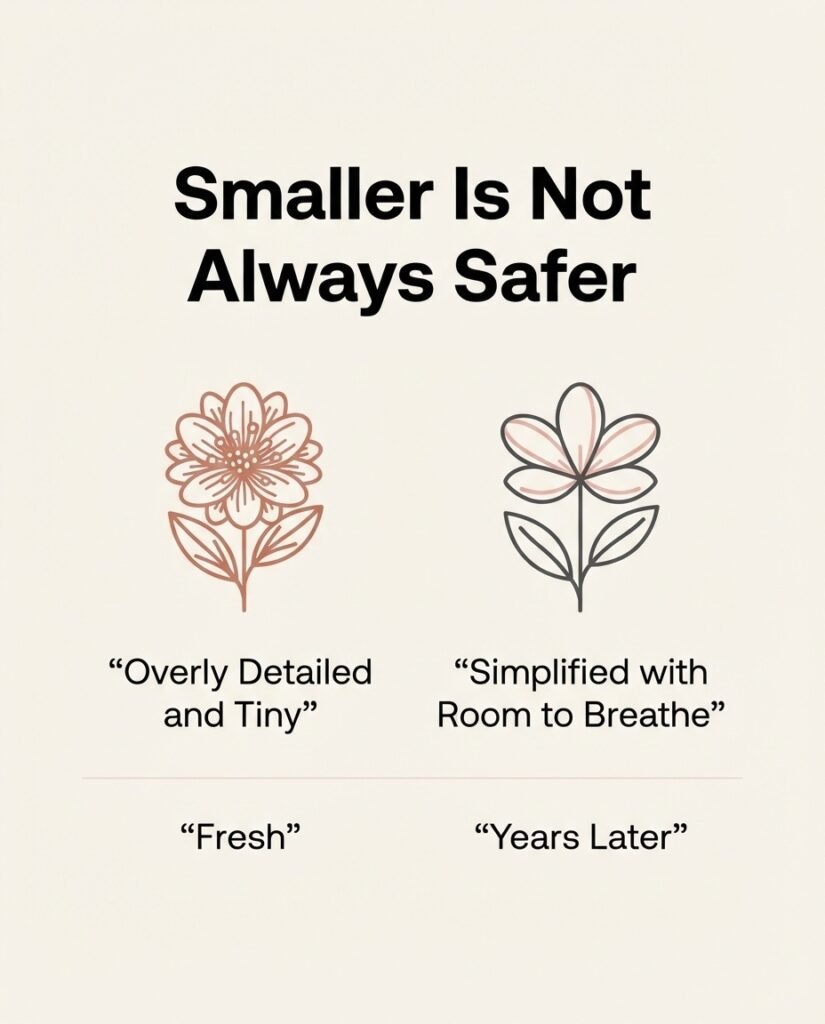
Here is the counterintuitive thing I wish someone had told me early. Very small plus very detailed is the combination that ages worst. When you pack lots of fine lines into a tiny space, those lines sit close together, and as ink naturally softens over the years they can blur into each other. So a detailed portrait the size of a coin is asking a lot of the future.
The fix is not to go huge. It is to match detail to size. If you love a delicate look, give the design a little more room, or simplify it so each line has space to breathe. A great artist will tell you honestly when a design needs to be a touch bigger to last, and that conversation is one of the most valuable parts of the whole process. Listen when they push back on size. They are protecting the version of your tattoo that exists ten years from now.
What delicate tattoos feel like: an honest word on pain
Pain is personal, and I will never pretend a tattoo tickles. That said, small delicate pieces have one big advantage: they are usually quick, so whatever you feel does not last long.
As a general rule, the least painful areas are those with more cushioning and fewer nerve endings, like the outer forearm and the outer upper arm. The more tender areas tend to be those over bone or thin skin, like ribs, sternum, spine, ankles, fingers, and the sensitive skin behind the ear. Most people describe the sensation as a hot scratch rather than a stab. For a tiny wrist piece you might be in the chair for fifteen minutes. Knowing that timeline honestly is usually more reassuring than any pain chart.
Choosing and working with a licensed artist
This is the part that matters most, and it is the part the pretty galleries skip. A delicate tattoo lives or dies on the skill of the person doing it, because clean, consistent fine lines are genuinely hard. Getting tattooed is a job for a trained, licensed professional, full stop, and the good news is that vetting one is very doable.
Start with portfolios. Look specifically for healed fine-line work, not just fresh photos, because fresh ink always looks crisp. Healed shots tell you how that artist’s lines settle. Look for even, confident linework and check that they regularly do the style you want. A blackwork specialist and a fine-line specialist are not always the same person.
Then check the fundamentals of safety and hygiene. A reputable studio will happily talk about single-use needles, sterilization, gloves, and how they prevent cross-contamination, because the real risk in tattooing is infection and bloodborne pathogen exposure when hygiene slips. If you want to understand why studios are so strict about this, the public health research on bloodborne pathogen risk reduction in the body art industry that the CDC has published lays out clearly what proper standards look like. Licensing rules and age minimums vary by state and city, so confirm your artist and studio are licensed where you live, and know that tattooing is strictly for adults, eighteen and up or your local legal minimum.
When you book a consultation, bring reference images, a sense of size and placement, and any meaning behind the design so the artist can help it fit your body.

Good questions to ask include how they think the piece will age at that size and spot, whether it suits fine-line or needs a slightly bolder approach, what the cost and studio minimum are, and what their touch-up policy is. Most studios have a minimum charge even for tiny work, so a small tattoo is rarely as cheap as it looks, and that is normal. You are paying for skill and safety, not square inches.
Aftercare basics that keep delicate ink crisp
I want to be clear that your artist’s aftercare instructions always come first. What follows is general context, not a replacement for what the professional who did your tattoo tells you, and certainly not medical advice.
In broad terms, dermatologists recommend keeping a new tattoo clean with gentle, fragrance-free products, moisturizing lightly, and not picking or scratching as it heals. The single biggest long-term favor you can do delicate work is sun protection, since UV light fades ink over time, and the guidance on caring for tattooed skin from the American Academy of Dermatology is a solid, non-scary rundown of both healing and long-term care. Once your tattoo is fully healed, a broad-spectrum sunscreen over it on sunny days genuinely helps those fine lines stay sharp for longer.
Watch how your skin responds, too. A little redness and warmth early on is normal, but tattoo inks are not risk-free, and reactions do happen. The FDA notes that it has not approved any pigments for injection into the skin and that allergic reactions or infections can appear soon after tattooing or even years later, which is why the consumer guidance on tattoo safety that the FDA publishes is worth a read before you book. If you notice a spreading rash, bumps, swelling that will not settle, or any sign of infection, contact your artist and see a doctor or dermatologist. That is not fearmongering, it is just the same care you would give any healing skin.
How delicate tattoos age, and making peace with it
Let’s return to the question from the car. Every tattoo changes as you do. Skin ages, ink settles, lines soften. Delicate work simply shows this a touch sooner than bold work, and that is a feature you can plan around rather than a fate to fear.
You give a delicate tattoo its best shot by choosing a skilled licensed artist, sizing it sensibly, placing it somewhere low-friction, and protecting it from the sun. Even then, expect that a fine-line piece may want a touch-up at some point, and treat that as normal maintenance rather than a failure. The people I know who love their delicate tattoos years later are almost never the ones who found the trendiest design. They are the ones who planned calmly, picked meaning over hype, and trusted a good artist.

That is the whole philosophy in one line. Good info in, great tattoo out. If you take your time, ask the honest questions, and work with a professional you trust, you get to enjoy the fun part fully: dreaming up something small and beautiful that is entirely yours. Save your favorites, sit with them for a while, and when it feels right, go make it real.