16 Fall Hairstyles That Are Actually Easy to Pull Off
I have a confession: I used to be the person who would spend forty-five minutes scrolling through Pinterest in September, saving every single gorgeous fall look I could find, and then… do absolutely nothing with any of them. Sound familiar? The gap between “I am obsessed with this style” and “I can actually recreate this on my own head” felt enormous. And honestly, it is enormous, if nobody ever takes the time to bridge it for you.
That is what this list is for. I pulled together 16 of the most-pinned, most-requested, and most genuinely doable fall hairstyles of the season, and I am going to walk you through not just what they look like, but how to actually get there. For each one I will tell you how hard it really is, what your hair type needs to know, what tools are worth buying, and where the beginner traps are. No vague “just curl your hair loosely” instructions. Real guidance.
Let us get into it.
Before You Style Anything: Your Fall Hair Reset
Here is something the big trend roundups always skip: fall is not just a style season, it is a hair health transition season. Going from summer (all that sun, salt water, pool chlorine, and humidity) into the drier, cooler autumn months is a real shift your hair has to adjust to. Drop in humidity means more frizz, more static, more dryness, and more breakage if your hair is already compromised from summer. If your ends are crispy and your hair feels like straw right now, that is not just you: it is biology.
The American Academy of Dermatology points out that excessive heat causes damage across all hair types, and that heat protectant should be used before any hot styling tool touches your hair. I know everyone says this, but I am repeating it because it matters more in fall. Drier hair is more vulnerable hair. Using a heat protectant is not optional just because you are in a hurry.
The good news is that fall is genuinely one of the best times to reset.
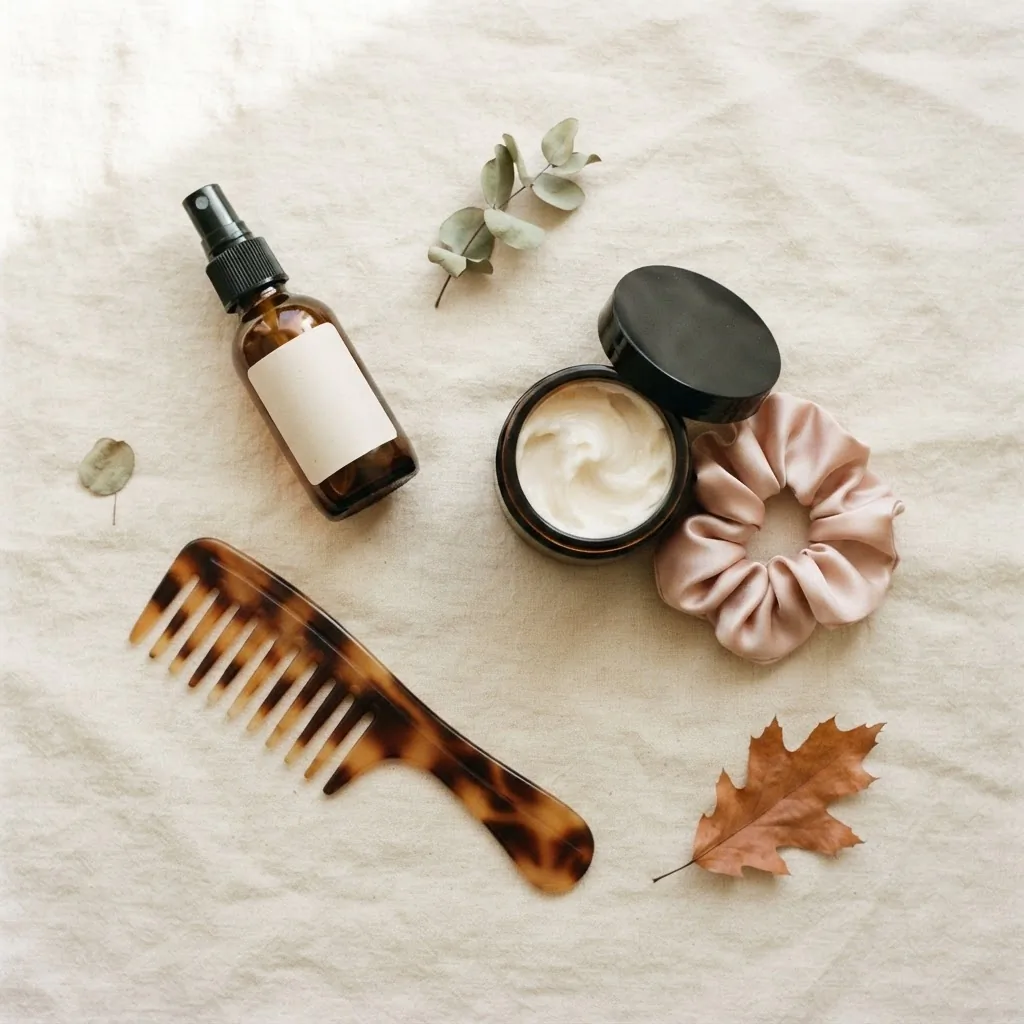
Less UV damage, less chlorine, more moisture-retaining cooler air. This is the season to lean into deep conditioning masks, protective styles, and heatless methods so you can actually show up to winter with healthy hair instead of fried hair. I will flag the heat-free options throughout this list.
The Cuts and Lengths to Know This Season
Before we get to styling, it helps to know the cut landscape, because some of these styles land totally differently depending on what length and shape you are working with. According to both Vogue’s August 2025 fall trend report and confirmed reports from celebrity stylists across the board, the shapes dominating fall 2025 are bobs (the classic, the swinging, and the strong blunt), 90s-inspired long layers, the lived-in shag and wolf cut, and curtain bangs. A lot of these are styles you can achieve through how you style and accessorise your existing hair, not just through a new cut.
If you are considering a cut, here is a trick I have seen work: hold a pen vertically against your earlobe and another horizontally under your chin, forming an L-shape. If the distance from your earlobe to where they intersect is two inches or less, short hair tends to be most flattering on you. More than two inches, medium to long hair usually sits best. Not a hard rule, just a useful starting point when you are not sure whether to go for the bob or the lob.
Now, the 16 looks.
Heatless and Low-Damage Looks
1. Overnight Heatless Waves
Difficulty: beginner-friendly
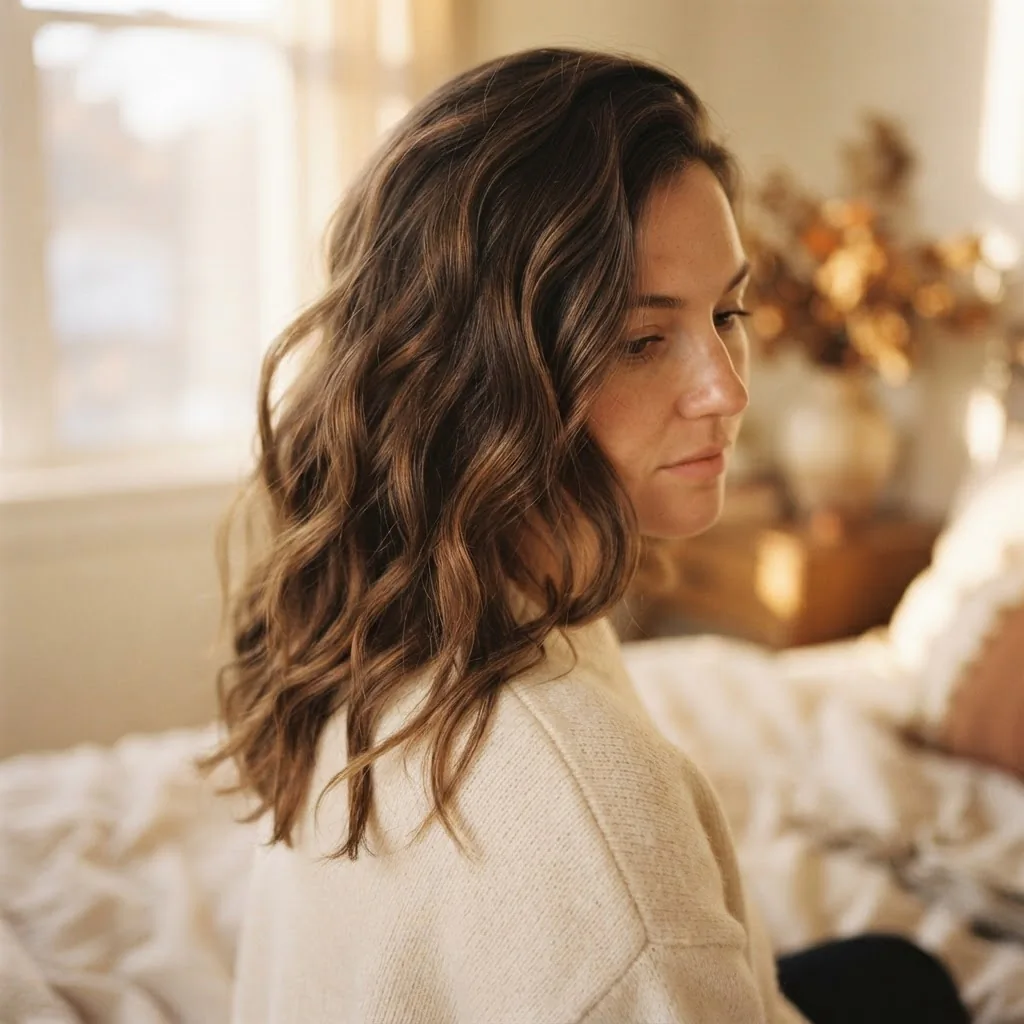
This is the style I reach for when I need to look like I tried without actually trying, and honestly it is one of the most effortless things in my entire rotation. The method is simple: slightly dampen your hair before bed (it should not be soaking wet, just lightly misted), divide it into two or four sections, twist each section into a rope braid or loose bun, secure with a satin scrunchie, and sleep on it. In the morning you undo everything and shake out soft, beachy waves with zero heat involved.
For fine hair: use a lightweight mousse before twisting to give the waves more definition and hold. Without it they may drop within an hour. For thick or coarse hair: you may need to let your hair air dry a little longer before unwrapping, because thick sections hold moisture longer and can come out slightly damp.
The satin scrunchie matters more than people think. Regular elastics create tension and dents. A satin or silk version slides off without marking your hair. This is a $3 to $8 upgrade that makes a noticeable difference, and you can find them at any drugstore.
2. Heatless Silk Rod Curls
Difficulty: beginner to moderate
Heatless curl rods (sometimes called silk rods or curling ribbon sets) went viral for a reason: they genuinely deliver beautiful, defined curls with zero heat. You wrap damp or slightly damp sections of hair around the rod from root to tip, let it set overnight, and unwrap to soft, bouncy curls. The process takes longer to wrap than overnight waves, but the results tend to be more uniform and defined.
The key beginner mistake with heatless rods is wrapping hair that is too wet. Too wet means you wake up and sections are still damp, which means the curl set is incomplete and the style falls within an hour. Start the wrap earlier in the evening so you have time for your hair to be in that “just slightly damp to slightly dry” sweet spot before you sleep. Hair type note: fine hair gets excellent results with smaller sections wrapped tightly. Curly or wavy hair types can use this method to define and elongate natural texture rather than create new curl.
3. The Low Bun with Face-Framing Pieces
Difficulty: total beginner
If I had to pick one style that looks intentional regardless of your skill level, this is it. You gather your hair at the nape of your neck in a low, slightly messy bun, but instead of pulling every strand back, you leave a few pieces out at the front, one or two on each side, to frame your face. That is it. That is the look.
Fall is actually the perfect season for this because as the air dries out and hair gets staticky, those little framing pieces tend to curl or wave slightly on their own, giving you that wispy, romantic effect without doing anything. The secret to making it look styled rather than just rushed is pulling the bun apart slightly after you tie it, so it looks intentional and voluminous instead of tight and severe. A single bobby pin or two to tuck in any stray ends keeps it polished.
4. The Claw Clip Updo
Difficulty: beginner, truly
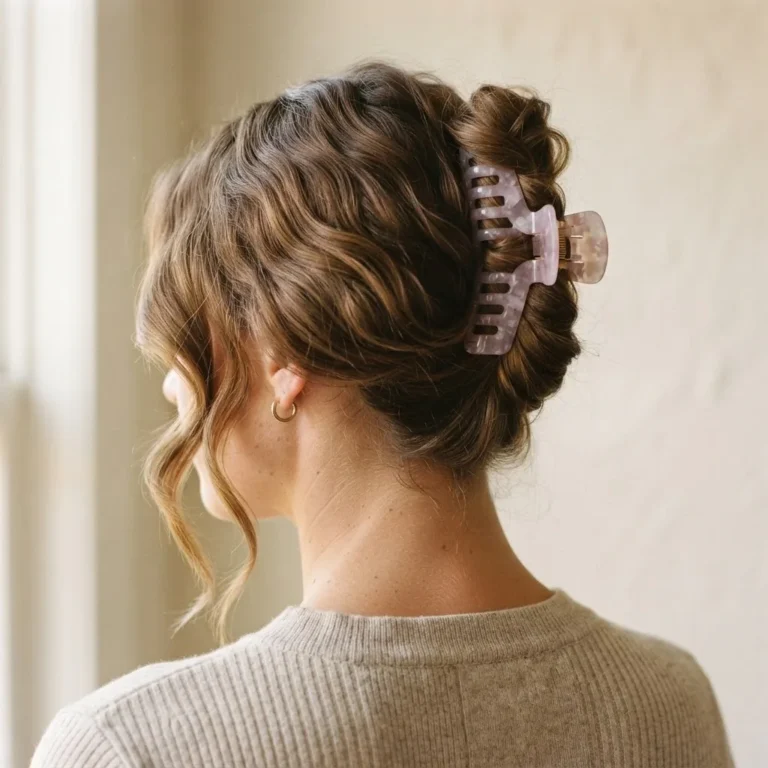
This is the style that completely changed how I thought about no-effort styling. The claw clip is having its biggest moment in years, and for good reason: it is fast, it is protective (no tight elastic tension on your strands), it looks chic, and it takes about thirty seconds. For the classic version you gather your hair loosely, twist it loosely upward, and clip it. But the fall 2025 version has a little more intention to it, with a specific technique of pulling a few pieces loose at the front and gently pulling the back of the clip up and out to create volume at the crown rather than a flat, slapped-together look.
For fine hair: use a volumising spray at the roots before clipping to give the crown some lift. For thick hair: you may need a large or extra-large claw clip to actually hold everything. The standard clips sold in packs of five will not cut it. A single, sturdy clip sized for your thickness makes this actually hold.
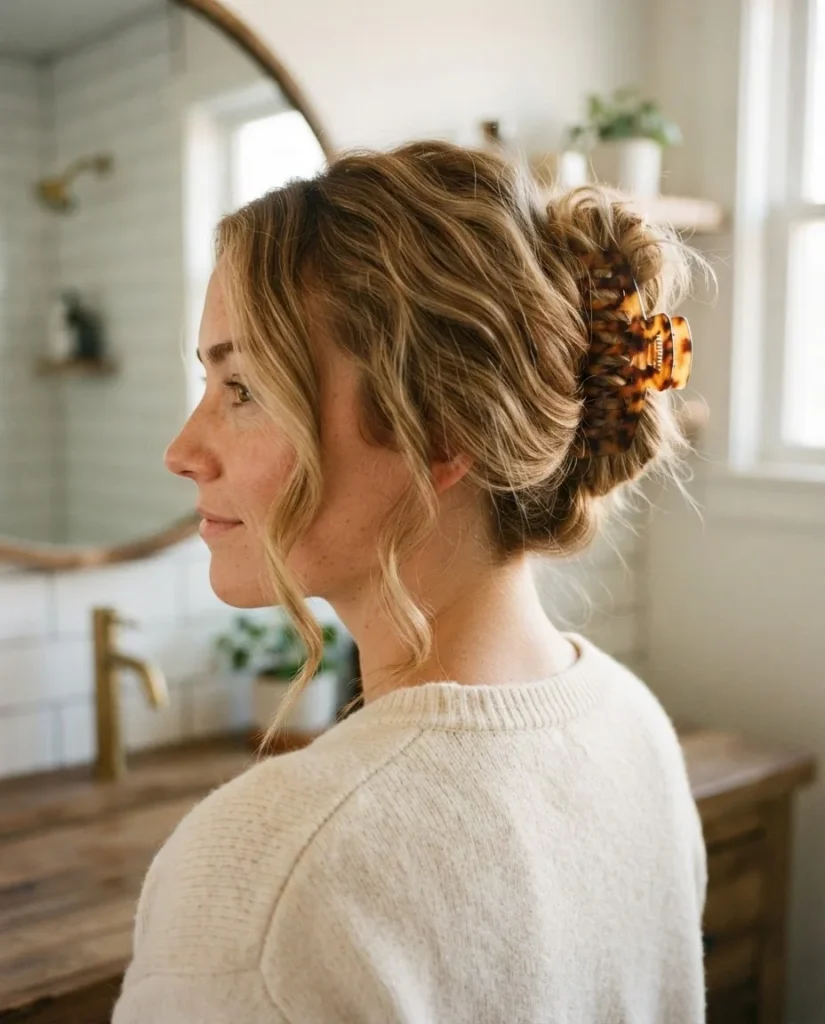
Expect to spend around $8 to $15 for a good quality oversized clip.
Braided Styles
5. Two Dutch Braids
Difficulty: moderate (takes a little practice)
I am going to be honest with you here because that is what I do: two perfect Dutch braids do not happen on your first try on your own head. Doing it on someone else’s head is easier. Doing it on yourself means you are working blind, your arms get tired, and keeping even tension on both sides is genuinely hard at first. That said, it absolutely clicks after a few attempts, and once it does, it feels like a superpower.
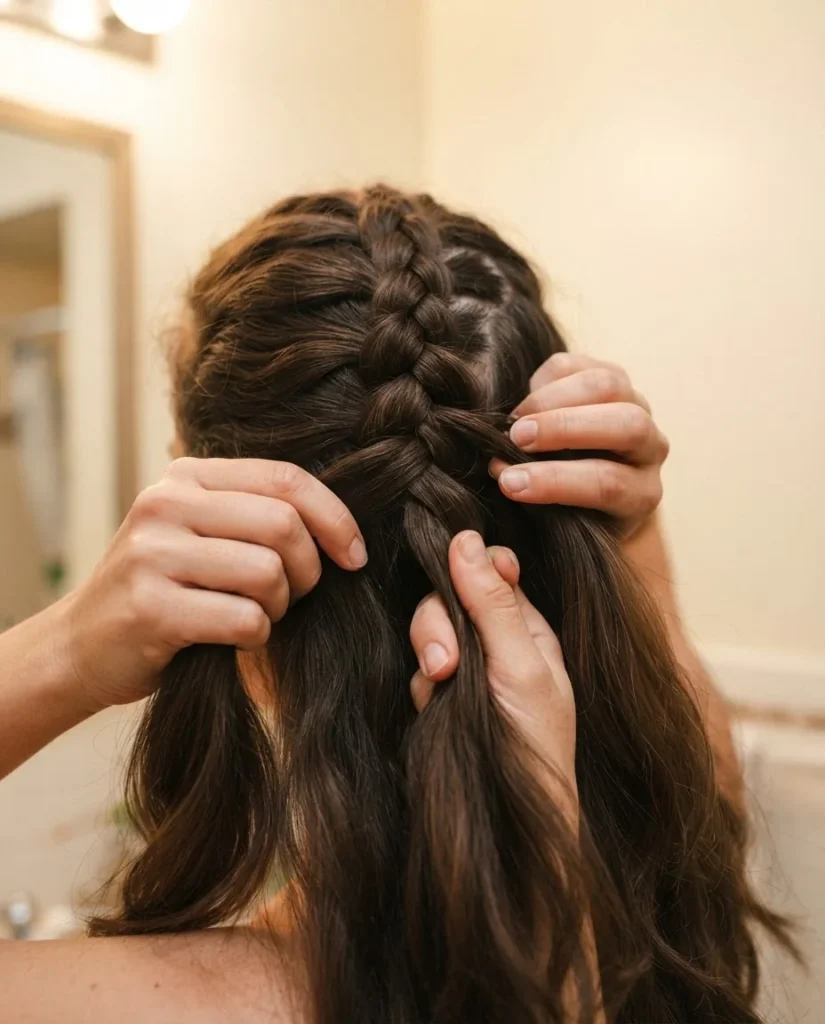
A Dutch braid goes under rather than over (the opposite direction from a French braid), which creates that raised, 3D braid effect that sits on top of your hair instead of being flat against it. This is the braid you see in the boho goddess braid looks that are everywhere this fall, and it is also the base for the pancake braid, where you gently pull the sides of the braid outward after finishing to make it look fuller and messier.
For beginners: practice the braiding motion on a section of hair at the back of your head first, not on your face-framing sections. Get comfortable with the under-over movement before you attempt full Dutch braids from the front.
6. Boho Goddess Braids
Difficulty: moderate to intermediate
Celebrity stylist Lacy Redway confirmed that goddess braids (sometimes called boho braids) are a fall 2025 staple, and I am completely here for it. These are thicker, looser, slightly undone-looking braids, often pancaked and pulled apart for that messy, textured volume. They work beautifully for natural textures, curly hair, and coarser hair types, and they double as a protective style, which makes them a fantastic option if you are trying to baby your hair back to health after a damaged summer.
Key technique note: the “goddess” effect comes from intentional imperfection. You do not want these braids neat. Use a small amount of texturising cream or pomade worked through your hair before braiding to add grip and separation, then actively pull the braid sections apart after finishing. The looser and more undone they look, the better.
7. The Braided Half-Up
Difficulty: beginner to moderate
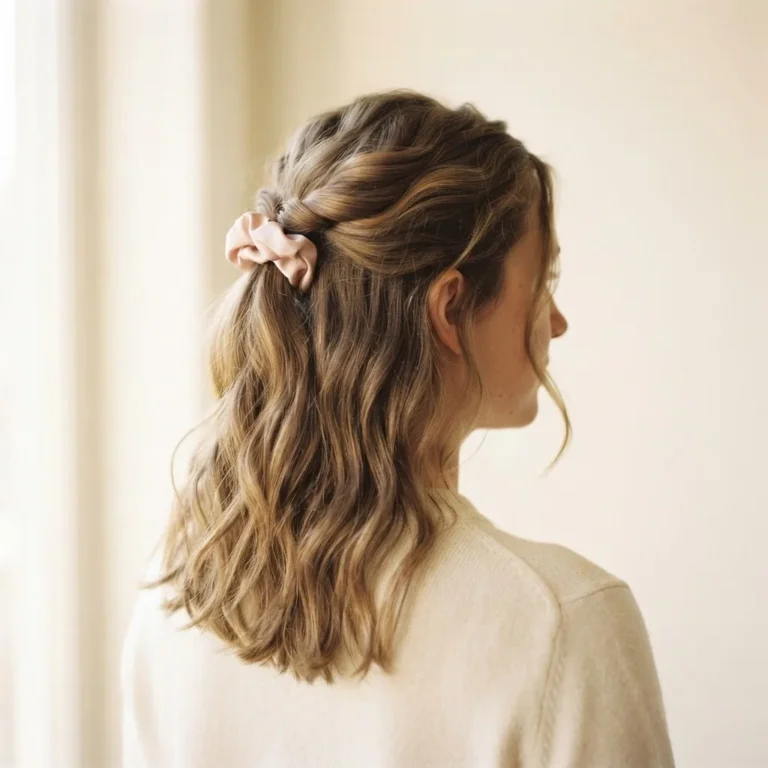
This is the style that hits that sweet spot between “effort” and “easy,” and it photographs so well that it looks like you spent far more time than you did. Take the top half of your hair (from the crown down to your temples), braid it, tie it off, and let the rest of your hair fall down. You can use a simple three-strand braid, a Dutch braid, or even two mini braids tied together at the back. The result looks intentional, romantic, and season-appropriate without pulling your whole hair up.
Hair type note: on fine or straight hair, a little texturising spray or dry shampoo before braiding gives your hair the grip it needs to actually hold the braid shape. On naturally wavy or curly hair, you can often braid your hair as-is and the texture does the holding work for you.
Textured and Waves Styles
8. 70s-Inspired Feathered Layers
Difficulty: moderate
This is the styling method, not the cut, that gives you those soft, Farrah Fawcett-era flicks and waves. You need a round brush and a blow dryer, and you are rolling sections of hair under and outward alternately while directing heat along the length of the hair shaft. It is one of those techniques where watching one YouTube video makes a massive difference, because the brush angle is everything.
The most common beginner mistake is using a brush that is too large. A round brush sized around 1.5 to 2 inches in diameter gives you the flick and wave. Too big and you just get volume without shape. The good news is that this technique also works beautifully with a hot brush (like a rotating heated round brush), which is more beginner-friendly because you can hold the handle at a natural angle instead of simultaneously holding the dryer and the brush.
This style works best on medium to long hair with some layers. If your hair is blunt and all one length, it can look great but the ends tend to flip uniformly rather than with that layered, cascading wave effect.
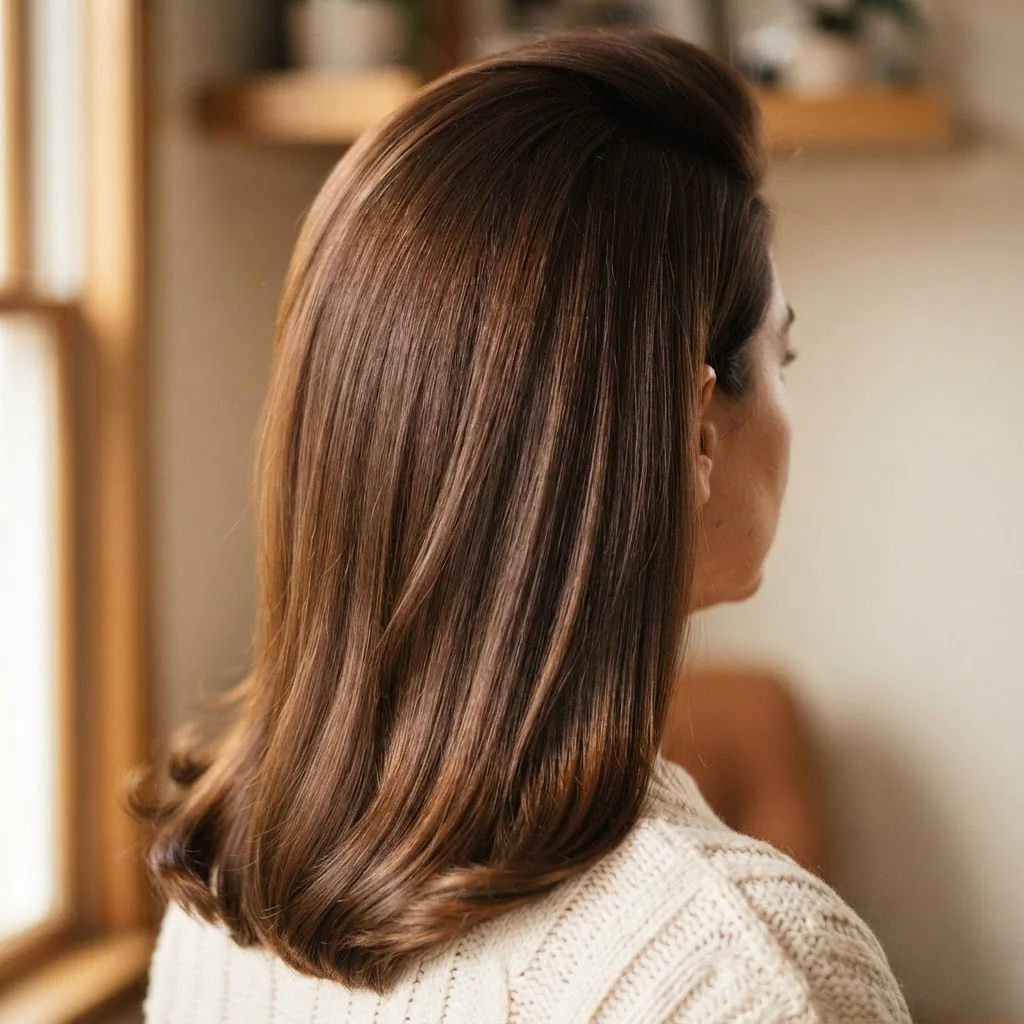
9. The Glossy Blowout
Difficulty: moderate to intermediate
The glossy blowout is one of the biggest fall 2025 styling moments. Celebrity hairstylist David Von Cannon told Vogue he predicts a return to “big and beautiful” finish for fall, and I completely understand why. There is something so satisfying about a proper blowout as the temperatures drop and you start wearing chunky sweaters and coats.
The keys to a glossy blowout at home: start with a heat protectant on damp hair, apply a volumising mousse or blow dry cream for hold and smoothness, rough dry about 80 percent with your dryer before using a round brush for the final smooth pass. The gloss comes from directing the air downward along the hair shaft (always down, not upward, which causes frizz) and finishing with a light shine spray or serum.
For fine hair: use a volumising spray at roots before blow drying and skip heavy serums which will weigh you down. For thick hair: section your hair properly into four to six panels and work through each one. Trying to blow dry thick hair all at once is the reason so many people get frustrated and give up. Work in sections and the result is dramatically better.
10. Tousled Rocker Texture
Difficulty: beginner to moderate
This is the effortlessly messy, slightly undone wave situation that is everywhere this fall, and the good news is that less-than-perfect technique actually serves this style well. You are going for lived-in and textured, not polished. The quickest route: scrunch a small amount of a dry texture foam or texturising spray through second-day hair and either let it air dry with some scrunching or add some quick bends with a one-inch curling wand, alternating which direction you curl each section and leaving the ends out of the clamp for that undone effect.
The intentionally imperfect nature of this style makes it forgiving for beginners, which is one reason I love recommending it. If one wave looks different from another, that is the look. Let it be messy.
Sleek and Polished Styles
11. The Swinging Bob Blowout
Difficulty: moderate
The bob in all its forms is arguably the biggest single haircut moment of fall 2025, confirmed across Vogue, Allure, and multiple celebrity stylists’ roundups. But even if you already have a bob, the “swinging” version is about how you style it, not just the cut. You want movement and body, which means a round brush blowout with the hair directed under and outward at the ends, not blown straight or flat.
According to Allure’s fall 2025 trend coverage, stylists across the board are noting that clients want lower-maintenance looks with longevity, and a healthy, bouncy bob fits perfectly into that energy. If you are considering getting a bob this fall, ask for “movement and swing” in the cut, meaning the weight line is not blunt and heavy but slightly beveled to give the ends that natural flip.
For fine hair on a bob: skip heavy serums. A light blow dry spray and that is it. The lighter your product layer, the more movement you will get. For thick hair on a bob: the bob cut actually helps remove bulk and create shape in thick hair. Ask your stylist to point-cut or texture the ends rather than blunt-cut, which can make thick hair look like a helmet.
12. Curtain Bangs
Difficulty: moderate (styling) or salon visit (cutting)
Curtain bangs are the face-framing fringe of the moment and honestly have been for several seasons now. The shape: bangs that are parted in the centre and swept outward and downward toward the temples, so they frame the face rather than sitting flat across the forehead. Celebrity stylist Jenny Cho specifically called them out for fall 2025, pairing them with loose waves for that effortless French-girl energy.
If you already have curtain bangs: styling them well is the key skill. Dampen your bangs, apply a small amount of light hold cream, then use a round brush to roll one side outward and upward while directing heat from your dryer, then repeat on the other side. The classic mistake is blowing them straight down, which removes the curl and makes them look like regular bangs. You want the outward sweep.
If you are thinking about getting curtain bangs cut: this is one I genuinely recommend doing at a salon rather than DIY. The angle of the cut determines how they fall, and it is very easy to cut too short or at the wrong angle. The grow-out of badly cut bangs is a several-month situation. A $40 to $60 fringe trim at a reputable salon is worth it here.
13. The Polished Low Bun
Difficulty: beginner once you know the trick
Not the messy bun from style number three. The polished version: hair smoothed back, gathered at the nape, twisted into a tight, intentional bun, and secured so nothing is escaping. This is the updo for when you want to look put together at work, at a dinner, or when you just want your hair completely off your face without looking like you rolled out of bed.
The beginner trick: instead of fighting flyaways with product that can make hair look greasy, use a fine-toothed comb or a soft bristle paddle brush to smooth sections before you gather them, and smooth the very top of your hair with a light edge serum or even a tiny amount of hair gel just along the hairline. The flyaways that live at your temples and nape are what break the “polished” look, so targeting those specifically is more effective than trying to plaster your whole head down.
Colour-Adjacent Styles You Can Style Into, Not Colour
14. Honey Blonde or Warm Brunette: Showing Off Your Colour with a Glossy Style
Difficulty: styling only, beginner-friendly
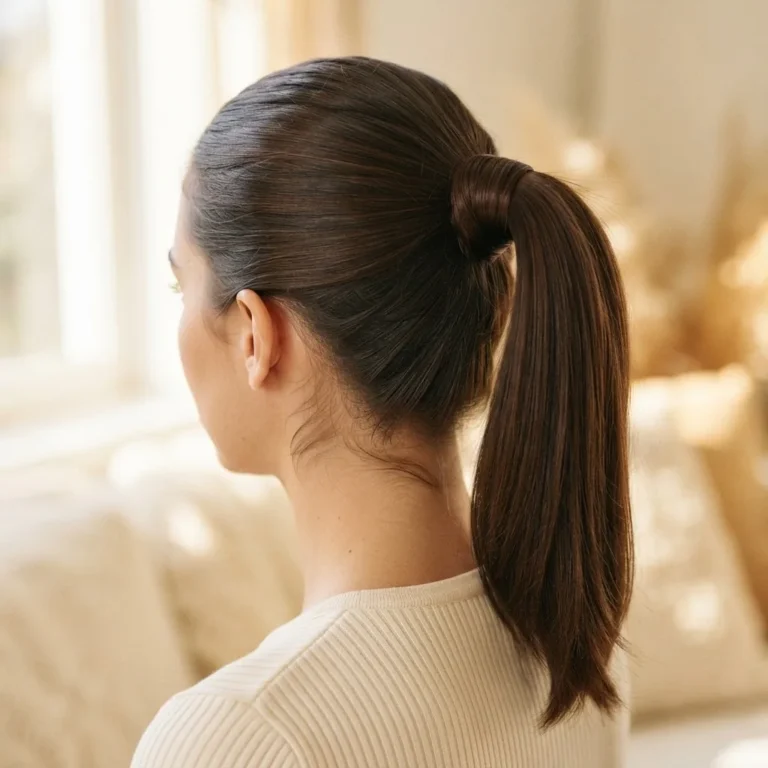
The biggest colour story for fall 2025 is warm tones. Behind The Chair, one of the most respected resources for professional colourists, reports that the dominant fall 2025 colour trends include smoky cherry reds, glossy espresso brunettes, warm coppery tones, and honey blondes. The practical takeaway for styling: if you already have warm tones in your hair, fall is the season to let them shine, literally. Gloss-enhancing styles (smooth blowouts, glossy buns, sleek ponytails with a light shine serum over the top) make warm colour look richer and more intentional in autumn light.
You do not need to change your colour to benefit from this trend. You just need to style in a way that lets the warm tones read clearly. That means less texture, more smoothness, and a product with some shine like a lightweight serum or a gloss spray worked over your finished style.
Important note: if you are considering a colour change, especially anything involving bleach, permanent dye, or a significant lift, please see a professional colourist. At-home chemical processing comes with real risks, including uneven results, scalp irritation, and hair damage that is much harder to repair than to prevent. The looks from Behind The Chair I referenced above are salon results achieved by professionals with specific formulas.
15. Cherry Cola or Cinnamon Red: The Dark Red Styling Moment
Difficulty: styling approach, beginner-friendly
Deep, rich red tones are a fall 2025 colour story almost every trend source confirms, with Allure’s September 2025 report specifically calling out cherry cola, cinnamon copper, and auburn with brown depth as the red direction of the season. If you have any natural red or auburn in your hair, fall is the season it comes alive in warm, low light.
If you are wearing a red or auburn tone, the styling direction that makes it look most intentional is a smooth, glossy blowout or a polished half-up with the colour visible down the back. Avoid styles that hide the colour behind heavy texture or keep everything piled on top of your head. Let the colour be part of the look.
Accessory-Forward Styles
16. The Hair Bow Moment
Difficulty: beginner, completely
This one requires almost no technique. A statement hair bow, placed at the back of a half-up or at the base of a ponytail or bun, is genuinely one of the most trend-forward things you can wear on your hair this fall. Celebrity stylist Lacy Redway said specifically that “we are not done seeing exaggerated bows” as a fall hair accessory, and I have seen this in every corner of Pinterest since September arrived.
The styling is easy: put your hair in whatever base look you want (half-up, low pony, bun), and tie a ribbon or a ready-made bow clip at the attachment point. The ribbon bow takes a little practice to tie evenly, so if you want foolproof, a clip-on bow is absolutely valid. Velvet ribbons in deep burgundy, chocolate brown, and forest green look especially good this season and cost almost nothing to try.
Putting It All Together: My Suggestions by Hair Type
If you have fine hair, your go-to fall styles are overnight heatless waves (mousse is your friend), the braided half-up (adds the illusion of thickness), and claw clip updos with a volumising spray at the roots. Avoid heavy serums on your length which flatten fine strands.
If you have thick hair, the swinging bob blowout (sectioned and worked through properly), the low polished bun, and goddess braids are all fantastic fits. Thick hair holds styles longer than fine hair, which is an advantage you should lean into.
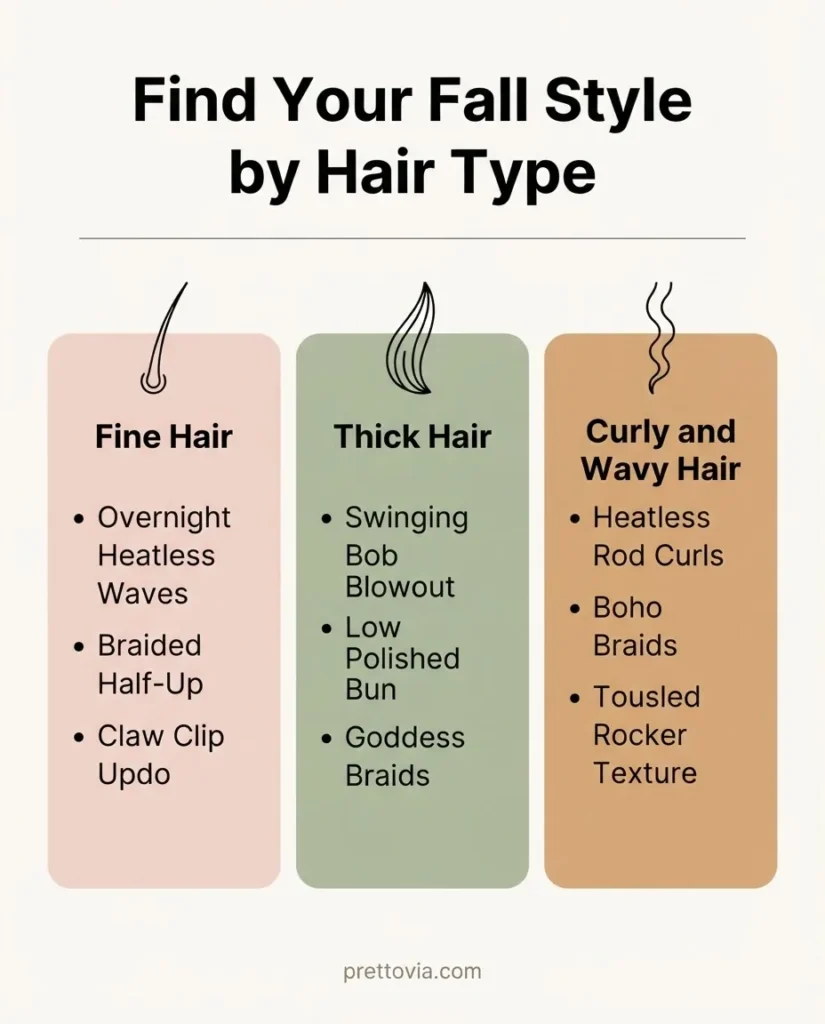
If you have curly or wavy natural texture, heatless rod curls, boho braids, and the tousled rocker texture (leaning into your natural wave pattern with a texture foam or a curl cream) are your best friends. Fall is also a great time to focus on moisture, since the drop in humidity can pull moisture from curls faster. A weekly deep conditioning mask makes a real difference. According to the AAD’s hair care guidance, protective styles and minimising heat use are especially beneficial for maintaining the structural integrity of hair across all types, and curly hair types in particular benefit from lower-manipulation styling approaches.
The One Thing Every Style on This List Has in Common
Whatever you decide to try this fall, please use your heat protectant. Who What Wear’s fall 2025 trend report, pulling from six celebrity stylists, noted that the overarching theme of fall 2025 hair is health. Caring and repairing, not bleaching and overprocessing. And I think that is exactly right. The prettiest version of any hairstyle is one growing out of healthy, hydrated strands. Every hot tool, every chemical service, every tight elastic leaves a mark. So as you experiment with these looks this season, balance the styling fun with some actual recovery time for your hair.
The heatless options on this list are not just the “lazy” choices. They are the choices that let you show up to winter with the same hair you had in September, maybe even better.
Go try something. Fall is genuinely one of the best seasons for hair. Everything looks a little more romantic when the leaves are changing and you are wearing a good scarf.