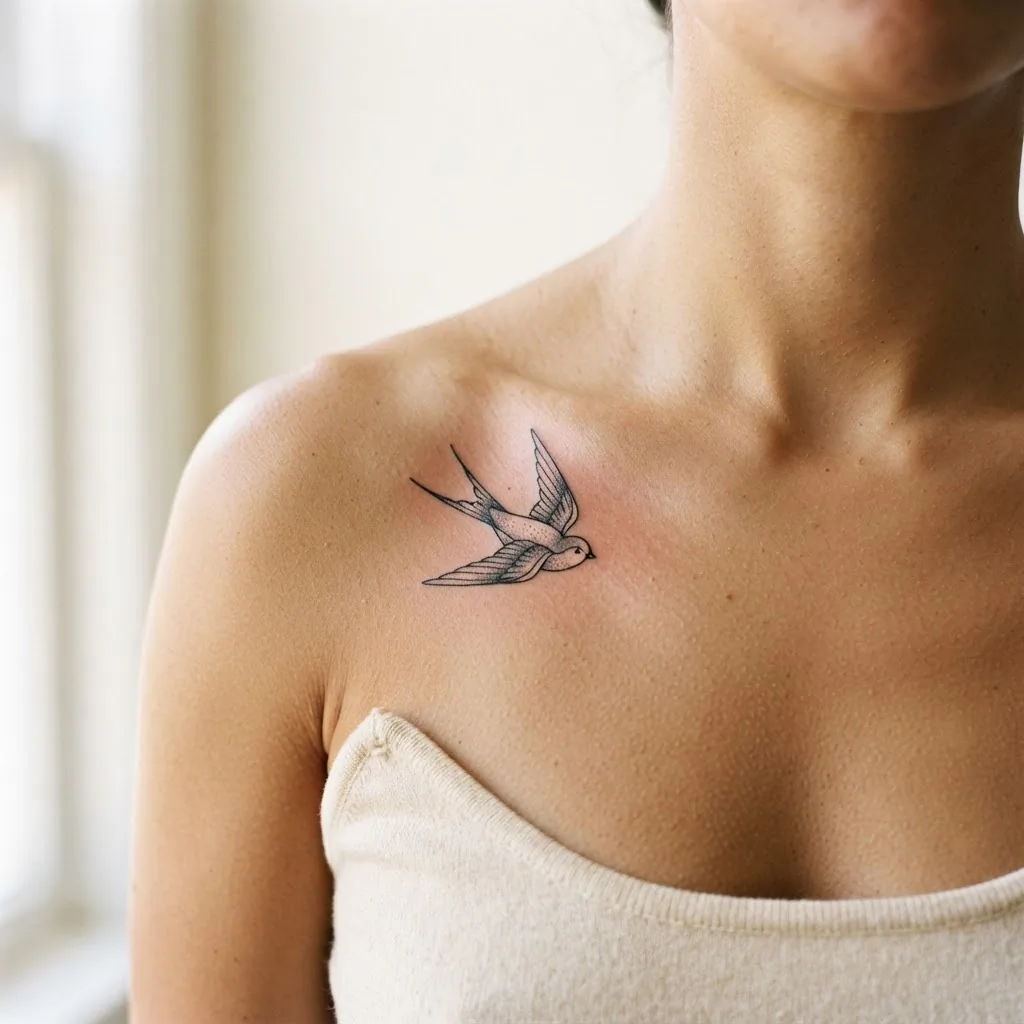
Bird Tattoos: Meanings, Styles, and How to Choose Right
There is something about bird tattoos that keeps pulling people back to them. I have seen it with my own friends, and I have felt it myself. You start saving images without quite knowing why, and then one day you realize you have thirty pins and they are all birds. A delicate swallow on a collarbone. A crane mid-flight across a shoulder blade. A tiny sparrow tucked behind an ear. Something in you is already responding to this subject. The question is how to turn that feeling into a specific, intentional design you will love for years.
That is exactly what this article is for. We are going to talk about what different birds actually mean, which styles work best and how they hold up over time, how to think about placement, what to expect from cost and pain, and how to walk into a consultation knowing exactly what you want to say. No rushing, no pressure, and no judgment if you are still in the “I just know I want a bird” phase. That is a completely valid starting point, and there is a lot of great thinking we can do from right there.
Why Birds Work So Well as Tattoo Subjects
Birds have carried symbolic weight across almost every culture and every era of human history. They move between sky and earth. They travel vast distances and come home. They appear in moments of grief, celebration, and transformation in folklore, poetry, and art from ancient Egypt to modern tattoo studios. That depth of meaning is one reason a bird tattoo can feel immediately personal even before you have decided on a species or a style.
The other reason is visual. Birds offer enormous range. A bold traditional American swallow with its classic red chest and navy wings tells a completely different visual story than a wisp of a fine-line hummingbird on a wrist. A geometric owl in blackwork reads entirely differently from a watercolor peacock spreading its feathers across a shoulder blade. One subject, endlessly flexible. That flexibility is genuinely one of the things I love about this genre of tattoo.
If you are curious about the ornithological reality behind the birds you are considering, the National Audubon Society has a thoughtful piece on choosing bird tattoos that approaches the subject from a naturalist’s perspective and is worth a read for anyone who wants their bird design to feel accurate and grounded, not just decorative.
Bird Meanings: The Species That Come Up Most
You do not have to choose a bird based on its traditional meaning. Some people fall in love with a particular bird for purely personal reasons, a childhood memory, a bird that appeared during a hard season of life, a species native to a place that matters to them. That is completely legitimate and, honestly, often produces the most meaningful tattoos I have ever seen. But if meaning is part of your decision-making process, here is what the most commonly requested species tend to carry.
Swallow. The swallow is one of the oldest tattoo subjects in Western tradition, and its meaning runs deep in maritime history. Sailors once earned a swallow tattoo for every 5,000 nautical miles traveled, and the bird became a symbol of safe return home because swallows were among the first land birds sailors sighted when nearing shore. That association with homecoming, loyalty, and perseverance traveled far beyond the sea.
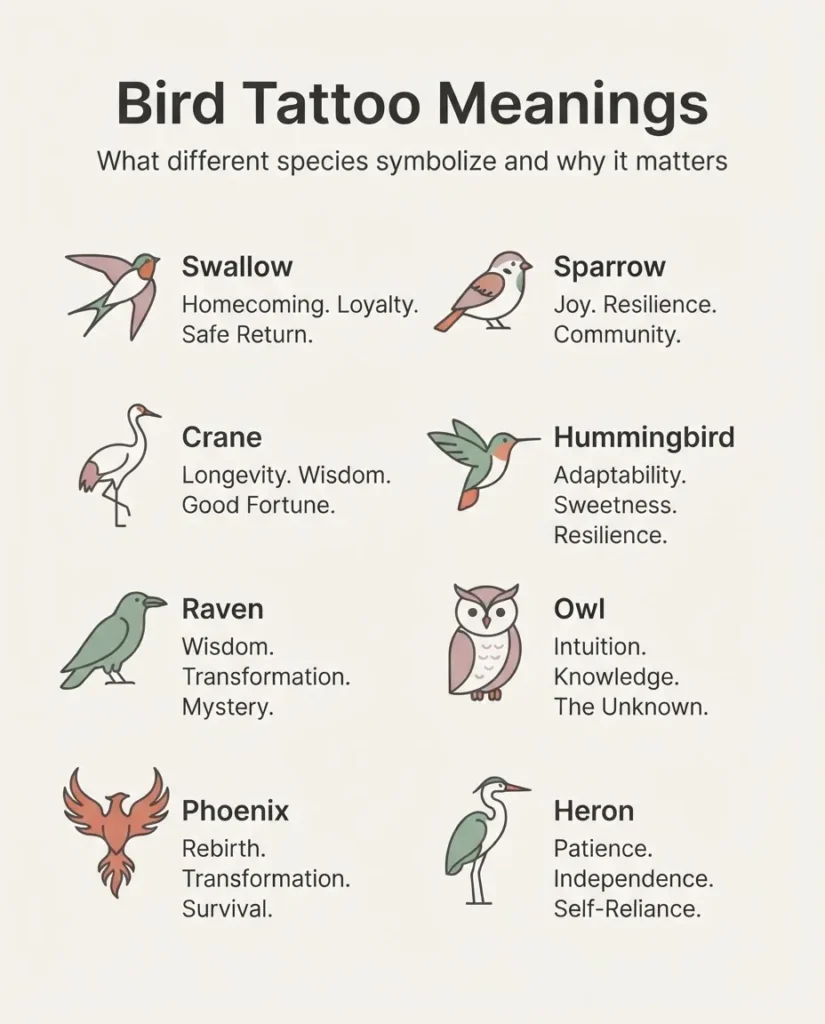
Today, swallow tattoos are chosen for all of those reasons and also simply because the traditional American silhouette, with its clean lines and confident shape, is one of the most elegantly tattooable birds that exists. If you want to know more about that maritime history, Naval History Magazine published a genuinely fascinating piece on sailor tattoo traditions that gives the swallow its full historical context.
Sparrow. Small, common, easily overlooked, and deeply resilient. Sparrows have long symbolized joy in everyday life, community, and the idea that ordinary things carry their own kind of beauty. They are also associated in various traditions with love and the soul. For many people, the sparrow is a quiet choice with a lot of warmth underneath it.
Crane. In Japanese and broader East Asian tradition, the crane is one of the most sacred birds in existence. It represents longevity, good fortune, fidelity, and wisdom. The legend of the thousand paper cranes, senba-zuru, ties the bird to hope and healing in a way that resonates across cultures. A crane tattoo tends to have a stillness to it, a composed dignity, that suits people who want something that feels both beautiful and deeply considered. In Chinese tradition specifically, the swallow and the crane each carry their own distinct symbolism rooted in centuries of cultural meaning.
Hummingbird. Possibly the most energetically joyful bird on this list. Hummingbirds are associated with resilience, adaptability, and the ability to find sweetness and lightness even through difficult times. They are among the smallest creatures in existence that migrate enormous distances, which gives them a particular kind of symbolic power for people who have navigated something hard and come through it. Aesthetically, hummingbirds are among the most challenging birds to tattoo well because of the detail in their feathers and the iridescence of their coloring, so choosing an artist with a portfolio that demonstrates this subject specifically is especially important.
Raven and Crow. These two are often grouped together in tattoo symbolism even though their personalities differ. Ravens appear prominently in Norse mythology as the companions of Odin, carrying wisdom and the ability to move between worlds. In Celtic tradition, the crow is associated with the Morrigan, representing transformation, fate, and the cycles of life. Both birds show up in memorial tattoo contexts, in “mystic and otherworldly” aesthetics, and in designs connected to intelligence, intuition, and the parts of life that live in the in-between. Blackwork and neo-traditional styles tend to suit them beautifully.
Owl. Owls have carried associations with wisdom, mystery, and the ability to see what is hidden across Greek mythology, Native American traditions, and a dozen other cultures. They are also deeply connected to night, intuition, and the idea of navigating the unknown. Owl tattoos range from large, dramatic chest or back pieces in illustrative styles to small, sweet geometric owls on an ankle. The subject is flexible enough to work at almost any scale.
Phoenix. Technically mythological rather than a real bird, but no list of meaningful bird tattoos leaves the phoenix out. Transformation, rebirth, survival, and the idea of building something new from what was lost. Phoenix tattoos are powerful statement pieces, almost always large because the detail and drama of the design call for space, and they tend to appear on backs, thighs, and arms where there is room for the full spread of wings and flame.
Heron and Egret. These are the quiet choices, beloved by people who love birds specifically as birds rather than as symbols. Great blue herons are associated with patience, independence, and self-reliance. An egret in flight over water, rendered in a fine-line or Japanese style, is one of the more quietly stunning bird tattoos I have come across. If you are drawn to a bird for how it moves or looks rather than its traditional meaning, that is completely enough.
Tattoo Styles and How They Change the Same Bird
Choosing a species is only half the picture. The style in which a bird is rendered will define its entire visual personality and, critically, how it holds up over years. This is one of the most important decisions you will make, and it is one that most content about bird tattoos barely touches.
Fine-Line and Minimalist. Right now, fine-line bird tattoos are everywhere, and for good reason. A hairline sparrow on a wrist or a single-needle crane on a forearm can be genuinely breathtaking in its delicacy. But fine-line work requires careful thought about placement and realistic expectations about aging. Very thin linework on high-movement areas like fingers, wrists, and feet tends to soften and blur faster than the same lines would on a shoulder blade or an upper arm. This does not mean fine-line is a bad choice. It means you want an artist whose portfolio shows healed fine-line work, not just fresh-from-the-session photos, and you want to have an honest conversation with them about which placements will hold the detail you want. A well-placed, well-executed fine-line bird on a stable area of the body, cared for consistently, can look beautiful for many years.
Traditional American (Old School). Bold black outlines, solid color fills, strong contrast. Traditional American tattoos were built to last, and they do. The classic swallow in this style is iconic for a reason. If longevity with minimal touch-up is a priority, and you love that vintage, graphic quality, traditional American is a very strong choice for bird designs. The trade-off is that you lose the sense of delicacy that fine-line offers.
Neo-Traditional. Think traditional American’s structure but with more illustrative detail, richer color saturation, and more dimensionality. Neo-traditional bird tattoos, particularly owls, ravens, and hummingbirds, are stunning and tend to age well because they retain the foundational boldness of traditional work while adding artistic complexity. They usually require more space and more session time.
Japanese (Irezumi-influenced). Cranes, phoenixes, and sparrows are native subjects in Japanese tattooing. This style uses flowing line work, deliberate negative space, and compositions that are designed to move with the body. Sleeve and back pieces in this style are some of the most spectacular bird tattoos in existence, and the style is genuinely built for large-scale birds with wings spread. It is a significant commitment of time, money, and body real estate, and the results tend to be extraordinary.
Blackwork and Geometric. If you are drawn to graphic, high-contrast designs or birds rendered in abstract geometric forms, blackwork offers real durability. Pure black ink tends to hold its contrast longer than color. Ravens, owls, and eagles work particularly well in this style.
Watercolor. Splashes of color bleeding beyond the lines of a bird, mimicking the look of a watercolor painting on skin. Visually striking, and also the most honest conversation to have with your artist about longevity. Color saturation in watercolor-style tattoos can change over time, and some of the softness that makes them beautiful fresh is connected to how they settle into skin over years. This is not a reason to avoid the style, but it is a reason to talk openly with your artist about realistic expectations and touch-up possibilities before you book.
Placement: Where Your Bird Lives on Your Body
Where a bird tattoo sits changes everything about how it reads and how it ages. Here are the most popular placements for bird designs and what to honestly consider about each one.
Collarbone and Chest. One of the most requested placements for fine-line birds, particularly swallows, sparrows, and small flocks in flight. The collarbone is relatively flat and the skin there moves less than areas over joints, which helps fine-line work hold its shape. Symmetrical designs across both collarbones are stunning and popular.
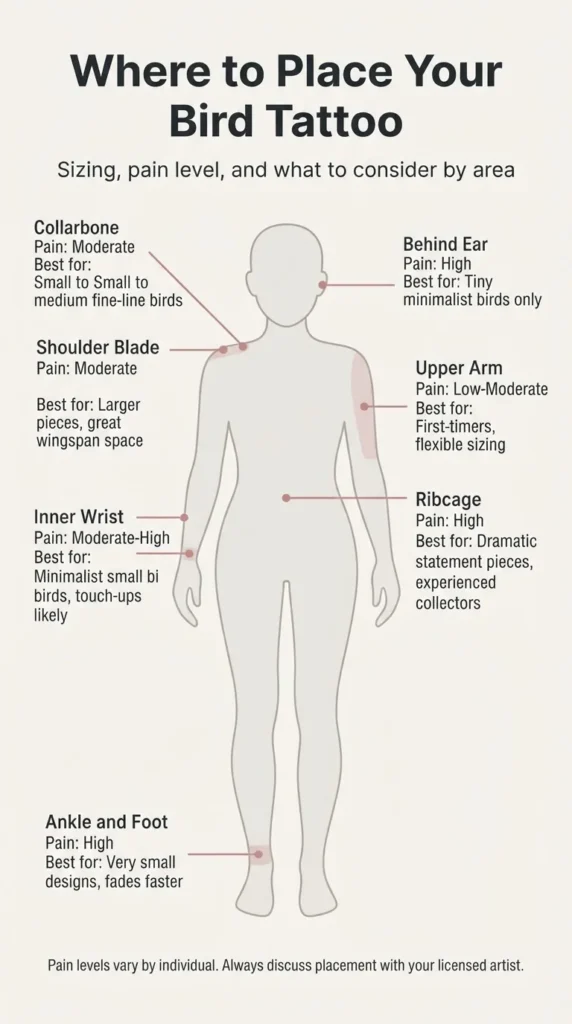
Pain-wise, this area is moderate to uncomfortable because the skin sits close to bone. Most people find it very manageable.
Shoulder Blade and Upper Back. Some of the best real estate for bird tattoos, especially larger pieces. Skin here is relatively thick, movement is moderate, and there is space for wingspan and detail. Cranes, herons, and phoenixes shine on shoulder blades. Pain in this area is generally considered moderate and tolerable for most people.
Wrist and Inner Wrist. Beautiful placement for small minimalist birds. The visibility is part of the appeal. The honest consideration: the wrist is a high-movement area and the skin is thinner, so very fine line work here may need a touch-up sooner than the same design on a shoulder. Also, the inner wrist is more sensitive than the outer wrist for most people.
Ribcage and Sternum. Dramatic placement, beautiful results. This is also one of the more painful areas for most people, because the skin sits directly over bone and cartilage with very little cushion. If you are considering a rib or sternum bird and you are new to tattooing, it is worth talking honestly with your artist about your pain tolerance before committing to this spot as your first piece. That said, people get ribcage tattoos as their first tattoos all the time and are completely fine. Know yourself.
Ankle and Foot. Delicate placement, popular for small birds. High-friction areas like the tops of feet and the sides of ankles tend to fade and blur faster than most other zones because of how much movement and contact they experience. Your artist will give you specific guidance on aftercare for these areas.
Behind the Ear and Neck. Very popular for tiny, minimalist birds. These are also among the more sensitive areas for most people, and healing requires some care with hair and clothing. Small designs suit this placement well. Very detailed designs typically do not, because there is not enough space for fine detail to stay crisp long-term.
For a general sense of how pain levels vary by placement, Healthline’s medically reviewed tattoo pain chart maps discomfort by body area and explains why certain zones feel more intense, which is useful reading if you are narrowing down placement options and pain tolerance is part of your decision.
Cost, Timing, and What to Actually Expect
A small, simple bird tattoo (think a single minimalist sparrow at about an inch or two) typically starts around $100 to $200 at most US studios, though many studios have a minimum charge of $100 to $150 regardless of size. A medium fine-line bird, 3 to 5 inches with moderate detail, generally runs in the $200 to $400 range. Larger, more detailed pieces in neo-traditional, Japanese, or full-color illustrative styles can run $500 to well above $1,000 depending on the complexity, the artist’s rate, and your location.
Good work costs what it costs, and it is permanent. This is one of the places where I always tell friends the same thing I would tell you: do not let price be the primary factor when choosing your artist. Look at portfolios first, find the artist whose healed work looks like what you want, and then have the conversation about budget. If a piece is outside your range right now, many artists do deposits and multi-session bookings. The right piece on the right timeline is far better than a rushed piece on a budget timeline.
The tattoo appointment itself tends to run anywhere from 30 minutes for a very small, simple design to 3 or 4 hours or more for larger, detailed birds. Most artists will give you a time estimate when you discuss the design at your consultation.
Ink, Color, and What You Should Know Before You Commit
This is an area I want to address honestly because it matters, especially for colorful bird tattoos. Certain ink pigments carry a higher rate of allergic reactions than others. Red, yellow, and some blue pigments are the ones dermatologists see the most reactions to, including redness, itching, raised bumps, and more significant skin responses that can appear not just right after getting tattooed but sometimes years later.
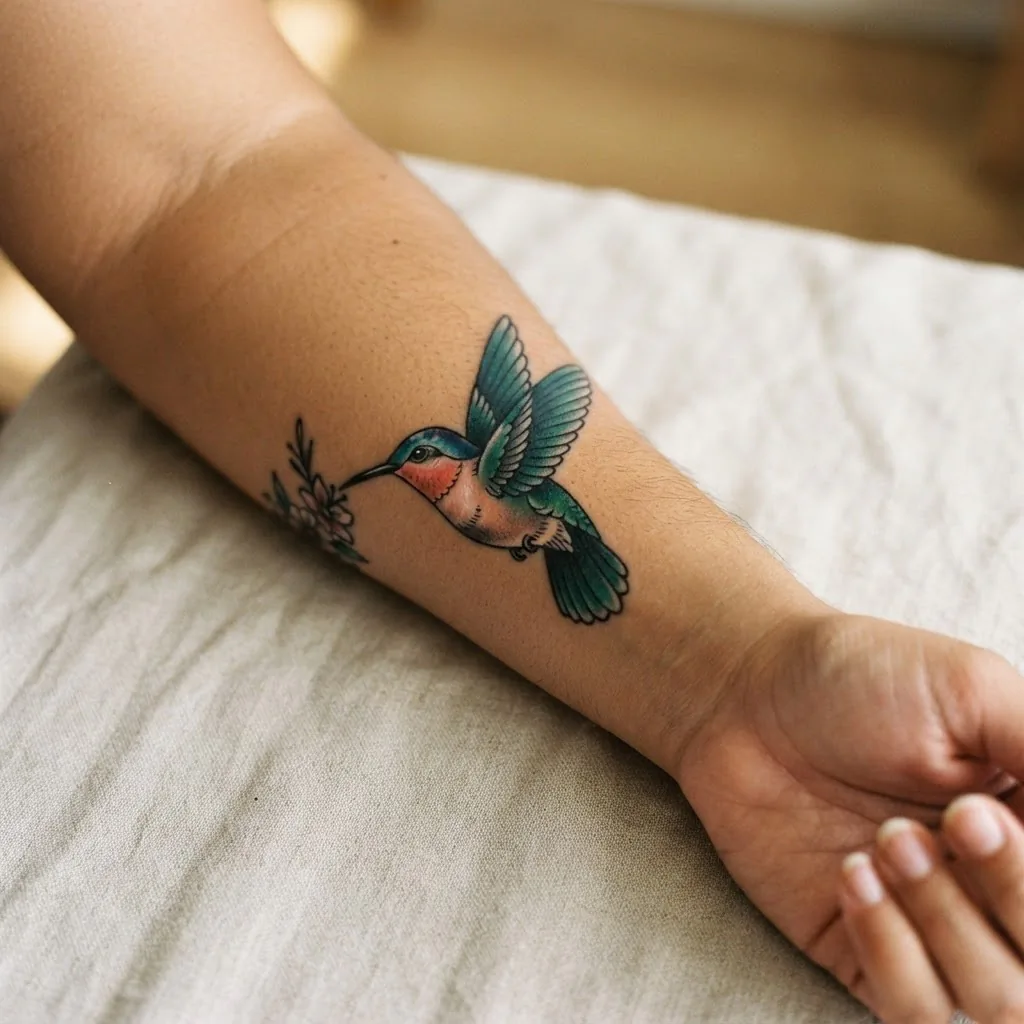
If you are planning a vividly colored bird, a red-chested robin, a blue jay in full color, a rainbow hummingbird, this is worth knowing and worth raising with your artist before your appointment.
The American Academy of Dermatology’s guide to unexpected tattoo skin reactions explains the different types of reactions, what they look like, and when to see a dermatologist. It is genuinely useful reading before committing to a colorful design. If you ever notice an unusual reaction in a tattooed area, please do not wait: contact your artist and see a medical professional. Your artist can advise you on what is normal healing and what is not, but a doctor or dermatologist should evaluate anything that concerns you.
On the ink safety side more broadly, the FDA’s consumer guidance on tattoo safety is worth reading before any tattoo appointment. It covers what is and is not regulated in tattoo inks, contamination risks, and what to know about the products going into your skin. It is not scary reading, but it is important reading, and it reinforces why working with a licensed artist in a properly regulated, inspected studio matters so much.
How to Find the Right Artist for Your Bird Tattoo
This section might be the most important one in this entire article. The right artist for a bird tattoo is not simply the most popular or the most affordable. It is the artist whose specific portfolio shows you the kind of bird work you want, rendered well, in the style you are drawn to, and in healed photographs not just fresh work.
Start by identifying the style you want. Fine-line, traditional, neo-traditional, Japanese, blackwork. Then search for artists who specialize in that style specifically. General-purpose tattoo studios do excellent work, but a fine-line specialist will produce a different quality of delicate bird work than an artist whose primary style is bold traditional.
When you look at a portfolio, look specifically for birds or similarly detailed nature subjects. Feathers, wings, and the specific anatomy of individual species require a level of precision that shows up clearly in a portfolio. Look for healed photographs, not just fresh ones. A fresh tattoo is always a slightly idealized version of itself. Healed work tells you the truth.
Look for signs of a safe, licensed, professionally operated studio. Your artist should work in a licensed studio (licensing requirements vary by state, so check your local health department’s regulations), use single-use needles, and be happy to answer your questions about their hygiene protocols. A good artist welcomes questions about safety. If anyone makes you feel like you are being difficult for asking, that is important information.
When you reach out to book a consultation, bring reference images but do not treat them as a rigid blueprint. Bring them as a conversation starter: “Here is the feeling I want,” “here is the species I am drawn to,” “here is the placement I am thinking about.” A skilled artist will take your references and your ideas and show you how they would approach them within their own artistic strengths. That collaboration is where great tattoos are born.

Questions worth asking in a consultation: What size would you recommend for this placement? How do you think this style will hold up in this area over time? Have you tattooed this species before, and can I see healed examples? What does your aftercare recommendation look like? All of these are normal, expected, welcome questions and any artist worth booking will answer them thoughtfully.
Caring for Your Bird Tattoo Once It Is Yours
Your artist will give you specific aftercare instructions, and those instructions are the ones to follow. Artist recommendations vary somewhat depending on their preferred method, your skin, and the specific work they did, so their guidance takes priority over any general advice including what I share here.
That said, the general consensus across dermatologists and experienced artists is consistent: keep the area clean, use gentle fragrance-free products, moisturize as directed, stay out of direct sun during healing, and avoid soaking (no swimming, no long baths) until the surface is fully healed, which typically takes 2 to 4 weeks. The deeper layers of skin continue settling for 2 to 4 months after that.

Sun protection is particularly important for bird tattoos with color. UV exposure is one of the main reasons tattoo color fades faster than it needs to. Once your tattoo is fully healed, a broad-spectrum SPF 30 or higher applied to the area whenever it is exposed to sun will meaningfully extend the vibrancy of your design. The American Academy of Dermatology’s guide to caring for tattooed skin covers long-term maintenance including sun protection recommendations that are worth bookmarking for reference.
Any signs of unusual swelling, discharge, spreading redness, fever, or a skin reaction that does not look like normal healing should be evaluated by a medical professional. Your artist is a great first call for anything that seems off, and they will tell you honestly if something warrants a doctor’s visit.
The Bird That Is Right for You
I want to close with the thing I tell every friend who texts me with a bird tattoo question and is not quite sure where to land. You do not have to have it all figured out before you start talking to an artist. You do not need a final, locked-down design in your head. You need a sense of direction. A species that resonates, a style that speaks to you, a placement that feels right, and a willingness to have a real conversation with a skilled professional who will help you bring it together.
Bird tattoos have endured across cultures and centuries because they carry something genuinely human in them. The desire to move freely, to return home, to transform, to find beauty in small things, to mark a moment that mattered. Whatever draws you to this subject, that draw is worth following thoughtfully.
Take your time. Build your Pinterest board. Do your research. Find the right artist. And then walk into that studio knowing exactly what you want and why. That confidence is half the experience, and it is entirely within your reach.