The Best Drugstore Shampoo Dupes for Every Hair Type
I want to be honest with you about something before we get into this list.
When I was working in that salon in Austin, I used to hear stylists tell clients, almost without blinking, that drugstore shampoo was basically poison for their hair. And I get why they said it. They were trained on professional lines, they believed in those formulas, and honestly, it was also just good business. But every time I shampooed a client at the backbar and looked at the ingredient label on the salon bottle, then went home and looked at my $6 drugstore bottle, I kept thinking: these are not as different as everyone is claiming.
Years later, the beauty community is finally catching up to what a lot of ingredient-savvy people have known for a while. A high price tag does not automatically mean a better formula, and a drugstore price tag does not automatically mean damage. What actually matters, as we will get into below, is matching the right formula to your specific hair needs. That is the whole point of this guide.
Whether you are trying to replace a $38 bottle of Olaplex, a $45 tube of Kerastase, or just want to know which drugstore shampoo is genuinely worth buying for your hair type, here is exactly what you need to know.
First, Let’s Talk About the “Drugstore Is Bad for Your Hair” Myth:
This belief is everywhere, and I understand why it sticks. But it deserves a closer look.
The cleansing in any shampoo, drugstore or salon, comes down to surfactants. Surfactants are the molecules that lift oil and buildup from your scalp. Older drugstore formulas relied heavily on sodium lauryl sulfate, commonly called SLS, which is a very effective but aggressive surfactant. It cleans really well, but for people with dry hair, color-treated strands, or a sensitive scalp, it can strip more than you want it to. That is where the “sulfates are bad” conversation started, and it is not entirely wrong for certain hair types.
Here is the thing though: as dermatologists at Mayo Clinic Press point out, the concern with SLS is largely about scalp sensitivity and over-stripping for dry or chemically treated hair. It is not a universal hair killer. And modern drugstore formulas, even ones sitting in the $6 to $12 range, have largely moved away from SLS as the primary cleanser. Brands like L’Oreal, MONDAY Haircare, Garnier, and Dove now routinely use milder surfactant blends, including cocoamidopropyl betaine and sodium cocoyl isethionate, the same classes of ingredients you will find in many professional lines.
A peer-reviewed paper published in the National Library of Medicine covering shampoo and conditioner formulations confirms that the functional performance of a shampoo comes down to the surfactant system and the conditioning agents used, not the brand tier. Translation: the playing field between drugstore and salon is more level than the salon industry would like you to think, especially since 2020.

What salon formulas often do offer is more concentrated active ingredients in certain treatments, a refined sensory experience (fragrance, texture, slip), and more targeted solutions for very specific hair concerns. That is worth paying for sometimes. But for everyday cleansing? A well-chosen drugstore shampoo can absolutely hold its own.
How to Actually Find a Good Dupe (Instead of Just Guessing):
Here is my approach and the one I wish someone had explained to me when I was in my dorm bathroom using whatever was cheapest at CVS.
Start with your primary hair concern, not the brand you want to replace. Ask yourself: am I trying to preserve color? Repair damage? Add volume to flat, fine hair? Define curls? Control a dry, itchy scalp? Clarify buildup? That concern should drive your dupe search, because buying the “closest match by brand” does not always mean buying the closest match for your actual hair.
Then look at the first five ingredients on the label. The ingredients list is ordered by concentration, so what is listed first is what is doing the most work. A shampoo that lists sodium lauryl sulfate as its first surfactant will behave very differently than one that leads with sodium cocoyl isethionate, even if both are marketed as “moisturizing.”
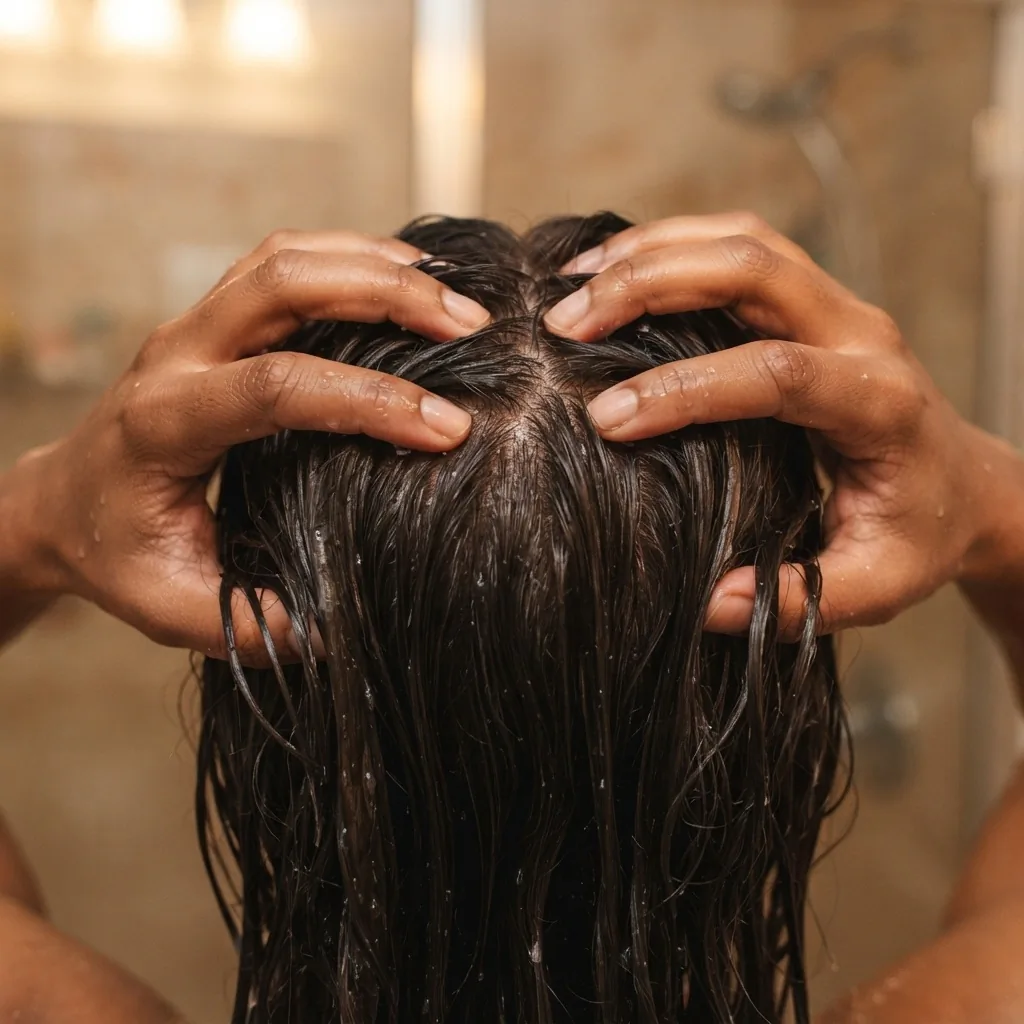
The American Academy of Dermatology also recommends applying shampoo to your scalp rather than running it through the full length of your hair. This matters more than most people realize. Your scalp produces oil and accumulates product buildup. Your ends do not need the same aggressive cleanse, and if you are already dealing with dryness or color fade, concentrating shampoo on your scalp and letting it rinse through your lengths is a simple technique that reduces unnecessary stress on the hair.
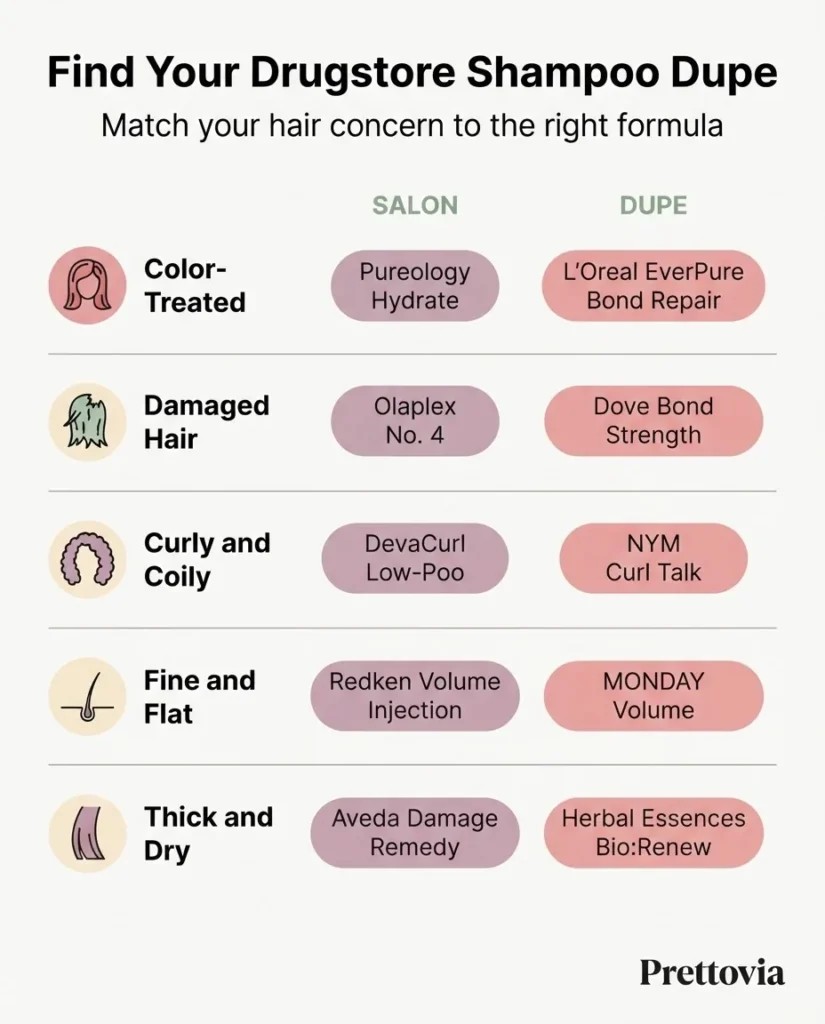
Now, here are the dupes worth knowing about, sorted by concern.
For Color-Treated Hair: L’Oreal EverPure Bond Repair Shampoo (Dupe for Pureology and Kerastase)
Pureology Hydrate Shampoo runs around $38 to $42. Kerastase Bain Chroma Respect sits at $38 and up. Both are genuinely good at what they do, protecting color and keeping chemically treated hair from getting crispy. But when you are washing two or three times a week, that price adds up fast.
The L’Oreal Paris EverPure Sulfate Free Bond Repair Shampoo retails for around $10 to $13 and is one of the most thoughtfully formulated drugstore shampoos I have come across at that price. It is sulfate-free, paraben-free, and uses citric acid as a bond-care component alongside mild surfactants. Multiple hairstylists and hair community members consistently note that the EverPure line performs comparably to Pureology for maintaining color vibrancy and softness.
If your main goal is keeping color from fading, sulfate-free is genuinely worth prioritizing here, not because sulfates will destroy your hair overnight, but because they can break down the outer cuticle layer slightly, which is what allows color molecules to escape faster. Going sulfate-free for your color-day washes is a practical choice, not just marketing language.
For Damaged or Over-Processed Hair: Dove Bond Strength Shampoo (Dupe for Olaplex No. 4)
Olaplex No. 4 Bond Maintenance Shampoo is probably the most-duped salon shampoo on the internet right now. At around $30 to $38 per bottle, it is genuinely effective for hair that has been through bleach, color, heat damage, or some combination of all three. The Olaplex patent involves a specific bis-aminopropyl diglycol dimaleate bond repair system, which is unique to the brand.
Dove Bond Strength Shampoo retails for about $5 to $7. It does not replicate the exact Olaplex chemistry, and any honest dupe list should be upfront about that. What it does offer is a gentle, conditioning cleanse with hydrolyzed proteins and a genuinely mild surfactant profile, making it one of the most accessible options for hair that is already stressed and does not need an aggressive wash. Reviewers with relaxed, bleached, and heat-damaged hair consistently rate it as one of the best bang-for-your-buck options in the damage-care space.
If your hair has been through serious chemical processing, like bleach at high developer volumes, a relaxer, or a keratin treatment, I will always say: work with a licensed stylist on your maintenance routine. Your starting point matters a lot for how you rebuild. But for everyday cleansing between salon visits, a gentle, protein-friendly shampoo like Dove Bond Strength is a sensible, honest choice.
For Curly and Coily Hair: Not Your Mother’s Curl Talk and SheaMoisture (Dupes for DevaCurl)
The curly hair space has some of the most loyal product devotees in the beauty world, and DevaCurl built a massive following. DevaCurl shampoos typically run $24 to $30 and are specifically designed for the curly girl method approach, meaning low-lather, moisturizing formulas that do not strip curl definition.
Not Your Mother’s Curl Talk Gentle Shampoo at roughly $10 to $11 is one of the most consistently recommended alternatives in the curly hair community. It is sulfate-free, designed to cleanse without disrupting curl pattern, and gets high marks for leaving hair soft without residue. SheaMoisture Coconut and Hibiscus Curl and Shine Shampoo, also in the $9 to $11 range, is another strong option and is particularly loved by those with type 3 and type 4 hair textures. SheaMoisture formulates with shea butter, coconut oil, and hibiscus flower extract, all of which support moisture retention in high-porosity curly hair.
For curly hair specifically, the application technique matters as much as the product choice.
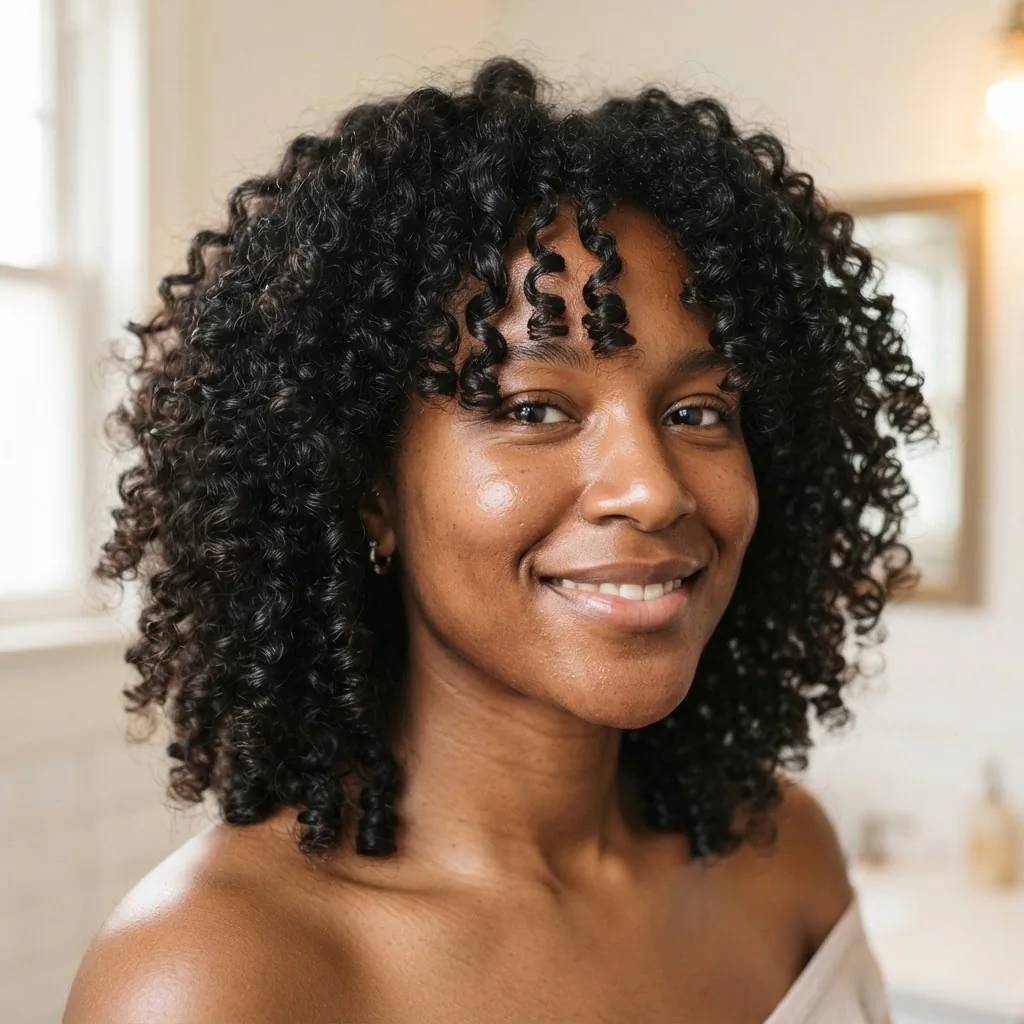
Work the shampoo into your scalp with your fingertips, not your nails, using a gentle circular motion. Avoid scrubbing your length, which causes frizz and tangling. Let the rinse water carry the diluted shampoo down through your curls rather than piling your hair on top of your head. These habits make a real difference regardless of which formula you are using.
For Fine, Flat Hair: MONDAY Haircare Volume (Dupe for Redken Volume Injection)
Fine hair has a specific challenge with drugstore shampoos: many formulas designed for moisture and hydration are too heavy for hair that already struggles to hold volume. Redken Volume Injection Shampoo, at around $22 to $26, is lightweight, adds body without weight, and does not leave a coating behind.
MONDAY Haircare Volume Shampoo at $8 is one of the few drugstore options that genuinely competes here. It is SLS-free, paraben-free, and formulated with coconut oil and vitamin E in low enough concentrations that they condition without weighing fine hair down. InStyle has included MONDAY in its best drugstore shampoo lists for good reason: it lathers well for a sulfate-free formula and delivers a noticeable lift at the root area after drying.

If you have fine hair and you are dealing with buildup from heavier products (dry shampoo, oils, styling creams), pairing a volumizing shampoo with a monthly clarifying wash will change everything. Buildup is one of the biggest reasons fine hair falls flat, and it is entirely fixable. Garnier Fructis Grow Strong at $5 to $7 is also worth keeping in your routine as a weekly or biweekly clarifying option. It lathers generously and removes residue without leaving hair stripped.
For Thick, Dry, or Frizzy Hair: TRESemme Rich Moisture and Herbal Essences Bio:Renew (Dupes for Mid-Range Salon Moisture Lines)
Thick, coarse, or very dry hair needs real moisture without a heavy silicone coating that causes buildup over time. Aveda Damage Remedy Shampoo at around $30 to $34 and Moroccanoil Moisture Repair at $26 to $32 are salon staples here, delivering plant-based proteins and oils that soften without weighing thick hair down.
Herbal Essences Bio:Renew Argan Oil of Morocco Shampoo at $5 to $8 is one of the best positioned drugstore alternatives for this concern. It contains actual argan oil and vitamin E, and unlike older Herbal Essences formulas from the early 2000s, the current Bio:Renew line uses a refined formulation that has moved away from heavy silicones. Byrdie consistently names TRESemme Rich Moisture as another solid option for this category, pointing to its ability to deeply hydrate during the wash without leaving a waxy coating.
A note on silicones, since this is something people ask about all the time: not all silicones are created equal. Water-soluble dimethicone derivatives rinse out cleanly and do not build up in a meaningful way for most hair types. Heavier, non-water-soluble silicones like dimethicone or amodimethicone in high concentrations can accumulate over time, especially on fine or low-porosity hair. If you notice your hair feeling progressively heavier or looking dull after a few weeks on a new shampoo, that is a sign a clarifying wash is due. The AAD recommends avoiding habits that stress the hair unnecessarily, and this includes skipping regular removal of product buildup, which a monthly clarifying shampoo handles easily.
For Oily Scalp or Dandruff: Head and Shoulders and Nizoral
This category is a little different because the best drugstore options here are not really “dupes” for anything salon-exclusive. They are just genuinely excellent at what they do and often outperform salon alternatives.
Head and Shoulders Classic Clean at under $8 uses zinc pyrithione, a clinically recognized active for controlling the fungal imbalance associated with dandruff and seborrheic dermatitis. Nizoral A-D at around $15 to $18 uses ketoconazole 1%, which dermatologists consistently recommend for stubborn flaking and scalp inflammation. Neither of these has a direct salon equivalent that is meaningfully better for the clinical concern. If your scalp issues are persistent, significant, or involve scaling, redness, or hair thinning, a board-certified dermatologist is genuinely your best next step rather than cycling through more shampoos.
A Few Honest Things to Keep in Mind:
Switching shampoos sometimes comes with a brief adjustment period. If you move from a sulfate-based formula to a sulfate-free one, your scalp may temporarily produce more oil as it recalibrates. Give any new shampoo two to four weeks before making a final judgment.
If you have a known sensitivity to fragrances or preservatives, check ingredient lists carefully before committing, even to drugstore products. Common preservatives like methylisothiazolinone and certain fragrance compounds have been associated with contact sensitivity in some people. If you are trying a new formula, doing a small test on your inner arm before applying it to your scalp is a practical, low-effort precaution.
None of the drugstore shampoos on this list require a prescription, a professional application, or special equipment. They are straightforward to use at home, they work for the vast majority of people within their target hair type, and they will save you real money. That is what this is all about.
Quick Reference: The Dupe Pairings at a Glance
| Salon Pick | Price | Drugstore Dupe | Price |
| Pureology Hydrate | $38+ | L’Oreal EverPure Bond Repair | ~$10-$13 |
| Olaplex No. 4 | $30-$38 | Dove Bond Strength | ~$5-$7 |
| DevaCurl Low-Poo | $24-$30 | Not Your Mother’s Curl Talk | ~$10-$11 |
| Kerastase Bain Chroma | $38+ | L’Oreal EverPure Bond Repair | ~$10-$13 |
| Redken Volume Injection | $22-$26 | MONDAY Haircare Volume | ~$8 |
| Aveda Damage Remedy | $30-$34 | Herbal Essences Bio:Renew | ~$5-$8 |
| Moroccanoil Moisture Repair | $26-$32 | TRESemme Rich Moisture | ~$5-$7 |
One last thing I want to say before you close this tab.
You do not have to justify buying drugstore shampoo to anyone. Not to your stylist, not to your group chat, not to TikTok. Spending more on shampoo does not make you a better or more serious person about your hair. The $10 bottle and the $40 bottle are often working with the same building blocks. What makes the difference is choosing the right formula for your specific hair, using it correctly, and being consistent.
That is something anyone can do, at any budget.
And that is exactly the kind of advice I am always going to give you here.