Wolf Cut Hair: 18 Styles From Soft to Super Edgy (and How to Pick Yours)
There is a reason the wolf cut has had such an absurdly long moment. It is not just another haircut trend that looked good in one Instagram reel and then disappeared. It has been living rent-free in salons, on Pinterest boards, and in TikTok comment sections for years now, and every time someone declares it over, a new wave of people discover it and fall in love all over again.
I get why. The wolf cut is that rare haircut that manages to look effortlessly cool without being unapproachable. It has texture and movement and personality. And when you see it done right, on hair that actually looks healthy and alive, it is the kind of style that makes you want to screenshot it immediately and send it to your stylist.
But here is the thing. The wolf cut has a wider range than most people realize. There is a version for the person who wants something soft and barely-there, and a version for the person who wants full shaggy rock-star energy. There is a version for curly hair, one for fine straight hair, one with curtain bangs, one without. The trouble is that most content about it either shows you a gallery with no context or gives you a one-size-fits-all tutorial that assumes you already know which version is right for you.
So this is the version that actually helps you figure that out. I am going to walk you through 18 styles, how they work, which hair types and face shapes they suit best, how to style them at home without destroying your hair in the process, and what to honestly expect from the whole experience.
What Exactly Is a Wolf Cut, Anyway?
Before we get into the styles themselves, let me quickly ground us, because there is a real amount of confusion around what a wolf cut actually is versus what a shag is versus what a mullet is.
The wolf cut sits between a shag and a mullet. It borrows the voluminous, choppy layering of a 1970s shag haircut and the shorter-front, longer-back silhouette of an 80s mullet, then blends them into something that feels modern rather than retro. The result is a cut with a lot of crown volume, graduated layers that get longer as they move down, and textured, wispy ends that give the hair movement and life. It tends to have a slightly wilder, more untamed quality than a classic shag, which sits a little softer and rounder. If you want to dig into the exact structural differences, Mane Addicts has a genuinely useful breakdown of wolf cuts, shullets, and shags that is worth bookmarking before your salon appointment.
The wolf cut went viral on TikTok starting around 2021, but its roots actually go much deeper. Teen Vogue traced its cultural history back to South Korean K-pop circles, where a version of the cut had been popular for years before Western audiences caught on. It was described as “shorter in the front and tapered in the back, but unfussy and effortlessly piecey,” which is still the most accurate one-sentence definition I have found. The cut crossed over into mainstream Western beauty culture partly through K-pop idols and partly through TikTok, where the wolf cut tag has racked up hundreds of millions of views.
So when you see it on your Pinterest board and think it looks somehow both edgy and wearable, that is not accidental. It is a cut that was designed to do exactly that.
The 18 Wolf Cut Styles: From Softest to Most Edgy
I have organized these by vibe, from the most beginner-friendly and low-commitment versions down to the styles with the boldest, most dramatic look. Think of it as a spectrum. Find where your comfort level lives, and start there.
Soft and Subtle Wolf Cuts (Styles 1 to 5)
Style 1: The Barely-There Wolf
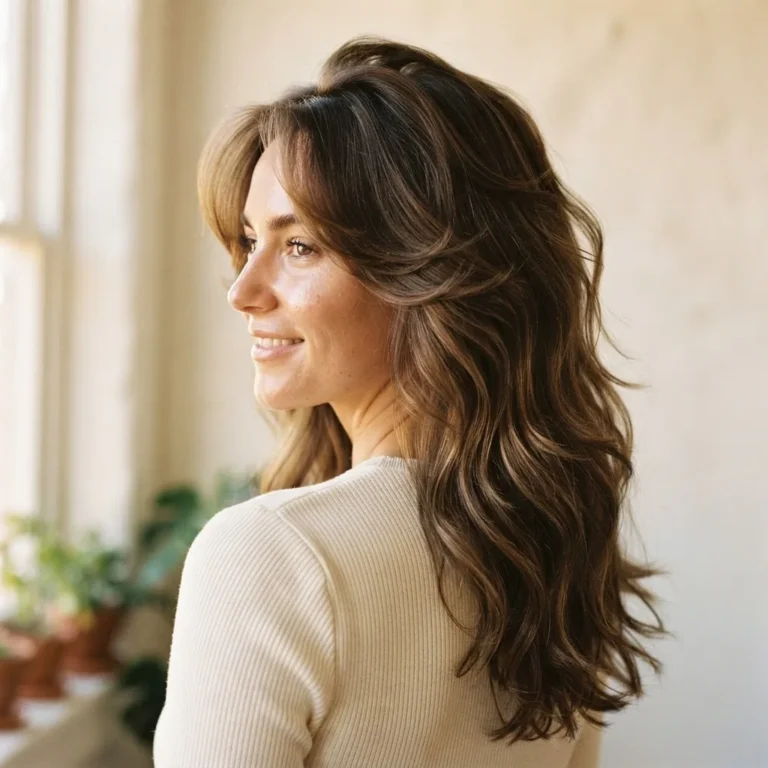
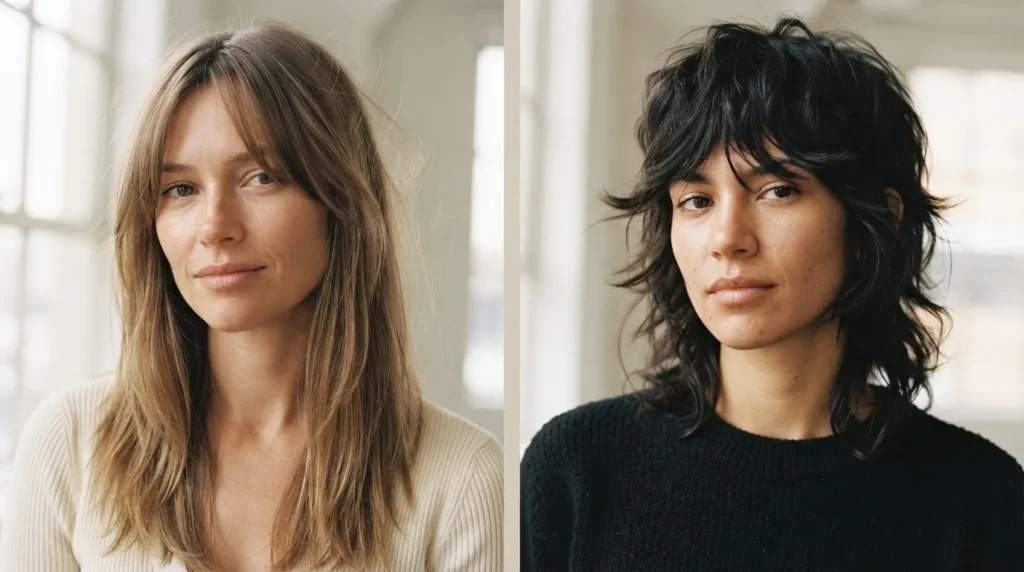
This is your entry point if you love the idea of the wolf cut but are nervous about losing length or looking too “done.” It uses the same layering principles but with much softer, more blended layers so the ends do not look choppy. The crown gets a little extra volume, but nothing dramatic. On straight or slightly wavy hair, this reads as a “great haircut” rather than a statement cut. If you have never had heavy layering before, starting here is genuinely the smart move.
Style 2: The Long Wolf Cut
This version keeps most of the length, usually past the collarbone or longer, and puts the layering work up top at the crown and through the mid-lengths. The ends stay relatively full. This is the most Pinterest-friendly version for people who are growing their hair out or who are not ready to commit to shorter layers. It is also particularly flattering if you have a longer or more oval face shape, because the length balances the face rather than cutting it off.
Style 3: The Curtain Bang Wolf Cut
Arguably the most popular combination right now. The wolf cut’s crown layers flow naturally into curtain-style bangs, which part in the middle and sweep gently to the sides. This is the version that has been all over Vogue’s 2026 spring trend coverage because it manages to feel current without going extreme. It suits most face shapes reasonably well. For round faces, the middle part and face-framing layers create gentle elongation. For square faces, the soft curtain shape rounds out the angles.
Style 4: The Blunt Wolf Cut
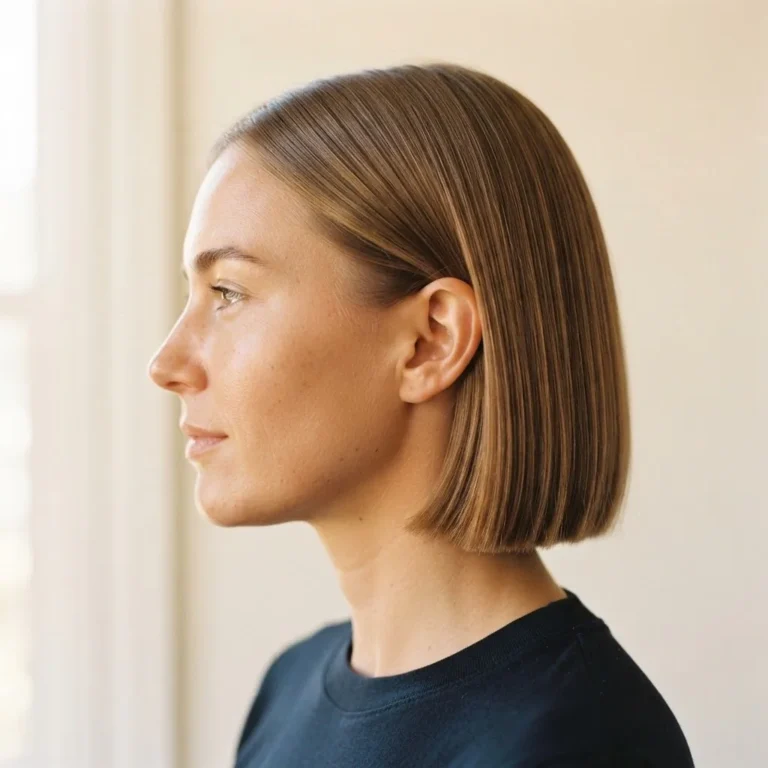
This sounds like a contradiction but it works. It takes the classic wolf cut layering through the crown and mid-lengths, then leaves the ends slightly more blunt rather than completely wispy. The result is a little more polished, a little less “just rolled out of bed,” and a great option if your workplace or personal style leans toward put-together rather than effortless. Works beautifully on thick, straight hair that tends to look heavy when layered.
Style 5: The Side Part Wolf Cut
The wolf cut does not have to live on a middle part. Shifting the part to the side changes the whole personality of the cut, making it feel more classic and less Gen-Z. One side of the curtain bang falls longer than the other, creating a sweep that works beautifully for heart-shaped and diamond-shaped faces, where you want to add a little visual weight around the jaw rather than the forehead.
The Medium-Energy Wolf Cuts (Styles 6 to 11)
Style 6: The Wavy Wolf Cut
If you have 2A, 2B, or 2C wavy hair, the wolf cut was practically designed for you. The layering removes weight from the mid-lengths, which allows your waves to spring up instead of getting pulled flat by bulk. You get natural volume at the crown without having to do anything elaborate. Style with a sea salt spray scrunched in on damp hair, then either air dry or diffuse on low heat. The result is the kind of effortless beachy texture that takes some people a full product lineup to fake.
Style 7: The Curly Wolf Cut
For curly hair (3A and beyond), the wolf cut works differently than it does on straight or wavy hair, and it deserves its own honest conversation. Layering curly hair is genuinely a technique-dependent thing. Done well, with a stylist who understands curly hair structure, the layers add bounce and reduce the pyramid shape that many curly-haired women deal with. Done without that understanding, you end up with frizzy, disconnected chunks that look nothing like what you pinned. Curl Maven’s waterfall wolf cut guide for curly hair is a great resource to read before your appointment so you can talk through the technique with your stylist.
Style 8: The Textured Bob Wolf Cut (Wolf Bob)
Yes, the wolf cut works on short hair. The wolf bob, or “wob,” keeps the length around the jaw or just below it and loads the crown with choppy, textured layers. Think less traditional bob and more of a bob that has been given a lot of personality. This one is the sweet spot for people who want the wolf cut aesthetic but are not interested in the weight or length of a longer version. It is also a great option if your hair type is fine or thin, which I will come back to in a moment.
Style 9: The 70s Shag-Wolf Hybrid
If the wolf cut has a cool older sibling, this is it. This version leans more toward the shag side of the family, with heavier curtain bangs, more consistent layering throughout the length, and a generally softer overall shape. It has a 1970s Stevie Nicks energy that reads as deeply cool without being aggressively trendy. Works best on medium to thick hair with some natural wave or texture. On very straight, fine hair, it needs a bit more styling effort to get the volume to hold.
Style 10: The Wolf Cut with Face Framing Highlights
This is more of a color technique that enhances the wolf cut rather than a structural variation, but I am including it because it is everywhere right now and for good reason. Adding lighter, face-framing pieces around the curtain bangs and the first few layers around the face makes the cut’s shape read much more clearly. It also creates a natural-looking dimension that photographs beautifully. You can achieve this with balayage, a face-framing foil placement, or a simple money piece, all at varying price points.
Style 11: The Grown-Out Wolf Cut
One thing nobody talks about enough: what happens when you are between appointments. The wolf cut in its grown-out stage actually has its own character. The layers soften, the volume shifts, and the whole thing starts to feel more relaxed and bohemian. Some people genuinely prefer this phase of the cut. It is worth knowing going in that you are not locked into a rigid look between trims. You can lean into the softer, slightly overgrown version without it looking like you forgot about your hair.
The Bolder, Edgier Wolf Cuts (Styles 12 to 18)
Style 12: The Short Wolf Cut
The fully short version of the wolf cut sits at the ear to chin length and packs a lot of attitude into less hair. Crown layers are dramatic and choppy, and the overall shape has an energy somewhere between a pixie and a bixie. This is a commitment, genuinely so. But if you have been considering going short and you want something with more personality than a standard pixie or lob, this is worth a serious look at your salon.
Style 13: The Layered Wolf Cut with Bangs (Full Fringe)
Swap the curtain bangs out for a full, straight-across fringe and the wolf cut takes on a whole different personality. This is the version that reads most punk and most European. It suits oval, heart, and longer face shapes particularly well. For rounder faces, a full fringe can visually shorten the face, so the curtain version is generally the better recommendation, but the right cut at the right length can still work.
Style 14: The Wolf Cut with Shaved Sides
Now we are getting into genuine statement territory. Some versions of the wolf cut add a subtle undercut or shaved sides, keeping the top layers voluminous and long while removing weight from beneath. This is the version most closely linked to the K-pop origin of the cut and the one that requires the most stylist skill to execute cleanly. If you want this version, please do not DIY it unless you genuinely know what you are doing.
Style 15: The Color-Pop Wolf Cut
The wolf cut’s layered, textured shape is genuinely one of the best canvases for bold color. The layers and movement catch light in a way that makes color look more dynamic than it would on a blunt cut. Vivid color at the ends, a two-tone root-to-end look, or even a punchy single color all work here. This is also the version where the conversation about hair health matters most, which I cover in more detail below.
Style 16: The Razor Wolf Cut
A razor cut through the ends instead of scissors creates even more texture and piece-y movement. The ends almost look intentionally shredded in the best possible way. Razor cutting is a specific technique that not all stylists offer, so if you want this particular finish, ask before you book. On fine hair, razor cutting can sometimes make already-thin ends look wispy in a less flattering way, so this version tends to work better on medium to thick hair.
Style 17: The Wolf Cut on Natural/Coily Hair
For 4A, 4B, and 4C hair textures, the wolf cut concept translates but the approach needs to be genuinely texture-informed. Layering coily hair requires a different cutting method, often cut dry to account for shrinkage, and a stylist experienced with natural hair textures. When done right, the result is gorgeous. The crown volume the cut creates plays beautifully with coily hair’s natural lift. This is not a cut to guess at. Find a stylist who specializes in natural hair textures and bring references that show your specific texture, not just someone else’s 3B curls.
Style 18: The Full Shaggy Wolf
The most dramatic version of the cut, all choppy layers, deep crown volume, heavy texture throughout, and fringe that could go either curtain or full-bang. This is the wolf cut as seen on your favorite vintage rock record and your favorite TikTok celebrity in the same week. It requires the most styling effort to look intentional rather than just messy, and it rewards you with one of the most distinctive, personality-packed looks in the current trend cycle.
Which Wolf Cut Is Right for Your Face Shape?
I want to be straight with you here: face shape guidelines are genuinely useful starting points, but they are not rules. The best wolf cut for you also depends on your hair texture, your lifestyle, and how much time you want to spend styling. Take these as a framework, not a mandate.
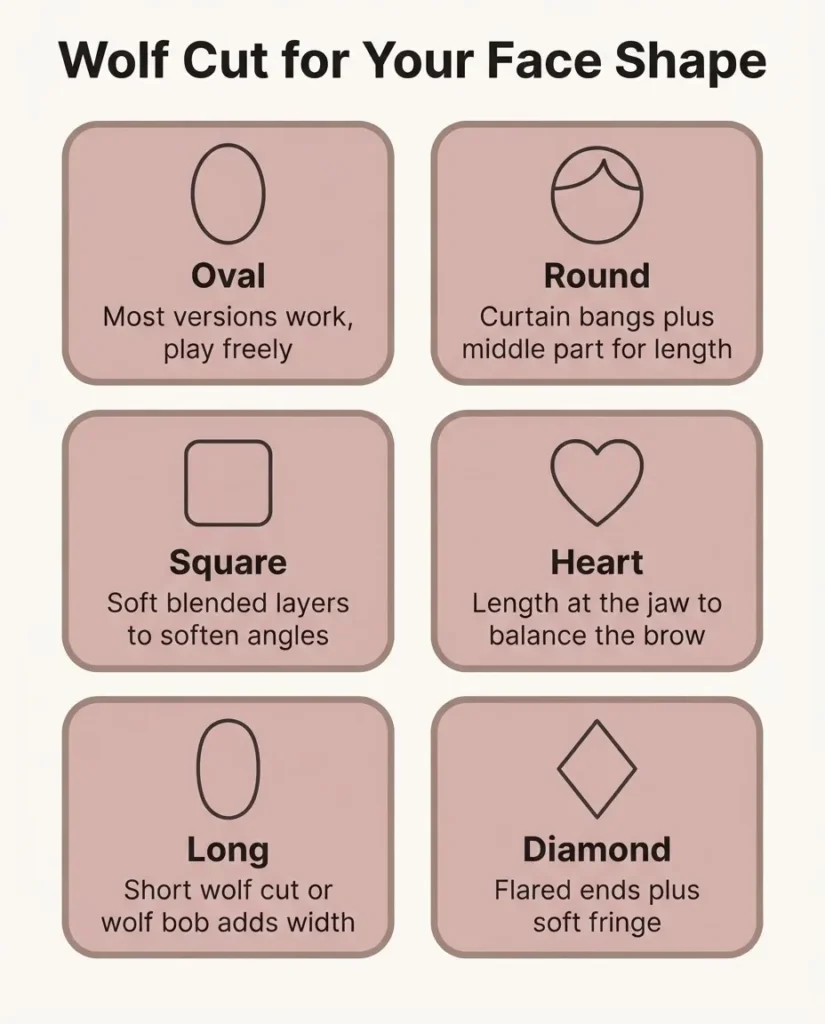
For oval faces, you have the most flexibility. Most versions of the wolf cut work, from soft and long to bold and short. Lean into whatever your instinct says looks coolest.
For round faces, you want length and a middle or slightly off-center part to create vertical lines. The curtain bang wolf cut is particularly flattering because the parted fringe creates elongation without harsh angles. Avoid very short versions that hit at the chin, as they can visually widen the face.
For square faces, the soft, blended wolf cut works beautifully. The choppy texture at the crown creates volume upward, and the face-framing layers around the jaw soften angular lines. Curtain bangs are your friend here too. Avoid very blunt or heavy fringe, which can emphasize a strong forehead.
For heart faces, the longer wolf cut with layers that hit at the jaw or below helps balance a wider forehead with a narrower chin. A side-swept curtain bang variation softens the brow line without adding visual width at the bottom of the face.
For longer or oblong faces, shorter versions of the wolf cut with strong crown volume work well because they add visual width. The wolf bob in particular is a flattering option that breaks up the length of the face.
For diamond faces, the goal is to soften the widest point (the cheekbones) while adding width at the jaw. A wolf cut with layers that flare slightly at the ends and a softer fringe does this nicely.
Wolf Cut Hair by Hair Type: The Honest Truth
This is the section I wish existed when I was watching clients come in with their Pinterest screenshots back in my salon-assistant days. So many women walked out disappointed not because the cut was wrong, but because nobody had set honest expectations based on their actual hair.
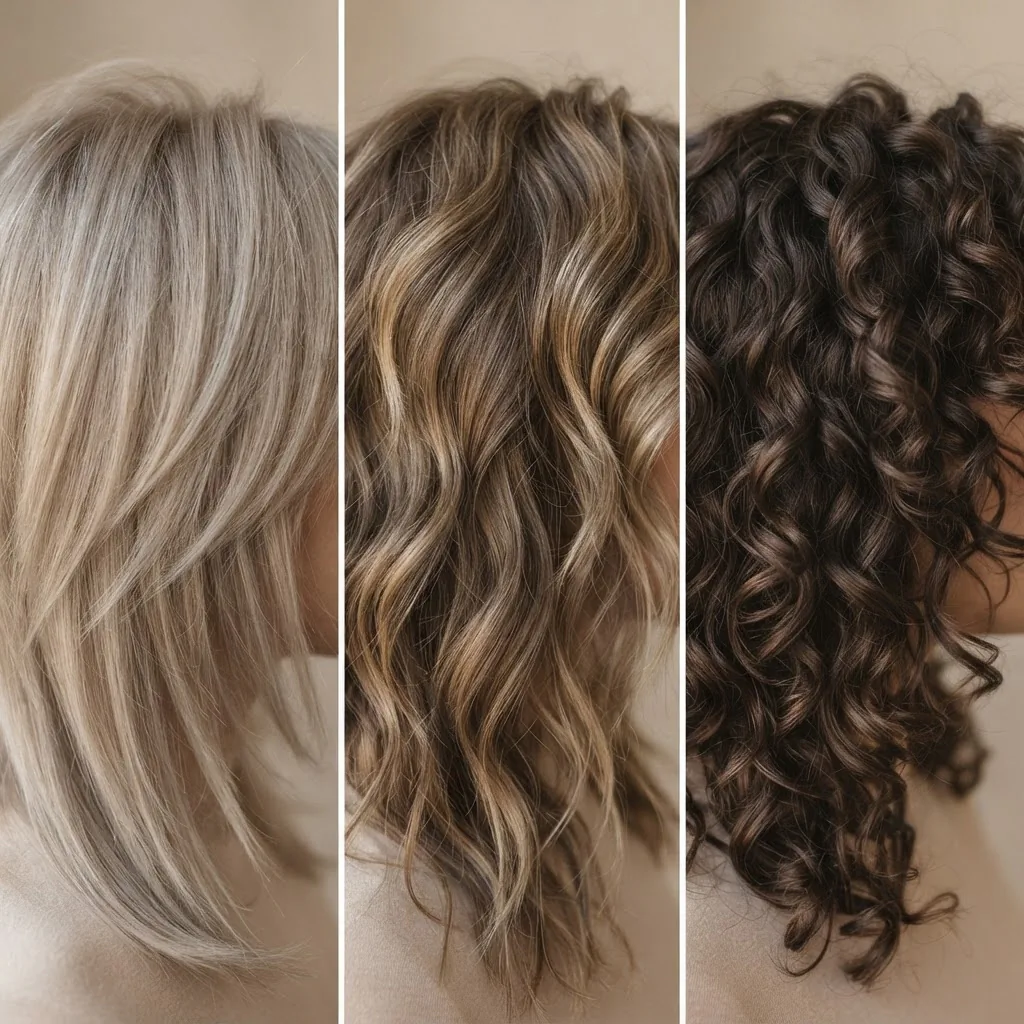
Fine or Thin Hair: I am going to be real with you. The wolf cut can absolutely work on fine hair, but it requires some careful adjustments. Too many short layers on fine hair creates wispy, disconnected-looking ends that can make hair look thinner rather than fuller. The fix is softer, more blended layering with length kept at or below the collarbone, so the weight at the ends gives the appearance of fullness. Ask your stylist to keep the crown layers on the longer side and blend them carefully rather than going super choppy. John Frieda’s guide for wolf cuts on fine hair has some genuinely solid advice on this, including asking for “soft, blended layers to build volume without making ends too wispy,” which is exactly right.
Styling-wise, fine hair needs a light volumizing mousse at the roots before blow-drying, a diffuser or round brush to build lift, and a light-hold texturizing spray rather than anything heavy that will weigh the hair down. Skip heavy waxes or oils completely.
Thick or Coarse Straight Hair: Honestly, this is a great hair type for the wolf cut. The cut removes weight through the mid-lengths, which reduces the heavy, heavy-feeling bulk that thick straight hair can carry. The result is a cut that finally moves. The challenge is keeping the ends looking intentionally textured rather than just rough, so look for a stylist who point-cuts or razor-cuts the ends rather than blunt-cutting them.
Wavy Hair: As I mentioned in the style breakdown, wavy hair is where the wolf cut really thrives. The layering activates your waves and gives them room to form. Less weight, more spring.
Curly and Coily Hair: Refer back to styles 7 and 17. Find a curly-specialist stylist. Bring photos of your own texture, not someone else’s. And always make sure your stylist cuts your hair dry or at least asks about your shrinkage factor. A cut that looks perfect wet can be drastically different once your curls dry.
How to Style Your Wolf Cut at Home (Without Wrecking Your Hair)
Here is the styling reality. The wolf cut can look effortless, but it does require some active styling to look like the Pinterest version rather than the “I slept on it wrong” version. Good news: once you get a routine down, it is actually pretty quick.
Start with a heat protectant before any hot tools. I want to be direct about this because I watched it be skipped constantly in the salon and it matters. The American Academy of Dermatology recommends using a heat protectant and keeping tools on a lower heat setting to limit heat damage, and that advice is genuinely worth following, especially on fine or already-processed hair. If you are layering heat on an already layered cut, the exposed ends are particularly vulnerable.
For wavy and curly wolf cuts, the go-to routine is to scrunch a light mousse or curl cream into damp hair, then diffuse on low to medium heat using a scrunching motion rather than raking the diffuser through. This sets the texture without disrupting the curl pattern. Finish with a light mist of texturizing spray held about a foot from your hair and scrunched in gently.
For straight wolf cuts, a round brush blowout adds the most volume at the crown. Work in sections, rolling the brush away from the face as you dry.
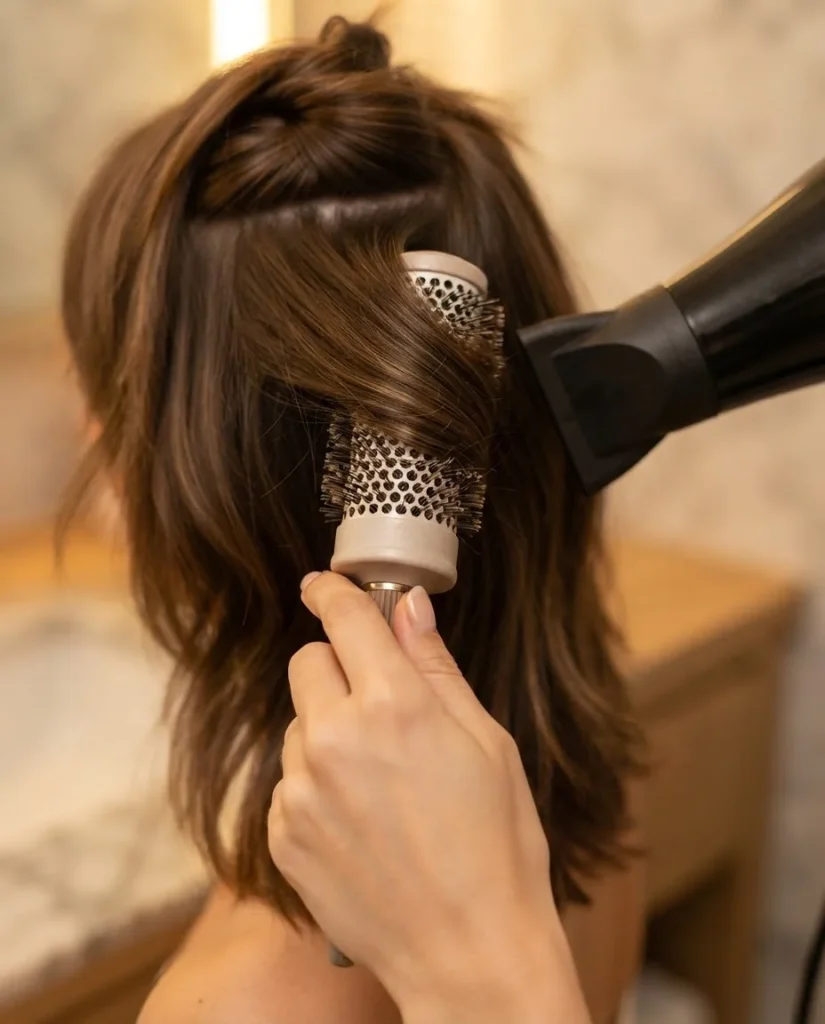
Once the hair is fully dry, a flat iron or small-barrel curling iron can add piecey, slightly tousled movement to the ends. Wrap sections away from the face rather than toward it for a more modern, relaxed finish.
For the curtain bangs section specifically: the easiest method is to split them in the middle while damp, then pull each side away from the center with a round brush as you blow-dry. If they dry weird, a small amount of moisture (even just your hands dampened with a little water) lets you reshape them quickly.
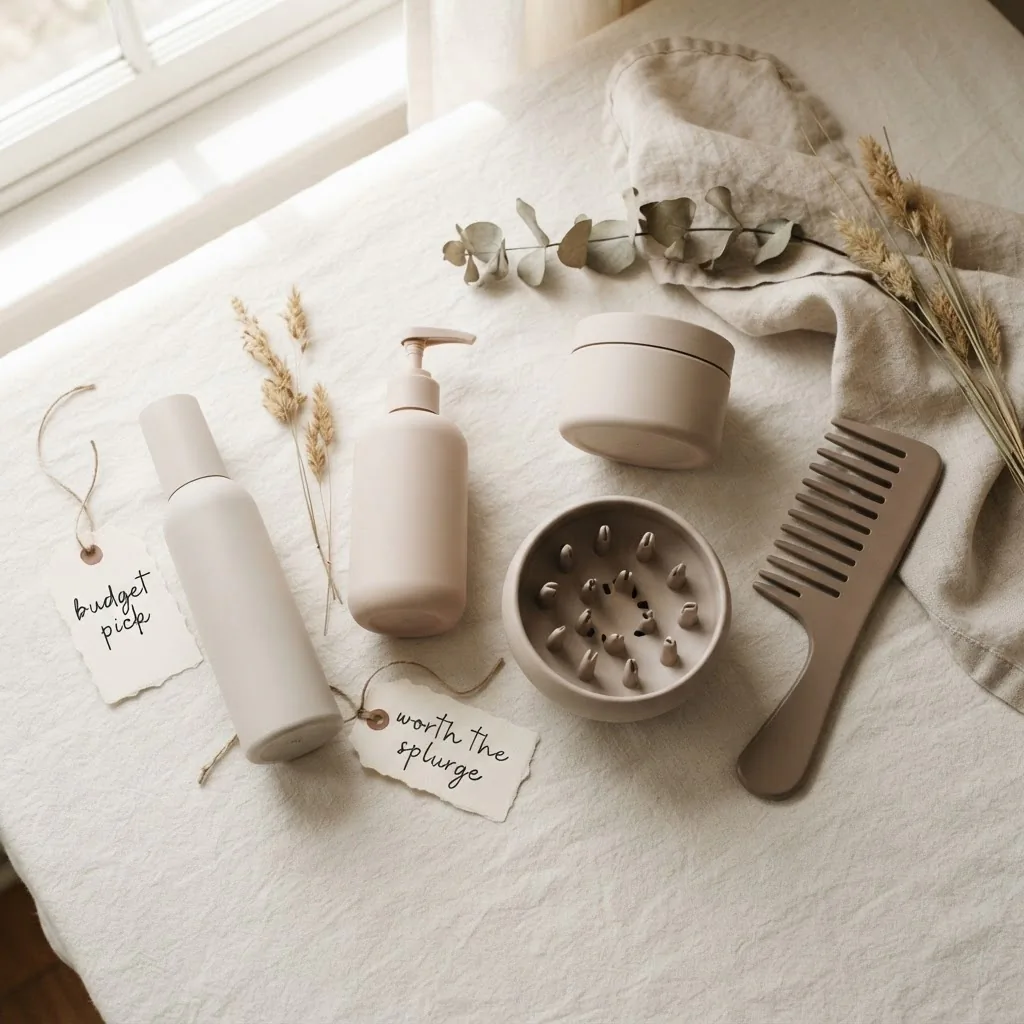
On budget tools and products: a texturizing spray in the $10 to $15 range from the drugstore (look for ones with sea salt or sugar for grip) genuinely works as well as a $40 option for most hair types. Same goes for a light-hold mousse. Where it is worth spending a little more is on your heat protectant, since those do have meaningful formula differences, and on a good diffuser attachment, which you can find for around $20 to $30 from brands that fit most standard dryers.
The Heat and Hair Health Conversation
Because the wolf cut involves a lot of layering and the styling typically involves a diffuser, a round brush, or curling iron work, it is worth spending a moment on hair health honestly.
The AAD has noted that common hair-damaging habits include skipping conditioner, using high heat settings, and brushing from root to tip rather than detangling from the ends upward. All of these become more relevant when you have a cut with lots of shorter layers that are already more exposed and more fragile than blunt ends.
If your hair is already color-treated, bleached, or has some existing damage, that is not a reason to skip the wolf cut entirely, but it is a reason to keep heat tool use lower in frequency and temperature. Air-drying your wolf cut with a good product routine is a completely valid and genuinely gorgeous option. The lived-in, slightly undone texture that comes from air-drying a wolf cut on wavy or curly hair is arguably better than anything you would get from a round brush blowout.
If you have concerns about scalp health, breakage, or hair thinning, a conversation with a dermatologist before making any significant cut or color change is always a smart move, not because the wolf cut is dangerous, but because understanding your starting point lets you care for your hair better through any style transition.
Maintenance: How Often Do You Actually Need a Trim?
Here is what competitors rarely cover honestly. The wolf cut is not a wash-and-forget situation. The short layers at the crown grow fastest, and as they grow out, the overall shape of the cut softens and eventually loses its character. Most stylists recommend coming back every six to eight weeks to maintain the shape. For shorter wolf cuts (like the wolf bob), you might need a refresh closer to every four to six weeks.
That said, you do not necessarily need a full re-cut every appointment. A lighter maintenance trim to reshape the crown and freshen the ends is less time and less money than the original cut. If budget is a concern, communicate that to your stylist and ask what a “maintenance trim only” appointment looks like for your specific cut.
The good news about growing it out? The wolf cut grows out into something pretty graceful. The layers gradually blend, the shape softens, and you end up with a longer, more relaxed layered cut that has its own charm. You are not stuck in an awkward phase the way you would be growing out a very short crop.
Before You Book: Questions to Ask Your Stylist
Bring at least two or three photos of the wolf cut version you want, ideally on someone with a similar hair texture to yours. Tell your stylist your texture, your natural wave pattern, and how much time you realistically spend styling each day. Ask them which version of the cut they think works best for your specific hair. A good stylist will have opinions, and those opinions are worth hearing before you commit.
If you are nervous about going all-in on a dramatic version, start soft. You can always go shorter and choppier at your next appointment. You cannot un-cut layers, but you can absolutely add more of them later.
A Few Honest Words Before You Go
I really do love this cut, and I have watched a lot of women discover it and never look back. But I also want to be the person who tells you it is not magic. If you have fine, straight hair that does not hold volume well, you will still need to do some styling work. If your hair is already damaged, the layered ends will need some extra care. If you hate curtain bangs, you do not have to get them just because they are trending.
The wolf cut works best when it is matched to your actual hair, your actual face, and your actual life. So use this guide to narrow down your version, take your screenshots to a stylist who really listens, and enjoy the fact that one of the most wearable, personality-forward haircuts of the decade has a version that is genuinely made for you.