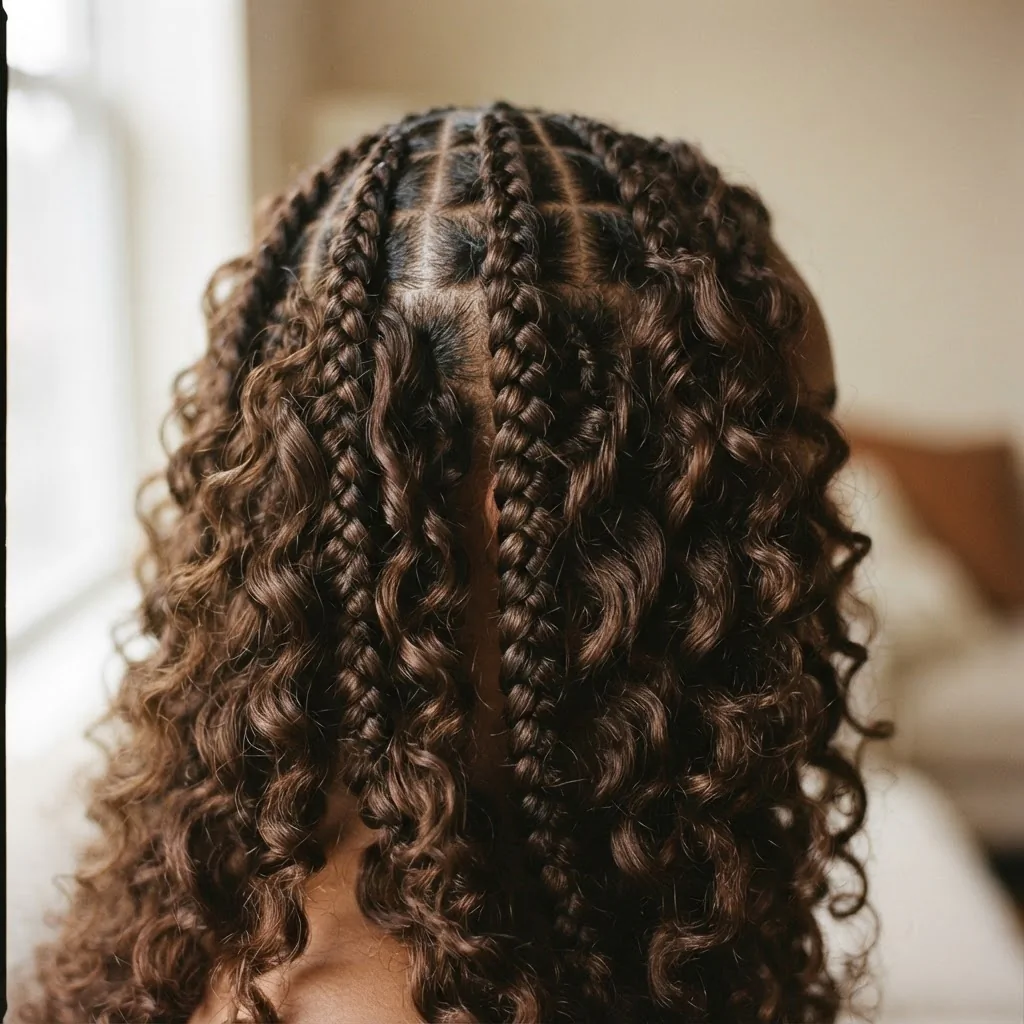
If your Pinterest board is drowning in these gorgeous, curly, lived-in braids that somehow look both put-together and effortlessly undone, you are not alone and you are not imagining things. Boho braids are everywhere right now, and for good reason. They are the rare style that is genuinely protective, stunning for weeks at a time, and adaptable enough to look fresh whether you are going to brunch, a festival, a work presentation, or just running errands.
I know some of you are looking at these styles thinking “that is stunning but that is definitely not for me.” I hear you. Back in my salon-assistant days in Austin, I watched clients come in clutching Pinterest photos of boho braids looking slightly panicked, whispering to the braider like they needed a translator. The terminology alone, knotless, goddess, Bora Bora, feed-in, is enough to make anyone feel out of the loop.
So let’s fix that. This is your complete, no-jargon guide to boho braids: what they actually are, the different variations that exist right now, how to keep them healthy and lasting as long as possible, and the one thing you absolutely need to know before you sit down in the chair.
What Are Boho Braids, Really?
Here is the clearest definition I can give you. Boho braids are any braid style where loose, curly or wavy hair pieces are woven in throughout the length of the braid, giving it that soft, textured, “just came back from the beach” appearance. The curly pieces are not just at the ends. They show up all along the braid, often peeking out from the sides, which creates that full, romantic, slightly undone look that makes the style so recognizable.

The base braid can be traditional box braids or, much more commonly now, knotless box braids. The knotless technique is worth understanding because it matters for your scalp health. In a traditional box braid, the extension hair is knotted at the very root, which creates immediate tension and a visible knot at your scalp. Knotless braids feed the extension hair in gradually as you braid, starting with just your natural hair and adding the extensions little by little. This distributes weight and tension much more evenly along the braid rather than concentrating it at the root. For most people, especially those with more delicate edges or fine hair, the knotless technique is simply the gentler option.
The curly extension pieces woven into boho braids come in different textures. The most popular options braiders and reviewers consistently point to are water wave, deep wave, and loose wave human hair or synthetic alternatives. Water wave and deep wave human hair tend to blend beautifully with natural curl patterns and last significantly longer than synthetic versions, though they cost more.
If you want the style to hold up for six or more weeks, human hair pieces are the way most braiders recommend going. If you are trying the style for the first time and want to test the waters without a big investment, good-quality synthetic curly bulk hair can work for a shorter wear period. For a genuinely lovely, longer-lasting curly texture for boho installs, brands like Heat Free Hair carry deep wave human braiding hair specifically designed for this purpose, which stylists frequently recommend as a reliable option.
Boho Braids vs. Goddess Braids vs. Bora Bora Braids: Let’s Sort This Out
This is the question I get most often, and honestly the confusion makes sense because the styling community uses these terms somewhat interchangeably online. Here is how they actually differ.
Goddess braids are the original version. Curly or wavy pieces are added primarily at the tips or at intervals along the braid, but the braid itself is still mostly visible. You can clearly see the plaited sections, with curly wisps peeking out here and there.
Boho braids go further. The curly pieces are added more frequently throughout the entire length of each braid, so the braid becomes much more enveloped in curls. You see less of the plaited braid itself and more of the flowing, curly texture. The overall result looks fuller and dreamier.
Bora Bora braids take it even further still. This style was coined by New Jersey-based Nigerian master braider Omobolanle Ajao, and it incorporates a significantly higher density of loose curly hair than even standard boho braids. The braids almost disappear into the curls. It is the fullest, most dramatic version of the look, and it is one of the most in-demand protective styles right now, according to professional braiders quoted by Byrdie in their 2025 braid trends roundup.
Think of it as a spectrum: goddess braids at one end, Bora Bora braids at the other, with standard boho braids sitting in the middle.

The 8 Boho Braid Styles Trending Right Now
The broader world of boho braids has expanded into several distinct variations, each with its own vibe and level of commitment. Here is what is actually having a moment right now.
1. Classic Boho Knotless Braids
This is the foundation. Medium to small-sized knotless box braids with water wave or deep wave curly pieces fed in throughout. The size matters: medium braids are the most beginner-friendly because they are faster to install and easier on the scalp than a full set of minis, but they still give you that full, lush boho effect. If someone says “boho braids,” this is usually what they mean.
2. Bora Bora Braids
The most voluminous version of the look, as mentioned above. The curly pieces are added much more densely, often starting closer to the root, so the braid is almost entirely wrapped in flowing curls. This style does require more extension hair and more time to install, so expect a longer appointment. It is also slightly higher maintenance because there is more curly hair to keep moisturized and frizz-free.
3. Boho Bob
One of the biggest braid trends of 2025 according to professional stylists. This is boho braids cut or styled at bob length, hitting somewhere around the chin to collarbone area. It is a fantastic option if you love the boho look but want something lighter, cooler, and easier to style in an updo. Braiders often leave the curly ends slightly longer so the bob has movement and bounce.
4. French Curl Boho Braids
Here the braider uses French curl extension hair instead of water wave or deep wave, leaving the curly portions unbraided at the ends for a voluminous, almost retro-glamorous finish. The style blew up on TikTok and has stayed consistently popular. The ends on a French curl boho look fluffier and more defined than water wave ends, which gives the style a slightly different personality, less beachy, more glam.
5. Butterfly Stitch Boho Braids
A newer, more editorial take on the boho look. The foundation is a stitch braid (where the stylist alternates the sections with each pass), which creates a looped, slightly distressed look along the braid. Add in French curl extensions with that signature loopy texture and you get something that feels very runwayish but also surprisingly wearable.

6. Mini Boho Knotless Braids
Tiny braids with curly pieces woven in throughout. The look is incredibly detailed and takes significantly longer to install, often 8 to 12 hours for a full head. The tradeoff is that mini braids tend to last longer, lie flatter against the scalp, and the finished look is genuinely stunning. Worth it if you have the patience and budget for the install time.
7. Boho Feed-In Cornrows with Curly Ends
Not a box braid at all. Here the base is feed-in cornrows, flat-braided against the scalp in a pattern, with curly extension pieces left loose at the ends or added along the length. The result has that same romantic, curly softness but with a more geometric, graphic quality at the roots. It is gorgeous on oval, heart, and oblong face shapes.
8. Fulani Goddess Boho Braids
A fusion style. The structure references Fulani braids, with a center part, a few braids framing the face, and cornrow elements near the hairline, but with the boho curly pieces added throughout for fullness and texture. This style photographs incredibly well and is everywhere on Pinterest right now.
What Hair Do You Actually Need?
This is the question that trips people up most in the planning stage. When your braider talks about the hair for a boho install, they are actually referring to two separate types of extension hair.
The first is the braiding bulk hair that forms the actual braid structure. This is typically pre-stretched braiding hair in a straight or slightly wavy texture. Brands that braiders consistently recommend include Dreamweaver, Hot Braids, and similar pre-stretched options. Pre-stretched hair is important because it reduces the amount of manipulation needed at the scalp during installation, which helps minimize tension.
The second is the curly bulk hair that gets woven in throughout the braid to create the boho effect. This is where you choose your texture. Water wave gives you a tighter, S-shaped curl. Deep wave gives you a slightly bigger, more defined wave. Loose wave gives you a relaxed, beachy wave.

Human hair curly pieces last longer, blend better with a wider range of natural textures, and hold their curl pattern through washing and humidity far better than synthetic options. They typically cost more per pack, but most installs only need two to four packs of the curly pieces, so the total cost difference may not be as dramatic as it sounds.
For a genuinely protective install, it is also worth starting with a clean, moisturized base. The Carol’s Daughter team has a useful walkthrough of protective style prep for natural hair that covers the basics of getting your hair ready before any long-term protective style install.
A Word on Your Edges and Scalp Health
I want to talk about this honestly because it is genuinely important and most boho braid content skips right over it.
Braids can absolutely be a healthy, protective style. They can also cause real damage if they are installed too tightly, worn too long, or combined with existing chemical treatments on your hair. The condition most associated with tight braiding is traction alopecia, which is hair loss caused by repeated tension on the hair follicles, typically appearing along the hairline and temples. The American Academy of Dermatology has a clear resource on hairstyles that can cause hair loss that is worth reading if you are new to protective styles and want to understand the risks. A peer-reviewed study published in Clinical, Cosmetic and Investigational Dermatology also found that tight braids and hair extensions represent the highest-risk hairstyles for traction alopecia, especially when combined with chemical relaxers.
None of this is meant to scare you away from the style. The knotless technique specifically exists because it is gentler on the scalp than traditional box braids. But a few things matter a lot.
If your braids feel painful, tight, or give you a headache immediately after installation, speak up. A good braider will adjust. Tension that is uncomfortable should not be pushed through and it is not something you should “get used to.” Your hairline should not be pulled taut. The braids near your temples and edges should feel secure but not tight. If you notice your edges looking thinner, pulled, or if there is soreness and tenderness on your scalp that lasts more than a day or two, those are signs worth paying attention to and discussing with a dermatologist.
Wearing the style no longer than six to eight weeks also matters. Leaving braids in beyond that point increases the risk of matting, breakage during removal, and scalp buildup. The general guidance from both braiding professionals and scalp health sources is to give your scalp a genuine break between installs as well, at least a few weeks.
How Long Do Boho Braids Actually Last? (Honest Answer)
The honest range is four to six weeks for a well-maintained install with quality extension hair. Some people stretch it to eight weeks with human hair curly pieces and a diligent nighttime routine, but beyond eight weeks the style typically starts to look rough and the risk to your natural hair increases.
What significantly shortens longevity is neglecting the curly pieces. Because the curly extension hair is not braided down and secured, it is exposed to air, friction, and humidity in a way that regular box braids are not. Frizz comes fast if you do not stay on top of moisture. The Sofnfree Naturals guide to maintaining boho and goddess braids breaks this down really well: hydrating the curly pieces one to two times per week with a lightweight leave-in spray and following with a light oil to seal the moisture is the single most effective thing you can do to extend the life of the style.
How to Keep Boho Braids Looking Fresh Longer
The maintenance for boho braids is more hands-on than regular box braids, and going into the style knowing that sets you up for success rather than frustration. Here is what consistently works.
Protect your braids every night. This is non-negotiable. The curly extension pieces are the most vulnerable part of the style, and friction against a cotton pillowcase is the fastest route to frizz and tangles. Wrap your braids in a satin or silk scarf and sleep on a satin pillowcase as a backup. If your braids are long, divide them loosely into two sections and secure them before covering.
Moisturize the curly pieces regularly. A lightweight curl refresher spray misted over the curly sections one to two times per week, followed by a light oil to seal, keeps the curls defined and prevents the matting that makes boho braids look old fast. Avoid heavy products that will cause buildup on the extension hair.
Keep your scalp clean and nourished. A dry, itchy scalp is common with any long-term protective style. Diluted shampoo applied directly to the scalp along the parting lines (not scrubbed through the braids themselves) every two to three weeks helps prevent buildup. Follow with a lightweight scalp oil massaged in along the partings.
Use a shower cap every time you shower. Steam and splashing water can cause the curly pieces to frizz faster than almost anything else. Cover everything before you step in.
When frizz appears, refresh rather than fight it. A small amount of curl mousse scrunched into the curly sections and allowed to dry can bring the definition back without needing a full rewet. Think of it as reviving rather than starting over.
Take them down on time. I know it is tempting to push to ten or twelve weeks when the braids still technically look fine on top. But the natural hair underneath has been growing out that whole time, and the longer the braids stay in, the higher the chance of significant matting and breakage at the demarcation point where your natural hair meets the extension. Six to eight weeks is a generous window. Set a reminder.

What to Tell Your Braider (If You Are Nervous About Asking)
This comes up so much and I genuinely want to help you feel less nervous about it. Braiders are not mind readers and the more specific you can be, the better your result. Here is what to communicate before the braider starts.
Tell them the base size you want: mini, small, medium, or jumbo. Medium is the most beginner-friendly and gives a beautiful, full boho look without extremely long install time. Ask specifically for knotless technique if that is important to you for scalp comfort. Show them a reference photo of the specific curl density you want, because there is a big difference between goddess braids with a few curly wisps and a full Bora Bora install. Tell them if you have sensitive edges or have experienced tension issues with previous styles. A good braider will check in with you as they work your edges and hairline.
If you are going to a new salon and it is your first time with this specific braider, it is also perfectly reasonable to ask to see their portfolio of boho or goddess braid work. That is not rude or demanding. It is how you make sure you are both imagining the same thing.
A Quick Note for Different Hair Types
Boho braids are genuinely versatile across hair types, but a few adjustments are worth knowing.
If you have very fine or low-density hair, opt for smaller to medium braid sizes and ask your braider to be particularly gentle on your edges. Lighter-weight curly extension pieces, like loose wave rather than deep wave, will also put less weight on each braid.
If you have thick, high-density hair, you have a bit more flexibility with size and curl texture. Water wave or deep wave pieces will both blend and hold beautifully. Your install may take longer than average, so plan accordingly.
If you have natural, coily hair (4B or 4C), your natural curl pattern can actually blend with curly extension pieces beautifully, especially if you moisturize your hair well before the install. The knotless technique is particularly recommended for coily textures because it starts with your natural hair and builds gradually, rather than immediately adding weight at the root.

The Budget Reality
Boho braids at a salon are not cheap, and I want to be upfront about that. A full install with medium knotless braids and curly human hair extension pieces can run anywhere from $150 to $350 or more depending on your city, the braider’s experience level, and the braid size you choose. Mini braids will cost more due to install time. Bora Bora or very full boho installs cost more because they use more curly extension hair.
The extension hair itself, which you typically buy and bring to the appointment at many braiding studios, adds to that cost. Two to four packs of human hair curly bulk for the boho pieces typically runs $15 to $40 per pack depending on brand and length. Pre-stretched braiding hair for the base braids usually costs $5 to $12 per pack and you typically need two to three.
If budget is a real concern, a few honest options: synthetic curly bulk hair costs significantly less and can work well for a first-time trial of the style, though it typically lasts three to four weeks rather than six to eight. Going with a medium braid size rather than mini keeps the install time, and therefore the labor cost, significantly lower. Some braiders also offer pricing for “bring your own hair” versus “all-inclusive,” so it is worth asking.
Final Thoughts
Boho braids are one of the most Pinterest-worthy, genuinely protective styles going right now, and they are far more approachable than they look. The key ingredients are the right braider, the right technique (knotless, please), realistic expectations about maintenance, and a willingness to actually protect your scalp and edges with the same energy you put into getting the install right.
You do not need to be an expert. You do not need to have “done braids before.” You just need the information to walk in knowing what you want and what to watch out for. Now you have it.