How to Choose a Rose Tattoo Style You’ll Love for Years
There is a reason the rose has been one of the most tattooed subjects for over a century. It carries weight and beauty in equal measure. It is instantly recognizable, endlessly adaptable, and somehow never feels tired when it is done well. I have loved roses as a tattoo subject since before I got my first piece at eighteen, and I still think a well-executed rose is one of the most satisfying things you can have on your skin.
But here is what I want you to know before we get into the designs: a rose tattoo is not just a rose tattoo. The style you choose, the placement you pick, the size you land on, and the artist you trust with it all shape whether this becomes a piece you love forever or one you quietly wish you had thought through a little more. That is exactly why I am writing this. Not to overwhelm you, but to give you the kind of honest, thoughtful context that helps you make a decision you will genuinely feel good about for years.
So let’s talk about all of it, one piece at a time.
Why the Rose Has Always Been a Tattoo Icon:
The rose has been used as a symbol of love, beauty, grief, and power across cultures for thousands of years, long before it ever appeared in a tattoo studio. As Art & Object’s deep-dive into rose symbolism throughout art history traces, the rose appears in Greek mythology as a symbol linked to Aphrodite, in Roman culture as a sign of Venus, in Christian iconography as both a symbol of the Virgin Mary and a representation of martyrdom, and in Persian poetry as an emblem of divine beauty. By the time it traveled into the world of American sailor tattoos in the early twentieth century, it carried centuries of meaning in its petals.
The American Traditional rose, popularized through the bold flash art of artists like Norman “Sailor Jerry” Collins, became one of the most iconic images in Western tattoo history precisely because it did what great symbolic art always does: it held complexity lightly. A rose could mean love, loss, devotion, beauty surviving pain, or a tribute to someone who mattered. It still means all of those things today, and that versatility is a huge part of why it remains one of the most requested designs in studios everywhere.
This history is worth knowing because it shapes how you might think about your own design.

You are not just picking something pretty. You are choosing a symbol with serious roots, and that makes the choice even more worth getting right.
What Does a Rose Tattoo Actually Mean? (And Does It Have to Mean Anything?)
The short and honest answer is: a rose tattoo means whatever you need it to mean. You do not owe anyone an explanation for your ink, and personal meaning is always more important than what a color “traditionally” symbolizes. That said, knowing the common associations can help you make deliberate choices when you are briefing your artist, which is always a good thing.
Red is the most classic choice and the one most readers picture first. It carries associations with love, passion, romance, and deep devotion, but in more contemporary interpretations it also represents strength and vitality. If you want something with the weight and warmth of a feeling you cannot always put into words, a red rose does that.
Black is one of the most popular choices right now and for genuinely interesting reasons. It is often associated with grief and loss, a memorial tribute to someone loved. It can also represent resilience, the idea of surviving a difficult chapter with your beauty and strength intact. In blackwork and fine-line styles, it tends to be the most visually clean and versatile option. On warmer skin tones in particular, black and grey roses produce stunning contrast.
White roses in tattoo form often carry meanings of purity, new beginnings, innocence, and fresh starts. They present a real challenge for some tattoo artists because white ink behaves differently than black, fading and shifting in tone over time. This is worth discussing honestly with your artist before committing to white as a primary color.
Yellow feels sunny and emotional in a quiet way: friendship, warmth, the joy of a specific relationship. It is a wonderful choice for a tribute piece that is not about romantic love.
Pink tends to sit in the space of gratitude, gentleness, admiration, and care. Soft dusty pinks in a realism or watercolor style can produce some genuinely breathtaking pieces.
Blue roses do not exist naturally, which gives them a meaning rooted in that very impossibility: mystery, longing, something beautiful and just out of reach. A blue rose tattoo tends to feel deeply personal and a little romantic in the philosophical sense.
Purple carries associations with royalty, enchantment, and spiritual feeling. It blends well with botanically detailed styles.
Then there is the question of what you add to the rose.

A rose with thorns emphasizes the duality of beauty and pain, that nothing worth having comes without risk or cost. Thorns on a rose tattoo are never just decorative. They say something. A rose with a skull speaks to mortality and the fleeting nature of beauty. A rose with a dagger is one of the oldest combinations in American Traditional tattooing and suggests betrayal survived, love that cuts, or strength forged through pain. A rose with a butterfly brings in transformation and freedom. A rose with a clock or an hourglass introduces time, memory, and impermanence.
None of this is a rule. These are starting points for your own thinking, and a great consultation with your artist will help you work through what combination feels true to your intention.
The Rose Tattoo Styles You Should Know:
This is the section that I think matters most to the planning process, because style determines so much about how your tattoo will look on day one and how it will look on year ten. These are the main styles worth knowing before you start researching artists.
American Traditional
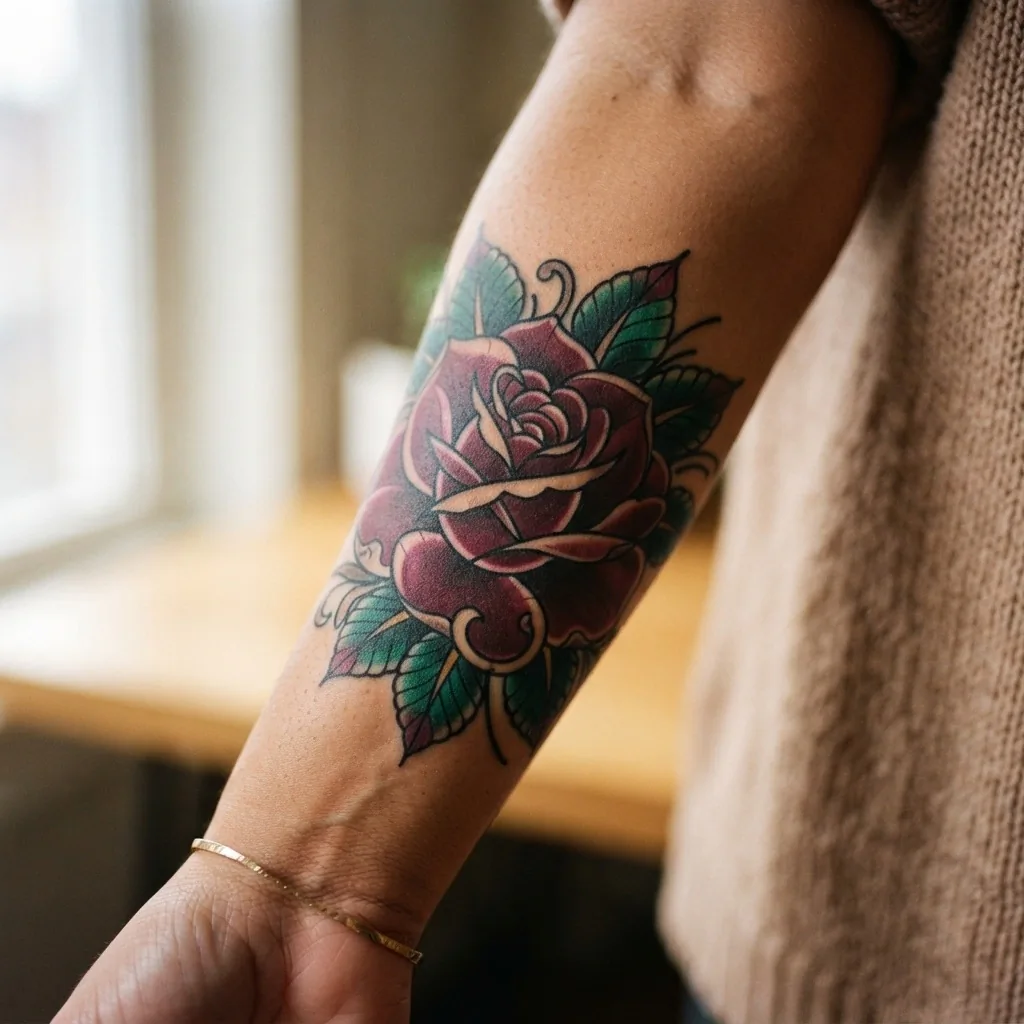
This is the original rose. Bold black outlines, a limited but vivid color palette (usually red, green, and yellow), flat shading, and a strong graphic quality. American Traditional roses are designed to last. The thick lines hold their shape over decades, and the style has a warmth and confidence that reads well on almost any skin tone and placement. If you love the vintage, bold, timeless feeling, this is your style. It works especially well on the upper arm, forearm, and thigh.
Neo-Traditional
Think of neo-traditional as American Traditional’s more illustrative, painterly cousin. The outlines are still bold, but there is more detail in the petals, richer shading, and a wider color range. It has a jewel-like quality that makes roses look lush and dimensional. It also ages very well for the same reason traditional does: solid linework and good color density hold up over time.
Fine-Line
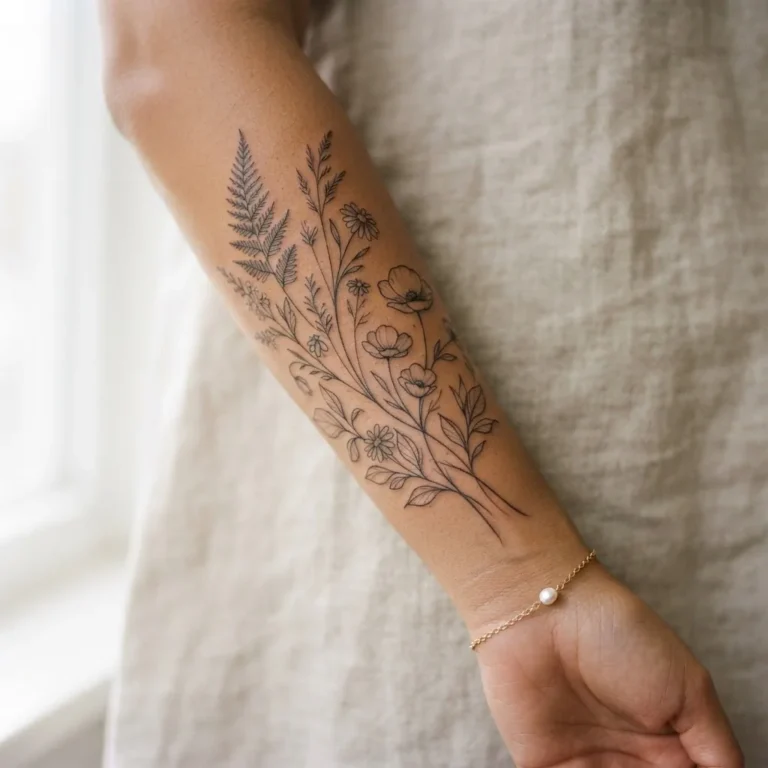
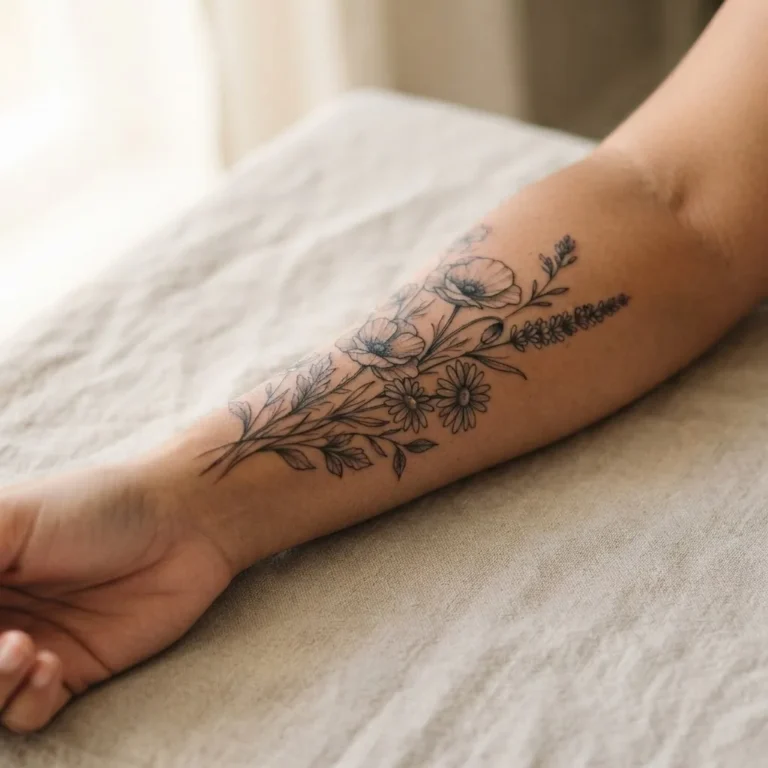
Fine-line rose tattoos are the style I see most in my Pinterest saves right now, and honestly I understand why. They are delicate, precise, and extraordinarily beautiful. A fine-line rose looks like it was drawn directly onto skin with a technical pen, all whisper-thin lines and subtle shading. They tend to sit beautifully on the wrist, collarbone, inner forearm, and ankle.
The honest thing to say about fine-line, though, is that it requires real conversation about aging. Fine-line tattoos, including roses, generally hold their crispest detail for approximately five to ten years with excellent aftercare and smart placement, after which some softening and fading is typical. This is not a reason to avoid the style. It is just something to go in knowing. Placement matters enormously: areas with frequent sun exposure or skin movement will see faster fading. Your artist is the best person to advise you on what to realistically expect on your specific skin type and chosen placement.
Blackwork and Black and Grey Realism
Blackwork uses only black ink, sometimes in deep saturated fills, sometimes in intricate dotwork or linework patterns. A blackwork rose can look intensely graphic and striking. Black and grey realism takes the rose in an entirely different direction: photorealistic depth, delicate wash shading, and a softness that can feel almost painterly. These styles can age beautifully on the right skin and placement, and they tend to be some of the most versatile options across different skin tones.
Watercolor
Watercolor tattoos mimic the look of loose, blended paint, with roses that seem to bloom with color bleeding beyond the petal edges. They are striking and artistic. The honest note here is that watercolor tattoos have traditionally been one of the more debated styles in terms of longevity, as the lack of strong outlines can cause the design to lose definition faster than bold-line styles. Some artists now incorporate subtle linework to anchor the design. This is definitely a style to research deeply in your artist’s portfolio, specifically looking for healed work, not just fresh tattoos.
Geometric and Micro/Minimalist
Geometric roses incorporate shapes, patterns, or linework alongside the floral form, creating something that feels architectural and modern. Micro roses are tiny, often under two inches, and either highly simplified or incredibly detailed at a small scale. Both are trending heavily right now. Micro tattoos in particular need a skilled artist with fine-line experience, as very small detailed work requires precision to avoid the lines bleeding together during healing.
Placement and Sizing: Making It Work on Your Body:
Placement is the decision that most people underestimate, and it is the one I encourage everyone to think about most carefully before their consultation. Where a tattoo lives on your body affects how it looks, how it ages, how much it hurts to get done, and even how it interacts with future pieces if you ever want more ink.
Some of the most popular and beautiful placements for rose tattoos, and what to know about each:
The forearm (inner or outer) is one of the most popular choices for a reason. It gives the design room to breathe, allows for beautiful vertical compositions like a single stem with leaves, and has a relatively manageable pain level on the outer forearm. The inner forearm is more sensitive. This placement also has high visibility, which is worth thinking through if you work in an environment where visible tattoos require coverage.
The upper arm and shoulder are classic and consistently flattering. They allow for larger, more detailed compositions. The outer upper arm is one of the less painful areas, which makes it a solid choice for a first tattoo.
The collarbone and clavicle area is one of the most aesthetically striking placements for a delicate fine-line or minimalist rose. It is a moderately painful area given the bone proximity, but the visual payoff is significant.
The ribcage is a placement that photographs beautifully and allows for larger, more artistic compositions. It is one of the more painful placements because of the thin skin over the ribs and the movement of breathing during the session. Worth knowing before you commit.
The thigh offers generous space for larger, more detailed roses and is one of the more comfortable placements in terms of pain. It works especially well for neo-traditional or realism styles that need room for dimension and shading.
The wrist and ankle are popular for smaller, simpler rose designs. Both are more sensitive than they might look, and both experience more sun and friction than most placements, which can affect long-term shading. They work best with cleaner, simpler compositions.
For a detailed look at pain levels by body location, Healthline’s tattoo pain chart is a clear, medically reviewed reference that breaks down which areas tend to be most and least painful, and why.

I always share it with friends who are planning their first piece.
On sizing: a good rule of thumb that most artists will echo is to let the placement dictate the minimum size. A fine-line rose with petals, leaves, and a stem needs enough space to breathe so the details do not close in on each other during healing and as the skin ages. A design that looks perfect at three inches may not be appropriate at one inch. Your artist will guide you here, and trusting that guidance is one of the smartest things you can do.
Finding the Right Artist for Your Rose Tattoo:
This is where the quality of your outcome lives. The rose is one of those subjects that every tattoo artist has attempted, but the difference between an artist who has truly mastered the style you want and one who simply offers it is often significant. Here is how I think about the search.
Start by identifying the style you want most, because that determines which portfolios you are looking for. A realism artist and a traditional artist are two very different skill sets, and you want someone whose existing portfolio already contains beautiful, healed examples of the kind of rose you have in mind. Social media, particularly Instagram, is still the primary place most artists show their work. Search style-specific hashtags like “fine line rose tattoo artist,” “neo traditional rose,” or “blackwork rose tattoo” alongside your city name.
When you find an artist whose work excites you, look for healed tattoos in their portfolio, not just fresh ones. Freshly done tattoos are bright and crisp on almost everyone. What you want to see is how their work looks six months to a year later, after the skin has settled and the true quality of the lines and shading is visible. Many artists will show healed work in a dedicated portfolio section or on request.
Check that the studio is licensed. Most states require both the studio and individual artists to hold current licenses, but requirements vary by location, so it is worth confirming that the studio you are considering operates legally and transparently. A reputable studio will have no hesitation displaying its credentials and answering hygiene questions directly. OSHA’s Bloodborne Pathogens Standard, detailed in their formal interpretation for tattoo and body art establishments, outlines the hygiene and safety controls that properly run studios are required to follow, including single-use needles, sterilized equipment, and protective measures throughout the procedure. Knowing this standard exists means you know what to look for when you visit a studio.
Before you book, ask for a consultation. Most reputable artists offer them, either in person or via a brief messaging conversation before booking. A consultation is where you share your reference images, discuss sizing and placement, ask questions about the artist’s process, and get a realistic quote. Bring at least two or three reference images that capture the style and feeling you want, even if they are not exact matches for your vision. This gives the artist something to work from and opens a real creative conversation.
Questions worth asking at a consultation: How would you approach my skin tone with this style?

Do you have healed examples of this type of work I can see? How do you think this will age on this particular placement? What aftercare protocol do you recommend? What is the deposit policy and what happens if I need to reschedule?
What to Expect During Your Session:
Knowing what a session actually feels like takes a lot of the pre-appointment anxiety out of the picture, so here is an honest overview.
Your artist will place a stencil of the design on the skin so you can both see the placement and size before any ink happens. This is your moment to speak up about position adjustments. Take your time. Once the stencil looks right to both of you, the session begins.
Pain experience varies widely by person and placement, but the general sensation is often described as a combination of scratching, pressure, and stinging. Bony areas (ribs, collarbone, ankle, sternum) tend to be sharper. Fleshier areas (outer thigh, outer upper arm) tend to be more manageable. Most people find that they settle into the experience after the first few minutes. A small to medium rose can be completed in one to three hours depending on complexity and detail. A large, highly detailed color piece may require multiple sessions.
Eat a real meal before your appointment, stay hydrated, avoid alcohol the day before, and wear comfortable clothing that gives easy access to the placement area. These things matter more than most first-timers realize.
Ink Colors, Allergies, and What You Should Know:
This is not meant to alarm you, but it is real information worth having before you choose your colors. The FDA’s consumer page Think Before You Ink: Tattoo Safety notes that the FDA has received reports of people experiencing both infections from contaminated tattoo inks and allergic reactions to the inks themselves, and that it has not approved any pigments for injection into the skin for cosmetic purposes. This does not mean you should not get a colored rose tattoo. Millions of people do with no complications. It means you should choose a reputable, licensed artist who uses quality inks, and you should be honest with yourself and your artist about any known skin sensitivities or allergies before your session.
Colored inks, particularly reds, yellows, and some bright pigments, have a higher reported rate of allergic reaction than black ink. Reactions can range from localized itching and redness to more significant skin responses. If you experience any unusual reaction during healing, do not guess your way through it. Contact your artist and, if needed, consult a board-certified dermatologist or your doctor. The American Academy of Dermatology’s guide to unexpected tattoo skin reactions outlines seven skin responses that can occur and what each one means. It is a smart bookmark for anyone going through their first healing process.
After Your Rose Tattoo: The Healing Process:
I want to be clear about something upfront: your artist’s aftercare instructions are the ones that matter most. Every artist has a protocol they trust, and it is tailored to how they work and what they have seen heal best over their career. Follow their instructions first, always.
With that said, the general consensus across dermatology guidance and experienced artists includes a few consistent themes. Keep the tattoo clean, using gentle, fragrance-free soap and cool to lukewarm water. Moisturize when the skin feels dry, using a fragrance-free, water-based lotion rather than heavy petroleum-based products. The AAD’s guidance on caring for tattooed skin is specific on this point: petroleum-based products can cause ink to fade prematurely, so product choice matters.
Avoid submerging the tattoo in pools, hot tubs, or open water during healing. Avoid direct sunlight on fresh ink. Do not pick at peeling skin or scabs. Surface healing typically takes around two to four weeks, but deeper layers of the skin can take closer to two to three months to fully settle. During this period, how the tattoo looks will shift, and some temporary dullness or uneven appearance is completely normal.
Once your tattoo is fully healed, sun protection becomes your best long-term investment. UV exposure is one of the primary causes of ink fading, particularly for color work. A broad-spectrum SPF 30 or higher applied to healed ink on sun-exposed placements will help keep your rose looking sharp for years longer.
Is a Rose Tattoo “Too Common”? Here Is How I Actually Think About That:
I get some version of this question from friends regularly: “Is a rose too cliché? Too basic?” And my honest answer is always no, with a caveat.

A rose that was chosen carelessly, placed without thought, and executed by an artist who was not the right fit for the style can feel like a letdown. Not because it is a rose, but because the decisions around it were rushed. That is true of any tattoo design.
A rose chosen intentionally, from a style and placement and meaning that feel genuinely personal, executed by an artist who truly specializes in it? That is never basic. That is the whole point. Roses have been tattooed for over a century because they carry something real, and when a rose tattoo is done right, that comes through every single time.
The question is never “is this design overdone?” The question is always “does this feel right for me, and am I going into this with enough information to make a decision I’ll love?”
If the answer to both is yes, then book your consultation. You are ready.
A Few Things to Keep in Mind Before You Book:
Tattoo laws, age requirements, and studio regulations vary by state and by country. In the United States, the legal minimum age for tattooing is 18 in most states, though some states allow tattooing with parental consent at 16 or 17. Always confirm the regulations in your specific location and choose a studio that follows them without exception.
Cost varies significantly by artist experience level, studio location, size and complexity of the design, and the number of sessions required. A small simple rose at a reputable studio in the US might start around $100 to $200, while a large, detailed color or realism piece can run $500 to well over $1,000. Deposit requirements are standard at most studios. Tipping your artist, usually 15 to 20 percent of the total, is a widely observed practice and a genuine way to acknowledge skilled work.
No article, including this one, replaces the guidance of your licensed artist. They know your skin, your chosen design, and the full context of your session in ways that no guide can. This article exists to help you walk into that conversation feeling confident and prepared. What happens next is between you and your artist, and that is exactly how it should be.