Wildflower Tattoos: Finding the Design You’ll Love for Years
There is something about a wildflower tattoo that stops people mid-scroll. It might be the loose, unplanned feeling of a meadow scattered across someone’s forearm, or a single delicate poppy behind a collarbone, or a whole botanical wrap winding up a shin like something that grew there naturally. Wildflower tattoos have this quality of looking both deeply intentional and effortlessly free at the same time, and I think that is exactly why they feel so personal to the people who get them.
I am Riley Bennett, and I have been helping friends plan their tattoos long enough to know that the people who search “wildflower tattoo” are not always sure exactly what they want yet. They have a feeling. Maybe it is tied to a place they love, a season that means something to them, a chapter of life they are closing or opening. They know they want flowers, they know they want something that feels wild and honest rather than overly arranged, and they are trying to figure out how to turn that feeling into a real tattoo they will genuinely love wearing on their skin for the rest of their life.
That is what this guide is for. We are going to walk through the styles available to you, the specific wildflowers and what they mean, placement and sizing realities, how to find the right artist for this kind of work, what to bring to your consultation, and what you can realistically expect from the experience and the healing. By the end, you should feel genuinely ready to move forward, not rushed, not overwhelmed, just clear.
Why Wildflower Tattoos Feel Different From Other Floral Designs
Most floral tattoo categories feel composed. A rose is a rose. A peony is a peony. There are centuries of artistic tradition behind how each looks in a tattoo context, and artists have clear conventions for rendering them. Wildflower tattoos are different because the very definition of a wildflower is looseness, variety, and natural imperfection. When people say “wildflower tattoo,” they might mean a field daisy, a red poppy, a sprig of lavender, a stem of cosmos, a bunch of yarrow, or a combination of all of the above. That freedom is wonderful, but it also means you have more decisions to make than you would with a single-species design.
The other thing that makes wildflower tattoos feel distinct is what they tend to mean to the people wearing them. These are rarely decorative-only tattoos. The people I talk to who want wildflower pieces almost always have a story behind the flowers they choose, even if the story is just “I love how they grow in unexpected places” or “my grandmother had a garden.” That personal meaning is something worth exploring before you book, because choosing your specific flowers with intention is one of the best things you can do to make sure the tattoo still feels right in ten or twenty years.
The 6 Main Wildflower Tattoo Styles (And How Each One Ages)
Before you fall in love with a specific image you found online, it helps to understand the style it was done in. Style affects how your tattoo looks the day it is done, yes, but it also significantly affects how it looks five, ten, and twenty years later. Here is an honest breakdown of the main styles you will encounter when researching wildflower tattoos.
Fine-Line Botanical
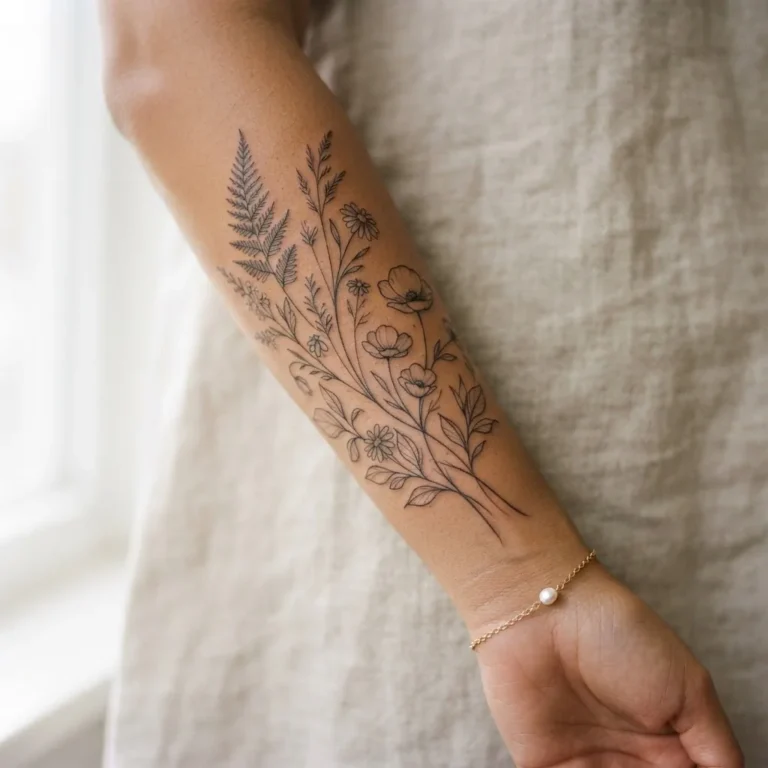
This is currently the most popular style for wildflower tattoos, and for good reason. Fine-line botanical work uses very thin, precise lines to create detailed, almost pressed-flower-style designs.

The best artists working in this style can render individual petals, stamens, and stems with a delicacy that looks almost like botanical illustration. The result is beautiful and, when placed well, genuinely ethereal.
The honest part: fine-line tattoos do change over time. The very qualities that make them stunning, the thinness of the lines and the light touch of the shading, are also what makes them more susceptible to softening as skin ages and the ink settles. You can expect fine-line work to look its crispest in the first few years and to gradually soften, particularly in high-movement areas or spots with regular sun exposure. A good artist will factor this into the design by leaving appropriate spacing between elements and not working too small for the level of detail involved. Fine-line botanical pieces that are given room to breathe, and that are cared for properly, absolutely can age beautifully. But it is worth having an honest conversation with your artist about sizing and placement before you commit to a tiny, densely detailed piece in a challenging spot.
Blackwork / Botanical Illustration
Blackwork wildflower designs draw from the tradition of printed botanical illustration, the kind you might see in old nature encyclopedias. These designs use bolder, more confident line work and often incorporate solid black fills, cross-hatching, or etching-style shading. They tend to age significantly more gracefully than very fine-line work because the lines have more density and hold their shape longer. If longevity is a priority for you, blackwork botanical is worth serious consideration.
Watercolor Style
Watercolor wildflower tattoos are striking. Loose, blurred edges, soft color washes, and the intentional absence of a hard outline give them a painterly, dreamy quality. They look incredible fresh. The trade-off is that they tend to fade and blur more noticeably over time than outlined designs because ink without a defining border spreads more freely into surrounding skin. If you love the watercolor look, asking an artist about combining subtle outlines with watercolor fills is a way to get that aesthetic while adding a little more structural staying power.
Neo-Traditional
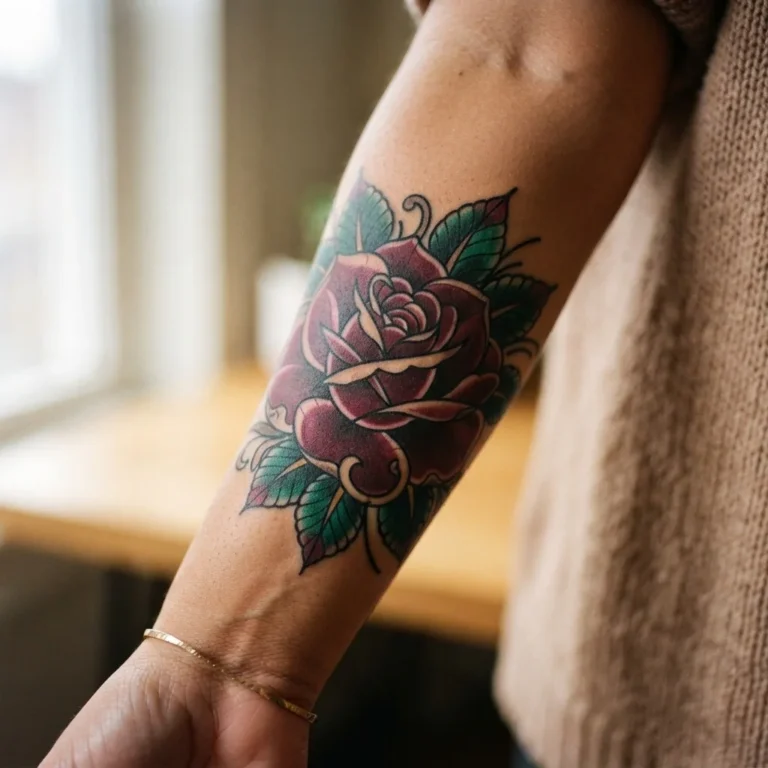
Neo-traditional wildflower work takes the bolder linework and saturated color palette of traditional American tattooing and softens it into something more illustrative and organic. Think richer, jewel-toned poppies or exaggerated daisies with confident dark outlines and layered shading. These age very well and make excellent larger pieces.
Illustrative / Etching
Illustrative wildflower tattoos feel like something between fine-line and traditional, with a hand-drawn, slightly looser quality. Etching-style pieces, which use fine hatching and stippling rather than solid fills, have a beautiful vintage feel and tend to be more forgiving in terms of aging than single-needle fine-line.
Minimal / Single-Line
Single-bloom, minimal wildflower tattoos, a daisy or a chamomile rendered in a handful of clean lines, are enduringly popular for a reason. They are versatile, placement-flexible, relatively quick to execute, and when done well they carry an elegance that needs no embellishment. The key with minimal designs is working with an artist whose minimalism is intentional and confident rather than just sparse.
10 Wildflower Tattoo Ideas to Inspire Your Design
1. The Scattered Meadow
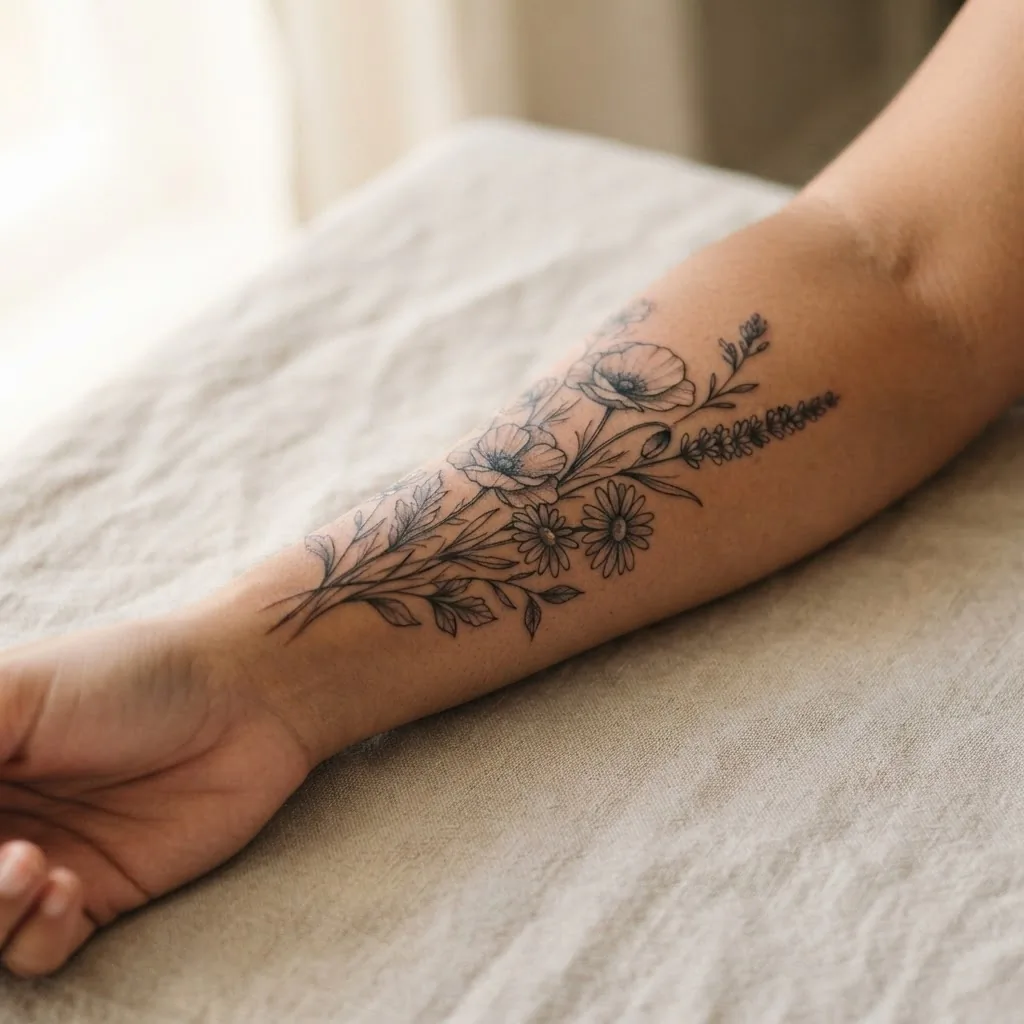
A meadow-style wildflower tattoo places multiple blooms and stems in a loose, organic arrangement that mimics how wildflowers actually grow, not in rows, but in clusters with natural gaps and overlaps.

This works beautifully as a forearm piece, a thigh wrap, or a shoulder-to-upper-arm composition. The key design decision is choosing flowers that feel cohesive in style even when varied in species.
2. The Single Poppy
A single red or black-ink poppy is one of the most quietly powerful wildflower tattoos you can get. Poppies carry rich symbolism including remembrance, rest, the beauty of impermanence, and in many traditions, honoring people we have lost. A clean fine-line poppy on the inner forearm or collarbone has a simplicity that tends to age gracefully and age meaningfully.
3. The Lavender Sprig
Lavender is beloved as a tattoo subject for its combination of visual elegance and personal meaning. The long stems and small clustered buds translate beautifully into fine-line or botanical illustration styles. Lavender symbolizes calm, devotion, and healing in flower symbolism traditions, making it a genuinely meaningful choice for people going through transitions or who want to carry a sense of peace with them. A sprig of lavender along the inner wrist, behind the ear, or along the shin is a classic that holds its appeal.
4. The Daisy Cluster
Daisies are the most accessible of the wildflowers visually, but that simplicity is a strength. Field daisies in a loose cluster, done in fine-line with subtle shading on the petals, have a freshness and lightness that works on almost any placement. Symbolically, daisies represent innocence, new beginnings, and loyal love, as documented in InkedMag’s comprehensive A-Z guide to flower tattoo symbolism. For first-timers especially, a daisy design tends to be a very satisfying starting place because the design reads clearly even at small sizes.
5. The Wildflower Wrap
A wrap-style wildflower tattoo follows the contour of an arm, leg, or torso, letting stems and blooms curve naturally around the body’s shape rather than sitting flat on the skin. These are larger, more complex pieces that require an artist with strong experience in body-aware composition. The result, when done well, is stunning and feels organic rather than applied. This is a longer session and a higher investment, but for the right person it is the piece they describe as the one they waited their whole life to get.
6. The Cosmos and Cornflower Combination
Cosmos flowers (the loose, papery blooms with a fine-textured center) and cornflowers (the vivid blue wildflower of European meadows and fields) pair beautifully in terms of shape contrast. Cosmos are circular and open, cornflowers are multi-petaled and dense, and together they create visual interest without competing. This combination also photographs and reproduces exceptionally well in fine-line botanical style.
7. The Chamomile Stem
Chamomile as a tattoo subject is having a genuine cultural moment, partly driven by its association with gentle self-care and partly because those tiny white-and-yellow blooms just render beautifully in ink. A single or double chamomile stem is quiet and understated in the best possible way. It suits placement in more delicate spots like the inner wrist, the side of a finger, or behind a knee.
8. The Yarrow and Wildgrass Botanical
Yarrow’s flat-topped clusters of tiny flowers surrounded by feathery leaves translate into a distinctive botanical illustration aesthetic. Paired with fine-line wildgrass or fern sprigs, a yarrow-forward design has a forested, meadow-in-late-summer quality. This works particularly well as a forearm or upper arm piece.
9. The Forget-Me-Not Border or Band
A band of forget-me-nots wrapping a wrist, ankle, or upper arm is one of the more romantic wildflower tattoo concepts. Symbolically, forget-me-nots represent enduring remembrance and true love, and they have a long literary and cultural history in that role. In terms of design, the small clustered blooms work well in a repeating motif and hold up nicely at a range of sizes.
10. The Color Wildflower Bouquet
Not every wildflower tattoo needs to be black-and-grey. A loose, gathered bouquet of wildflowers done in soft, earthy color, ochre, dusty rose, sage, lavender, and muted terracotta, can feel incredibly personal and alive. Color tattoos do require a bit more attention to sun protection as they heal and over their lifetime, since UV exposure causes color to fade faster than black ink. A quality SPF applied to fully healed tattooed skin is something most artists recommend as part of long-term care, and your artist will guide you through exactly how and when to apply it.
Placement and Sizing: The Honest Conversation
Placement is one of the decisions I see people either rush or agonize over, and honestly, a little time spent thinking it through is worth it.

Placement affects how your design looks, how much it hurts to get, how well it heals, and how it ages.
Forearm and inner arm: The forearm is one of the most forgiving and versatile placements for wildflower tattoos. Skin here is fairly consistent, the surface is reasonably flat for design work, pain is moderate on the outer forearm and slightly more sensitive on the inner, and visibility is easy for you to enjoy the piece. Fine-line botanical work heals well here. One thing to know: the inner forearm, particularly near the wrist, does get regular sun exposure, so consistent SPF on healed skin matters for color work.
Collarbone and shoulder: These are beautiful spots for single stems, small clusters, or pieces that follow the shoulder’s curve. Pain is moderate, though bony areas near the collarbone can feel more intense. Designs here sit well in most professional and casual wardrobe scenarios, being easy to show or cover.
Ribcage and sternum: These are popular for larger wildflower pieces or botanical wraps for good reason. The skin takes ink beautifully and the curved surface suits flowing botanical compositions. Honestly, though, these are among the more painful placements because the skin is thin and you can feel the vibration near bone. People consistently report rib and sternum sessions as more challenging. That does not mean you should not choose these spots, but go in knowing what to expect and discuss pacing with your artist.
Thigh: The outer thigh is a wonderful canvas for wildflower tattoos. The skin is generally consistent, there is space for larger compositions, and pain levels are typically on the lower end. It also heals well compared to higher-friction areas. Inner thigh is more sensitive and higher-friction during healing, so keep that in mind for aftercare.
Ankle and shin: Popular spots for single blooms or sprigs. Ankle tattoos in particular are a frequent first-tattoo choice for wildflower designs because they are concealable, charming, and suit smaller work. Pain near the ankle bone can be more intense. These spots also experience more friction from footwear during healing, so timing and clothing choices during the healing period matter more here.
A word on sizing and detail: One of the most important conversations to have with your artist is about the minimum size your chosen design needs to hold its detail over time. Very small fine-line tattoos that pack a lot of detail into a tiny space are at higher risk of the elements blurring together as skin ages. A skilled artist will tell you honestly if a concept needs more room to work. Trust that guidance. Getting the size right is an act of care for the tattoo you are investing in.
The Meaning Behind the Flowers: Choosing with Intention
One of the things I love most about wildflower tattoos is how easily they accommodate personal meaning. You do not have to have a deep symbolic reason for every petal, but if a particular flower carries significance for you, that is worth knowing before you choose.
Poppies have long been associated with remembrance, rest, and the honoring of those we have lost, a meaning especially resonant in British and Commonwealth cultures since World War I, though their symbolism is rich across many traditions. Lavender carries associations with calm, devotion, and healing. Daisies represent innocence, new beginnings, and simple joy. Forget-me-nots speak to enduring remembrance and the bonds that outlast distance. Chamomile often signals quiet resilience and the simple pleasure of small, beautiful things. Cornflowers, with their distinctive blue, have been used as symbols of hope, delicacy, and in some traditions, fidelity.
Yarrow has a particularly interesting symbolism history. It has been used for centuries in herbal and folk medicine traditions and carries meanings around healing, protection, and courage in facing difficulty. For someone who has been through something hard and come out the other side, a yarrow tattoo carries a depth that is not immediately obvious to the casual observer, which is part of its appeal.
Cosmos, with their loose papery petals, are associated with order, harmony, and the idea that beauty exists in both structure and randomness. They are also simply stunning in ink.
None of these meanings are fixed rules.

They are traditions and associations worth knowing so you can decide what, if anything, you want to carry. Your tattoo means what it means to you.
How to Find the Right Artist for Wildflower Work
This is the part where a lot of people feel most uncertain, and I understand why. Finding an artist is not like finding a product you can return if you do not love it. The right artist for your wildflower tattoo is a licensed professional whose portfolio demonstrates specific, consistent skill in the style you want. Here is how to approach that search.
Search by style, not just by location. If you want fine-line botanical work, you need an artist whose portfolio is full of fine-line botanical work, healed work in particular. A lot of tattoos look beautiful immediately after completion, but healed photos tell you how the artist’s line weight and technique actually settle into skin. Always look for healed examples before booking.
Verify licensing and studio hygiene. Every legitimate tattoo studio operates under state or local licensing and health department oversight. These regulations exist specifically to protect you. The CDC’s NIOSH program has published safety and health guidelines for tattooists and piercers that explain exactly what professional standards look like, including bloodborne pathogen training, single-use needle protocols, and autoclave sterilization requirements. A licensed studio should be able to answer basic questions about their sterilization practices, and the space should look and feel clean. If something feels off, trust that instinct.
Use the consultation. Most reputable artists offer a consultation before booking, either in-person or remotely. This is your opportunity to share your reference images, explain what the flowers mean to you, discuss placement and sizing, and ask questions. Bring a mood board. Show inspiration images but be open to the artist’s expertise. A good artist will tell you if a specific design will not translate well to skin at the size you want, or suggest modifications that will help it age better. That kind of honest feedback is a gift.
Questions to ask before booking:
- Can I see healed examples of your botanical or fine-line work?
- What size do you recommend for this level of detail in this placement?
- How do you handle touch-ups if needed once the tattoo is fully healed?
- What aftercare instructions do you provide?
- What is your licensing status and can I see your certifications?
What to Expect During Your Session
Going in knowing what a session actually feels like helps enormously with the first-timer nerves I hear about so often. Here is an honest picture.
When you arrive, your artist will finalize the stencil placement with you. You will both look at the stencil in the mirror and confirm the sizing, position, and orientation before anything is started. This is the moment to speak up if something feels off, and good artists genuinely want you to. Once you approve the stencil, the session begins.
Pain varies by placement and individual threshold, but most people describe wildflower tattoos in standard placements as a consistent scratching or stinging sensation that is manageable with steady breathing and reasonable distraction. Areas over bone and in more sensitive spots feel more intense. Taking breaks is always okay to ask for.
Sessions for small-to-medium wildflower pieces typically run one to three hours. More complex pieces or large compositions will take longer. Your artist will give you a time estimate when you book.
When the session ends, your artist will cover the fresh tattoo with a protective dressing and walk you through their specific aftercare instructions. Follow those instructions as your primary guide. Artist aftercare protocols vary, and your artist knows their technique and the work they just did. Their instructions come first.
Healing and Aftercare: What You Need to Know
Fresh tattoos are open wounds and they deserve to be treated with care. Surface healing, the stage where the skin seals over and peeling stops, typically takes two to four weeks. Full, deep healing of all skin layers takes closer to two to four months.
The American Academy of Dermatology’s guidance on caring for tattooed skin is a reliable general reference, and it aligns with what most licensed artists recommend: keep the area clean with a gentle, fragrance-free wash, moisturize with a water-based lotion (the AAD specifically notes that petroleum-based products like petroleum jelly can cause ink to fade), protect the piece from direct sun during healing, and do not pick or scratch as the skin peels and flakes. That last one is hard. Do it anyway.
Once your tattoo is fully healed, SPF is one of the most effective things you can do to preserve the crispness of fine-line work and the vibrancy of color ink over the long term. UV exposure is consistently cited by dermatologists as a leading cause of tattoo fading and distortion over time.
Occasionally, skin reacts to tattoo ink in ways that go beyond normal healing. The AAD has documented seven unexpected skin reactions that can occur, including sun-triggered reactions, allergic responses, and infections, some of which can appear months or even years after the tattoo is done. If you notice anything unusual during or after healing, including spreading redness, unusual swelling, itching that feels different from normal healing, or any kind of rash or raised texture that concerns you, contact a board-certified dermatologist or your doctor. This is not meant to frighten you. Most wildflower tattoos heal without any issues at all. It is simply worth knowing what to watch for.
On the subject of ink: the FDA’s tattoo safety consumer page is worth a read if you want to understand what is currently known about tattoo ink regulation. Ink formulations vary between manufacturers and are not as tightly regulated in the US as you might expect. Choosing a licensed artist at a reputable studio is your best protection here, since professional artists typically work with established, professional-grade ink suppliers and have a professional and legal stake in using materials that are safe for their clients.
A note for anyone with known skin sensitivities or conditions: talking to your dermatologist before getting a tattoo is always a reasonable idea. This is especially true if you have eczema, psoriasis, or a history of allergic reactions to dyes or pigments.
Before You Book: A Quick Planning Checklist
If you have made it this far and you feel that pull toward actually booking, here is how I think about the last steps before committing.
Spend a few more days building your reference folder.

Pull images of the specific flowers you want, in the style you want, at roughly the scale you are imagining. Do not just save the prettiest images. Save images that show the design in the placement you are considering, in healed form if you can find them.
Research three to five artists whose portfolios show consistent, healed work in your chosen style. Follow them for a little while if you need to. Most artists post regularly enough that you can get a real sense of their range and consistency before reaching out.
Book a consultation, not a tattoo session. The consultation is a low-stakes way to have a real conversation and confirm that the artist understands your vision and you feel comfortable with them. That comfort matters. You are going to spend a few hours with this person and trust them to do permanent work on your body. A good consultation makes the actual session so much calmer and better.
Then, when you feel ready, and only when you feel ready, book it. This is supposed to be exciting. And I genuinely believe that when you go in prepared and informed, it is.