Butterfly Tattoo Ideas: Designs, Placement, and Meaning
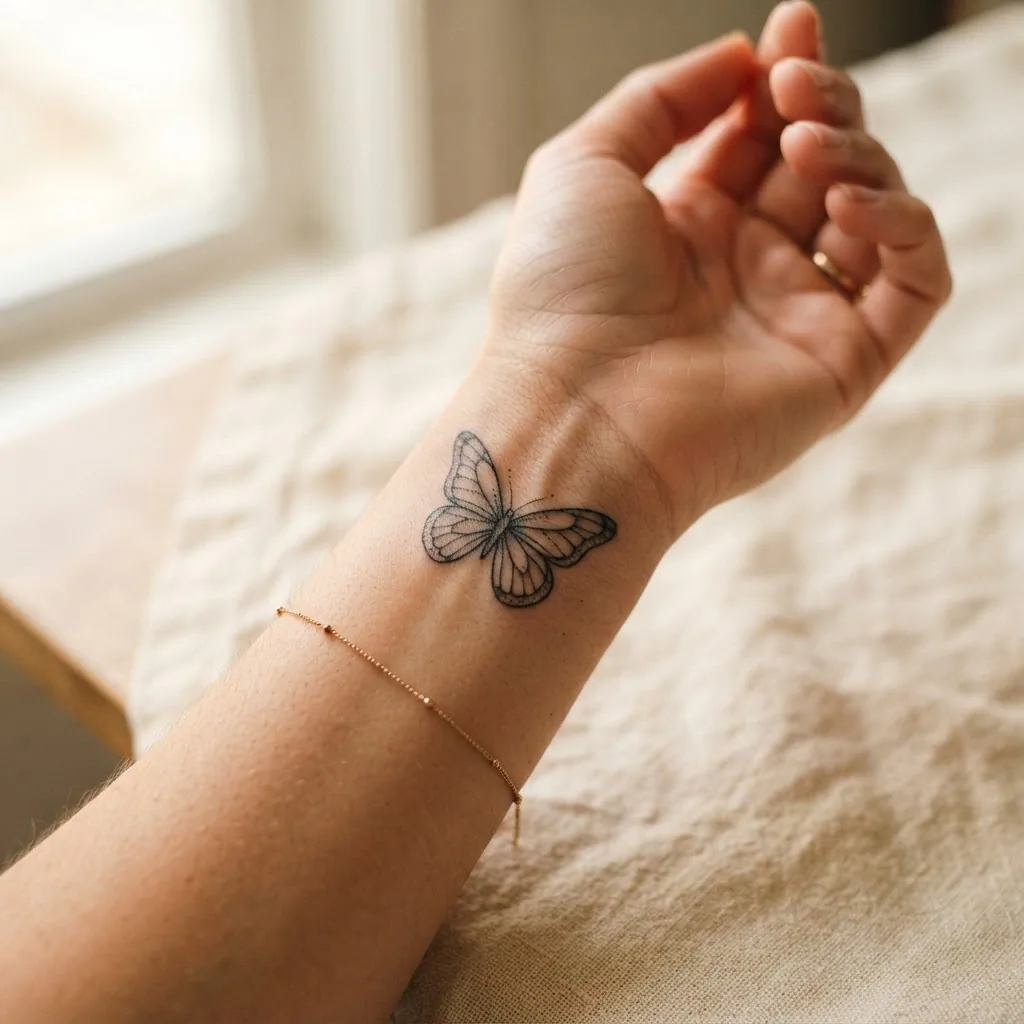
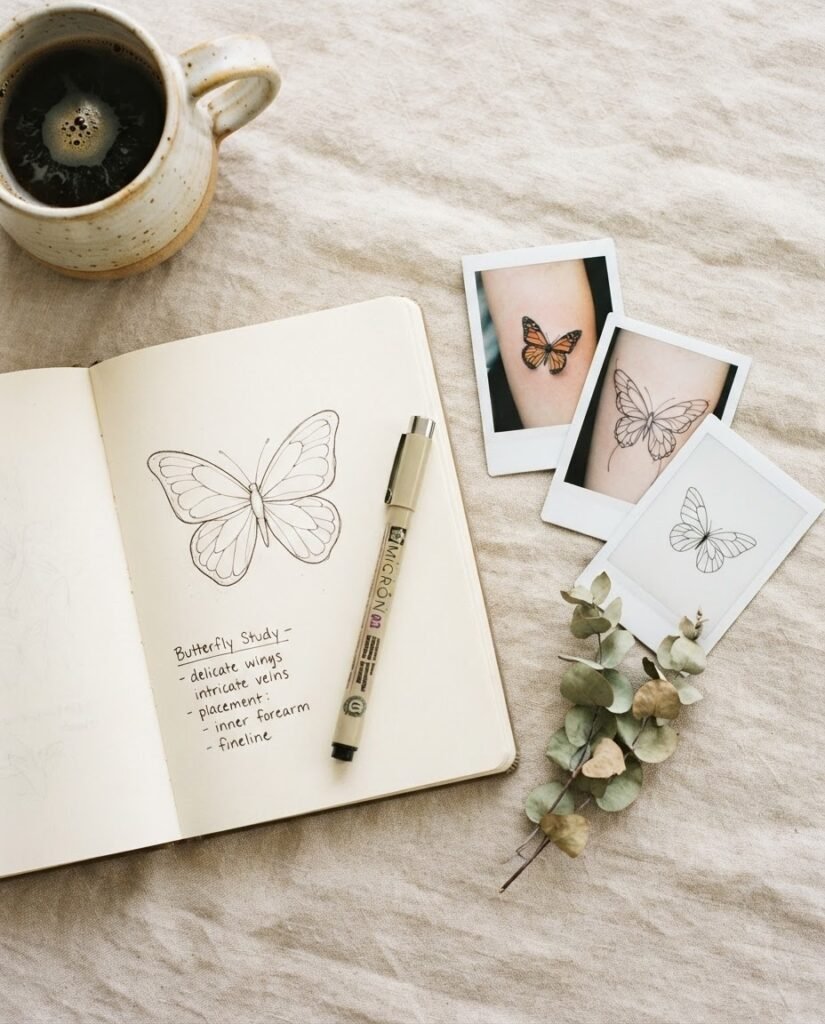
I still remember the first time I really looked at a butterfly tattoo, not just glanced at it, but looked at it properly. It was on someone’s forearm at a coffee shop, a single fine-line monarch with shaded wings so delicate they looked like they had been pressed from the inside of the skin rather than drawn onto it. I sat there thinking, that’s art. Real, considered, personal art.
If you’ve landed here, you’re probably sitting with a version of that same feeling. Maybe you have a folder full of butterfly tattoo saves and you’re trying to figure out what it is exactly that you love about them. Maybe you know you want one and you’re trying to sort out the details, the style, the size, the placement, what it means and whether it matters if it means something. Or maybe you’re still in the “I think I want a tattoo someday” phase and butterflies keep showing up at the top of your imagination.
All of those places are the right place to start. What I want to do in this article is walk through the real substance of a butterfly tattoo decision: the styles available to you, how to think about placement and sizing honestly, the meaning behind the symbol if you want it to carry meaning, how different styles hold up over time, what to look for in a licensed artist, and how to have a consultation that gets you exactly what you want. Because a good tattoo starts with good information, and butterfly tattoos, as popular as they are, deserve more than a gallery and a caption.
This is for adults who are ready to think this through. If you’re 18 or older, or approaching it, let’s get into it properly.
Why Butterfly Tattoos Have Staying Power
Butterflies are one of the oldest and most consistently loved tattoo subjects in the world, and there’s a reason they haven’t faded into a trend cycle the way some designs do. The image is inherently versatile: a butterfly can be bold and graphic or impossibly delicate, it can be hyperrealistic or geometric, it can be a single quiet line or a full painterly spread across a shoulder blade. There are very few subjects that lend themselves to this many interpretations while still reading immediately as what they are.
But staying power in tattooing also comes from meaning. People don’t get butterflies because they’re pretty (though they are). They get them because the metamorphosis story is deeply, personally true for them. A butterfly tattoo has been a marker of transition, of surviving something and emerging differently, for a very long time. That’s why it endures.
Understanding the symbolism a little, even if you just want something beautiful, gives you better language to bring into your consultation. And language is one of the best tools you have when working with an artist.
What a Butterfly Tattoo Can Mean
You don’t have to assign meaning to your tattoo. Some people want a beautiful design and that is entirely enough. But if meaning matters to you, or if you want to understand what the image has carried through history, this section is worth reading.
The most universally recognized meaning of the butterfly is transformation. The biology of metamorphosis, the caterpillar dissolving itself completely inside a chrysalis and rebuilding into something new, has made the butterfly a symbol of profound change in almost every culture that knew the insect. For many people, a butterfly tattoo marks a specific before and after. A recovery, a loss, a chapter that ended, a version of themselves they grew out of. It doesn’t need to be explained to anyone else. It just needs to be true for you.
Freedom is another layer. The butterfly moves through air without weight, which has made it a symbol of liberation, of shedding constraints, of choosing lightness. If that’s the resonance you feel, it’s a legitimate and beautiful one.
There are also deep cultural roots worth knowing. In Japanese tradition, butterflies have long been associated with the souls of the living and the dead, with the idea that a butterfly near you might be the spirit of someone you love.
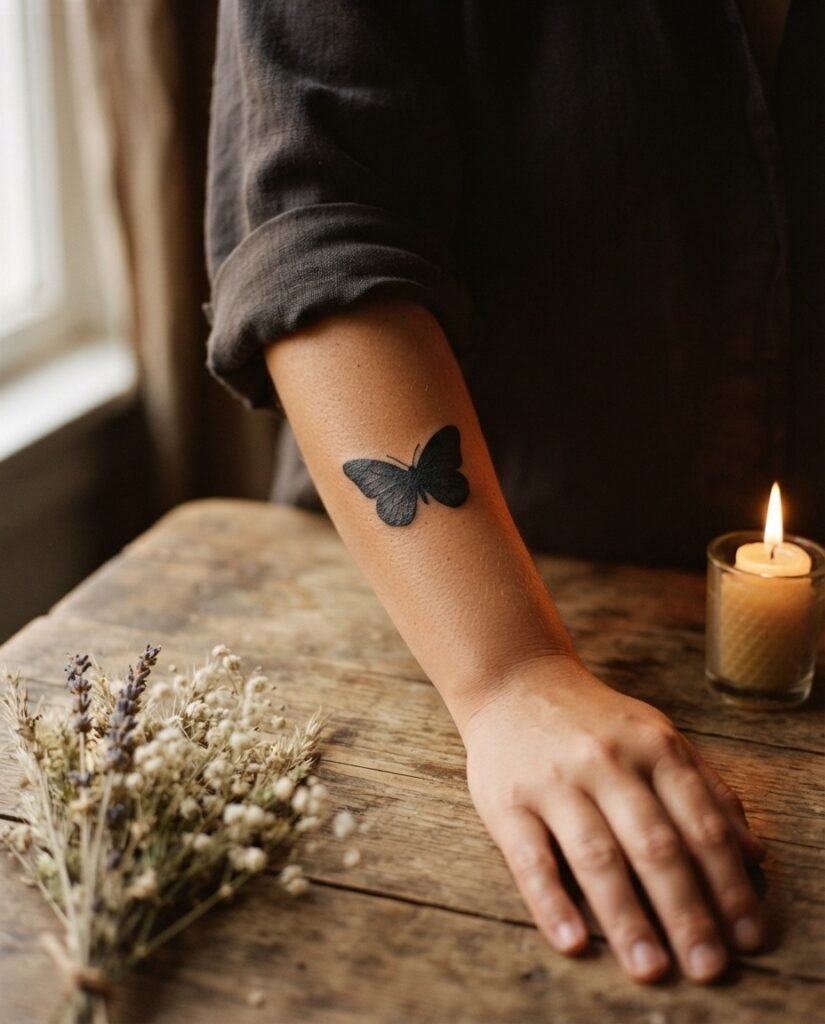
That adds a layer of tenderness that makes the symbol particularly meaningful for memorial tattoos. As HowStuffWorks covers in their exploration of butterfly tattoo symbolism, the butterfly connects to spiritual concepts of rebirth and renewal across many different traditions and time periods.
The Aztec and Mexica traditions held the butterfly in remarkable reverence. The goddess Itzpapalotl, whose name means “obsidian butterfly,” was a complex figure associated with sacrifice, fire, and warrior souls. Butterflies more broadly were connected to warriors who died in battle or women who died in childbirth, souls believed to return as butterflies. Mexicolore’s educational resource on Aztec butterfly symbolism goes into this beautifully if you want the full cultural context. It’s a reminder that the butterfly carries centuries of weight, not just as a pretty image but as a deeply human symbol of what happens after something ends.
In Celtic tradition, the butterfly was connected to the soul and to rebirth. The monarch butterfly in particular carries powerful meaning in Mexican culture, where millions of monarchs return to the mountains of Michoacán each year around Día de los Muertos, believed by many to be the souls of ancestors returning home.
None of this means your butterfly tattoo needs to be a dissertation on mythology. But knowing what the image has meant to people across time can help you decide whether you want to lean into that symbolism in your design or go purely aesthetic. Both are completely valid. The difference just affects the conversation you’ll have with your artist.
10 Butterfly Tattoo Styles Worth Knowing
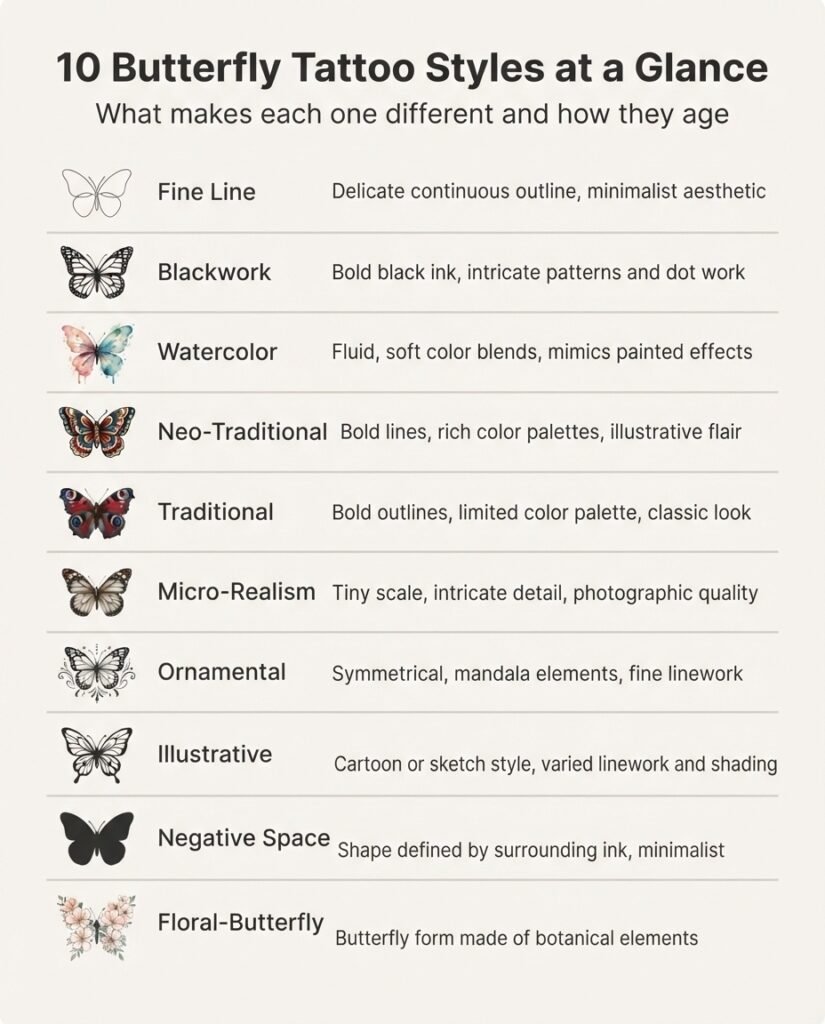
This is where a lot of people get stuck, looking at images on Pinterest and not quite knowing what separates one from another. Here’s a clear breakdown of the ten most common styles used for butterfly tattoos right now, what makes each one distinct, and who each tends to suit.
Fine Line
Fine line butterfly tattoos use extremely thin, precise lines, sometimes single-needle work, to create an elegant, almost drawn effect. They are minimal without being empty, and they photograph beautifully. Fine line is probably the most-requested butterfly style right now. The thing to know about fine line is that it requires a skilled, specialized artist and a minimum size. Very small fine line work on high-movement areas like wrists or fingers will soften over time as the thin lines naturally blur slightly in the skin. More on aging in a moment.
Blackwork and Silhouette
Blackwork butterflies use solid black ink, sometimes with negative space details, to create bold, graphic shapes. A silhouette butterfly can be striking in its simplicity. Blackwork tends to age exceptionally well because the bold lines hold their definition over decades. It’s a strong choice if you want something graphic and timeless.
Watercolor
Watercolor tattoos mimic the look of watercolor paint, soft washes of color with bleeding edges, no hard outlines. They’re gorgeous when done by an artist who specializes in them. The trade-off is that watercolor, without a solid black base, is generally considered the style most prone to fading and color migration over time. If you love the aesthetic, choose an artist who has a strong portfolio of healed watercolor work specifically, not just fresh pieces.
Neo-Traditional
Neo-traditional butterflies take the bold outlines and saturated color of classic American traditional tattooing and add more illustrative detail, dimensionality, and artistic freedom. They’re vibrant, expressive, and tend to age beautifully because the bold outlines hold. If you want a butterfly with real visual presence and rich color, neo-traditional is worth exploring.
Traditional (American Traditional)
Classic American traditional uses thick black outlines, a limited palette (typically red, yellow, green, blue, black), and a flat, iconic look. A traditional butterfly has a timeless, almost badge-like quality. These tend to age better than almost any other style because the bold lines resist blurring. If you want something that will look strong and clear for decades, traditional is a smart choice.
Micro-Realism
Micro-realistic butterflies attempt to capture photographic detail, wing texture, iridescence, veining, in a very small format. They’re technically demanding and genuinely impressive when executed well. They require an artist who specializes specifically in micro-realism. The smaller and more detailed, the more precise the artist needs to be about placement on lower-movement skin.
Ornamental and Geometric
Ornamental butterfly tattoos incorporate mandala-style patterns, geometric shapes, dotwork, or symmetrical decorative elements into or around the butterfly form. They can feel celestial and intricate. Geometric butterflies replace organic wing shapes with precise angles and patterns. Both styles are visually striking and particularly beautiful on placements like the sternum or back where symmetry reads well on the body.
Illustrative
Illustrative tattoos fall somewhere between fine line and neo-traditional, with a hand-drawn, editorial quality. Think a botanical illustration. They allow for personality, narrative details, and gentle shading without going fully realistic. Very versatile and flattering on most placements.
Negative Space
Negative space butterflies use the untouched skin as part of the design, creating the impression of the wings through what’s left untattooed rather than filled in. They’re clever and contemporary and look particularly clean on lighter skin tones. They require real planning with your artist to ensure the skin tone contrast works for your specific complexion.
Floral-Butterfly Combinations
Not a single style per se, but worth naming because it’s one of the most popular butterfly tattoo directions right now. Butterflies combined with florals, peonies, wildflowers, cherry blossoms, create a flowing, feminine composition that works beautifully on larger placements like the thigh, upper arm, or back. They tend to be done in fine line, illustrative, or watercolor styles.
A Note on Ink Colors and What You Should Know
Color choice matters beyond aesthetics. If you’re considering a butterfly in warm tones, reds, oranges, yellows, it’s worth knowing that these pigments have a higher documented rate of allergic reactions than black ink. The FDA’s consumer guidance on tattoo ink safety notes that the agency has received reports of people experiencing allergic reactions to tattoo inks, and that certain pigment colors are more commonly associated with reactions than others. This doesn’t mean you shouldn’t use color. It means you should bring it up with your artist, ask what ink brands they use and whether those inks have any reported issues, and pay attention to how your skin behaves in the weeks after. If you have a history of sensitive skin, it’s genuinely worth a quick conversation with a dermatologist before you book.
How Different Styles Age Over Time
Aging is one of the most under-discussed aspects of tattoo planning, and it’s one I genuinely wish more people knew about before they sat down. Tattoos are not static. They change with your skin, your sun exposure, and time, and different styles change differently.
Bold, traditional, and neo-traditional tattoos age the best of any style as a general rule. The thick outlines hold their shape, and saturated color in these styles tends to fade gracefully rather than blur. Blackwork is similarly durable.
Fine line tattoos require a more nuanced conversation. When done well by a skilled artist, at an appropriate size, in a lower-movement placement, they can remain beautiful for many years. The lines soften slightly rather than blur dramatically, which many people actually prefer over time. The risks increase when fine line work is done very small, very thin, in high-friction areas (inner wrist, fingers, ankle), or with insufficient UV protection on the healed tattoo. Sun is the biggest enemy of fine line longevity.

Resources like this guide to fine line tattoo aging outline what to realistically expect, and the consistent recommendation from artists is high-SPF sunscreen on any healed tattoo that gets sun exposure.
Watercolor tattoos, as noted, are the most likely to show visible change over time, particularly in the color wash areas. An artist who is honest with you about this is an artist you can trust.
When you’re reviewing an artist’s portfolio, ask specifically to see healed work, photos taken 6 months to 2 years after the tattoo was done. Fresh tattoos always look crisp. Healed work tells you the real story of how an artist’s technique holds up.
Placement and Sizing: Making It Work on Your Body
Placement is one of the most personal and practically important decisions in the whole process. Here’s how I think about it.
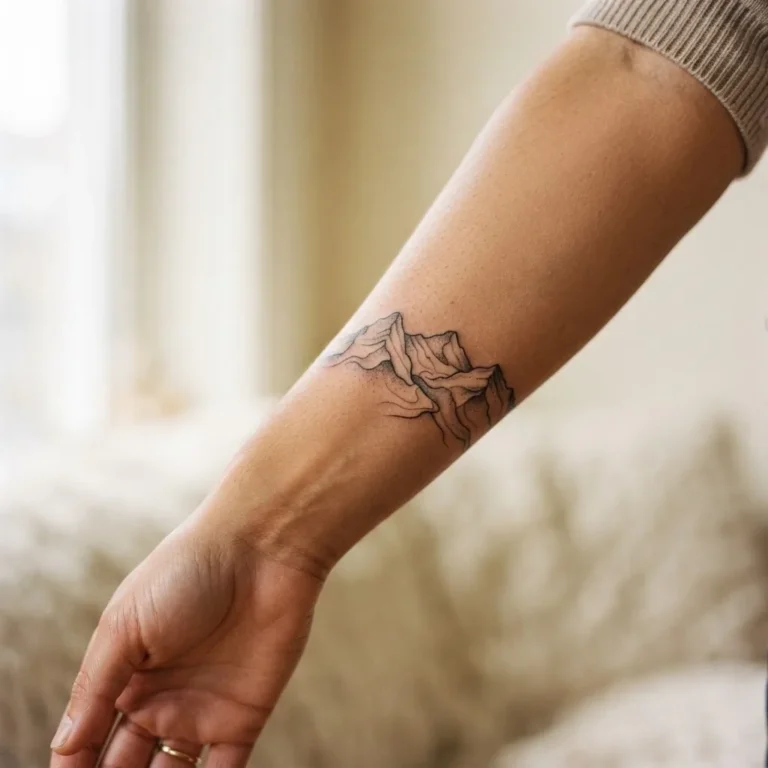
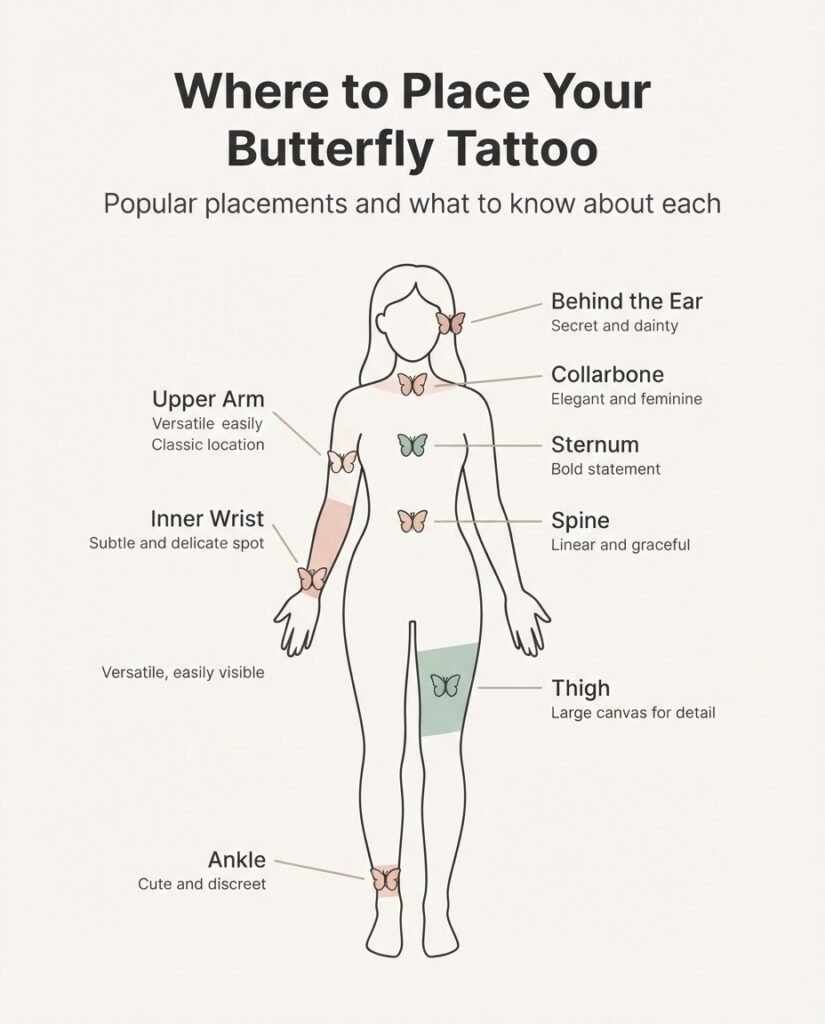
Wrist and inner wrist are classic butterfly placements, delicate and visible, perfect for smaller pieces. The inner wrist has more movement and slightly more tendency to fade over time than the outer wrist. Pain level is moderate, the skin is thin and close to bone and tendons.
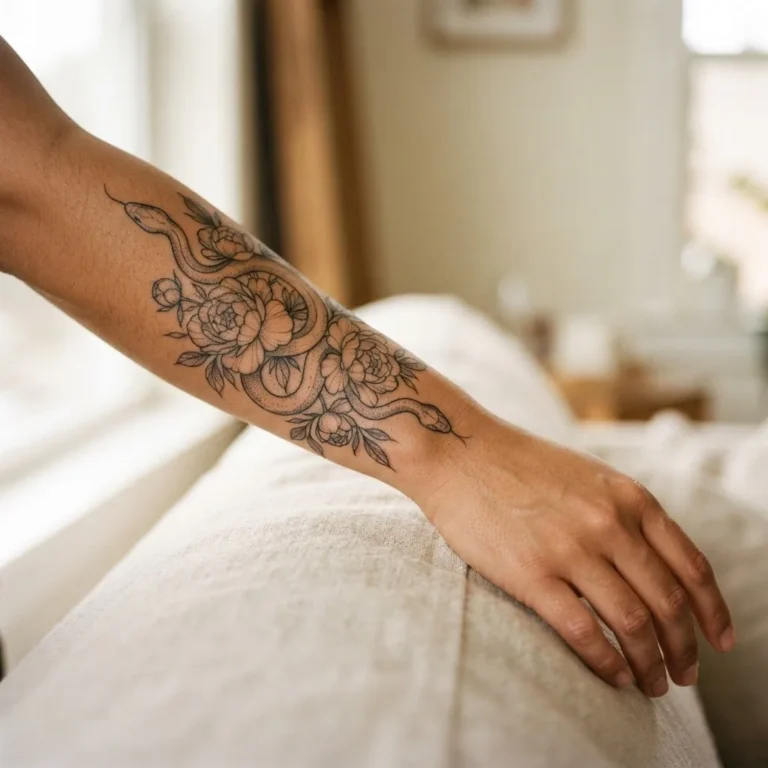
Forearm is probably the most forgiving placement for a first tattoo. The skin is relatively flat and has good surface area. It heals consistently well and allows for a wider range of sizes. Pain level is generally low to moderate.
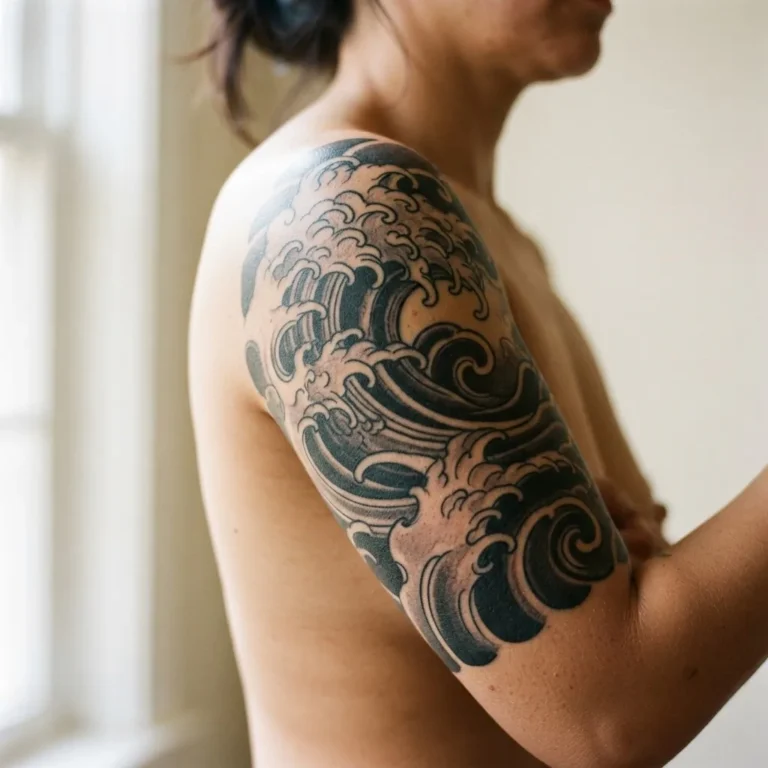
Upper arm and shoulder are excellent for medium to larger pieces. Butterflies with wing spread work especially well here because the arm’s natural curve can actually complement the wing shape. Pain level is low to moderate on the outer arm, slightly more on the inner.
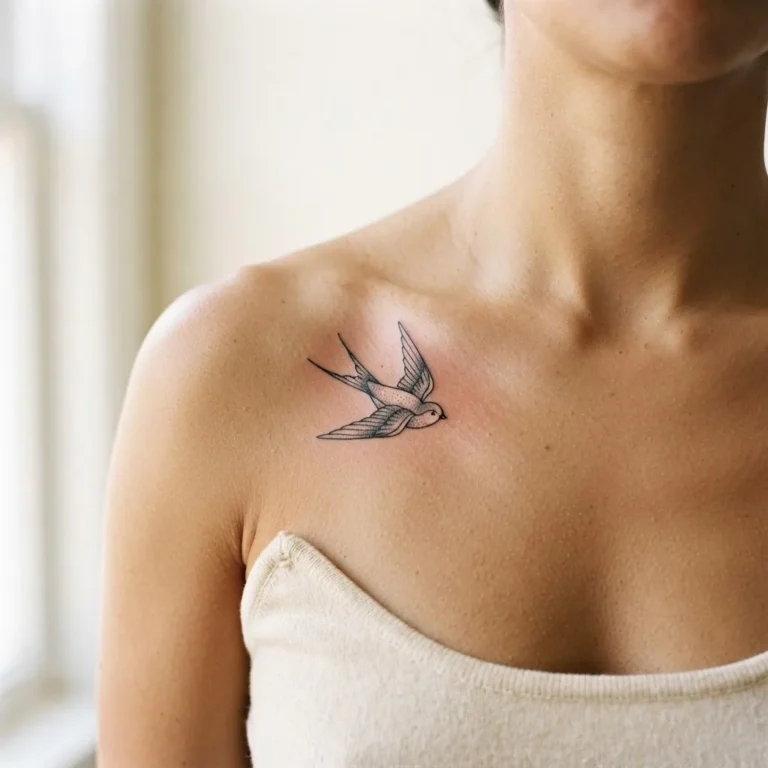
Collarbone and clavicle are beautiful, elegant placements for a horizontal butterfly, either centered or asymmetrical. The bone proximity makes this moderately painful for most people, and the curves of the clavicle mean sizing and angle need to be thoughtfully discussed with your artist in a consultation.
Sternum and chest are stunning for symmetrical butterfly designs, the natural centerline of the body aligning with the butterfly’s symmetry. This placement can be more painful due to proximity to bone and the thin skin over the sternum, but many people find it deeply worth it. It’s also one of the more private placements, easily covered.
Spine and back are dramatic and beautiful, particularly for larger or floral butterfly compositions. The spine itself is one of the more painful tattoo placements because the skin is thin over the vertebrae and nerve density is high. The upper back between the shoulder blades is a significantly more comfortable placement.
Ankle and foot have a certain delicate appeal for small butterfly designs, but it’s worth knowing that these areas have a reputation for fading and requiring touch-ups more often than most, due to friction from footwear and the skin’s texture in that area.
Thigh is one of the most comfortable first-tattoo placements if visibility isn’t a priority. The skin is soft, the surface area is generous, and pain levels are generally low. Butterflies with florals shine on the outer thigh.
Behind the ear is subtle and sweet for a very small silhouette butterfly, but the area is limited in space and moderately sensitive.
On sizing, one of the most common things I hear from people who got tattooed without enough planning is “I wish I had gone a little bigger.” A design that looks large on a phone screen often lands much smaller in real life on a body. Fine line work especially needs a minimum size to retain its detail. For a fine line butterfly with wing detail and shading, most artists recommend no smaller than about 2 to 3 centimeters (roughly 1 inch) wing-to-wing. For micro-realistic work, 4 to 6 centimeters allows the detail to breathe properly. Your artist is the right person to guide this conversation, but coming in with a sense of scale, bringing a printout at actual size or tracing a similar size on your skin with a pen beforehand, makes that conversation much easier and more productive.
How to Find and Vet a Licensed Artist for Your Butterfly Tattoo
This is the most important practical section in this entire article, and I mean that. Choosing the right artist is the whole game. The best design in the world doesn’t help you if it’s in the wrong hands.
Start with style, not geography. The question isn’t “who is the nearest tattoo studio?” It’s “who in my region specializes in the specific style I want?” A fine line artist and a traditional artist are not interchangeable. Search Instagram and TikTok with specific search terms like “fine line butterfly tattoo Portland” or “neo-traditional butterfly artist [your city].” Look for artists whose entire portfolio makes you feel something.
Look at healed work, not just fresh. As I mentioned, fresh tattoos almost always look good. A portfolio of healed pieces tells you whether the artist’s technique holds. Many artists post healed-photo updates on Instagram or have a section of their portfolio specifically dedicated to healed work. If you can’t find any healed photos, ask.
Verify licensing. Every legitimate tattoo artist in the US works out of a licensed studio and should hold personal certifications including bloodborne pathogen training. Studios are licensed by state or local health departments, and most states make license lookup publicly available online. In Oregon, for example, where I’m based, the Oregon Health Authority maintains a board specifically for body art practitioners with searchable licensing records. Your state’s health department or board of health will have an equivalent. The studio should also be visibly clean, use single-use needles opened in front of you, and have their permits posted.
Book a consultation before you commit to a date. A consultation, either in person or via email/DM with reference images, is standard practice at reputable studios. It’s a chance to see the space, talk through your vision, ask about sizing, get the artist’s honest professional take on what will work well, and ask your questions before money changes hands beyond a deposit.
Questions worth asking at your consultation:
Before booking, it’s worth asking an artist about their experience with your specific style, whether they can show you healed work in that style, how they handle sizing and placement for the specific area you have in mind, what their deposit and cancellation policy is, and what aftercare instructions they provide. You might also ask how many sessions a design like yours typically requires and whether touch-ups are included. These are all completely normal and welcome questions. Any artist who makes you feel like you’re asking too much is not the artist for you.
What to Expect During Your Session
Knowing what’s coming makes the whole experience so much less intimidating. Here’s the honest version.
Your artist will create a stencil of your design and apply it to your skin before beginning. This is your chance to check placement, size, and orientation. If something feels off, say so. Adjustments at this stage are simple. Adjustments after are not.
The sensation of tattooing is different for everyone, but the most consistent description is a scratching or burning sensation, with intensity depending heavily on placement. Flatter, less bony areas with more subcutaneous fat tend to hurt less. Bonier spots, areas with thin skin, and places close to nerves and joints tend to hurt more. For a small to medium butterfly on a forgiving placement like the forearm or upper arm, most people find the session very manageable.
Adrenaline is real. Many people feel a rush at the start of a session that masks the sensation for the first few minutes, then settle into the experience. Bring water, eat a good meal beforehand, wear or bring clothing that gives your artist easy access to the placement without being uncomfortable for you, and feel free to ask for a break if you need one.
Aftercare Basics: Setting Your Ink Up to Heal Well
Your artist will give you specific aftercare instructions, and those instructions are the ones to follow above anything else. Artists know their work and their preferred products. What I’ll share here is a general overview so you go in informed.
Most artists use some form of protective wrap on a fresh tattoo for the first hours. After that, keeping the area gently clean and moisturized is the core of aftercare. The American Academy of Dermatology has a clear and practical guide on caring for tattooed skin that’s worth bookmarking, including guidance on avoiding petroleum-based products on fresh ink and the importance of protecting healed tattoos from UV light with broad-spectrum sunscreen.
Keep your healing tattoo out of direct sun, out of pools and open water, and away from soaking in the bath until it’s fully surface-healed, which typically takes 2 to 4 weeks. Full dermal healing, the deeper layer settling completely, can take 3 to 6 months. That’s normal. The tattoo may look slightly different at the 3-month mark than it did fresh, and that’s not a sign of a problem.
If you notice signs of infection, increasing redness that spreads, unusual swelling, discharge, or fever, contact your artist and a healthcare provider. Infections are rare when artists follow proper hygiene protocols and clients follow aftercare instructions, but they are possible. Similarly, if you develop an unusual reaction to the ink, persistent itching, raised skin, or a rash, the AAD notes that skin reactions to tattoo ink can occur immediately or develop years after placement, and a dermatologist or your doctor is the right person to see. Please don’t dismiss a reaction or try to self-treat a potential infection.
On sun protection for the long term: SPF on a healed butterfly tattoo, especially a fine line piece in a sun-exposed placement like the forearm or wrist, is genuinely the best thing you can do to keep it looking clear for years. This is something I do consistently with my own tattoos and it makes a real difference.
Building Your Reference Collection
The last thing I want to leave you with is something practical that makes the whole process easier: build your reference folder with intention.
Save images that excite you, but also note what specifically you love about each one. Is it the style? The placement? The size? The addition of florals or negative space? When you bring a reference folder to a consultation, the best ones aren’t a collection of “I want this exact tattoo.” The best ones are a collection of images that together communicate what you love, even if no single one is exactly what you want. Your artist can work with that.
Also save photos of your own skin and the placement you have in mind, in good lighting, at the angle where the tattoo would sit. It helps enormously in a consultation and shows the artist you’re serious and prepared.
A butterfly tattoo is a meaningful choice whether it carries deep personal symbolism or it simply makes you feel beautiful. You deserve to go into this with full information, a clear vision, and a licensed professional who’s excited about your specific idea. The time you spend planning is not overthinking.

It’s the beginning of a great tattoo.