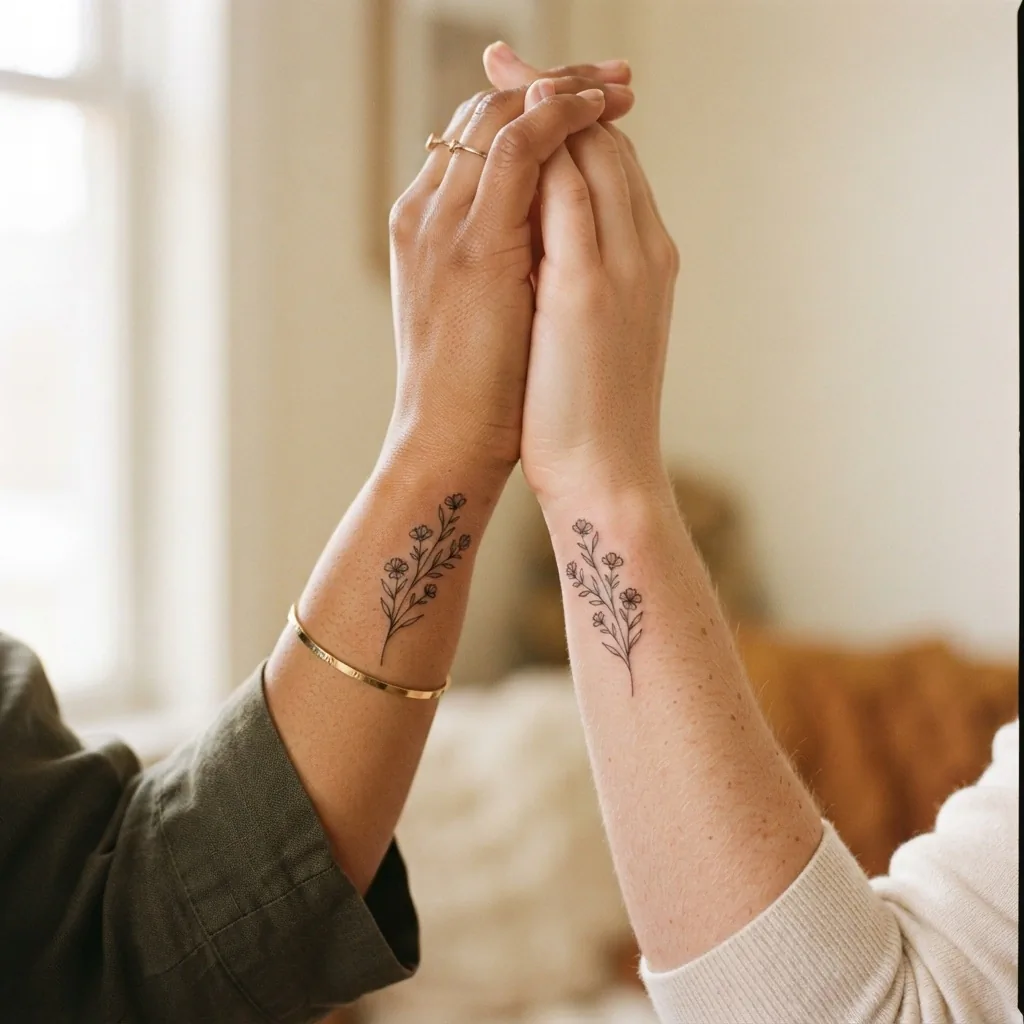
Best Friend Tattoos: 9 Meaningful Matching Ideas to Love
There is something different about a tattoo you get with your best friend. It is not just another piece of ink. It is a decision you make together, and it lives on your skin as a permanent marker of something that actually matters. I have a small matching piece with one of my closest friends, and I still look at it and smile, years later. That is exactly the feeling you are looking for, and it is completely achievable with a little thoughtful planning.
Before we get into the ideas, I want to say something I think most of these articles skip: this is a big decision, and it deserves to be treated like one. Not in a scary way, just in an honest, let-us-think-this-through way. A matching tattoo done well, with a design you both genuinely love, placed somewhere you both feel good about, by a licensed professional artist you trust? That is one of the most meaningful things you can put on your body. This guide is here to help you get there.
The Conversation to Have Before You Book Anything
I know you want to get straight to the ideas. We will get there, I promise. But the single best thing you can do for a matching tattoo is have one real, unhurried conversation with your friend before you contact any studio.
Ask each other: Do we want identical designs, or complementary ones that make sense individually but connect when we are together? Are we okay with different placements because our bodies, skin tones, and comfort levels are different? Are we both open to getting the same artist, which genuinely matters for the cohesion of matching work? And: how do we both feel about this being permanent? You do not have to answer “who cares, we will be friends forever” because of course you will. You just want to walk in with eyes open and hearts full, not with a half-formed plan you both agreed to under excitement.
The “what if things change” question comes up a lot, and I want to be honest with you about it. Friendships shift. Life moves people in different directions. But the tattoo does not have to be about predicting the future of the relationship. Many people think of their matching pieces as a marker of a specific chapter, a specific person who shaped who they are, and that meaning holds up beautifully no matter what. What you are really avoiding is the regret of a rushed, not-quite-right design. A thoughtful tattoo you love, regardless of what it represents to you ten years from now, will never feel like a mistake.
Matching vs. Complementary: What Is the Difference and Which Is Right for You?
This is a distinction most people do not think about until they are already at the studio, and I think it is worth understanding early.
Matching tattoos are identical or nearly identical pieces placed on both people, typically in the same spot. A small crescent moon on each of your left inner wrists. Tiny outline stars behind each ear. These have a clean, satisfying symmetry and photograph beautifully together.
Complementary tattoos are two separate designs that tell one story together. Sun on one person, moon on the other. Bee on one, flower on the other. Half of a broken heart on each wrist. These are wonderful if you and your friend have different aesthetic preferences, because each person gets something that feels completely their own, and the connection only reveals itself when you are side by side. They also have a practical advantage: they stand alone as individual pieces, so they work as great tattoos whether or not someone around you knows the pairing.
Neither approach is better.
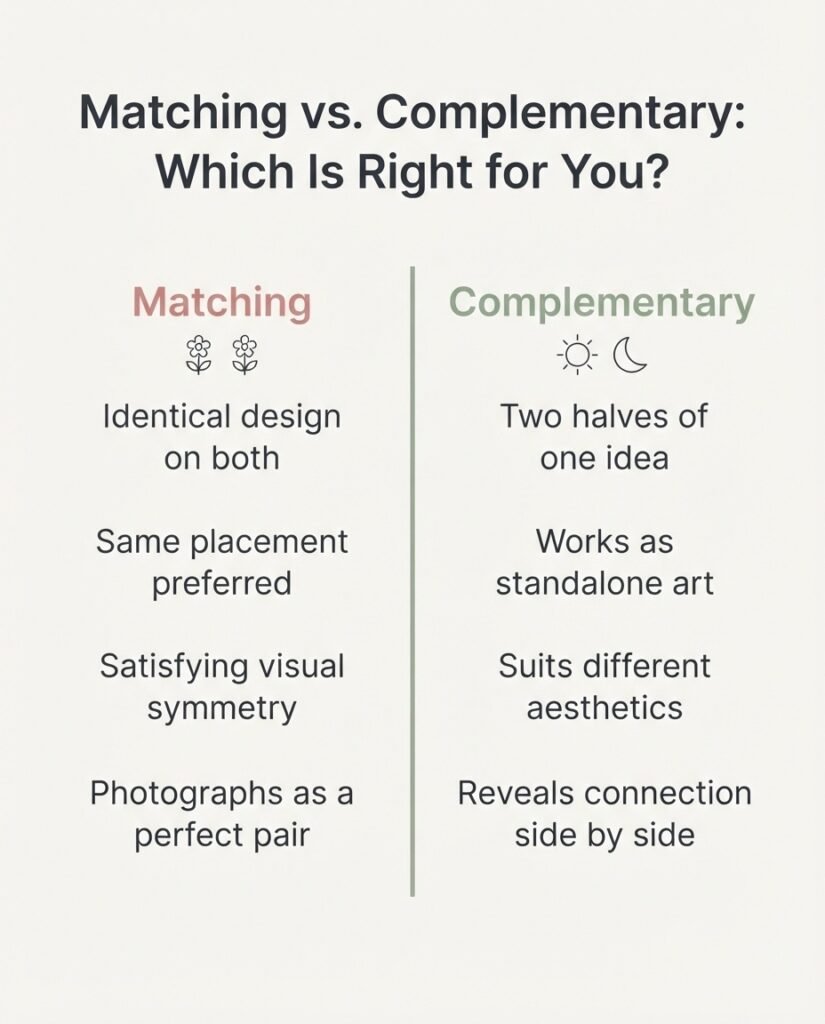
The right one is whichever fits how you and your friend think about the meaning of the piece. Some pairs want the visual satisfaction of an exact match. Others love the idea of carrying one half of something.
9 Best Friend Tattoo Ideas Worth Thinking About
These are not just pretty images. For each one I want to give you a real sense of the style, the meaning, how it ages, and where it tends to work beautifully on the body, so you can have a genuinely informed conversation with your artist.
1. Fine-Line Botanical: Birth Flowers
Few things feel more personal than a flower tied to a date. Birth flowers (each calendar month has one or two traditionally associated blooms) are having a real moment right now, and for good reason. They are specific to each person, visually beautiful in fine-line black ink or delicate single-color work, and they age with a lot of grace when done by an artist who specializes in the style.
The complementary version works especially well here: each person gets their own birth flower, and together the two pieces form a little garden. The inner forearm, the outer ankle, or just below the collarbone are all popular placements. For sizing, think about the level of detail you want. Fine botanical work needs enough space to breathe. A tiny sketch under two inches can be lovely, but some detail will soften over time. A piece between two and four inches tends to hold up significantly better over the years.
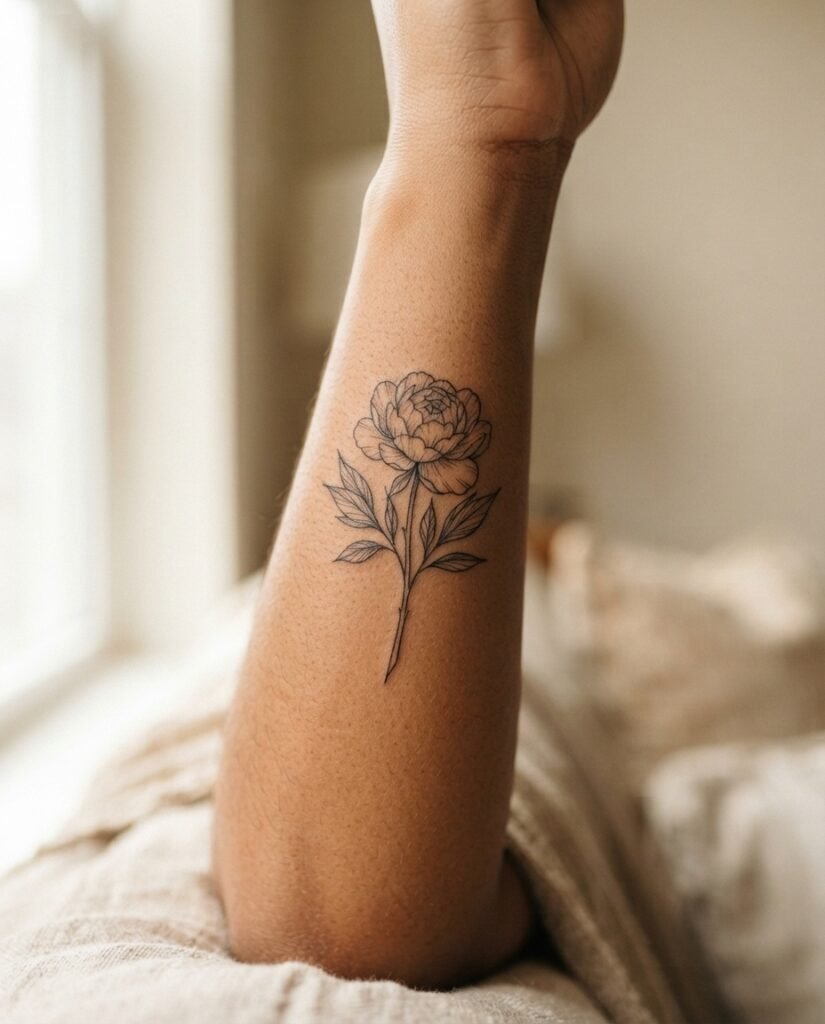
A note on fine-line work in general: it looks stunning fresh and can age beautifully with good sun protection and proper skin care, but it does soften and spread more than bold traditional linework. An artist who truly specializes in fine-line techniques makes a meaningful difference to the long-term outcome of this style.
2. Minimalist Symbols: Sun and Moon
This is one of the most enduring complementary pairs in tattooing and for very good reason. The sun and moon are rich in meaning (light and dark, balance, constancy, cycles) and they are endlessly versatile in style.

You can do them as simple geometric outlines, as detailed celestial illustrations, or as tiny blackwork icons.
What I love about this pairing for best friends specifically is that each piece is beautiful and complete on its own. The sun tattoo does not look like half of something. Neither does the moon. The connection is yours to share or keep private. Placement options are genuinely limitless, inner wrist, behind the ear, upper arm, ankle, shoulder blade, but simple versions work especially well in smaller, more delicate spots.
If you and your friend have different aesthetic preferences, this is often the pairing that satisfies both people. One person can lean minimal, one can lean more detailed, and the shared motif ties them together without requiring them to be identical.
3. Single-Word or Short Phrase: A Shared Word That Is Just Yours
Words and short phrases as matching tattoos are deeply personal and almost always meaningful in a way a symbol cannot replicate. The best versions are not generic (“brave,” “forever”) but something specific to your friendship: a word from an inside joke, the name of a place that matters to you both, a phrase from a song or book that has been between the two of you for years.
Placement for script tattoos tends to work best on slightly flatter, less curved areas of the body: inner forearm, collarbone area, upper arm, or back of the neck. Font choice matters for longevity. Very thin, delicate script can blur into illegibility over time, especially in small sizes. Your artist will likely advise you on the minimum size for the lettering to remain readable long-term. Trust that guidance.
4. Celestial Accents: Tiny Stars or Constellation Pairs
Constellations and star clusters have been popular in matching tattoos for several years, and they show no sign of fading. Each person can get the same small constellation, or you can split a star map, each carrying half of a larger design. There is also a beautiful option of getting your own birth constellation (your zodiac sign as a star pattern), with the two sitting side by side aesthetically even if they are different shapes.
These work beautifully small, which makes them approachable for first-timers. A simple three-to-five-dot constellation on the wrist or inner arm is one of the gentler placements in terms of pain and visibility. The caveat with very small dot work: it does fade and spread more than you expect over years. An artist who specializes in micro-tattooing or fine-line minimalist work will be able to tell you honestly what the minimum viable size is for your chosen design to age well.
5. Geometric Pairs: Matching Shapes That Symbolize Balance
Geometry in tattooing has a long, rich tradition, and simple geometric shapes carry meaning that holds up well over time because it is not tied to a specific trend. Two halves of a circle. A triangle and its inverted mirror. Interlocking rings. A shared geometric shape worn slightly differently by each person.
Blackwork geometry tends to age better than fine-line geometric work because the lines are bolder and more forgiving as skin changes over the years. This is genuinely one of the styles I would recommend to friends who want their matching pieces to look sharp and clear a decade from now. Placement is flexible: upper arm, shoulder, ankle, and the back of the hand (though hands are higher-maintenance and more prone to fading due to constant washing and sun exposure, so discuss that with your artist).
6. Pinky Promise Silhouette
Simple, warm, and unmistakably about friendship. A small outline of two hands linked at the pinky is one of the most recognized matching best friend tattoos for good reason: it communicates the relationship instantly and it works beautifully as either a matching or a mirrored design. Each person can get the same image, or one can get the left hand side and the other the right, so they connect when you hold hands.
For placement, the inner wrist is the most common and feels very intentional. The ankle is a softer, slightly more private option. This design works best at a moderate size (think two to three inches) because the fingers need enough detail to read clearly over time. Very small versions of this design can lose that detail. Your artist will have a good sense of the minimum workable size.
7. Botanical Fine-Line Florals: Matching Single Stems
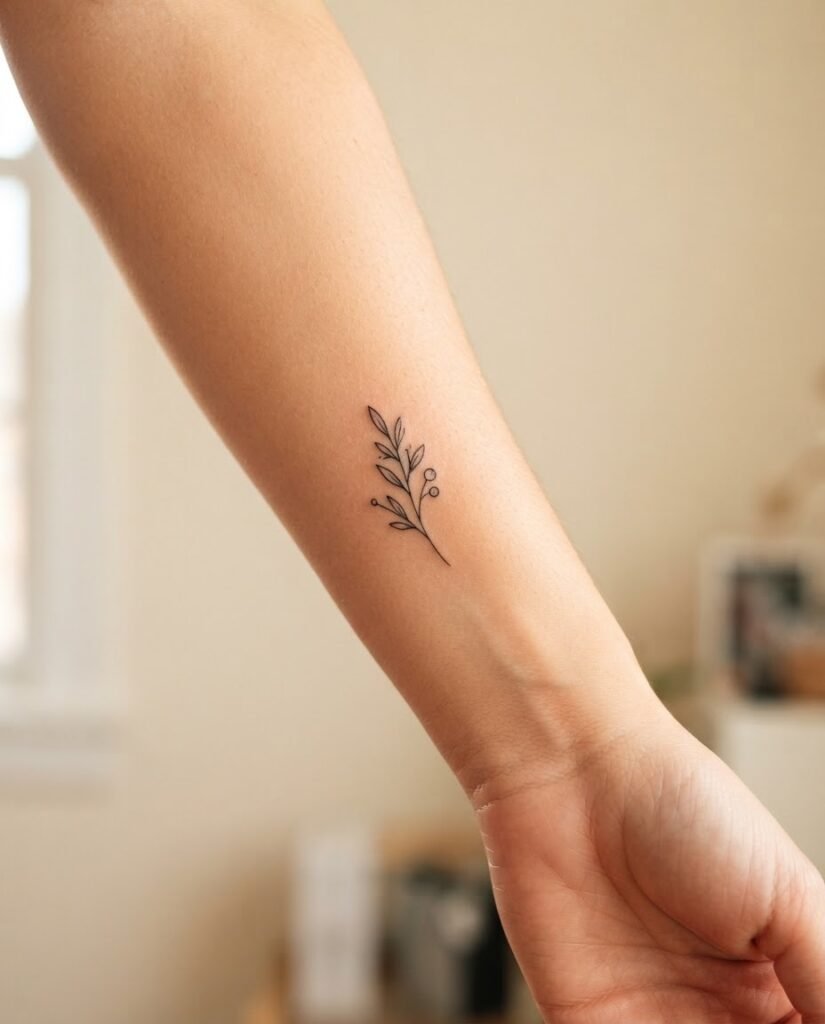
A single fine-line flower, whether a rose, a peony, a wildflower, or a botanical sketch of something with personal meaning, is one of the most timeless matching choices. It photographs well, looks beautiful in black and grey or with delicate color, and ages gracefully when executed by an artist with strong botanical portfolio work.
The key with matching florals is finding an artist whose portfolio shows healed botanical tattoos, not just fresh ones. Fresh ink always looks sharper than healed work. Looking at healed examples tells you how their style holds up, and that matters a lot for a piece you will wear for life. Ask specifically for healed photos when you review a portfolio or reach out for a consultation.
8. Abstract Watercolor Accents
Watercolor-style tattoos, with their soft washes of color and fluid edges, are visually stunning and feel contemporary without being slavishly trendy. They work well as complementary pieces: each person could have a small abstract burst in a color that reflects something about them, connected by a shared central motif (a small black linework anchor that grounds the color on both).
One honest thing I want to share about this style: the watercolor elements (the soft color washes) tend to fade faster than bold linework, and they are more dependent on sun protection over the life of the tattoo. That does not make them a bad choice. It just means going in with realistic expectations and committing to covering them with SPF on sunny days once they are fully healed. A good artist will also explain that the black linework underneath the color is what keeps the piece looking structured as the watercolor softens.
9. Yin-Yang or Interlocking Symbols of Balance
The yin-yang has ancient roots in Taoist philosophy and represents the idea that opposites are complementary and interconnected rather than opposing forces. For two friends who balance each other out, who see in each other the qualities they feel they lack, this design carries genuine meaning. Modern interpretations have moved well beyond the simple circle: artists are doing beautiful versions with botanical fills, abstract patterns, and custom motifs inside each half.
The classic circular design also lends itself perfectly to the complementary approach: each person carries one half, and together they complete the symbol. This is a case where the skill and portfolio of your chosen artist matters enormously, because a complex interlocking design needs to be mapped perfectly across two pieces to look cohesive. Bring visual references and discuss the sizing and placement of both pieces in a single consultation so the artist can plan them as a pair.
Placement and Pain: What to Know Before You Choose a Spot
Placement is not just an aesthetic decision. It is a practical one that affects your experience during the session, how the tattoo heals, how it ages, and how often you see it every day. For matching tattoos, it is especially worth coordinating, because one friend’s preferred placement may be more sensitive or more sun-exposed than the other’s.
As a general guide, the least painful placements tend to be the outer upper arm, the outer forearm, and the thigh, where there is more muscle and fat cushion. The wrist and ankle are mildly more sensitive. Areas that tend to be more challenging include the ribcage, the inner arm, the spine, and anything close to bone or a joint. Healthline’s tattoo pain chart by body location is a useful reference point when you and your friend are comparing notes on where you each want to place your pieces, and it can help you have a realistic conversation before you book.
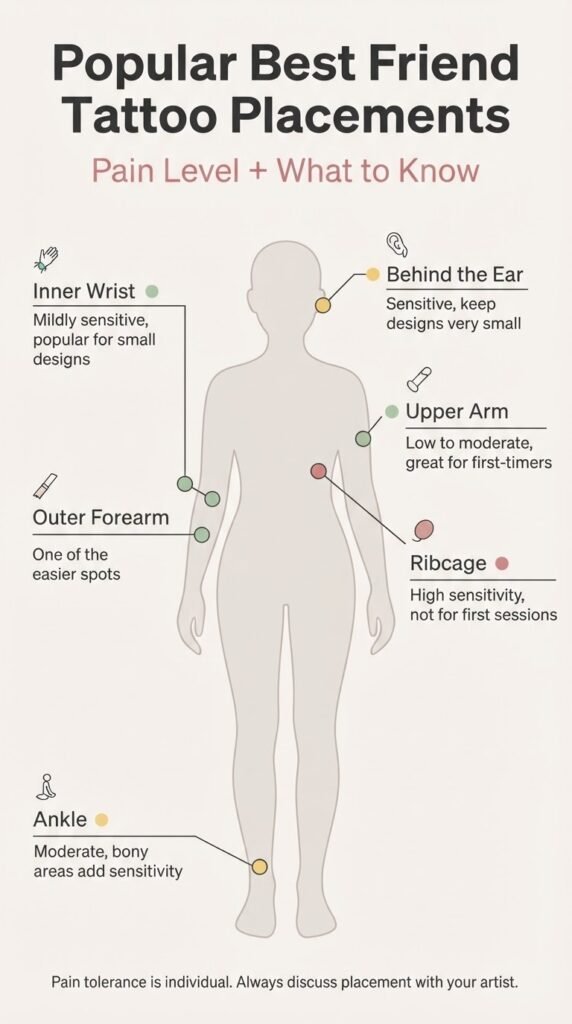
I also want to say: pain tolerance is deeply individual. Someone who sails through a ribcage tattoo might find a wrist piece unexpectedly sharp. Describe your tolerance honestly to your artist before the session and ask what to expect for the specific placement you are choosing. They have done this hundreds of times and will give you a real answer.
How to Find the Right Artist for Your Matching Tattoos
This part of the process deserves as much care as choosing the design, maybe more. The right artist makes the difference between a tattoo you love forever and one you wish you had thought more carefully about.
Start by identifying what style you want, because style drives everything about your artist search. A fine-line botanical specialist and a bold traditional artist are completely different skills. Once you know your style, use Instagram and Google to find artists in your area whose portfolios genuinely reflect that work. Look for healed photos, not just fresh ones. Read reviews. Check that the studio is licensed by your local or state health authority.
Because the actual tattooing process carries health and safety considerations, including the use of needles and exposure to blood, every reputable studio and artist should hold current bloodborne pathogen certification. The CDC’s NIOSH body art safety bulletin is worth knowing about for context on what those professional standards cover, and you can find it at the NIOSH Safety and Health for Tattooists and Piercers resource. When you visit a studio for a consultation or walk-in, look for disposable gloves and equipment, an autoclave for sterilizing reusable tools, single-use needles that are opened in front of you, and a clean, organized space. A studio that is protective of its hygiene practices is proud to show them.
For matching tattoos specifically, I would strongly recommend booking both people with the same artist. It is the best way to ensure the pieces are genuinely cohesive in line weight, shading, and overall feel. Artists who work on one partner’s tattoo without seeing the other’s can and do produce slightly different-looking work even with the same design. If the same artist is not available or not within budget for both, bring printed reference photos of the first piece to the second artist so they can match it as closely as possible.
Preparing for Your Consultation and Session
Walking into a consultation with a clear plan is one of the most confidence-building things you can do. Bring visual references, as many as feel relevant. Even screenshots from Pinterest or images from this article work. You do not need to walk in with a finalized design. You need to walk in with a clear direction and genuine references so the artist can understand the aesthetic you are going for.
For a matching or complementary set, it really helps if both people attend the consultation together so the artist can see both of you, understand both placements, and design the pieces to work as a pair. Club Tattoo has a practical breakdown of how to prepare for that conversation, including how to build a reference mood board and communicate scale and placement specifics, and their five tips for effective consultations are worth reading before you book.

Some questions worth asking your artist: What size do you recommend for this design in this placement, so it ages well? Do you specialize in this style, and can I see healed examples? What should I know about preparing for the session? What aftercare protocol do you recommend? A good artist will welcome these questions and answer them thoroughly. That responsiveness is itself a sign you are in the right hands.
On the day of your session, come rested, hydrated, and having eaten a solid meal. Wear or bring clothing that gives your artist easy access to the placement area. Follow any specific preparation instructions your artist provides, as they know their space and their process best.
A Note on Ink Safety and What to Watch For
Tattoo ink safety is something I think every person getting inked deserves honest information about. The inks used in tattooing are not currently subject to pre-market approval in the United States, and the FDA has documented cases of allergic reactions and infections linked to contaminated tattoo inks. The FDA’s tattoo safety consumer update covers what they have found and what to watch for, and reading it once before your appointment is genuinely worthwhile.
Choosing a licensed, reputable studio with an artist who uses high-quality inks from known suppliers is one of the most important ways you reduce this risk. If you have a history of skin sensitivities, allergies to certain pigments, or any skin conditions, share that information with your artist before the session and consider speaking with a dermatologist beforehand. Certain pigment colors, historically including some reds and yellows, have been associated with higher rates of allergic reactions, though formulations vary widely.
The American Academy of Dermatology has a thorough page covering unexpected tattoo skin reactions and what to do if you experience one. Save that link. Most people heal without any issue, but knowing what a normal healing response looks like versus something worth calling a doctor about is just good information to have on hand.
Healing Basics (And Why They Matter Just as Much for a Matching Set)
This comes up less often in matching tattoo conversations, but it is worth thinking about: if you and your friend are getting tattooed on the same day or within days of each other, you will be going through the healing process at the same time. That can actually be lovely, a shared experience to compare notes on. But it means both of you need to take aftercare seriously.
Your artist will give you specific aftercare instructions, and those instructions are the authority here. Not an Instagram comment, not a friend’s advice, and not even general information from me. Every artist has their preferred protocol based on their technique and the products they trust. Follow it.
In general terms, the healing process for a fresh tattoo involves keeping the area clean, avoiding submerging it in water (pools, baths, the ocean) until it has fully healed, protecting it from direct sun exposure, and keeping it moisturized without over-applying product. The American Academy of Dermatology’s guide to caring for tattooed skin is a solid overview of what dermatologists recommend for keeping ink looking its best over the long term, including the importance of broad-spectrum SPF on healed tattoos to protect color and clarity. Sun protection is genuinely one of the biggest long-term investments you can make in your tattoo, and it matters especially for fine-line and watercolor work.
Surface healing typically takes two to four weeks.
Full deep healing takes longer, often several months, though it varies by person and placement. Do not judge your healed tattoo until the surface has fully settled. Fresh ink often looks slightly different from the final healed result.
The Part No One Talks About: Coordinating Two People, Two Schedules, and Two Budgets
Logistics are genuinely part of the planning process for a matching set, and ignoring them until the last minute can create stress that takes some of the joy out of the experience.
On cost: small to medium minimalist or fine-line tattoos from an experienced licensed artist typically start around $100 to $300 per piece, depending on complexity, size, and your region. Most studios have a shop minimum that applies regardless of size, often $80 to $150. Highly sought-after artists in major cities will have higher rates, and that is completely appropriate given their skill level and demand. Budget for a tip, which is standard and genuinely appreciated. If you and your friend have different budgets, talk about it early. You can often find designs that work beautifully at different price points, or you can plan around a deposit and booking timeline that works for both of you.
On scheduling: some pairs book the same appointment slot and sit side by side. Others go separately on the same day or within a short window. There is no single right answer, but if your design requires the artist to see both placements together (for a complementary piece that needs to be mapped as a pair), a joint consultation is genuinely worth coordinating.
A Few Final Thoughts Before You Book
I get asked a version of this question a lot: “Am I overthinking this?” And my honest answer is: probably not. For a permanent piece of art on your body, thinking carefully is the right instinct. The goal is not to talk you out of excitement, it is to channel that excitement into a decision you will love.
The friends who text me before booking and do the work of finding the right artist, choosing a design they genuinely love, and walking in prepared? They come out of the studio glowing. Not because the tattoo was painless or because everything went perfectly according to plan, but because they felt confident and informed going in. That confidence is what makes the experience feel like the celebration it is supposed to be.
Take your time. Talk to your friend. Build your references. Find an artist whose healed work makes you both exhale with “yes, that is it.” And then go do the most meaningful, permanent, beautiful thing: mark this friendship on your skin on your own terms.